
The Ship They Bought as a Home Left 203 People on a Cambodian Pier
Residents of the Villa Vie Odyssey were given seven hours to leave the ship in Sihanoukville after its operator suspended operations, blaming fuel costs that rose from about $1,800 to as much as $8,000 a month per cabin.
By early afternoon the hallway of the Villa Vie Odyssey was full of luggage and people saying goodbye. Residents had been told to be off the ship by two o'clock, in a port none of them had planned to live in, and the reason the company gave was the cost of the fuel that had carried them there.
The Ship They Bought as a Home Left 203 People on a Cambodian Pier
Sihanoukville, Cambodia — Villa Vie Residences, the Florida-based operator of the Odyssey, announced on 27 October 2026 that it had suspended operations in Cambodia and was disembarking residents in this port city on the Gulf of Thailand.
Seven Hours to Leave
The notice came with a deadline attached. Residents were given seven hours to pack and leave during what had been scheduled as a routine port stop, according to local authorities. Lanette Canen and Johan Bodin told the BBC they were informed by Villa Vie Residences' chief executive at 6am on Tuesday that they had to be off the vessel by 2pm the same day.
Randy Cassingham, who has written about life aboard at ResidentialCruising.com, recorded it differently. He wrote that a note appeared on the ship's message board shortly after 7 a.m., announcing a "temporary lay up" and telling everyone to disembark by 2 p.m. NBC reported that note as Monday's. The accounts in circulation do not agree on the hour, or on whether the notice arrived on Monday or on Tuesday.
What no account disputes is the size of the window. It was hours, not weeks, and it arrived in a country most of the people aboard had treated as a stopover. Long Dimanche, deputy governor of Preah Sihanouk Province, said the order had "left many retirees and remote workers homeless thousands of miles from their home countries."
The Fuel Bill the Company Blames
The company's explanation is arithmetic. Monthly fuel expenses per cabin that historically averaged about $1,800 have reached an estimated $6,000 to $8,000 in parts of Asia, Villa Vie Residences said in its statement.
It said it had taken "significant steps to reduce fuel consumption, including slowing the itinerary and spending more time in port," and that those measures were not enough to "offset the extraordinary increase in fuel costs."
"The company cannot simply pass increases of that scale on to residents, and the resulting shortfall has placed its current operating model under unsustainable financial pressure," it said. Then, flatly: "We have been unable to continue carrying the resulting operating losses."
Slowing the ship and staying longer in port are precisely the remedies a residential vessel can offer. Both cost time rather than money, which is why residents noticed the itinerary thinning out long before anyone asked them to leave.
A Voyage That Was Supposed to Run for Years
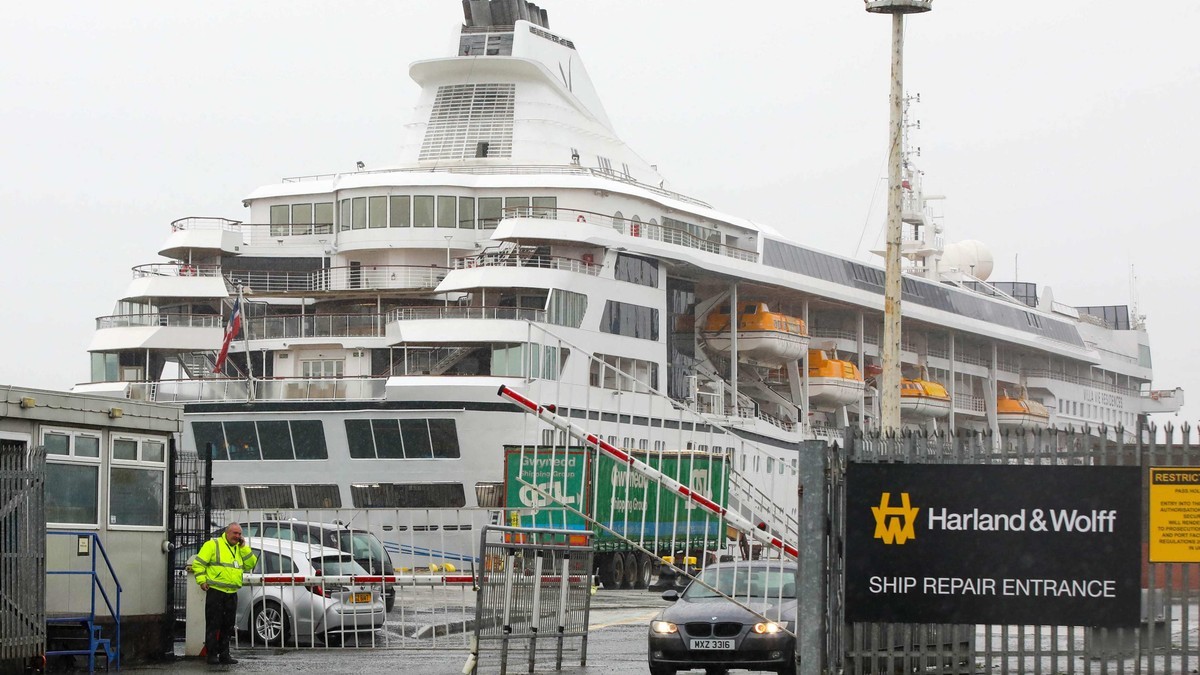
The Odyssey left Belfast in October 2024 for what its operator called a continuous voyage around the world. By the time it reached Cambodia it had been at sea for more than 750 days, the BBC reported. Reuters put the figure at at least 755.
The plan, according to the ship's own website, was a 3.5-year circumnavigation covering nearly 150 countries. It did not start cleanly. Repairs delayed the Belfast departure and left passengers ashore for months, at a cost to the company of millions of pounds. Cassingham put the delay at four months.
The ship never filled. Built to carry 650 people, it peaked at around 350, by Cassingham's estimate. Those who stayed had the ordinary furniture of a settled life moved onto water: several bars and restaurants, a pool deck, a pickleball court. It was, by design, a home that happened to move.
What They Paid to Live at Sea
The prices were the selling point. The Odyssey houses 650 people, with "villa suites" listed at $440,000 and an inside villa at $120,000, Reuters reported. Cabins could also be rented from $3,500 a month, and in 2024 the company advertised entry at "just $119,000."
Randy Cassingham and his wife Kit have been aboard since Belfast. He put their outlay at around $1 million for an all-inclusive trip they hoped would last at least 15 years, and he had written publicly, more than once, about why: no airports, no repacking, the same bed in a new place every few days.
Carol Larson, 69, from California, told AFP she paid $120,000 for her cabin, maintenance fees excluded, for a voyage meant to run 15 years or the life of the ship. She got a year and a half. She used the word stranded.
How Much Money Can You Give to Save a Sinking Ship?
Barbara Figiel, 62, a former UN employee who says she has taken around 70 cruises, told AFP she and her husband boarded in December 2024. "I've always said, 'Oh, when I retire, I want to live on a cruise ship,'" she said. She wanted a slow way to travel and a community around her at the same time.
In the last four months, that community turned into a fundraising drive. "We knew something was going wrong because they kept on asking us for more and more and more money," she said. And then: "It came to a point that how much money can you give to save a sinking ship?"
Pamela Reckamp, 59, who rented a cabin and left the ship this month, told NBC about a meeting in early September at Ha Long Bay in Vietnam, where an official asked cabin owners to help raise $1 million so the vessel could sail on. "She said, 'If we don't get this money, we have about four days of the ship running,'" Reckamp recalled. "'Then the lights will go off and the AC will go off.'" At a later meeting, she said, a woman who had bought in during August told the room she had sold her house and her car to do it.
Two Hundred and Three Guests, One Hundred and Fifty-Six Crew
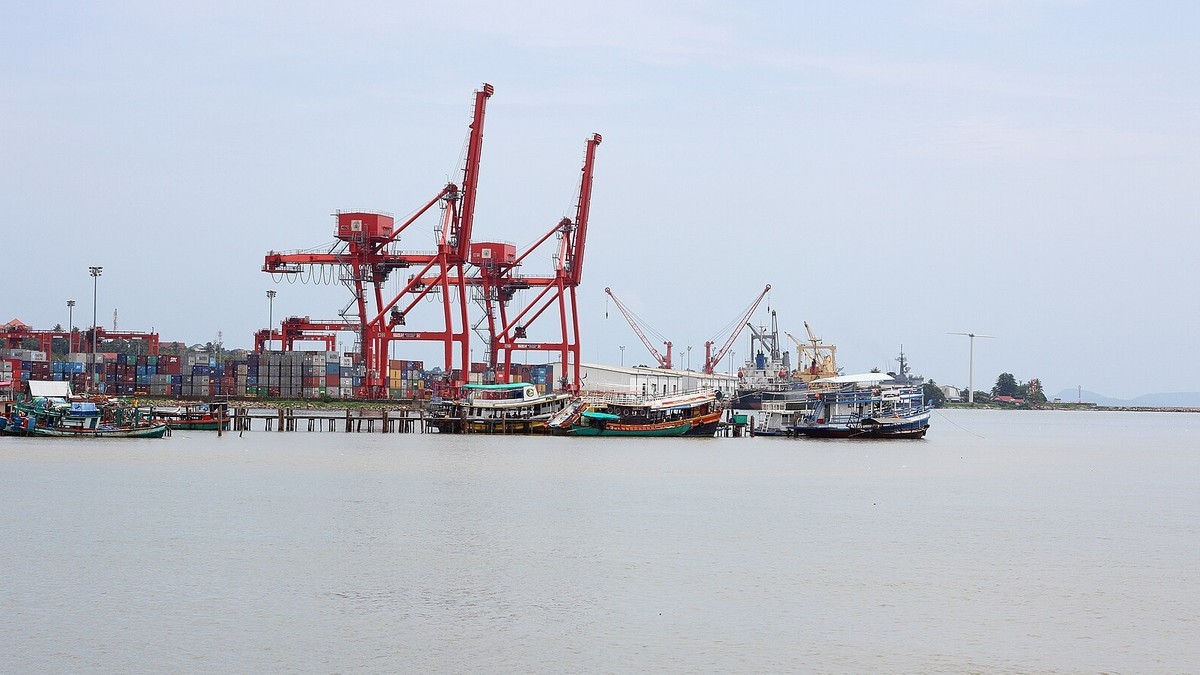
Cambodian officials put the numbers aboard at 203 passengers and 156 crew. The Odyssey had arrived from Thailand on 23 October and had been due to continue to Vietnam, Dimanche said. The ship was scheduled to refuel and leave Cambodia on 31 October.
Sihanoukville is an odd place to be set ashore. Once a sleepy beach town, it has become known in recent years as a hub for Chinese casinos and scam centres, a reputation the Associated Press noted in its reporting on the disembarkation. Some passengers took flights out. Others stayed in the city, in hotels they found themselves, waiting to see what the ship would do.
Canen and Bodin told the BBC the location was "a difficult place to disembark" because of the distance to a major international airport. For people whose possessions had been in a cabin for two years, the practical problem was not sentiment but freight.
What the Company Says
Villa Vie Residences said its focus was "on supporting residents, crew, and employees while we work toward restructuring and recapitalization over the next 60 days," and that "no outcome is assured." It said it was working with residents "to coordinate disembarkation and identify temporary living arrangements."
Reuters reported that no financing for that restructuring has been finalised. Mikael Petterson, an executive with the company, declined to give NBC further detail. In a release earlier this year announcing a second residential ship, he said the Odyssey was 85 per cent sold.
In July he had described the ambition plainly: "When we launched Odyssey, we set out to prove that residential cruising wasn't just possible — it was sustainable." Villa Vie did not respond to a request for comment from AFP.
The Fraud Suit It Was Already Fighting
The pier was not the company's first bad day. In a lawsuit filed last year, a company that bought a cabin on the Odyssey for $469,000 accused Villa Vie Residences of fraud, alleging that it had misrepresented its financial stability. The business model, the suit alleges, was not financially sound "but rather precarious."
Those plaintiffs are seeking a jury trial and unspecified damages above $100,000. Villa Vie Residences has denied the allegations. The case is ongoing and no finding has been made against the company.
Cassingham's own account is less legal and more mechanical. He described "a cascade of problems piling up on one another, from the business model to mistakes by management to the mentioned crisis in fuel cost and availability, and more." He also accused the company of doing "absolutely nothing" to help people once they were off the gangway.
The War That Reached the Gangway
The fuel numbers did not appear from nowhere. Reuters reported the company's position that price increases driven by the Iran war had made operations prohibitively expensive, and that from late February, when that war began, Villa Vie had been cutting consumption.
The mechanism is shipping, not sentiment. Traffic has been curtailed in the Strait of Hormuz since the war started, squeezing supplies of petroleum-based fuels, especially in Southeast Asia, and sharply raising prices, the Associated Press reported. Oil has climbed in recent days to its highest levels in months.
Passengers felt the same pressure from the other side of the ledger. Lynn Montoya told the AP that residents were repeatedly asked to contribute money for fuel and other expenses, including a fresh appeal to raise funds to get the ship out of Cambodia. She also said the crew had not been paid.
What Happens to Them Now
Holly Hennessey is staying. She told the BBC that passengers had earlier been asked to consider a fuel surcharge as prices rose, and that the itinerary had been "severely curtailed." She is in a hotel with several shipmates, waiting. "Until they say we are done - done done - I am not giving up," she said. "I could never duplicate this lifestyle. The idea of going home? It would be so trite."
Cassingham is not bitter about the money. "It was great, for a while," he told AFP. "Money aside, it was a fantastic adventure." Larson, who had counted on years more than she got, said the journey was "well worth it," and that she was "so blessed to have been part of the experiment of residential cruising."
Canen and Bodin plan a few days in Sihanoukville, then to travel in South East Asia while they "figure out our next chapter." Behind them, the Odyssey sat at the pier, due to refuel, with no announced date on which it would carry anyone anywhere again.
By Jessica Ali, Staff Writer
This article was produced with AI-assisted research and editorial support. Sources: The Associated Press, Reuters, Agence France-Presse, BBC News, NBC News, South China Morning Post and Channel NewsAsia. Photographs: Reuters via the South China Morning Post (cover); AFP via the South China Morning Post (Belfast, 2024); Dmitry Makeev, Wikimedia Commons, CC BY-SA 4.0 (Sihanoukville Autonomous Port).
What's Your Reaction?
 Like
0
 Dislike
0
 Love
0
 Funny
0
 Wow
0
 Sad
0
 Angry
0

Editor-in-Chief at Global1.News. Atlanta-based journalist who cuts through the BS and tells it like it is. Lead anchor, host, and the voice you hear when the spin stops and the truth starts.














Comments (0)