
Mali Pardons Frenchman Sentenced for Alleged Coup Plot, Ending 20-Year Prison Term
BAMAKO — In a sudden and dramatic reversal, Mali’s military junta has granted a presidential pardon to Yann Vezilier, the French national sentenced to 20 years in prison for allegedly plotting to destabilise the government of President Assimi Goïta. The announcement, made on Thursday via the Malian government’s official Facebook page, confirms Vezilier’s immediate release and removal from the country, closing a case that had further poisoned already fragile relations between Bamako and Paris.
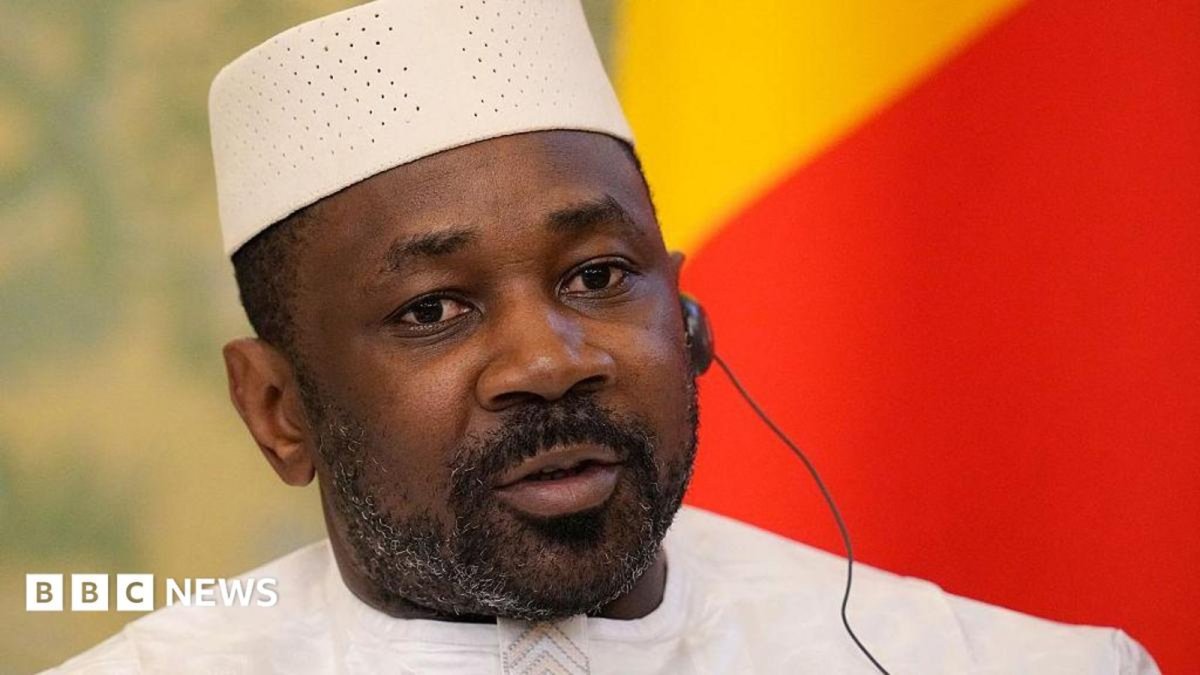
BAMAKO — In a sudden and dramatic reversal, Mali’s military junta has granted a presidential pardon to Yann Vezilier, the French national sentenced to 20 years in prison for allegedly plotting to destabilise the government of President Assimi Goïta. The announcement, made on Thursday via the Malian government’s official Facebook page, confirms Vezilier’s immediate release and removal from the country, closing a case that had further poisoned already fragile relations between Bamako and Paris.
A Surprise Act of Clemency in a Tense Climate
The Malian government’s statement was careful to frame the pardon as an act of grace, not a vindication. It stressed that the clemency “does not call into question the facts established by an adversarial judgment rendered during a trial, where all rights of the defence were respected.” The statement added that the pardon was “accompanied by the immediate removal of the individual from national territory.”
What prompted this U-turn remains unclear. The junta, which has consistently used the alleged plot to rally nationalist sentiment, has offered no public explanation for the sudden release. France’s foreign ministry has yet to comment on the pardon, maintaining a silence that echoes its earlier dismissal of the accusations as “unfounded.” For now, observers are left to speculate on the motivations behind a decision that appears to contradict the narrative the Goïta government has carefully constructed over the past year.
The Case That Shook the Sahel
Vezilier’s arrest in August 2025 sent shockwaves through the region. Mali’s Security Minister, Gen Daoud Aly Mohammedine, announced at the time that “fringe elements of the Malian armed security forces” had been detained for seeking to “destabilise the institutions of the republic.” The minister alleged that these soldiers and civilians had obtained “the help of foreign states,” and specifically accused Vezilier of acting “on behalf of the French intelligence service, which mobilised political leaders, civil society actors and military personnel” in Mali.
The accusations were explosive. They painted a picture of a covert French operation to topple a government that had, in 2021, seized power in a coup led by Goïta. The junta’s narrative was clear: France, the former colonial power, was unwilling to accept the loss of its influence in Bamako and was actively working to undermine the new order. The trial, which concluded with Vezilier’s 20-year sentence, was conducted in a climate of intense anti-French sentiment, and human rights groups raised concerns about the fairness of the proceedings.
France, for its part, has consistently denied the allegations. The French foreign ministry previously called the accusations “unfounded,” and Paris has not wavered from that position. The lack of any official French reaction to the pardon is telling, suggesting a cautious approach to a situation that could still evolve.
A Nation Under Siege: The Security Crisis That Defines Mali
The Vezilier case cannot be understood in isolation. It is a symptom of a deeper crisis that has gripped Mali since 2012, when a Tuareg rebellion and a subsequent Islamist insurgency plunged the country into chaos. The security situation was one of the primary justifications Goïta gave for leading the 2021 coup, promising to restore order and defeat the jihadist groups that had turned vast swathes of the country into a no-go zone.
Those promises have not been fulfilled. Attacks by jihadist groups have continued and, by many accounts, intensified. The capital, Bamako, has itself come under siege, with Islamist fighters managing to impose a partial blockade on the city and total blockades elsewhere, including the major town of Ségou. The psychological impact on the population cannot be overstated; a capital city under siege is a stark symbol of a state’s failure to protect its citizens.
The crisis reached a new nadir in April of this year, when the country’s defence minister was killed in an apparent suicide truck bombing on his residence near Bamako. The assassination of a senior government official in such a brazen manner underscored the reach and capability of the militant groups. Goïta’s response was swift and telling: he named himself defence minister shortly after, an apparent attempt to consolidate his already considerable power and project an image of direct control over the security apparatus.
Political Repression and the Broken Promise of Elections
The security crisis has been accompanied by a steady erosion of political freedoms. In May, the junta dissolved all political parties following rare anti-government protests. The move was described by former Prime Minister Moussa Mara as a severe blow to reconciliation efforts initiated by the military leaders. It was a clear signal that the junta was unwilling to tolerate dissent, even as it struggled to deliver on its core promise of security.
Goïta had pledged to hold elections within two years of seizing power in 2021. Those elections have never been held. Instead, in July, the transition period was extended by five years, clearing the way for Goïta to continue leading the country until at least 2030. This extension, coupled with the dissolution of political parties, has effectively cemented the junta’s grip on power, with no clear path back to civilian rule.
The contrast between the junta’s rhetoric and its actions is stark. It came to power promising to restore security and democracy, but has delivered neither. The security situation has worsened, and the political space has shrunk dramatically. For many Malians, the pardon of Vezilier is a bewildering sideshow to the daily struggles of living under the threat of jihadist violence and the weight of authoritarian rule.
Shifting Alliances: From Paris to Moscow
The breakdown in relations with France has been a defining feature of the junta’s foreign policy. Mali, along with its neighbours Niger and Burkina Faso, has broken ties with Paris and enlisted the help of Russian allies to contain the jihadist attacks. This pivot away from the former colonial power and towards Moscow has been a central pillar of the junta’s nationalist narrative.
The results, however, have been far from encouraging. Despite the presence of Russian forces and advisors, there have been no significant improvements in security. The jihadist groups remain potent, and the blockades and attacks continue. The strategic shift has not delivered the promised dividends, leaving the junta in a difficult position: it has alienated its traditional partners without securing a decisive victory against the insurgency.
The regional implications are profound. Mali, Niger, and Burkina Faso have formed a loose alliance, even launching a joint bid for the 2032 Africa Cup of Nations, a symbolic gesture of unity. But this alliance is built on a shared rejection of France and a reliance on Russian support, rather than a coherent strategy for defeating the insurgency. The region, which already accounts for more “terror deaths” than the rest of the world combined, remains a crucible of instability.
Echoes in Dakar and Across West Africa
For those of us in Senegal and across West Africa, the events in Mali are watched with a mixture of concern and foreboding. The security crisis does not respect borders. The jihadist groups that operate in Mali have shown a capacity to expand, and the instability in the Sahel poses a direct threat to coastal states like Senegal, Côte d’Ivoire, and Benin.
The political trajectory in Mali is also a source of unease. The dissolution of political parties, the postponement of elections, and the consolidation of power by a military leader are trends that resonate across a region where democratic gains have been fragile. The recent wave of military takeovers in the Sahel has been met with a degree of popular support, driven by frustration with corruption and insecurity, but the long-term consequences are deeply worrying.
The pardon of Vezilier, while a specific event, is part of this larger tapestry. It is a reminder of the junta’s unpredictability and its willingness to use foreign policy as a tool for domestic consolidation. The lack of transparency around the decision, and the silence from France, leaves many questions unanswered. Why now? What was the trigger? Was there a back-channel negotiation?
An Uncertain Future
As Vezilier is removed from Malian territory, the country remains mired in its deepest crisis in decades. The security situation is dire, the political space is closed, and the economy is struggling under the weight of sanctions and instability. The pardon may resolve one diplomatic headache for the junta, but it does nothing to address the fundamental challenges facing the nation.
The people of Mali deserve better. They deserve a government that can protect them from the violence that has uprooted millions and claimed countless lives. They deserve a political process that offers a genuine path to democracy, not endless extensions of military rule. And they deserve leaders who are accountable to them, not to foreign powers or their own ambitions.
For now, the future remains uncertain. The junta’s grip on power appears secure, but the forces arrayed against it are formidable. The jihadist insurgency shows no signs of abating, and the political opposition has been silenced. The pardon of Yann Vezilier is a small story in a vast and tragic landscape, but it is a reminder that in Mali, nothing is ever quite as it seems, and the only constant is change.
By Amara Diop, Staff Writer
This article was produced with AI-assisted research and editorial support. Sources: BBC Africa
What's Your Reaction?
 Like
0
Like
0
 Dislike
0
Dislike
0
 Love
0
Love
0
 Funny
0
Funny
0
 Wow
0
Wow
0
 Sad
0
Sad
0
 Angry
0
Angry
0

West Africa/Sahel Correspondent at Global1.News. Dakar-based journalist covering politics, security, climate, and development across Francophone and Anglophone West Africa. Tells the stories of a region undergoing profound transformation.











Comments (0)