
Thailand plans stronger measures over Myanmar mining concerns
Thailand’s National Security Council has turned its attention to the mining activities across the border in Myanmar, where Chinese‑held concessions are raising concerns about water and soil quality in Thai border communities.
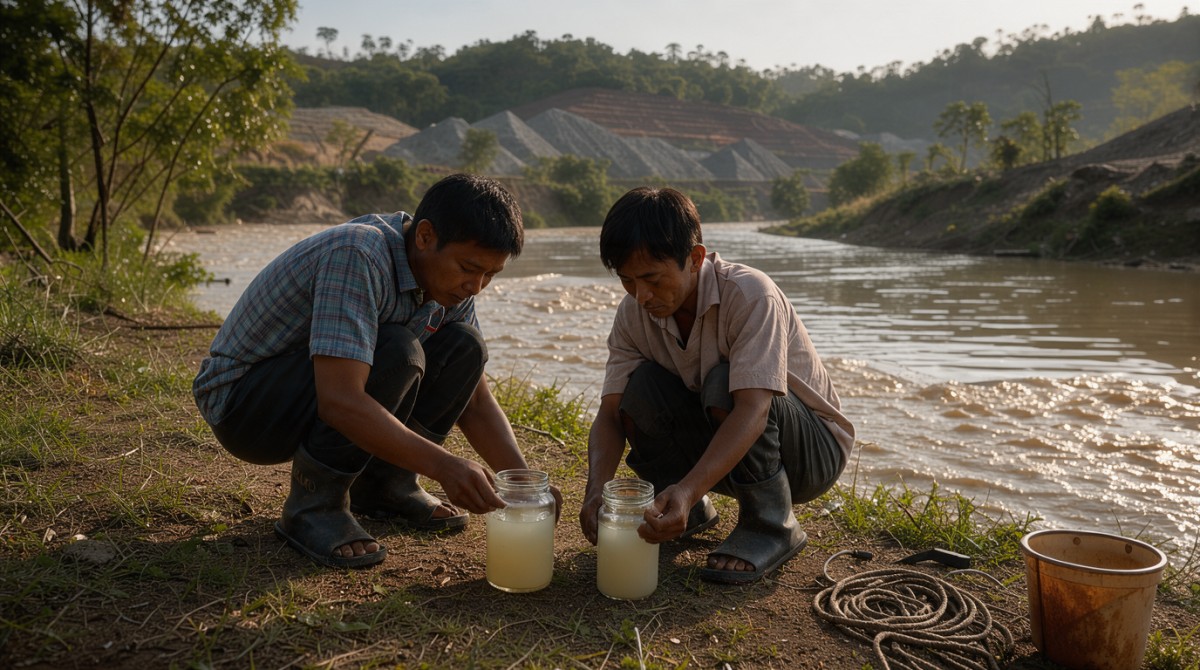
Thailand’s National Security Council has turned its attention to the mining activities across the border in Myanmar, where Chinese‑held concessions are raising concerns about water and soil quality in Thai border communities. The move reflects a growing awareness that environmental challenges do not respect political boundaries, and it underscores Bangkok’s commitment to protect the health of its people while honoring the Buddhist principle of caring for the natural world.
Assessing the cross‑border threat
On 22 November, Gen. Chaiyaphruek Duangpraphat, the secretary‑general of the National Security Council, travelled to the Ban Mong Kao Lang base in Chiang Rai. From an observation point that offers a clear view of the mining sites on the Myanmar side, he received a briefing from officers of the Pha Muang Task Force, including the Thap Chao Tak unit, and local security agencies. The briefing highlighted how mining operations, especially those under Chinese concessions, could release pollutants that travel downstream into Thai rivers, threatening the water that sustains both agriculture and daily life in the northern provinces.
Gen. Chaiyaphruek’s on‑site assessment is a tangible step that aligns with the Thai tradition of “sangkhom” – community solidarity. By directly observing the situation, the NSC signals that the government is listening to the concerns of villagers who depend on clean water for their families and their Buddhist rituals.
A two‑part response plan
The NSC chief outlined a two‑part response. The first part focuses on mitigating the environmental impact within Thailand. Ministries tasked with this effort include the Ministry of Interior and the Ministry of Natural Resources and Environment, which have been instructed to accelerate inspections and monitor tap water quality in communities that may be affected. This internal focus reflects a pragmatic approach: ensuring that Thai citizens have safe drinking water while longer‑term solutions are pursued.
The second part of the plan looks beyond Thailand’s borders. Gen. Chaiyaphruek stressed that preventing pollution at its source will require cooperation with Myanmar and China. This diplomatic outreach acknowledges that the mining sites lie outside Thai jurisdiction, and it mirrors the Buddhist teaching of “interdependence,” recognizing that the well‑being of one nation is linked to that of its neighbours.
Government coordination and upcoming talks
Prime Minister Srettha Thavisin has appointed a deputy prime minister to oversee the overall response. This senior official will coordinate discussions with Myanmar and China, ensuring that Thailand’s concerns are presented at the highest diplomatic level. The scheduled talks on 25–26 November aim to lay the groundwork for joint monitoring, shared data, and possibly joint mitigation measures, though specific details of the agenda have not yet been released.
Such high‑level coordination is significant in the regional context. Thailand’s role as a bridge between Southeast Asian nations positions it to facilitate dialogue that balances economic interests with environmental stewardship, a balance that resonates with the Buddhist principle of “right livelihood.”
Immediate measures for affected communities
While diplomatic talks are pending, the Ministry of Interior and the Ministry of Natural Resources and Environment have been tasked with providing clean drinking water to residents in potentially impacted areas. This rapid response aims to alleviate immediate public concerns, reflecting the Thai cultural value of “nam jai” – generosity and compassion toward those in need.
Local authorities are also accelerating water‑quality inspections. By monitoring tap water in vulnerable villages, they can quickly identify contamination and take corrective action, thereby protecting public health and preserving trust between the government and its citizens.
Environmental implications for Thailand
Should pollutants from Myanmar’s mining sites enter Thai waterways, the consequences could be far‑reaching. Contaminated water threatens rice paddies, which are central to Thai food security and cultural identity. It also endangers the health of monks and laypeople who rely on clean water for daily rituals, underscoring the spiritual dimension of the issue.
The focus on water and soil quality reflects an understanding that environmental degradation can erode the social fabric. In Thai villages, communal wells and rice fields are places where people gather, share stories, and practice the Buddhist value of “metta” – loving‑kindness. Protecting these resources is therefore both a practical and a moral imperative.
Regional geopolitics and the role of China
The mining concessions held by Chinese companies add a layer of complexity to the situation. China’s involvement in Myanmar’s extractive sector is well‑known, and its interests intersect with Thailand’s concerns about cross‑border pollution. Engaging China in constructive dialogue will be essential for any lasting solution.
Thailand’s approach, emphasizing cooperation rather than confrontation, aligns with its long‑standing foreign‑policy principle of “good neighbourliness.” By seeking joint monitoring and mitigation, Bangkok hopes to foster a collaborative framework that respects the sovereignty of Myanmar while safeguarding Thai environmental and public‑health interests.
Looking ahead: sustainable development and Buddhist stewardship
The NSC’s plan represents more than a reactive measure; it signals a shift toward proactive stewardship of shared natural resources. In Buddhist thought, caring for the environment is an expression of “ahimsa” – non‑violence – toward all living beings. Thailand’s efforts to monitor water quality, provide clean drinking water, and engage neighbours in dialogue embody this ethos.
As the talks in late November unfold, the outcomes will likely set a precedent for how Southeast Asian nations address transboundary environmental challenges. For Thai communities along the border, the hope is that these measures will preserve the purity of their rivers, protect their fields, and allow them to continue practicing their traditions without fear of contamination. The path forward will require patience, dialogue, and a shared commitment to the well‑being of both people and the planet.
This article was produced with AI-assisted research and editorial support. Reporting is based on the source material cited below. Sources: Khaosod English; khaosodenglish.com; Global1.News (23 November 2026).
By Ann Srisawat, Staff Writer
What's Your Reaction?
 Like
0
 Dislike
0
 Love
0
 Funny
0
 Wow
0
 Sad
0
 Angry
0

Southeast Asia Correspondent at Global1.News. Based in Bangkok, covering Thai and Southeast Asian politics, economy, technology, and culture. Deep regional perspective on one of the world's most dynamic regions.













Comments (0)