
Korea Convenes an Emergency Meeting as the KOSPI Braces for 'Black Monday'
South Korea's finance minister convened an emergency F4 meeting on 22 November after the KOSPI closed at 4,869.96, its first finish below 5,000 since February, with overnight futures down nearly 7 percent and the opposition warning of a Black Monday.
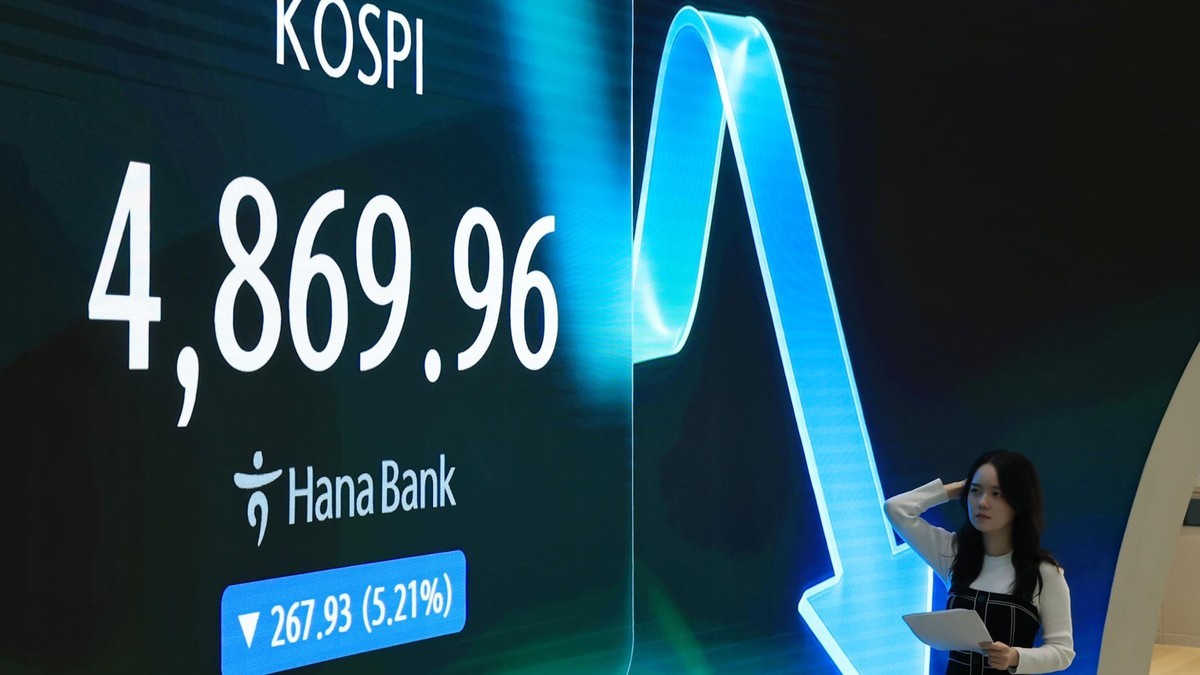
South Korea's government called its top four economic and financial officials into an emergency meeting on Sunday afternoon, 22 November, after the KOSPI closed below 5,000 and traders began bracing for a feared "Black Monday" when the market reopens. The benchmark fell 5.21 percent on Friday 20 November, and the opposition was already demanding emergency measures before the opening bell.
Korea Convenes an Emergency Meeting as the KOSPI Braces for 'Black Monday'
Seoul, South Korea — The four heads of South Korea's economic and financial authorities met at the Government Complex in Jongno on the afternoon of Sunday 22 November, the day before the market was due to reopen. The index they were managing had closed at 4,869.96 on 20 November, its first finish below 5,000 since 2 February.
A 5,000 Floor That Did Not Hold
The number that mattered on Friday was 4,869.96. The KOSPI closed there on 20 November, down 267.93 points, or 5.21 percent, from the previous session, according to Korea Exchange data reported by Yonhap. It was the first close below 5,000 since 2 February 2026, when the index finished at 4,949.67. The Herald Business put the same close in a different frame: the index had last closed lower on 16 January, when it finished at 4,840.74. The Korea Times described it as the first close below 4,900 in about 10 months. Over the week of 16-20 November the index fell 420.57 points, or 7.95 percent. The KOSDAQ closed at 645.68, down 39.13 points or 5.71 percent on the day and 53.98 points or 7.72 percent for the week. Program trading of KOSPI-listed shares was suspended for five minutes around noon. Sell-side sidecars — futures-market circuit breakers — fired in both the KOSPI and KOSDAQ markets, the first time in 10 trading days since 6 November.
What Wall Street Did to Seoul on Friday
Seoul did not fall in isolation. On Friday 20 November the Dow Jones Industrial Average fell 1.93 percent, the S&P 500 fell 3.70 percent and the Nasdaq Composite fell 5.28 percent, Yonhap Infomax reported. The Philadelphia Semiconductor Index dropped 10.73 percent. Nvidia lost 14.01 percent, Micron 13.89 percent, AMD 13.25 percent and Broadcom 12.19 percent. The S&P 500 has now fallen for seven consecutive trading days; the Nasdaq has given back all of its gains for the year; and the Dow and the S&P 500 have both entered correction territory, more than 10 percent below recent highs. The sell-off was attributed to doubts over the returns on large-scale AI capital spending, tighter U.S. semiconductor export controls and the potential rise in data-center costs. After the U.S. close, KOSPI 200 night futures fell 6.99 percent. The MSCI Korea exchange-traded fund fell 8.42 percent and the MSCI Emerging Markets ETF fell 5.13 percent. SK hynix's American depositary receipts closed down 13.11 percent at $103.57.
Half the Index in Two Stocks
Two names carry the KOSPI. Samsung Electronics fell 7.01 percent to 183,100 won on Friday, and SK hynix fell 5.92 percent to 1,113,000 won, Yonhap reported. Together the two account for nearly half of the KOSPI's weighting, according to 24/7 Wall St, cited by ByteWire. The damage showed up in the aggregate. Total KOSPI market capitalization fell to about 3,991 trillion won, below 4,000 trillion won for the first time since 15 January, against a record 7,450 trillion won set in June. The number of KOSPI-listed companies with market capitalizations of 1 trillion won or more fell to 211 from 237 in January. Hana Securities counted 81 percent of KOSPI 200 constituents down at least 40 percent from their peaks, with stocks down at least 50 percent making up 61 percent of the index. The comparable figures were 85 percent and 68 percent during the COVID-19 pandemic, and 88 percent and 85 percent during the global financial crisis.
The Sunday Meeting in Jongno
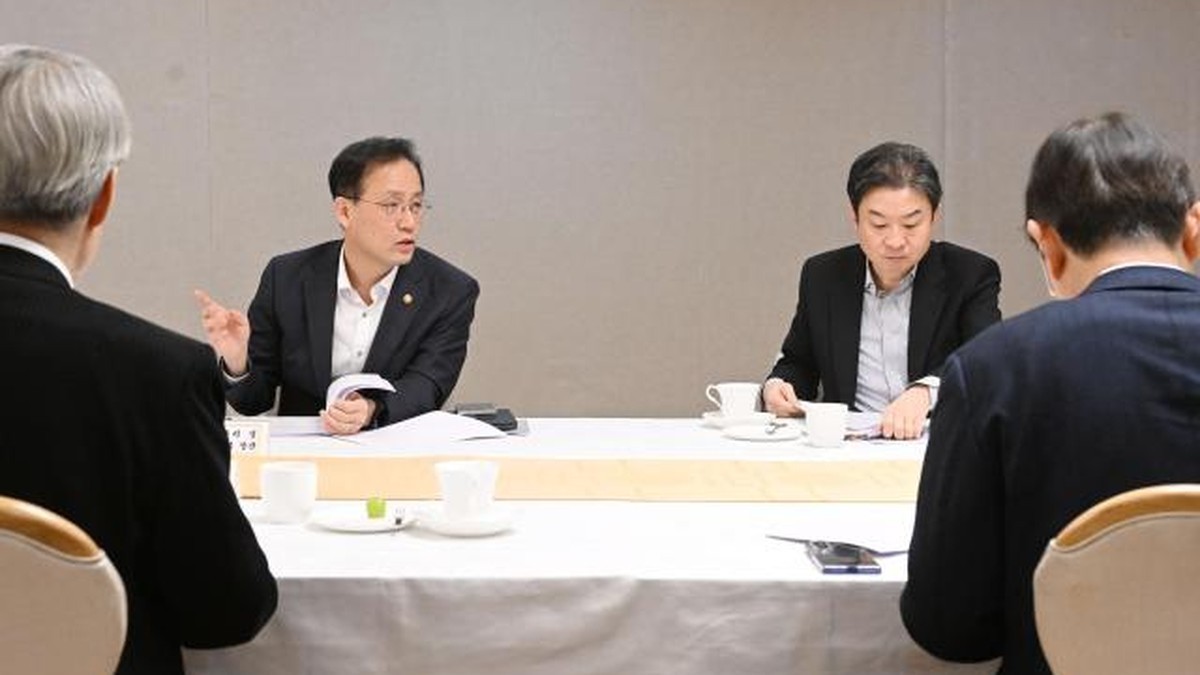
Deputy Prime Minister and Minister of Economy and Finance Lee Hyung-il convened an emergency Market Situation Review Meeting — the F4 meeting — on the afternoon of 22 November, ahead of the domestic market's opening on 23 November. Bank of Korea Governor Shin Hyun-song, Financial Services Commission Chairman Lee Eok-won and Financial Supervisory Service Governor Lee Chan-jin attended. The F4 is the forum in which the four heads of South Korea's economic and financial authorities review market conditions and coordinate policy. The meeting was held at the Government Complex Seoul in Jongno district. It was the government's second emergency market meeting this month. On 6 November, after domestic stocks fell for consecutive sessions following the U.S. midterm elections, the authorities waived for three months the requirement for securities firms to maintain a 140 percent collateral ratio on margin loans, effective 9 November. That day the KOSPI fell more than 7 percent and trading in KOSPI-listed shares was halted shortly after the opening bell.
The Government Says the Market Is Overreacting
The Ministry of Economy and Finance's English readout of the 6 November meeting sets out the government's position. That statement came from the first of the month's two emergency market meetings. Participants "expressed serious concern over heightened volatility in global stock markets," it says, and agreed the declines reflected "policy uncertainty surrounding the AI industry, such as concerns over regulations on AI data centers, and weakening global investor sentiment." The readout adds that they "noted that Korea's stock market appeared to be reacting excessively to these external factors." The same document says participants agreed Korea's fundamentals "remain stronger than ever," citing projections of economic growth in the mid-3 percent range this year, exports reaching USD 1 trillion and corporate operating profits exceeding KRW 900 trillion. Authorities pledged to "maintain the highest level of vigilance," monitor flows in real time, waive the 140 percent margin collateral requirement for three months from 9 November, and prepare additional measures should volatility increase further.
The Opposition Calls It the Lee Jae-myung Bubble
Jung Jeom-sik, floor leader of the main opposition People Power Party, posted on Facebook on Sunday: "There are widespread concerns that tomorrow's market could see an even worse Black Monday." He wrote: "The government should prepare emergency measures in advance for the sharp decline expected in the stock market tomorrow. Retail investors have already suffered heavy losses and investors' confidence in KOSPI's soundness has been shaken." He also wrote: "What followed the reckless playing with fire — the hasty introduction of single-stock leveraged ETFs, the deferral of National Pension Service rebalancing and all manner of excessive measures to boost share prices — is a record bubble burst." He said: "It will go down in history as the 2026 Lee Jae-myung bubble, comparable to the dot-com bubble of 2000," adding: "We will hold them firmly accountable." He also said the government and ruling party should focus "on the stock market, not impeachment." The ruling Democratic Party was simultaneously pushing to impeach Supreme Court Chief Justice Cho Hee-dae before the end of the year.
Who Was Actually Selling
Foreign investors sold a net 4.5 trillion won in the KOSPI market last week, Aju Press reported. Short-selling transactions on the KOSPI and KOSDAQ markets totaled 21.6 trillion won ($16 billion) over 14 trading sessions from 2 November to Thursday 19 November, according to Korea Exchange data reported by The Korea Times. Foreign investors accounted for 16.21 trillion won, or 75.1 percent of that total. Their cumulative net sales over seven consecutive months, from May through November, equal 4.3 percent of the KOSPI's market capitalization, compared with 4.4 percent during the global financial crisis, News1 reported. Retail investors bought a net 1.6 trillion won on Friday, according to BizHankook. Bloomberg reported that the trading desk at Goldman Sachs put its panic index at 9 out of 10 points. Over the weekend, stock market online communities filled with laments from retail investors; The Herald Business headlined its story "Too scared to open my stock app."
Taiwan Has Fired Three Times. Seoul Is Still Weighing.
Taiwan's Financial Supervisory Commission announced on Saturday 21 November that, starting Monday, investors would be barred from placing short-sale orders below the previous day's closing price for stocks that had declined in the prior session, The Korea Times reported. Smart Today reported that this was Taiwan's third stabilization package. The first was a National Financial Stabilization Fund decision on 6 November. The second, on 19 November, centered on short-selling restrictions. The third, on Saturday 21 November, tightened short-selling rules further and encouraged listed companies to buy back their own shares. The restriction takes effect as Seoul's market prepares to reopen on 23 November. Kim Jin-wook, chief economist at Citi Korea, told a capital-markets policy meeting chaired by President Lee Jae-myung on 13 November: "Feedback from foreign investors suggests that even a signal that the market stabilization fund could be activated would help curb short-selling activity."
Where the Analysts Think the Bottom Is
Lee Jae-man of Hana Securities worked the floor out on a trailing price-to-book basis: if the KOSPI's trailing PBR falls to its August 2025 level of 0.94, the index could bottom around 4,300, about 11.7 percent below the 20 November close. The current 12-month forward PBR is 0.91 and the trailing PBR is 1.07, News1 reported. "The index needs momentum to rebound after a steep decline," Lee said. "If corporate earnings forecasts do not actually deteriorate significantly, falling market interest rates could trigger a rebound." Daishin Securities said on 18 November that the KOSPI could fall as far as 4,600 in the short term, a level it called the "rock bottom"; the 4,911 level it identified was breached on 20 November. Lee Jaewon of Yuanta Securities said: "The correction reflects a combination of factors, including concerns over U.S. interest rates, foreign investor selling and a reduction in positions in global AI-related stocks, rather than a deterioration in corporate earnings." Kim Jongmin of Samsung Securities put the same problem in valuation terms: "Corporate earnings fundamentals have not deteriorated, but multiple contraction is continuing. That is why stock prices have failed to rebound even with record-high earnings and valuations near historic lows."
What Monday Decides
No decision from the 22 November meeting had been announced by Sunday night in Seoul. Market participants have discussed possible activation of the Securities Market Stabilization Fund; Aju Press and NewDaily both state that no specific measures, including the fund, had been confirmed, and that the details would be known through the meeting's results. News1 reported that the KOSPI is down about 47 percent from its peak this year — more than its roughly 44 percent maximum drawdown during the COVID-19 crash of 2020 and close to the roughly 55 percent decline of the 2008 global financial crisis. Hankyung reported ahead of the 6 November meeting that observers expected micro-level market responses rather than a full activation of the stabilization fund or a short-selling ban, given concerns about foreign investor confidence and the authorities' view that fundamentals were solid. The last hard numbers traders carry into Monday are Friday's close at 4,869.96 and KOSPI 200 night futures down 6.99 percent. The index reopens on 23 November.
By Jessica Ali, Staff Writer
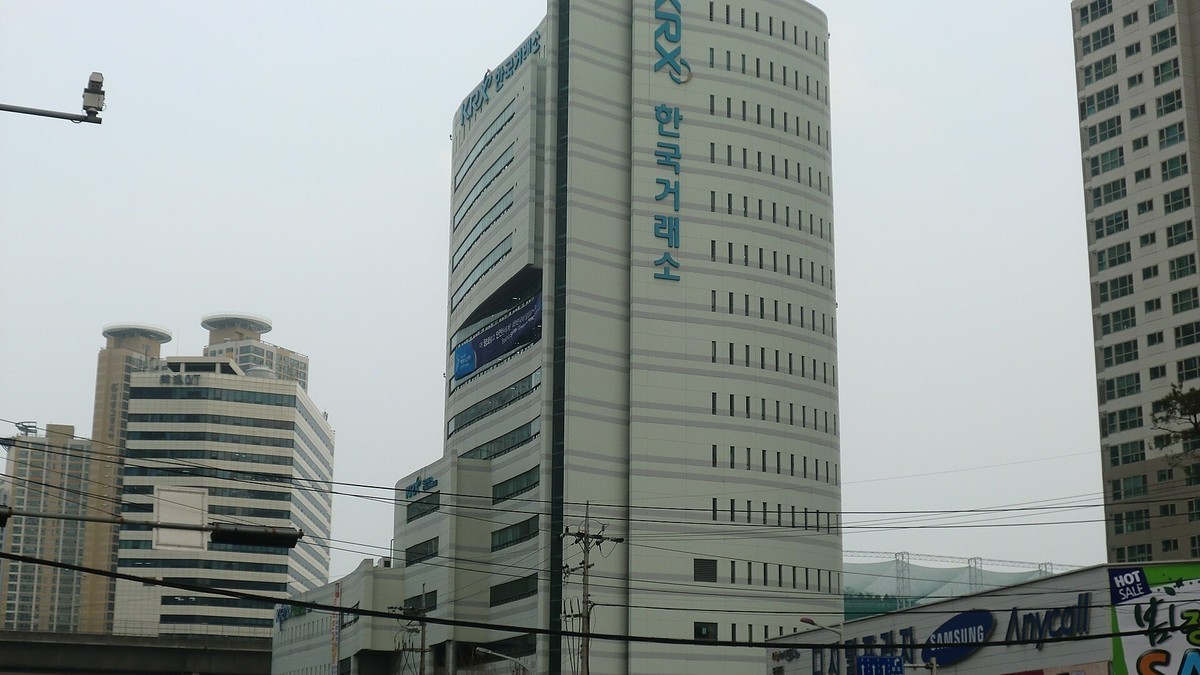
This article was produced with AI-assisted research and editorial support. Sources: Yonhap News Agency, Yonhap Infomax, The Korea Times, The Herald Business, Seoul Economic Daily, News1, Aju Press, Digital Times, KBS News, Newsis, NewDaily, Financial News, Asia Business Daily, Smart Today, Newsy Today, BizHankook and the Ministry of Economy and Finance. Photographs: Yonhap via The Korea Times (lead image); Ministry of Economy and Finance (emergency market meeting in Seoul); hyolee2 via Wikimedia Commons, CC BY-SA 3.0 (Korea Exchange building).
What's Your Reaction?
 Like
0
 Dislike
0
 Love
0
 Funny
0
 Wow
0
 Sad
0
 Angry
0

Editor-in-Chief at Global1.News. Atlanta-based journalist who cuts through the BS and tells it like it is. Lead anchor, host, and the voice you hear when the spin stops and the truth starts.









Comments (0)