
Meta TLX Brings Warp-Group GPU Control to Triton on Hopper, Blackwell, AMD
Meta just dropped TLX – Triton Low‑Level Extensions – and it’s shaking up the way we think about GPU kernels. TLX promises CUDA‑level control without abandoning the Python‑centric Triton workflow, targeting the latest Hopper, Blackwell, and AMD MI300/MI350 GPUs.
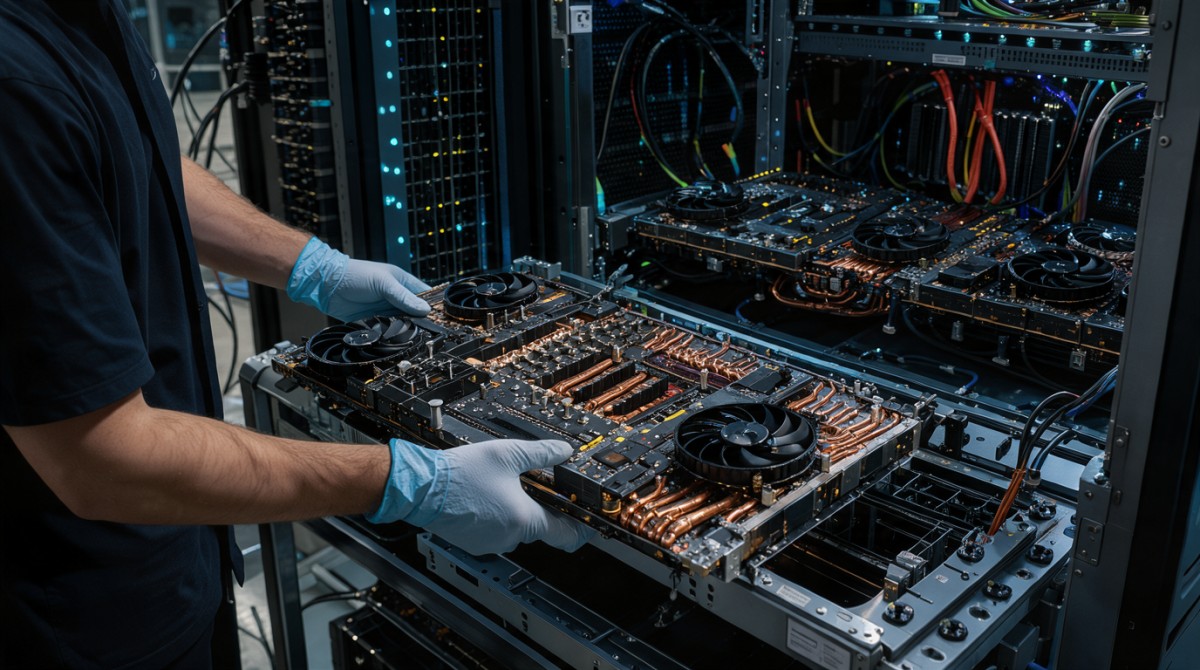
Meta just dropped TLX – Triton Low‑Level Extensions – and it’s shaking up the way we think about GPU kernels. As a founder who has spent a decade wrestling with production‑grade servers, I’m not impressed by hype; I’m looking at the real‑world impact on cost, performance, and the headaches it can save independent hosting providers. TLX promises CUDA‑level control without abandoning the Python‑centric Triton workflow, targeting the latest Hopper, Blackwell, and AMD MI300/MI350 GPUs. Let’s cut through the press‑release fluff and see whether this extension is a genuine tool for the trenches or another VC‑fed shiny object.
What TLX Actually Is – Not a New Language, Just an Extension
First off, TLX is not a brand‑new programming language. It sits on top of Meta’s fork of Triton (facebookexperimental/triton) and adds five extension areas: warp‑group orchestration, barrier synchronization, memory orchestration (including TMA and TMEM), cluster execution, and optional layout overrides. The API mirrors Triton’s style, using calls like tlx.local_alloc, tlx.alloc_barriers, tlx.async_task, tlx.async_dot, and tlx.barrier_wait. Engineers keep writing ordinary Triton code and sprinkle TLX calls only where fine‑grained control matters.
The design rationale is simple: Triton works at the block level, CUDA at the thread level, and modern GPUs need something in between. Hopper introduced warp specialization and the Tensor Memory Accelerator (TMA); Blackwell added tensor memory (TMEM), cluster execution, and paired‑CTA execution. Meta argues that you could achieve the same with raw CUDA, but only by writing massive amounts of architecture‑specific code. TLX tries to give you that control without the boilerplate.
Performance Numbers – How Does TLX Stack Up?
Meta’s self‑reported benchmarks show TLX landing within -0.9% to +3.7% of cuBLAS on H100 FP16 GEMM shapes. For an 8192×8192×8192 matmul, TLX hit 577.0 TFLOPS versus cuBLAS’s 582.3 TFLOPS. On AMD MI350, TLX beat rocBLAS by roughly 11.8% to 15.2% across square shapes from 256 to 2048. Those are respectable gains, especially given the short Python‑level code required.
Where TLX shines is in specialized kernels. Meta reports a 4× speedup on a linear compression kernel for ads inference on H100, and a 20%‑25% end‑to‑end MFU improvement on their Generative Ads Model training across thousands of GPUs. For attention, TLX’s “Jagged Flash Attention” outperforms FlashAttention‑4 by about 13% forward and runs backward roughly 50% faster on production jagged shapes. However, on dense LLM‑style attention shapes, TLX only reaches about 87% of FlashAttention‑4’s performance, with the gap narrowing as sequence length grows.
Productivity vs. Raw Speed – The Real Trade‑Off
Meta claims TLX offers the best “productivity‑performance balance” compared with CUTLASS, CuTe DSL, and other low‑level approaches on Blackwell. The key point for us in the hosting world is that TLX lets engineers write kernels in a few hundred lines of Python instead of the tens of thousands required for CuTe DSL. The attention kernel Meta cites is about 3.2K lines, whereas they estimate FlashAttention‑4’s CuTe DSL version at 10K lines. That reduction in code size translates directly into lower maintenance costs and fewer bugs in production.
But remember: the numbers are self‑reported. There’s no independent verification yet, and the performance gap on dense attention indicates TLX isn’t a silver bullet for every workload. If you’re building a service that relies heavily on dense transformer attention, you may still need to fall back to FlashAttention‑4 or hand‑tuned CUDA.
Installation and Integration – How Easy Is It Really?
TLX ships as a plugin for the upstream Triton project via the triton-utlx package on PyPI. The PyTorch‑Triton 3.7 plugin system can load TLX without forking Triton, meaning you can adopt it in existing pipelines with minimal disruption. For AMD users, Meta notes that AMD has published a GEMM plus activation guide for CDNA4 GPUs that incorporates TLX, suggesting cross‑vendor support is on the roadmap.
From an ops perspective, the fact that TLX lives under third_party/tlx/ in Meta’s MIT‑licensed Triton fork means you can audit the code, fork it, and even contribute back if you have the chops. That openness is a breath of fresh air compared to many hyperscaler‑only SDKs that lock you into a vendor’s ecosystem.
Business‑Risk Implications for Independent Providers
For hosting providers and SaaS founders, the core question is whether TLX can reduce cost‑of‑ownership (CoO) while delivering the performance needed for competitive ML services. The 4× speedup on a linear compression kernel suggests substantial GPU time savings for inference workloads, which directly cuts cloud spend. The 20%‑25% MFU uplift on training indicates you could finish large‑scale training runs faster, freeing up GPU clusters for other jobs.
However, the reliance on cutting‑edge hardware – Hopper, Blackwell, and the latest AMD MI300/MI350 – limits immediate applicability. Many smaller providers still run on older A100 or even V100 fleets. TLX’s benefits are tied to the new warp‑group and TMA features absent on older silicon, so the ROI may be limited unless you’re already planning a hardware refresh.
Strategic Recommendations – When to Adopt TLX
If your workloads are heavily inference‑oriented, especially around ad‑tech, recommendation engines, or any linear compression tasks, TLX’s demonstrated 4× speedup is a compelling reason to experiment. Start by porting a single high‑traffic kernel to TLX via the triton-utlx plugin and benchmark against your existing CUDA implementation. The short code footprint means you can iterate quickly.
For dense transformer models, treat TLX as a complementary tool rather than a replacement. Use it for jagged‑shape attention or custom kernels where you need fine‑grained warp control, but keep FlashAttention‑4 or a hand‑tuned CUDA path for the bulk of dense attention work. This hybrid approach lets you capture TLX’s productivity gains without sacrificing peak performance.
Bottom Line – TLX Is a Useful Tool, Not a Magic Wand
Meta’s TLX extension delivers a pragmatic middle ground between Triton’s block‑level abstraction and CUDA’s thread‑level grind. The performance numbers are solid for targeted kernels, and the productivity boost from smaller Python codebases can’t be ignored. Yet the lack of independent benchmarks and the hardware‑specific nature of the gains mean TLX is not a universal upgrade for every provider.
My advice: evaluate TLX on a pilot basis, focus on workloads that map to warp‑group orchestration, and keep a fallback path for dense attention. If you can shave GPU hours off your inference pipeline, that translates directly into lower bills and a more competitive offering. TLX is another arrow in the quiver of a seasoned ML engineer – valuable when aimed correctly, but not a cure‑all for all performance woes.
— Allan Ali, Founder
This article was produced with AI-assisted research and editorial support. Reporting is based on the source material cited below. Sources: MarkTechPost; marktechpost.com; Global1.News (24 November 2026).
By Allan Ali, Global1.News
What's Your Reaction?
 Like
0
 Dislike
0
 Love
0
 Funny
0
 Wow
0
 Sad
0
 Angry
0

Publisher of Global1.News. Automation architect, systems builder, and the guy making sure the truth gets published.













Comments (0)