
Solar Thermal Power Gains Momentum as Saudi Arabia Partners with GlassPoint for 1.5GW Heat Project
In a region where the competition for energy security intertwines with the broader Sunni‑Shia rivalry and great‑power jockeying, the latest development in solar thermal technology signals a strategic shift.
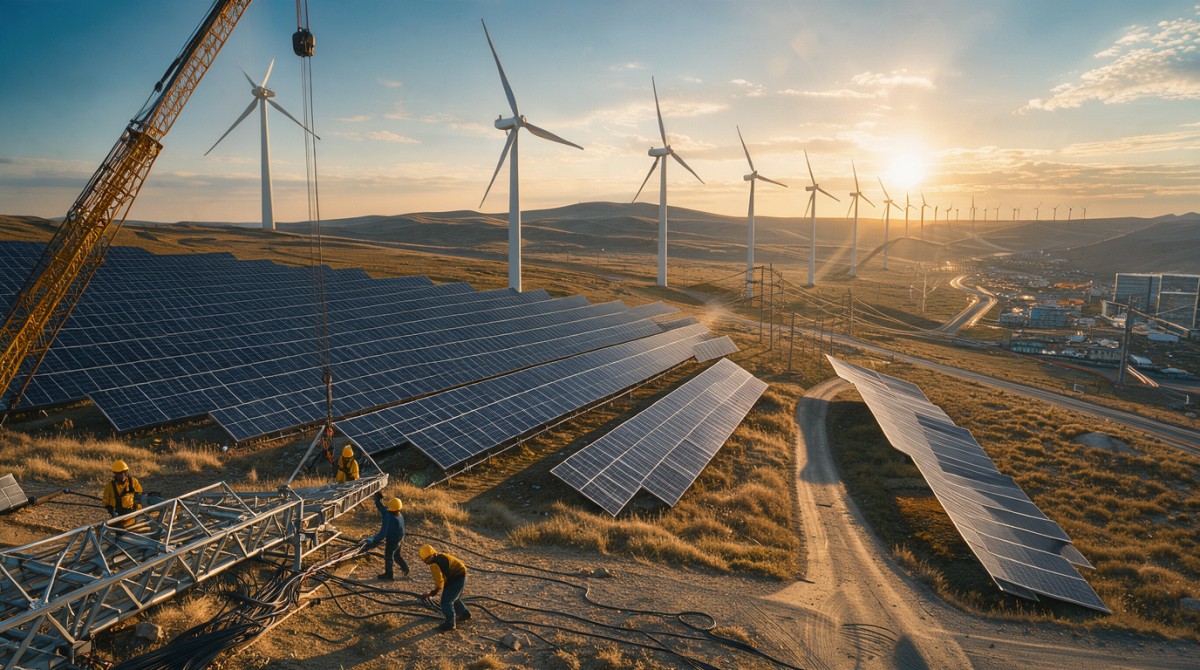
In a region where the competition for energy security intertwines with the broader Sunni‑Shia rivalry and great‑power jockeying, the latest development in solar thermal technology signals a strategic shift. In a recent episode of Al Arabiya English’s “The Riyal Deal Plus”, GlassPoint chief executive Rod MacGregor outlined a new 1.5 GW concentrated solar thermal project with Saudi Arabia’s mining giant Ma’aden, and hinted at a wider Saudi expansion that includes a manufacturing hub in Yanbu. While the video did not delve into political rhetoric, the economic logic behind the venture – delivering industrial heat directly from sunlight – offers a fresh lens through which to view the Kingdom’s energy transition under Vision 2030.
Concentrated Solar Thermal: A Pragmatic Alternative to Decarbonisation Rhetoric
MacGregor was clear that the primary driver for GlassPoint’s technology is economics rather than a pure climate agenda. The company’s concentrated solar thermal (CST) systems capture sunlight to produce high‑temperature heat that can be fed straight into industrial processes, bypassing the need for fossil‑fuel boilers. In the interview, he stressed that the technology is most attractive where the cost of conventional fuel is high or where the heat demand is continuous and large‑scale.
This pragmatic framing aligns with a broader trend in the Gulf, where governments are balancing the allure of green credentials with the imperatives of industrial competitiveness. By positioning CST as a cost‑saving measure, GlassPoint sidesteps the political sensitivities that often accompany carbon‑reduction pledges, especially in sectors such as mining and petrochemicals that remain heavily reliant on cheap energy.
In the context of Saudi Arabia’s diversification drive, the emphasis on economic viability is significant. The Kingdom’s Vision 2030 roadmap calls for the development of non‑oil revenue streams, yet it also recognises that any new energy solution must be financially sustainable. MacGregor’s message that “economics, not decarbonisation, drives adoption” therefore resonates with policymakers who are wary of subsidies that could distort market dynamics.
The 1.5 GW Thermal Project with Ma’aden: Scope and Strategic Rationale
The centerpiece of the discussion was the 1.5 GW thermal project that GlassPoint is developing in partnership with Ma’aden, Saudi Arabia’s state‑linked mining conglomerate. While the video did not disclose the exact location of the plant, the scale of the project – measured in gigawatts of thermal capacity – indicates a substantial commitment to replace or supplement traditional fossil‑fuel heat sources across Ma’aden’s operations.
Ma’aden’s portfolio includes aluminium smelting, phosphate processing and gold mining – all of which are energy‑intensive and require high‑temperature heat. By sourcing this heat from concentrated solar, the company can potentially lock in lower operating costs, especially as global oil prices fluctuate. The partnership also reflects a broader strategic alignment: Ma’aden, as a state‑linked entity, is positioned to act as a conduit for the Kingdom’s industrial modernisation, while GlassPoint brings the technical expertise to deliver solar‑derived heat at scale.
From a geopolitical perspective, the project underscores Saudi Arabia’s desire to showcase home‑grown solutions that reduce reliance on imported fuels. In an era where energy security is increasingly linked to political leverage, the ability to generate industrial heat from abundant solar irradiance strengthens the Kingdom’s bargaining position, both regionally and in its negotiations with traditional energy exporters.
Imminent Saudi Expansion: Beyond the Ma’aden Deal
MacGregor hinted that the Ma’aden agreement is only the first step in a broader Saudi expansion for GlassPoint’s technology. Although the video did not enumerate specific upcoming contracts, the language used – “imminent Saudi expansion” – suggests that other Saudi ministries or state‑owned enterprises are evaluating CST for their own industrial heat needs.
This prospective rollout could encompass sectors such as petrochemicals, desalination and even the emerging green‑hydrogen industry, where high‑temperature heat is a critical input. By offering a technology that can be deployed at scale and integrated with existing infrastructure, GlassPoint positions itself as a preferred supplier for the Kingdom’s next wave of industrial projects.
Strategically, this expansion aligns with Saudi Arabia’s broader push to become a hub for renewable‑energy technologies in the Gulf. The Kingdom has already invested heavily in large‑scale solar PV farms, but CST offers a complementary value proposition by directly addressing industrial heat demand – a niche that PV cannot fill without additional conversion steps. The anticipated expansion therefore deepens the Saudi‑GlassPoint partnership and could set a template for similar collaborations across the Gulf Cooperation Council (GCC) states.
Yanbu Manufacturing Hub: A Regional Supply Chain Node
One of the most concrete announcements in the video was the plan to establish a manufacturing hub in Yanbu, a Red Sea port city that already hosts a concentration of petrochemical complexes. The hub is intended to produce components for GlassPoint’s CST systems, effectively localising the supply chain for the region.
By situating production in Yanbu, GlassPoint not only reduces logistics costs for its Gulf customers but also taps into the existing industrial ecosystem. The city’s infrastructure, skilled labour pool and proximity to major energy users make it an ideal location for scaling up CST deployment across Saudi Arabia and potentially to neighbouring markets such as the United Arab Emirates and Oman.
The establishment of a regional manufacturing base also carries strategic implications for technology transfer and domestic capability building. While the video did not detail the extent of local content requirements, the move aligns with Saudi policy that encourages foreign firms to invest in local production as part of Vision 2030’s localisation goals. This could foster a nascent CST industry within the Kingdom, creating jobs and technical expertise that further embed the technology in the regional energy mix.
Economic Calculus: Cost Savings versus Decarbonisation Targets
Throughout the interview, MacGregor repeatedly underscored that the economics of CST are the primary selling point. By delivering heat directly from solar collectors to industrial processes, the technology eliminates the need for intermediate electricity generation, which can be costly and inefficient at scale. The video did not provide specific cost figures, but the emphasis on “economics, not decarbonisation” suggests that the projected savings are significant enough to outweigh any premium associated with new technology adoption.
This cost‑centric narrative resonates with the broader Gulf industrial sector, where profit margins are tightly linked to energy input costs. For companies like Ma’aden, a reliable, low‑cost heat source can improve competitiveness on the global market, especially in commodities such as aluminium where energy expenses constitute a large share of total production costs.
At the same time, the adoption of CST indirectly supports Saudi Arabia’s climate commitments. While the video did not frame the project as a carbon‑reduction initiative, replacing fossil‑fuel boilers with solar‑derived heat inevitably reduces greenhouse‑gas emissions. Thus, the technology offers a pragmatic pathway for the Kingdom to advance its environmental goals without sacrificing economic performance – a balance that many Gulf states are striving to achieve.
Regional Implications: Energy Security, Alliances and Market Dynamics
The GlassPoint‑Ma’aden partnership, coupled with the planned Yanbu hub, carries several implications for regional stability and energy markets. First, by diversifying the sources of industrial heat, Saudi Arabia reduces its exposure to volatile oil markets, thereby enhancing its energy security. This resilience can translate into greater confidence in pursuing ambitious industrial projects, which in turn can stimulate job creation and economic diversification.
Second, the move may influence the strategic calculus of other Gulf states. Nations such as the United Arab Emirates and Qatar, which are also exploring large‑scale solar projects, could view CST as a complementary technology to their existing PV deployments. If Saudi Arabia demonstrates commercial success, it could spur a regional race to adopt CST, potentially reshaping the Gulf’s renewable‑energy landscape.
Finally, the partnership signals a subtle shift in the balance of external influence. Historically, Western firms have dominated the Gulf’s energy‑technology sector, but GlassPoint’s expansion—backed by a Saudi state‑linked partner—illustrates how regional actors are increasingly steering the direction of their own energy transitions. This trend may encourage other domestic or regional firms to develop indigenous capabilities, thereby altering the traditional reliance on foreign technology providers.
By Malik Hassan, Staff Writer
This article was produced with AI-assisted research and editorial support. Reporting is based on the source material cited below. Sources: Al Arabiya English video report (23 November 2026); Al Arabiya English; Global1.News
What's Your Reaction?
 Like
0
 Dislike
0
 Love
0
 Funny
0
 Wow
0
 Sad
0
 Angry
0

Middle East Correspondent at Global1.News. Based in Beirut, covering politics, conflict, energy, and society across the Middle East. Brings context and depth to a region often reduced to headlines.











Comments (0)