
Hurricane Simon Stalls Off Mexico, Flooding Manzanillo and Closing Ports
Hurricane Simon stalled off Mexico's Pacific coast on Monday, flooding Manzanillo, closing two airports and nine ports and pushing hundreds into shelters as forecasters warned it will turn back toward land midweek.
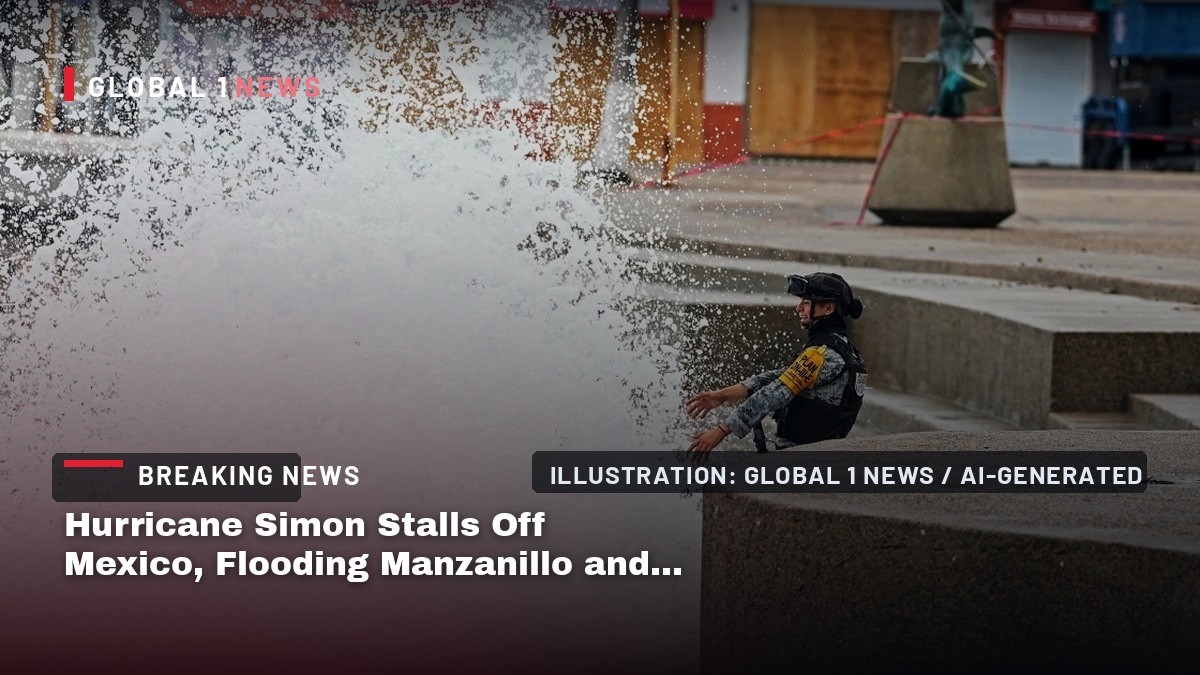
Hurricane Simon is parked off Mexico's Pacific coast, a Category 2 storm that refuses to come ashore and refuses to leave. Its rains have already flooded Manzanillo, shut two airports and nine ports, and forced hundreds into shelters across four states. Forecasters say the worst may still be ahead — and the calm people feel now is not the all-clear.
Hurricane Simon Stalls Off Mexico, Flooding Manzanillo and Closing Ports
Puerto Vallarta, Mexico — Simon sat roughly 60 miles west-southwest of Cabo Corrientes on Monday morning, drifting west at 2 mph with 105 mph winds, the National Hurricane Center said in its 1100 AM MST advisory. The storm has not made landfall. It has still managed to soak a coastline, empty a boardwalk and close a chunk of Mexico's Pacific shipping and aviation network.
The Storm That Would Not Leave
Simon is not charging at Mexico. It is loitering. The National Hurricane Center said the hurricane was moving west at just 2 mph on Monday morning, a crawl that keeps its rain bands parked over the same coastal terrain hour after hour.
Forecasters expect a slow northwestward turn by Monday night, continuing into early Tuesday, before a gradual turn toward the northeast brings Simon back toward the west-central Mexico coastline on Wednesday into Thursday. That is the track. The timing is not settled.
The storm's inner core has been brushing the Mexican coast, and the hurricane center said Simon "appears to be feeling the effects of the nearby high terrain of the Sierra Madre Mountains." Weakening is forecast, but the center also warned Simon could re-intensify some on Tuesday and Wednesday and is expected to remain a hurricane through midweek.
Manzanillo Under Water
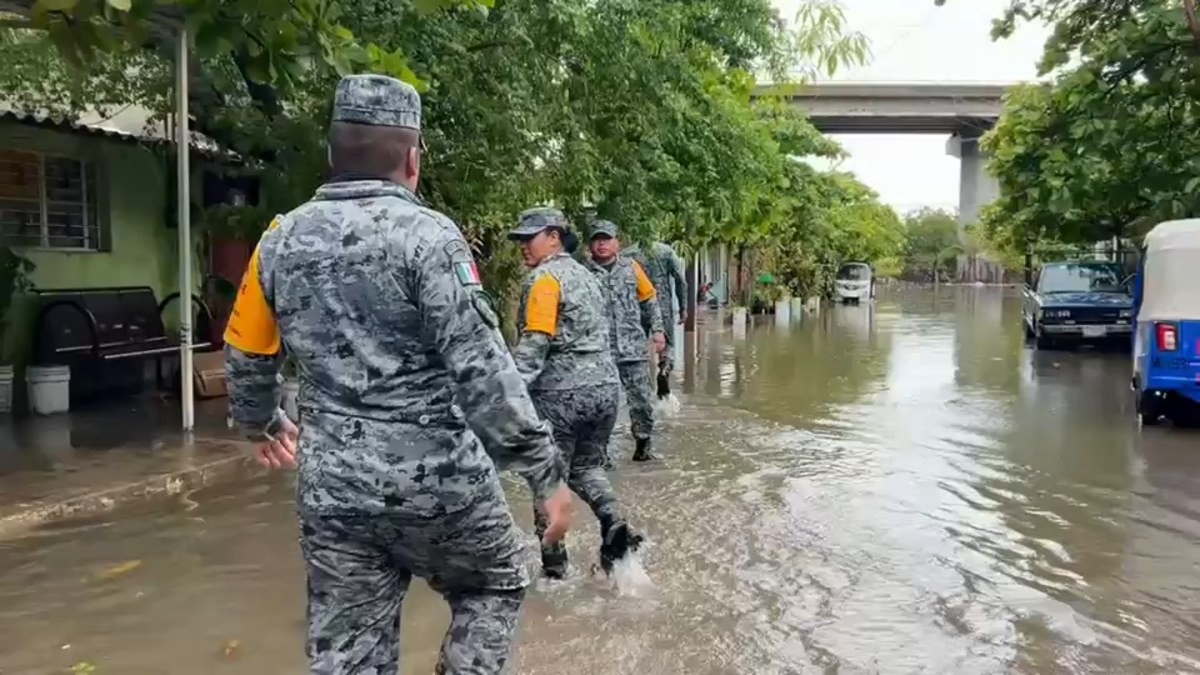
Manzanillo woke up to water. Residents waded through flooded streets Sunday morning as soldiers helped rescue locals from overnight rainfall, according to DW. The Navy helped pump water out of flooded houses.
Resident Cecilia Palomar told Reuters the water started rising in her home at dawn. "It had risen before, but not like this," she said. "Beds, refrigerators, heaters, all the furniture got wet, the whole house is flooded." She also told Reuters her elderly mother did not want to leave, so the family took her to her brother's home on higher ground.
Manzanillo is Mexico's busiest container port, and it is now closed. The Navy put Colima under the relief phase of its Plan Marina emergency plan.
Two Airports and Nine Ports Shut
Mexico's Navy closed nine ports on Sunday 11 October, including Manzanillo and Lazaro Cardenas, as well as Puerto Vallarta and San Blas. Five ports on the Baja California peninsula from Ensenada to Guerrero Negro were also shut, and six more harbours including Barra de Navidad, Nuevo Vallarta and Zihuatanejo were closed to small vessels.
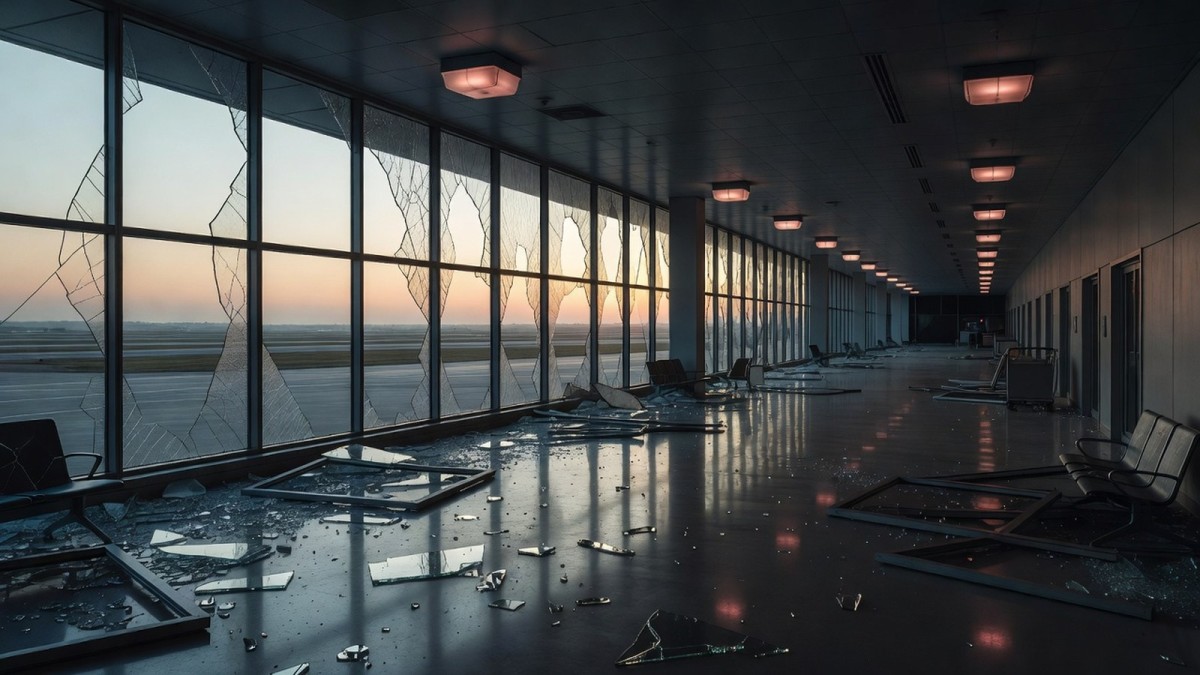
On the aviation side, the Pacific Airport Group reported Puerto Vallarta's international airport would remain closed until 10 a.m. ET on Monday. Flights at the airport in Manzanillo were suspended for the day. The Watchers, citing official aviation notices, reported Puerto Vallarta was scheduled to stay closed to all operations until 08:00 LT on 13 October and Manzanillo until 08:00 LT on 12 October.
Lazaro Cardenas has rail links north. Both airports serve a stretch of coast where the storm has suspended nonessential activity across 24 priority municipalities.
The Track Turns Back Toward Land
Here is the twist. Simon is drifting away from Mexico right now, but the forecast bends it back. The hurricane center said a gradual turn toward the northeast is expected after Tuesday, with Simon approaching the west-central Mexico coastline on Wednesday into Thursday.
The mechanism, per the center's earlier discussion, is a trough from the northwest that will approach the hurricane and force it to turn northeast with increasing forward speed. The timing of that turn is uncertain. Until then, Simon sits in weak steering currents between a mid-level ridge over the south-central United States and another feature well southwest of the storm.
AFP reported that weather reports had initially forecast a landfall around midday local time, but hurricane hunter aircraft data showed the cyclone moving slower and reaching only about 15 kilometres off the coast of Jalisco state. The hurricane center said it is "now looking increasingly likely that Simon will avoid making a direct landfall in the short-term," though its eastern inner core will likely produce hurricane conditions.
What the Forecast Still Cannot Say
The hurricane center is not pretending to know exactly where this ends. Its advisory noted a higher than normal amount of uncertainty in the track, with some models showing Simon trapped in an area of light steering.
Intensity is just as murky. The advisory 20 discussion described a wide spread in intensity estimates, ranging from 73 to 127 knots, with current intensity nudged downward to 100 knots. Weakening was expected from proximity to mountainous terrain and some easterly wind shear.
But the sea-surface temperatures Simon will cross later this week are around 31 to 32 Celsius, which could moderate that weakening trend. The hurricane center's forecast positions keep Simon at hurricane strength through midweek before it moves inland. Watches and warnings remain in effect: a Hurricane Warning for Las Islas Marias, a Hurricane Watch north of Cabo Corrientes to Bahia Tempehuaya, and a Tropical Storm Warning from Playa Perula to Cabo Corrientes.
Thirty Inches of Rain and a Nine-Metre Swell
The rain is the story. The hurricane center said additional totals of 2 to 4 inches are expected across coastal portions of southwest and west-central Mexico, with isolated additional amounts of 6 to 8 inches over parts of Jalisco through early this week and Sinaloa mainly Wednesday and Thursday.
Isolated maximum storm totals of 30 inches are possible over portions of Michoacan, Colima and Jalisco. That rainfall will produce life-threatening flooding and mudslides or worsen any ongoing flooding, especially in areas of steep terrain, the center said.
The water is not only falling. AFP reported waves of up to nine metres, or 30 feet. Fabian Vazquez, director of Mexico's meteorological service, told AFP that even without a direct landfall, "all the cyclone's cloud bands, or the intense part of the cyclone, will still be affecting" coastal communities. "We're going to have very severe effects, especially from wind along the coast," he said. A dangerous storm surge is likely near Las Islas Marias, accompanied by large and destructive waves.
Puerto Vallarta: Boarded Windows and a Closed Boardwalk
In Puerto Vallarta, businesses boarded up windows and doors. Some spray-painted messages on the plywood, including "Simon says: 'Everything will be fine'," a reference to the children's game, and "Simon, be brief, be peaceful" alongside a drawing of a shark and a smiley face.
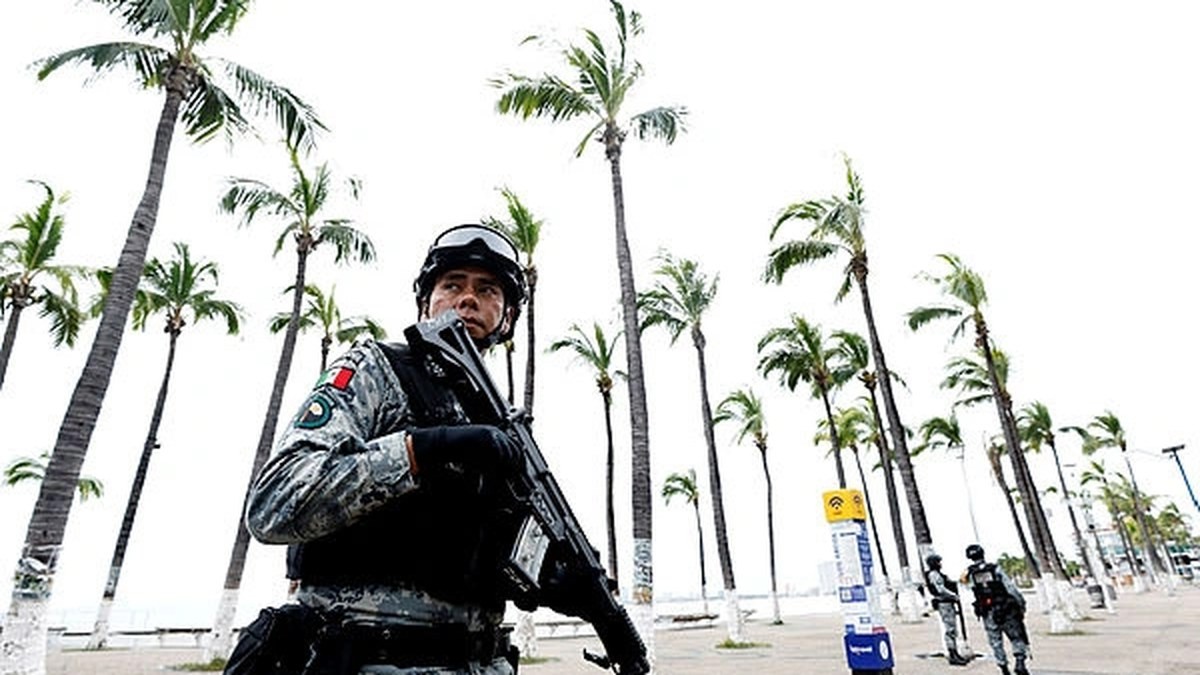
National Guard vehicles patrolled the streets while police used a megaphone to call out the few people jogging, walking dogs or biking by the waterfront. Officers reminded them the area was closed. "The boardwalk is closed. Be responsible. Understand!" police told passersby, according to the Associated Press.
Visitors Ricardo Ramirez and Brenda Villarreal, who have never lived through a hurricane, went looking for food by the boardwalk and found police urging people to take shelter. Ramirez said they were completely unprepared. Just inland and uphill from the resorts, many Mexicans live in communities where housing might not stand up to the storm, CBC reported.
A Pacific Season Running Hot
Simon is the latest in a busy Pacific hurricane season. AFP reported that the powerful El Nino ocean warming phenomenon is weakening wind shear, allowing storms to gain strength. By contrast, El Nino has helped keep the Atlantic hurricane season relatively quiet.
This one has already left a mark before any landfall. Heavy rain caused damage, and federal authorities were working to restore power in some areas, including Acapulco, which was devastated by Hurricane Otis three years ago, CNN reported.
Climate scientist Dr. Jorge Zavala of the National Autonomous University of Mexico told CNN: "Simon concerns us greatly." The storm peaked as a Category 4 over the weekend, weakened to a Category 3, and was down to a Category 2 with 105 mph winds in the Monday 1100 AM MST advisory. The hurricane center said it could re-intensify Tuesday and Wednesday.
Sheinbaum's Warning: The Calm Is the Lie
President Claudia Sheinbaum urged residents of Jalisco, Colima, Michoacan and Nayarit to remain in shelter "until an official announcement that the danger has passed." Her message came after Mexico's Civil Protection Agency warned of "exceptional rainfall" and "intense winds" in those states.
The agency's warning was blunt about the trap: "The wind and rain will suddenly and deceptively subside, creating an apparent calm that does not mean the danger has passed." Nonessential activities have been suspended, and precautionary evacuations are continuing.
Laura Velazquez Alzua, national coordinator of the Civil Protection Agency, told reporters the hurricane had not made landfall but was still "very close to the Mexican coast." She said Simon's effects — "strong winds, high waves, and storm surge," particularly along the northern coast of Jalisco state — would continue through Monday. "We ask that you remain vigilant," she said.
What Comes Next
Officials reported 579 people evacuated or sheltered across Jalisco, Colima and Nayarit. In Jalisco, 321 people were evacuated and 256 remained in 54 temporary shelters. Colima reported 143 evacuees in six shelters. Nayarit had 115 people in 15 shelters, and Michoacan opened 39 shelters.
A ferry took 80 residents out of Yelapa, a village south of Puerto Vallarta reached mainly by boat. Navy personnel took 55 people, including 25 children, to a shelter in La Huerta. The federal Security Ministry said 22,589 personnel were deployed across the four states, with 1,470 vehicles, 323 heavy machines and 18 aircraft. Jalisco sent 200 rescuers to the coast.
In Punta Perula, La Jornada reported rain since Saturday night, many flooded areas and paralysed roads, but no victims so far. No deaths had been reported by officials as of Sunday afternoon, and officials had not given power-outage or damage figures. Twenty-eight municipalities in Jalisco and Colima were under the highest cyclone alert level and another 93 under high alert.
By Jessica Ali, Staff Writer
This article was produced with AI-assisted research and editorial support. Sources: the U.S. National Hurricane Center, the Associated Press, AFP, Reuters, CNN, DW, CBC, The Watchers and La Jornada.
What's Your Reaction?
 Like
0
Like
0
 Dislike
0
Dislike
0
 Love
0
Love
0
 Funny
0
Funny
0
 Wow
0
Wow
0
 Sad
0
Sad
0
 Angry
0
Angry
0

Editor-in-Chief at Global1.News. Atlanta-based journalist who cuts through the BS and tells it like it is. Lead anchor, host, and the voice you hear when the spin stops and the truth starts.














Comments (0)