
India's Football Crisis: 101 East Documentary Exposes a Game in Freefall
The world's most populous nation, with 1.4 billion people, cannot field a football team that cracks the top 100 in the FIFA rankings. As 48 nations battle it out at the 2026 FIFA World Cup in North America — including our very own Bafana Bafana — India's professional game has collapsed into what the Al Jazeera English documentary 101 East bluntly calls an "end-stage" emergency.
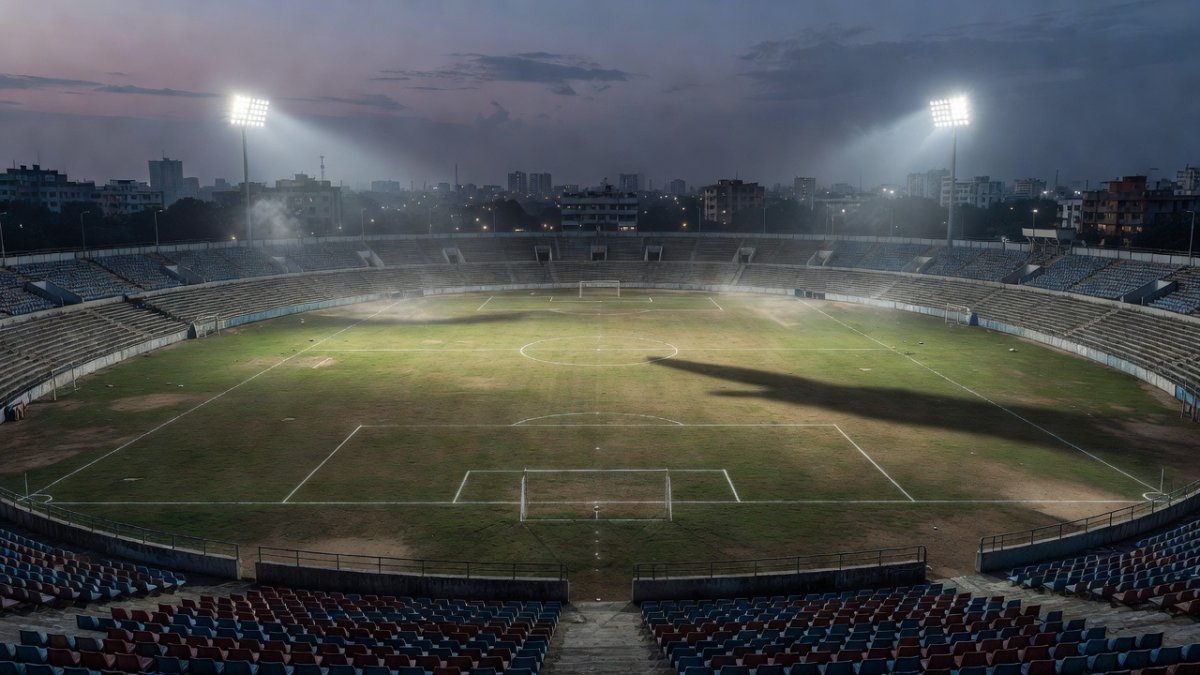
The world's most populous nation, with 1.4 billion people, cannot field a football team that cracks the top 100 in the FIFA rankings. As 48 nations battle it out at the 2026 FIFA World Cup in North America — including our very own Bafana Bafana — India's professional game has collapsed into what the Al Jazeera English documentary 101 East bluntly calls an "end-stage" emergency. Empty stadiums, a national federation in chaos, and a top league forced to sell its broadcast rights for a fraction of what it once commanded — this is the grim reality facing Indian football, and it carries uncomfortable lessons for South Africa's own sporting journey.
Why India's Football Dream Is Turning Into a Nightmare
New Delhi, India – June 2026 — While the world's footballing elite converge on the United States, Canada, and Mexico for the 2026 FIFA World Cup, India is not there. The men's national team, ranked outside the top 100, didn't even come close to qualifying. The documentary 101 East, which aired this week on Al Jazeera English, paints a devastating picture of a sport in freefall — a cautionary tale about what happens when governance fails, commercial structures crumble, and grassroots development is ignored. For South African fans who have watched our own sporting bodies stumble, the parallels are both striking and sobering.
The Commercial Collapse: From Rs 275 Crore to Rs 8.6 Crore
The numbers are staggering. For over a decade, the Indian Super League (ISL) was propped up by the Master Rights Agreement (MRA) between the All India Football Federation (AIFF) and Football Sports Development Limited (FSDL). That agreement expired on December 8, 2025, and with it went the commercial backbone of Indian football — the broadcast deals, the sponsorship revenue, the centralised league operations that kept the show on the road.
When the AIFF went to market in October 2025 to sell the ISL's commercial rights, the response was deafening silence: zero bidders. The league's media rights value collapsed from Rs 275 crore a year paid by JioStar to a paltry Rs 8.6 crore offered by FanCode for the 2025-26 season. JioStar, the previous rights holder, bid just Rs 5 crore. FanCode, owned by Dream Sports, eventually secured the rights, with Sony Sports Network sub-licensing the TV broadcast. The sports ministry had to intervene just to get the season staged, and the organisational burden fell disproportionately on the clubs themselves.
For South African football fans, this is a nightmare scenario. The Premier Soccer League (PSL) remains commercially healthy with a title sponsor and a SuperSport broadcast deal that, while not perfect, keeps the lights on. The contrast could not be starker. When a league's rights value drops by 97 percent in a single cycle, that's not a market correction — that's a vote of no confidence.
A Truncated Season: 91 Matches, No Playoffs, and a 22-Year Drought Ended
The 2025-26 ISL season eventually ran from 14 February to 21 May 2026 — the 12th edition of the ISL and the 30th season of top-tier Indian football. But it was a shadow of what it should have been: a truncated 91-match single-leg round-robin format with no playoffs, featuring 14 teams from 12 cities. Under stopgap plans, clubs were asked to contribute between Rs 2.5 crore and Rs 4.5 crore each just to stage the season. Some clubs asked players to accept pay cuts. Several foreign players left or went out on loan.
East Bengal emerged as champions, winning their first ISL title and fourth overall Indian title, ending a 22-year league drought. Mohun Bagan, the defending champions, were dethroned. But the celebration was muted. The AFC mandates that clubs play at least 24 matches per season to be eligible for continental competitions like the AFC Champions League 2. The truncated format made that mathematically impossible, forcing the AIFF to seek a one-time exemption from the Asian football governing body.
This is what happens when commercial failure cascades into sporting failure. Clubs can't play enough matches, players lose match fitness, and the national team suffers. It's a vicious cycle that South Africa knows all too well from our own governance crises in cricket and football.
Governance on Trial: The AIFF's Dysfunction
The documentary doesn't pull punches. Critics argue the All India Football Federation is dysfunctional, and responsibility for the sport's decline lies squarely with the federation and its shifting, uncertain commercial arrangements. The ISL is treated as both a partial success and a warning — a league that brought professionalism and star power but failed to build a sustainable foundation.
The AIFF has responded with a sweeping 20-year roadmap that proposes the federation directly own and operate the top division until 2045, with promotion and relegation and a new revenue-sharing model. But some club officials fear this concentrates too much power in one body — regulator, operator, and rights holder all rolled into one. It's a legitimate concern. In South Africa, we've seen what happens when a single entity controls too much of the sporting ecosystem. The recent turmoil at Cricket South Africa and the ongoing challenges at SAFA should serve as warnings.
The documentary also raises the question of player eligibility and policy reforms. Should India naturalise foreign-born players? Should the national team coach be held accountable for results? These are debates South African fans know intimately, from the calls to naturalise players to the constant scrutiny of Bafana Bafana coaches.
The Northeast: Football's Engine Room, Still Starving
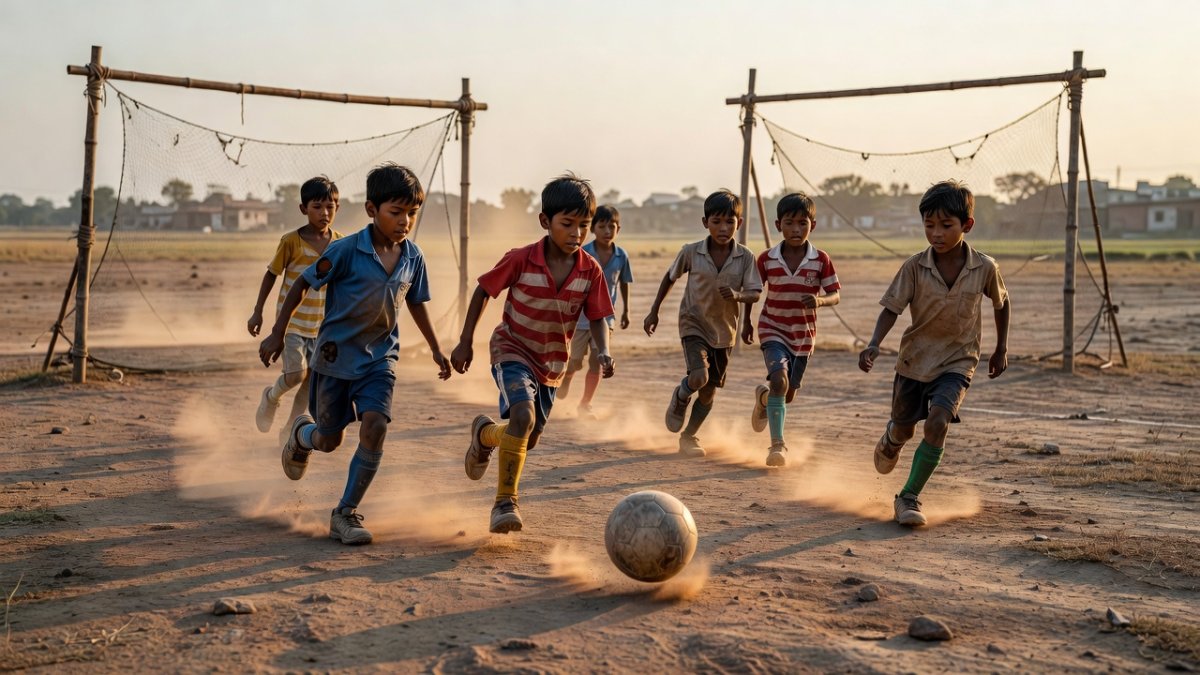
Despite the crisis, football culture thrives in certain pockets of India. The documentary highlights the Northeast as the country's football "engine" — a region where the sport is a way of life, where kids play on every patch of open ground, where local clubs are the heartbeat of communities. Yet even here, the lack of national investment is felt acutely. Grassroots development is identified as the deeper root problem, and the documentary argues that India's failure to convert its massive population into football talent is a systemic failure, not a cultural one.
This is where South Africa's own experience offers a glimmer of insight. Our grassroots structures — schools football, the MultiChoice Diski Challenge, community clubs — are far from perfect, but they exist. They provide a pipeline that has produced players like Banyana Banyana's Thembi Kgatlana and Bafana Bafana's rising stars. India, with 1.4 billion people, has no such pipeline. The documentary shows amateur players thriving in informal settings, but with no pathway to professional football, their talent is lost to the system.
The Chhetri Question: A Legend's Farewell and an Uncertain Future
No discussion of Indian football is complete without mentioning Sunil Chhetri. India's all-time leading scorer and captain for nearly two decades, Chhetri initially retired from international football in June 2024 with a farewell at Kolkata's Salt Lake Stadium against Kuwait. He briefly returned in 2025, then confirmed the end of his India career on 7 November 2025 after India failed to qualify for the AFC Asian Cup 2027. He has hinted that the ISL 2025-26 season could be the final chapter of his club career as Bengaluru FC captain.
Chhetri's departure leaves a void that no one seems ready to fill. He was the face of Indian football, the player who carried the national team's hopes for two decades. His retirement, combined with the league's commercial collapse, symbolises the end of an era — and the beginning of an uncertain future. South African fans understand this feeling. We felt it when Benni McCarthy retired, when Itumeleng Khune's career wound down. But we had a pipeline of talent ready to step up. India doesn't.
What to Watch For
The documentary ends on cautious hope. The AIFF's 20-year roadmap, if implemented properly, could bring stability. The truncated season, despite its flaws, was completed. East Bengal's title win shows that competitive football can still produce drama. But the fundamental questions remain: Can the AIFF rebuild trust with clubs and investors? Can the ISL attract a sponsor and a broadcast deal that reflects its true value? Can India build the grassroots infrastructure that has been neglected for decades?
For South Africa, the lessons are clear. Our sporting bodies must never take commercial stability for granted. The PSL's health is not guaranteed — it requires constant nurturing, transparent governance, and a commitment to development. The AIFF crisis is a warning from the future: neglect your grassroots, mismanage your commercial rights, and the game you love will wither, no matter how many billions of people live in your country.
As the 2026 World Cup concluded this month, with Spain beating Argentina in the final and Ferran Torres scoring the extra-time winner, India watches from the outside. A record 10 African teams qualified for this World Cup, a testament to the continent's rise. South Africa was among them, with Bafana Bafana reaching the world stage. India, with its 1.4 billion people, couldn't manage even a single qualification. The documentary 101 East asks why. The answer is uncomfortable, but it's one every footballing nation — including ours — should heed.
By Dante Williams, Staff Writer
This article was produced with AI-assisted research and editorial support. Reporting is based on sources cited in the article.
What's Your Reaction?
 Like
0
Like
0
 Dislike
0
Dislike
0
 Love
0
Love
0
 Funny
0
Funny
0
 Wow
0
Wow
0
 Sad
0
Sad
0
 Angry
0
Angry
0

Breaking News and Investigations Correspondent at Global1.News. Based in London, covering global breaking news, security, and investigative stories. Known for digging deeper and connecting the dots across continents.











Comments (0)