
Pakistan Imposes Emergency and Governor’s Rule in Khyber Pakhtunkhwa
On 11 October 2026 the federal government of Pakistan invoked Articles 232 and 234 of its constitution to impose an emergency and governor’s rule over Khyber Pakhtunkhwa (KP), a province that has long served as a stronghold for the Pakistan Tehreek‑e‑Insaf (PTI).
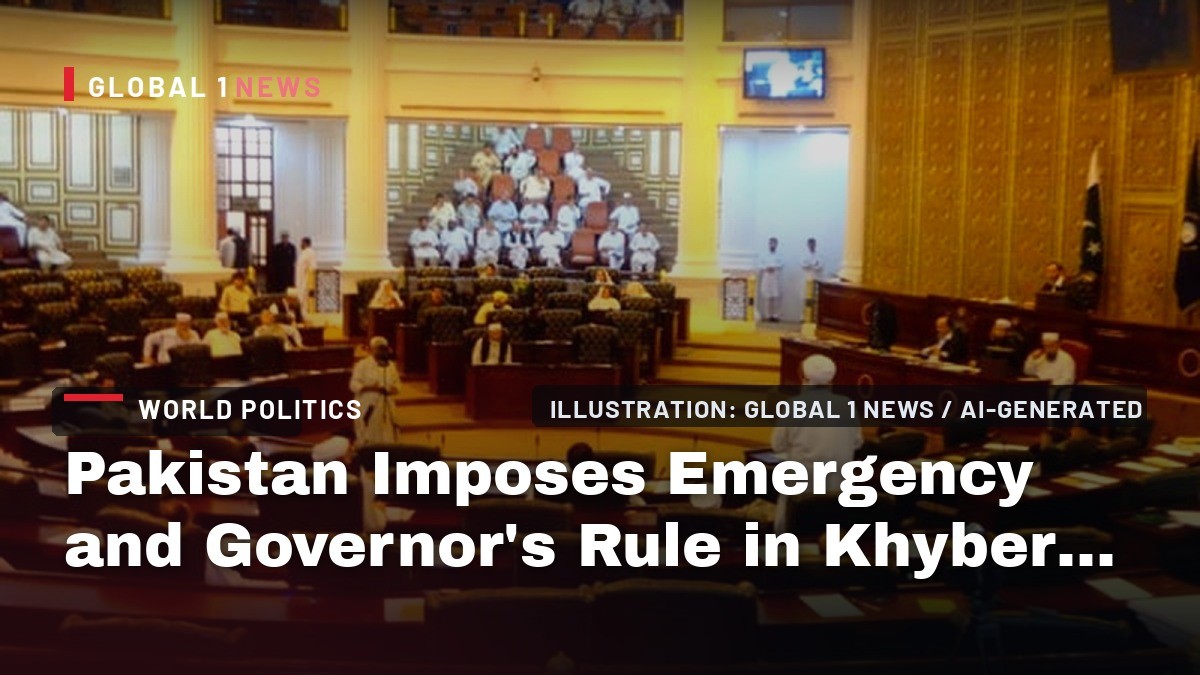
On 11 October 2026 the federal government of Pakistan invoked Articles 232 and 234 of its constitution to impose an emergency and governor’s rule over Khyber Pakhtunkhwa (KP), a province that has long served as a stronghold for the Pakistan Tehreek‑e‑Insaf (PTI). The decision, endorsed by President Asif Ali Zardari on the advice of Prime Minister Shehbaz Sharif, represents a decisive centralisation of authority and a systematic neutralisation of PTI’s institutional presence in the province. This development must be understood against the backdrop of a protracted political feud between the PTI and the ruling PML‑N‑PPP coalition, as well as the heightened security concerns that have characterised KP in recent months.
Constitutional Mechanisms: Articles 232 and 234
Article 232 empowers the federal government to declare a state of emergency when security is threatened by war or internal disturbance beyond the provincial government’s control. Under this provision the provincial assembly continues to sit, but federal statutes prevail in any area of conflict, effectively granting the centre legislative supremacy in matters of public order.
Article 234, by contrast, authorises the president to impose governor’s rule when a provincial administration is judged unable to function in accordance with the constitution. This mechanism suspends the provincial cabinet, transfers executive authority to the governor or directly to the federal government, and allows the national parliament to exercise the powers of the provincial assembly. By deploying both articles simultaneously, Islamabad has both sidelined the PTI‑led cabinet and secured legislative dominance over KP.
The Immediate Political Consequences for PTI
The suspension of the PTI provincial cabinet and the removal of Chief Minister Sohail Afridi under Article 234 have effectively cut the party off from the province’s administrative machinery, official resources and day‑to‑day levers of governance. Concurrently, Article 232 has shifted key legislative and public‑order authority to the centre, granting federal agencies broader powers to restrict street mobilisation and limit organised political activity. In practical terms, PTI’s capacity to mobilise supporters, manage development projects, or influence security operations in KP has been dramatically curtailed.
PTI leaders have characterised the emergency measures as a political manoeuvre designed to diminish the party’s footprint ahead of a planned “long march” from KP to Islamabad demanding the release of Imran Khan, who remains incarcerated. They argue that security concerns are being leveraged to justify a crackdown on legitimate political dissent, noting that the central government has refused a consultative approach to counter‑terrorism and has denied PTI access to Imran Khan for strategic discussions.
Security Justifications and the Federal Narrative
The federal government has framed the emergency as a response to a “sharp surge in terror attacks” across KP, alleging that the provincial administration was obstructing counter‑terrorism efforts, failing to maintain public order, and allowing militant groups to operate with impunity. Information Minister Attaullah Tarar went further, alleging a nexus between the PTI‑led provincial government and terrorist organisations, describing a “power‑sharing formula” that was allegedly expanding from southern districts throughout the province.
From Islamabad’s perspective, the deteriorating security environment—marked by a marked rise in militant attacks—rendered the provincial government a “political irritant and a security liability.” The federal narrative positions the emergency as a necessary step to restore law and order, protect citizens, and prevent the province from becoming a conduit for cross‑border militancy that threatens national stability.
Administrative Re‑organisation: The Area Development Secretariat
One of the first actions taken after the emergency declaration was the establishment of an Area Development Secretariat (ADS) to oversee KP’s border and former tribal districts. The ADS, supervised by an Area Representative and Development Council, will cover Dera Ismail Khan, Tank, Lakki Marwat, Bannu, Bajaur, Mohmand, Khyber, Kurram, Orakzai, North Waziristan, and both Upper and South Waziristan. Its mandate includes restoring law and order, protecting citizens, and ensuring governance and development in these high‑risk areas.
By placing civil administration, police and military coordination under a streamlined federal framework, the ADS reduces the scope for any future provincial administration to impede security operations. This restructuring reflects a broader trend in Pakistani governance toward centralised control of frontier regions, a pattern that has historical antecedents in the country’s management of the former Federally Administered Tribal Areas.
Regional Implications and the Afghanistan Dimension
KP’s proximity to Afghanistan has long rendered it a focal point for cross‑border insurgency and refugee flows. In the wake of the emergency, Governor Faisal Karim Kundi emphasised that policy will emanate from Islamabad rather than “Kabul, Jalalabad or Kandahar,” underscoring the federal government’s intention to avoid any perception of negotiating with militant elements across the border. This stance aligns with Pakistan’s broader strategic objective of preventing Afghan‑based groups from exploiting the porous frontier to destabilise KP.
The re‑assertion of central authority in KP may also influence Islamabad’s diplomatic posture toward Kabul, particularly as both capitals navigate the evolving security dynamics following the 2021 Taliban takeover. By consolidating control over border districts, Pakistan can more effectively manage cross‑border movements, a factor that will be closely monitored by regional think tanks such as the Asan Institute and the Korea‑based KDI, which have highlighted the security‑development nexus in frontier zones.
Future Trajectories: Political, Security and Governance Outlook
In the short term, the emergency and governor’s rule are likely to suppress PTI’s capacity to organise mass protests or to mount a coordinated political challenge from within KP. However, the underlying grievances that fuel PTI’s support—perceived marginalisation, demands for political reform, and opposition to centralised security policies—remain potent. The party’s planned long march could still generate significant public mobilisation, potentially prompting further security responses from the centre.
Long‑term governance in KP will hinge on the effectiveness of the ADS and the federal government’s ability to deliver tangible improvements in security and development. If the centralised framework succeeds in curbing militant activity and restoring public order, it may legitise the emergency measures and set a precedent for future federal interventions in other provinces. Conversely, persistent insecurity or perceived heavy‑handedness could exacerbate regional discontent and fuel further political fragmentation.
From a scholarly perspective, the episode illustrates the delicate balance between constitutional authority and political contestation in Pakistan’s federal system. The simultaneous invocation of Articles 232 and 234 demonstrates how legal mechanisms can be employed to achieve decisive political outcomes, a pattern observed in other parliamentary democracies where central governments confront regional opposition. As analysts at institutions such as KIEP observe, the interplay of security imperatives and partisan rivalry will continue to shape Pakistan’s internal dynamics and its broader geopolitical posture in South Asia.
This article was produced with AI-assisted research and editorial support. Reporting is based on the source material cited below. Sources: The Diplomat; thediplomat.com; Global1.News (14 October 2026).
By Prof. David Park, Staff Writer
What's Your Reaction?
 Like
0
Like
0
 Dislike
0
Dislike
0
 Love
0
Love
0
 Funny
0
Funny
0
 Wow
0
Wow
0
 Sad
0
Sad
0
 Angry
0
Angry
0
East Asia/Technology Correspondent at Global1.News. Seoul-based voice covering Korean politics, technology, business, and culture. Analyzes how technology and geopolitics intersect across East Asia.












Comments (0)