
Trump's Drill Cut Tests the US-ROK Alliance as Kim Jong Un Signals Engagement
Seoul, South Korea – August 19, 2026 — The annual Ulchi Freedom Shield (UFS) exercise, a cornerstone of the US-ROK combined defense posture, has become the latest flashpoint in a rapidly deteriorating alliance. President Donald Trump's weekend directive to "substantially reduce" the drills, coupled with his claim that North Korean leader Kim Jong Un has responded positively to his outreach, has injected a volatile new variable into Korean Peninsula security dynamics.
Trump's Drill Cut Tests the US-ROK Alliance as Kim Jong Un Signals Engagement
Seoul, South Korea – August 19, 2026 — The annual Ulchi Freedom Shield (UFS) exercise, a cornerstone of the US-ROK combined defense posture, has become the latest flashpoint in a rapidly deteriorating alliance. President Donald Trump's weekend directive to "substantially reduce" the drills, coupled with his claim that North Korean leader Kim Jong Un has responded positively to his outreach, has injected a volatile new variable into Korean Peninsula security dynamics.
The Truth Social Order That Reshaped an Exercise
On Sunday, August 16, 2026, President Trump took to Truth Social to issue a direct order to Defense Secretary Pete Hegseth, directing him to "substantially reduce" the scale of the annual Ulchi Freedom Shield exercises. The President characterized the drills as "not only costly ... but send a signal that is totally inappropriate and hostile, to a Country that, as long as Donald J. Trump has been President, has been unthreatening and respectful." This framing, which casts the North Korean regime as a benign actor, represents a fundamental departure from decades of US military planning that has treated Pyongyang's nuclear and missile programs as the primary threat to regional stability.
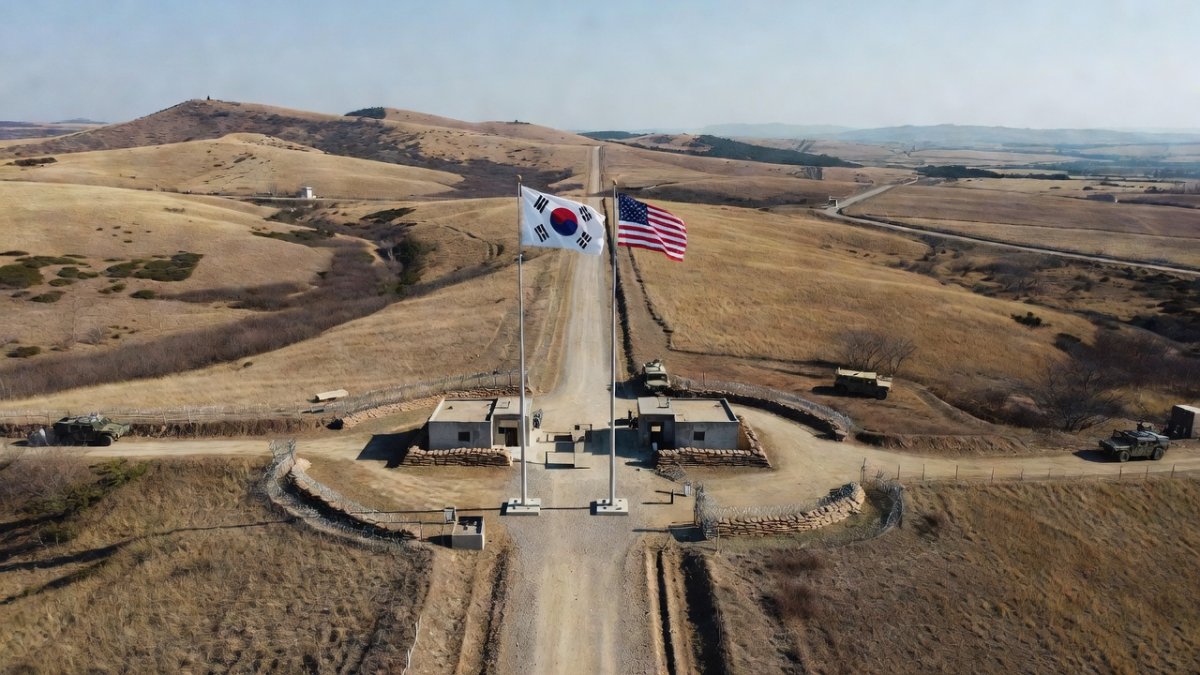
Despite the presidential directive, the 11-day UFS 2026 exercise began as scheduled on Monday, August 17, and is running through August 27. According to the South Korean Joint Chiefs of Staff, the exercise involves approximately 18,000 South Korean personnel. The drills integrate computer-assisted command-post training with field maneuvers, and this year's iteration includes counter-drone operations, GPS disruption scenarios, and cyberattack defense—capabilities that reflect lessons learned from recent conflicts, including the war in Ukraine. The decision to proceed, even in reduced form, underscores the operational reality that the Combined Forces Command cannot simply halt a major exercise on a moment's notice without risking readiness gaps.
Kim Responds: A 'Very Positive' Exchange
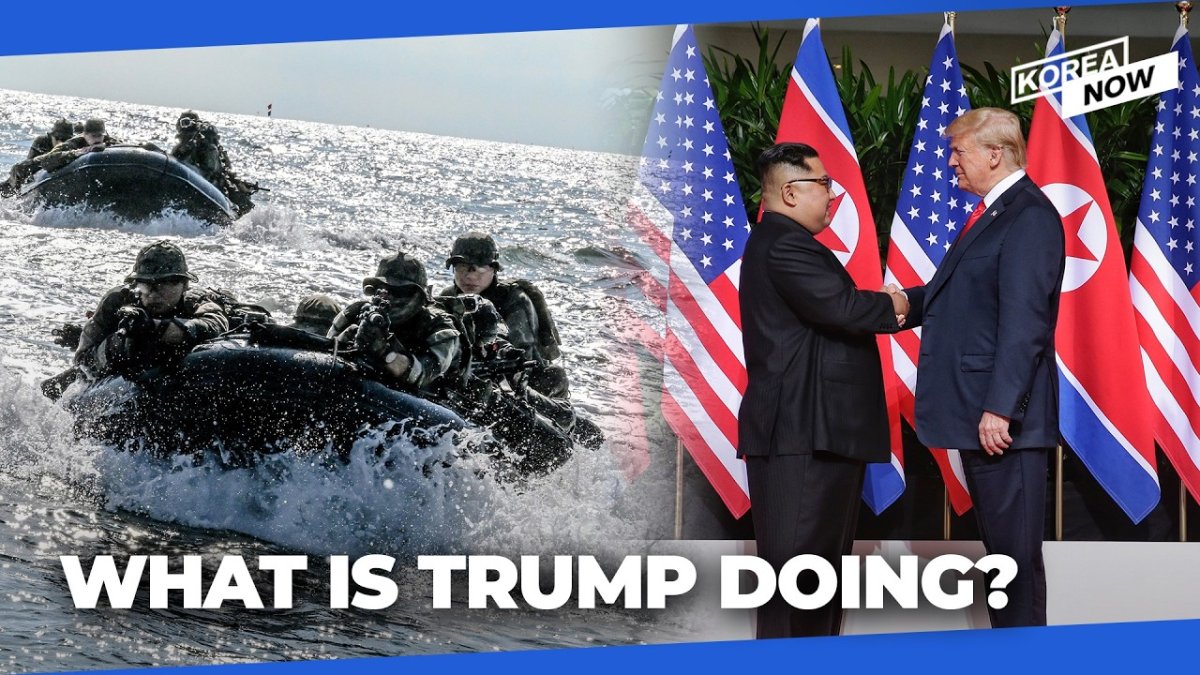
At the Oval Office on Monday, August 17, President Trump faced direct questions about the status of his outreach to Kim Jong Un. When asked why the North Korean leader had not responded to his request for a conversation, Trump replied with a characteristically evasive question: "How do you know he hasn't responded?" Pressed again by reporters, he asserted, "Yeah, he has." He described the exchange as "very positive" but provided no further detail regarding the substance, timing, or channel of communication. There was no immediate comment from North Korea, leaving the nature of this purported dialogue entirely opaque.
This is not uncharted territory. Trump and Kim met in Singapore in June 2018, a summit that produced a vague joint statement on denuclearization and led Trump to announce the suspension of what he then called "provocative" drills. Their second summit in Hanoi, Vietnam, in February 2019 broke down over irreconcilable differences regarding the scope of denuclearization and sanctions relief. More recently, Kim Yo Jong conceded last year that the personal relationship between her brother and Trump was "not bad," but she issued a pointed warning: if Washington intended to use that personal relationship to end Pyongyang's nuclear weapons program, the effort would only become the subject of "mockery." That warning now appears prescient, as Trump's latest claims suggest he may be overestimating the diplomatic value of personal rapport.
Seoul's Measured Response and Public Anxiety
South Korean officials have responded with a carefully calibrated mixture of operational continuity and diplomatic optimism. The presidential office in Seoul stated on Tuesday that the drills did not reflect "any intention to attack North Korea or escalate tensions on the Korean peninsula." President Lee Jae-myung reiterated that their fundamental purpose is "not to treat a specific entity as an adversary, but to safeguard the safe and peaceful daily lives of the people." This language, which studiously avoids naming North Korea as a threat, reflects the progressive administration's longstanding preference for engagement over confrontation—a stance that has yielded little reciprocation from Pyongyang.
Beneath the official calm, however, anxiety is palpable. Kim Sang-woo, a former politician with the left-leaning South Korean Congress for New Politics and now a board member of the Kim Dae-jung Peace Foundation, told DW that the majority of ordinary South Koreans are "very concerned" about the deteriorating alliance and the implications of Trump favoring Pyongyang over Seoul. "People are alarmed," he said. Kim noted that Trump's first-term threats to withdraw US forces, his tariffs on Korean exports, and now an approach to the North "that shows he wants to establish a new relationship and sign a peace treaty that ends the Korean War" have collectively eroded trust in the alliance. He added that Lee's government has "always tried to reinstate friendly relations with the North, even though the North has shown no intention of reciprocating."
The Iran Connection and the Russia Factor
The most striking aspect of Trump's announcement is its explicit linkage to the Iran war. Trump stated: "We have 39,000 soldiers over there, guarding you from Kim Jong Un, your next-door neighbour, and you're not going to help us on a very easy military operation in Iran. That's strange." This figure is disputed; CNA/AFP reports that the United States stations approximately 28,500 troops in South Korea, not the 39,000 Trump cited. Regardless of the precise number, the President's framing is unambiguous: US security guarantees are conditional on allied contributions to American military priorities elsewhere.
Trump went further, declaring, "We can't go around and protect all of these countries, especially when they're not there to help us," calling into question US support for both South Korea and NATO allies that refused to contribute to the Iran war. He added, "Kim Jong Un has always treated me with great respect. I understand him. He understands me." This transactional worldview, which reduces alliance relationships to quid pro quo arrangements, represents a profound shift from the values-based framing that has underpinned US alliances since the Korean War.
The strategic implications extend beyond the Korean Peninsula. Republican Senator Thom Tillis underlined South Korea's long military alliance with the US and argued that cutting the exercises could help Russia by enabling North Korea to send more troops to fight in Ukraine. This concern is not hypothetical. Since 2019, North Korea has significantly strengthened ties with Russia; North Korean troops have fought alongside Russian forces in the invasion of Ukraine, and Kyiv said last week that North Korean-made missiles were used in a Russian ballistic missile attack on a steel plant in Zaporizhzhia. North Korea recently test-fired a ballistic missile over the Sea of Japan and warned on Friday that it could respond to the exercises with a "new level of deterrent." Pyongyang has long decried the drills as dress rehearsals for an invasion.
Expert Perspectives: Biding Time in Pyongyang
Washington-based analysts are skeptical that Kim Jong Un will rush to embrace Trump's overture. Victor Cha, head of the Korea program at Washington's Center for Strategic and International Studies (CSIS), doubted North Korea would respond immediately: "I think they're going to bide their time and wait a little bit." Cha suggested that part of Trump's motivation for raising North Korea again appeared to be to shift headlines away from his struggles with the Iran war, although he acknowledged that Trump was clearly interested in seeing Kim again. This assessment aligns with the view that Pyongyang, having weathered years of sanctions and diplomatic isolation, sees little urgency in returning to a negotiating table that previously offered few tangible concessions.
Senator Jack Reed (D-RI), ranking Democrat on the Senate Armed Services Committee, offered a blistering critique: "This is another inane, haphazard decision by President Trump and his chaotic administration." He continued, "Kim Jong Un has won a propaganda victory and South Korea, one of our strongest allies, has been punished for no reason beyond Trump's ego." Reed warned that China and Russia were "watching how easily this president abandons America's allies." The operational reality on the ground adds another layer of complexity. Colonel Ryan Donald, spokesman for the US and South Korean Combined Forces Command, noted that the drills simulate combat against North Korean troops hardened by their deployment on Russia's side in its invasion of Ukraine—a recognition that the nature of the threat has evolved significantly since the last major US-ROK exercise cycle.
Looking Ahead: Alliance Endurance in Question
The announcement also comes at a moment of significant military rebalancing. The only US aircraft carrier operating in the Pacific region, the USS George Washington, is being redeployed to the Middle East to relieve the long-deployed USS Lincoln. This leaves the Indo-Pacific without a carrier presence at a time of heightened tension with China and North Korea—a strategic vacuum that will not go unnoticed in Beijing or Pyongyang.
As the UFS 2026 exercise continues through August 27, the fundamental question is whether the US-ROK alliance can withstand the strain of a president who views alliances as transactional burdens rather than strategic assets. The Yonhap News Agency's English channel, KOREA NOW, has framed the story succinctly: "Why is Trump scaling back drills with S. Korea while wooing N. Korea's Kim?" The answer, based on the available evidence, appears to be a combination of personal diplomacy, transactional pressure, and a desire to change the news cycle. For South Korea, the implications are profound. An alliance that has guaranteed peace on the peninsula for over seven decades is now subject to the whims of a single individual's social media feed. The coming months will test whether Seoul can navigate this new reality without sacrificing either its security or its sovereignty. The North, meanwhile, watches and waits, calculating whether the personal relationship Trump so prizes can be converted into concrete concessions—or whether it is simply another tool to be exploited and discarded.
By Prof. David Park, Staff Writer
This article was produced with AI-assisted research and editorial support. Reporting is based on sources cited in the article.
What's Your Reaction?
 Like
0
Like
0
 Dislike
0
Dislike
0
 Love
0
Love
0
 Funny
0
Funny
0
 Wow
0
Wow
0
 Sad
0
Sad
0
 Angry
0
Angry
0

East Asia/Technology Correspondent at Global1.News. Seoul-based voice covering Korean politics, technology, business, and culture. Analyzes how technology and geopolitics intersect across East Asia.












Comments (0)