
South Korea's Nuclear Dilemma Deepens as Alliance Strains Multiply
The debate over whether South Korea should pursue an independent nuclear arsenal has moved from the margins of academic discourse to the center of national strategy. A convergence of events in August 2026 — including President Donald Trump's last-minute curbs on joint military exercises and President Lee Jae-myung's renewed push for wartime operational control — has sharpened the dilemma facing Seoul. At the heart of the matter lies a fundamental tension: the very alliance that guarantees South
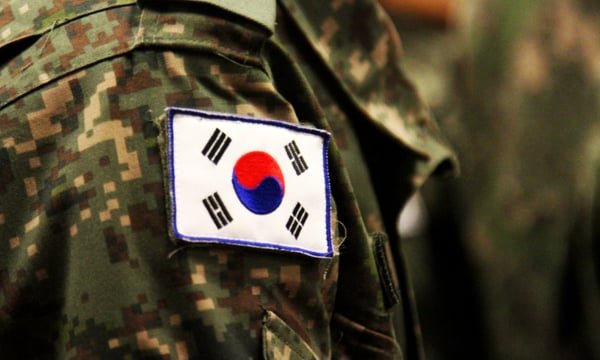
The debate over whether South Korea should pursue an independent nuclear arsenal has moved from the margins of academic discourse to the center of national strategy. A convergence of events in August 2026 — including President Donald Trump's last-minute curbs on joint military exercises and President Lee Jae-myung's renewed push for wartime operational control — has sharpened the dilemma facing Seoul. At the heart of the matter lies a fundamental tension: the very alliance that guarantees South Korea's security is now generating pressures that push Seoul toward nuclear self-reliance, even as such a move would jeopardize the civil nuclear cooperation agreement underpinning the bilateral relationship.
The 123 Agreement as a Strategic Anchor and Constraint
The legal framework governing US-South Korea civil nuclear cooperation is the 123 Agreement, first signed in 1974 and updated in 2015. This agreement, named for Section 123 of the US Atomic Energy Act, has long served as the cornerstone of the bilateral nuclear relationship. It permitted South Korea to operate a robust civilian nuclear power program — one of the largest in the world — while explicitly constraining Seoul from pursuing uranium enrichment or spent fuel reprocessing. These restrictions were designed to prevent the diversion of civilian nuclear technology toward weapons purposes, a concern amplified by South Korea's geographic proximity to a nuclear-armed North Korea. The 2015 iteration of the agreement, which came into force after years of negotiation, was widely seen as a compromise. It allowed South Korea to continue its civilian program while maintaining US oversight over the most sensitive elements of the nuclear fuel cycle. For successive South Korean governments, the agreement was both a practical necessity and a symbol of the alliance's depth. For Washington, it represented a critical nonproliferation safeguard in a region of growing strategic competition. However, the strategic landscape has shifted dramatically since 2015. North Korea has enshrined nuclear weapons in its constitution, and by March 2026, Kim Jong Un vowed to "irreversibly" cement the country's nuclear status. By June 2026, state media dismissed the American denuclearization push as an "anachronistic dream." These developments have fueled a growing conviction in Seoul that extended deterrence — the American nuclear umbrella — may no longer be a reliable guarantee.November 2025: A Quiet but Historic Shift
In November 2025, the United States formally endorsed South Korea's civil uranium enrichment and spent fuel reprocessing for peaceful uses, consistent with the bilateral 123 agreement and subject to US legal requirements. Washington also gave approval for the Republic of Korea to build nuclear-powered attack submarines. This represented a significant departure from decades of US policy that had strictly limited South Korea's access to sensitive nuclear technologies. The decision was not made in a vacuum. It reflected a recognition in Washington that the alliance needed to adapt to a new strategic reality, one in which North Korea's nuclear arsenal had grown more sophisticated and the regional balance of power was shifting. By permitting enrichment and reprocessing, the United States signaled a willingness to trust Seoul with technologies that had previously been considered too sensitive for any non-nuclear-weapons state. Yet the November 2025 endorsement also created new complexities. The approval was conditional, subject to ongoing US legal requirements and the framework of the 123 agreement. This means that any South Korean move toward an independent nuclear arsenal — as opposed to peaceful enrichment and reprocessing — would immediately place the entire civil nuclear cooperation framework in jeopardy. The Diplomat's August 19, 2026 analysis makes this point explicitly: the 123 Agreement would be in peril if Seoul moved toward nuclear weapons.The Submarine Question and the Trump Factor
President Lee Jae-myung has made the acquisition of nuclear-powered submarines a centerpiece of his defense agenda. On August 18, 2026, he called for swift progress in consultations with the United States on the submarine plan, following President Trump's order to curtail joint military exercises. The submarine program is seen in Seoul as a critical capability gap — a means of deterring North Korean submarines and projecting power in the region without relying on US assets. The Trump administration's decision to scale back the annual Ulchi Freedom Shield exercise, announced on August 18, has added urgency to Lee's push. Trump said he had instructed the US Defense Secretary to reduce the scope of the exercise, a move that The Diplomat characterized as having "limited immediate military effect" but a "deeper cost" in the precedent it sets for alliance readiness. For South Korean policymakers, the message was clear: the United States may not always prioritize the alliance's military preparedness. Lee has also renewed his push to regain independent wartime operational control (OPCON) of South Korean forces from the United States. This long-standing goal, which has been deferred multiple times over the past two decades, is now being pursued with renewed vigor. Lee said Seoul will take back wartime control of its own troops on schedule, a statement that carries both symbolic and practical weight. The combination of OPCON transfer and nuclear-powered submarines would represent a significant step toward a more self-reliant South Korean defense posture.Public Opinion and Political Realities
The domestic political environment in South Korea is increasingly favorable to nuclear ambitions. According to the Bulletin of the Atomic Scientists, roughly three-quarters of South Koreans support an indigenous nuclear arsenal. This public sentiment, measured in April 2026, is fueled partly by perceptions of growing alignment among North Korea, Russia, and China. The image of a united authoritarian bloc arrayed against South Korea has strengthened the case for nuclear self-reliance in the public imagination. However, political momentum has its limits. The Diplomat's June 2026 analysis, "South Korea's Nuclear Ambitions Clash With Political Realities," noted that the ruling party's electoral setbacks have underlined the constraints on steering the country's nuclear future. While public opinion is broadly supportive of nuclear weapons, translating that support into policy requires navigating a complex web of alliance obligations, international legal commitments, and domestic political calculations. The historical touchpoints are instructive. In January 2023, President Yoon Suk-yeol said South Korea might consider acquiring nuclear weapons if North Korean threats became more serious. That statement, which caused consternation in Washington, was followed by the Washington Declaration of April 2023, in which President Biden and President Yoon created the Nuclear Consultative Group for extended deterrence cooperation. The declaration was designed to reassure Seoul of the American commitment while steering it away from independent nuclear development.The Negotiation Track: Enrichment and Reprocessing Talks
The practical path forward lies in the negotiations over civil uranium enrichment and spent fuel reprocessing. On January 9, 2026, Rim Kap-soo, South Korea's representative for nuclear cooperation with the United States, held the first interagency meeting on the expected negotiations. This marked the beginning of a process that could reshape the bilateral nuclear relationship. The Korea Economic Institute of America (KEIA) published an analysis in July 2026 titled "Rethinking the U.S.-South Korea 123 Agreement in a New Strategic Era," which highlighted near-term political and industry opportunities in restarting nuclear-related discussions. The analysis suggests that both sides have incentives to reach a new arrangement — Washington to maintain influence over Seoul's nuclear activities, and Seoul to secure the technological autonomy it seeks. The negotiations are likely to be complex. The November 2025 endorsement of enrichment and reprocessing was a significant step, but the details of implementation remain to be worked out. Key questions include the scope of permitted activities, the level of US oversight, and the timeline for any new facilities. These negotiations will test whether the alliance can accommodate South Korea's growing strategic ambitions without triggering a broader proliferation crisis.Strategic Implications and the Road Ahead
The nuclear dilemma facing South Korea is not merely a technical or legal issue; it is a fundamental question about the nature of the alliance and the future of regional security. If Seoul were to pursue an independent nuclear arsenal, the consequences would be profound. The 123 Agreement would be jeopardized, potentially ending the civil nuclear cooperation that has benefited both countries for decades. The broader nonproliferation regime, already under strain from North Korea's nuclear program, would face another significant challenge. Yet the pressures pushing Seoul toward nuclear self-reliance are unlikely to diminish. The Trump administration's willingness to curtail military exercises, combined with the growing alignment of North Korea, Russia, and China, has reinforced the perception in Seoul that the United States cannot be relied upon unconditionally. The pursuit of nuclear-powered submarines and the push for OPCON transfer are steps toward a more autonomous defense posture, even if they stop short of an independent arsenal. The coming months will be critical. The negotiations over enrichment and reprocessing will test whether the alliance can adapt to South Korea's evolving needs. The submarine program will require sustained US cooperation, which may be complicated by the Trump administration's apparent desire to reduce the US military footprint in the region. And the broader question of extended deterrence — whether the American nuclear umbrella remains credible in the face of North Korean advances — will continue to shape South Korean strategic thinking. For now, the nuclear dilemma remains unresolved. South Korea is pursuing a path of increased technological autonomy within the framework of the alliance, but the pressures for a more radical departure are growing. The 123 Agreement, once a symbol of cooperation, now stands as a potential flashpoint. How Seoul and Washington navigate this terrain will determine not only the future of the alliance but also the stability of Northeast Asia. This article was produced with AI-assisted research and editorial support. Sources: The Diplomat, Bloomberg, The Guardian, Yonhap, Korea Herald, Bulletin of the Atomic Scientists, Korea Economic Institute of America. By Prof. David Park, Staff WriterWhat's Your Reaction?
 Like
0
Like
0
 Dislike
0
Dislike
0
 Love
0
Love
0
 Funny
0
Funny
0
 Wow
0
Wow
0
 Sad
0
Sad
0
 Angry
0
Angry
0

Prof. David Park
East Asia/Technology Correspondent at Global1.News. Seoul-based voice covering Korean politics, technology, business, and culture. Analyzes how technology and geopolitics intersect across East Asia.












Comments (0)