
A new Congress in Washington: What changes for the Caribbean?
When the mid‑term polls on 3 November 2026 handed Democrats control of both the House and the Senate, many in the Caribbean wondered if a new Congress would mean a fresh approach from Washington.
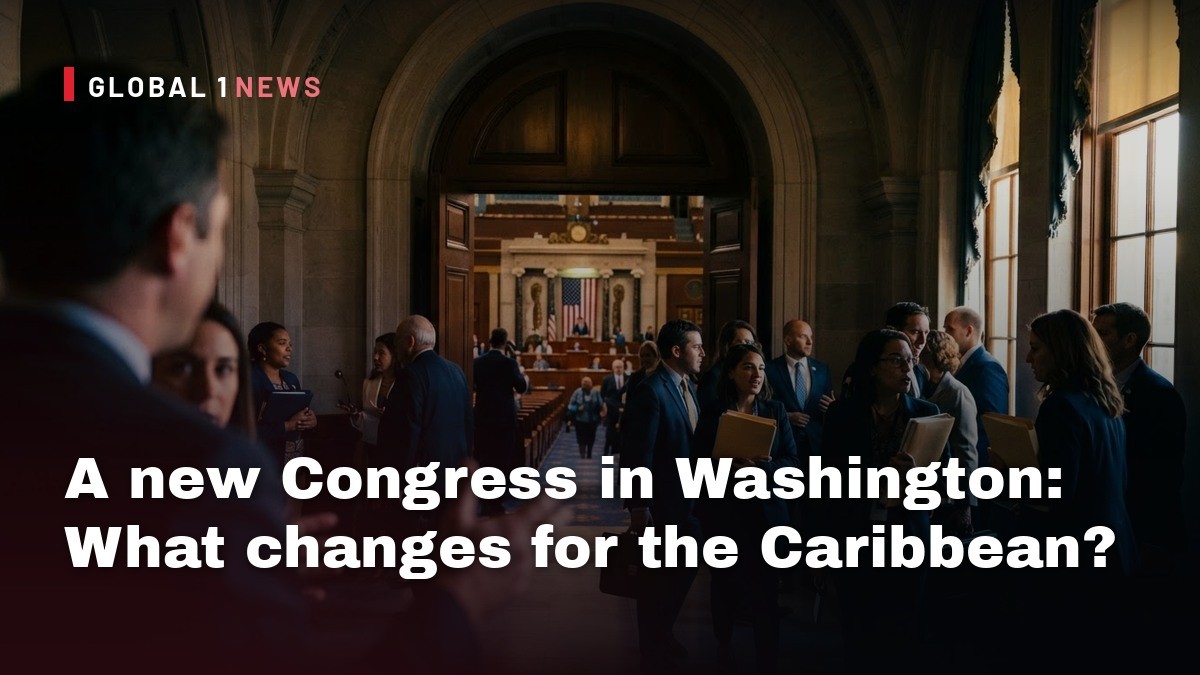
When the mid‑term polls on 3 November 2026 handed Democrats control of both the House and the Senate, many in the Caribbean wondered if a new Congress would mean a fresh approach from Washington. The reality, as outlined by analysts in Grenada, is that the balance of power in the United States will shift in the legislative arena, but the core foreign‑policy agenda of President Trump is likely to stay the same. Understanding how Congress can shape, fund and scrutinise that agenda is essential for CARICOM nations that rely on the United States for trade, security cooperation and disaster assistance.
Congressional power versus presidential prerogative
The new Democratic majorities will take over the legislative chambers in January 2027, giving them the ability to draft bills, appropriate money and conduct oversight of the executive. In the Senate, they will also confirm senior presidential appointments, meaning that the composition of key diplomatic posts could shift depending on the Senate’s preferences.
Nevertheless, the President retains substantial authority over foreign relations. He can direct diplomatic engagement, enforce immigration rules and shape trade policy through executive orders, provided they rest on constitutional powers or existing statutes. A presidential veto still stands as a powerful tool, and overturning it would require a two‑thirds super‑majority in both chambers – a hurdle that the new Democratic majorities are unlikely to clear without bipartisan support.
Continuity of the “Trump Corollary” in the Western Hemisphere
The administration’s guiding principle – often dubbed the “Trump Corollary” to the Monroe Doctrine – centres on protecting American strategic interests in the hemisphere. Its pillars remain migration control, curbing narcotics trafficking, securing access to strategically located ports and infrastructure, and limiting the influence of rival powers. The source material makes it clear that these priorities are not expected to vanish simply because Congress has changed hands.
For Caribbean states, this means that the United States will continue to focus on the same security and economic concerns that have shaped policy for years. While congressional committees may push for more stringent oversight or different funding levels, the overarching goals of migration management and counter‑narcotics will likely stay on the agenda.
Trade ties and the economic heartbeat of the region
The United States remains a major trading partner for the Caribbean, providing a vital market for exports and a source of imports. In 2025, the region generated a US goods trade surplus of roughly US$7 billion, underscoring the importance of American demand for Caribbean products. This surplus supports American businesses and employment, creating a mutually beneficial loop of commerce.
Beyond the flow of goods, Caribbean resources – oil and gas from Guyana, Trinidad and Tobago’s long‑standing energy sector, and Jamaica’s mineral exports – feed into American supply chains and energy security. The source notes that these connections give the region “practical substance” in the bilateral relationship, meaning that any shift in US policy could reverberate through the energy markets that many Caribbean economies depend on.
Tariffs, shipping costs and the price of predictability
One of the most immediate ways congressional control can affect the Caribbean is through trade policy. Current US tariffs on Caribbean exports are already squeezing the competitiveness of regional products in the American market. At the same time, rising American export prices, higher shipping costs and shifting supply‑chain dynamics are inflating the import bills of Caribbean nations.
For small island economies, a shock in any one sector can ripple across employment, government revenue and foreign‑exchange earnings. The source material stresses that “predictability matters,” implying that stable tariff regimes and transparent shipping policies are crucial for maintaining the delicate balance of trade that underpins many Caribbean fiscal plans.
Security cooperation: a two‑way street
Drug trafficking, illegal firearms, organised crime and illicit financial flows are shared challenges that bind the United States and the Caribbean. The source highlights that cooperation among police, customs, coastguards and judicial bodies is indispensable, and that the effectiveness of this partnership hinges on attention to both narcotics and the movement of weapons and criminal proceeds.
Security, however, is not just about enforcement. It rests on strong institutions, economic opportunity and public confidence in the rule of law. The example of Haiti, where insecurity has overwhelmed state capacity, illustrates the human cost of weak institutions and the spill‑over pressures on neighbouring states. A durable response, according to the analysis, will require resources, accountability and meaningful Haitian participation – a stance that would likely receive bipartisan support in a Congress keen on human‑rights and development issues.
Disaster vulnerability and development financing
Caribbean economies are uniquely exposed to natural hazards. A single hurricane can wipe out decades of infrastructure, thrusting a middle‑ or high‑income country into severe financial distress. The source material points out that income per capita alone does not capture this vulnerability; instead, the region’s exposure to disasters must be weighed alongside economic indicators.
Because the United States wields considerable influence in international financial institutions, its congressional stance on disaster relief and resilient infrastructure funding can shape the region’s capacity to rebuild without perpetual emergency assistance. Strengthening disaster preparedness and resilient infrastructure offers a tangible basis for cooperation that benefits both American investors – who rely on stable supply chains – and Caribbean governments seeking to protect hard‑won development gains.
People‑to‑people links and visa policy
Beyond government‑to‑government ties, families, students, workers and businesses create a web of connections that stretch across the Atlantic. While individual visa eligibility remains a matter of US law, broad restrictions based on nationality can affect the flow of people and, by extension, remittances, tourism and cultural exchange.
The source material notes that any broad visa restrictions would be administered by US authorities, but it also hints that a Congress focused on human‑rights and diaspora concerns might push for more nuanced policies. For Caribbean communities in the United States, these people‑to‑people links are a lifeline, reinforcing the need for a stable and predictable immigration framework that respects both security imperatives and the social fabric of the diaspora.
This article was produced with AI-assisted research and editorial support. Reporting is based on the source material cited below. Sources: Now Grenada; nowgrenada.com; Global1.News (09 November 2026).
By Sharon Sahatoo, Staff Writer
What's Your Reaction?
 Like
0
 Dislike
0
 Love
0
 Funny
0
 Wow
0
 Sad
0
 Angry
0

Caribbean Correspondent at Global1.News. Based in Port of Spain, Trinidad, covering Caribbean politics, economy, energy, climate, and culture. Amplifying the voices and stories of the Caribbean region.













Comments (0)