
One Year On, No Justice for Slain Palestinian-American Sayfollah Musallet
In a recent Middle East Eye video report, the father of Sayfollah Musallet, a 20-year-old Palestinian-American killed by an Israeli settler mob in the occupied West Bank more than a year ago, stood on the same rocky hillside where his son died and demanded the justice that has yet to arrive.
In a recent Middle East Eye video report, the father of Sayfollah Musallet, a 20-year-old Palestinian-American killed by an Israeli settler mob in the occupied West Bank more than a year ago, stood on the same rocky hillside where his son died and demanded the justice that has yet to arrive. The report captures a grief that has hardened into resolve, as Kamel Musallet, a small business owner from Tampa, Florida, insists that his son's life mattered and that those responsible must face consequences.
One Year On, No Justice for Slain Palestinian-American Sayfollah Musallet
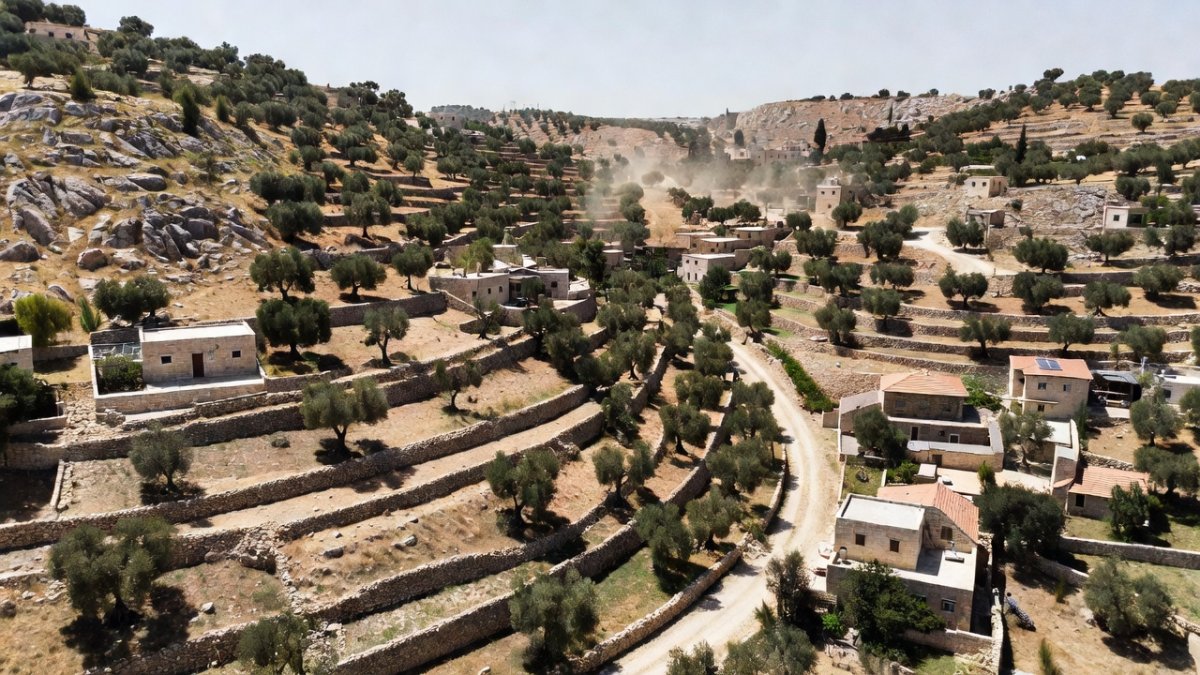
Sinjil, Occupied West Bank – 20 August 2026 — The olive trees on the Musallet family farmland near the village of Sinjil, north of Ramallah, are still there. So is the rocky ground where 20-year-old Sayfollah "Saif" Musallet was beaten to death by Israeli settlers on 11 July 2025. What remains absent, more than a year later, is any semblance of accountability. No investigation has been concluded. No one has been charged. And a grieving father's repeated requests for a meeting with his own US senator have been met with silence.
The Killing on the Hilltop
Sayfollah Musallet was born in Port Charlotte, Florida, and lived in Tampa, where he worked at his family's ice cream and dessert shop. He had traveled to the West Bank to visit family ahead of his 21st birthday, a trip meant to reconnect with his roots in the village of Sinjil, a community nestled in the hills north of Ramallah. On the morning of 11 July 2025, he was on his family's farmland when a confrontation erupted with Israeli settlers.
Multiple eyewitnesses told CNN that settlers attacked Palestinians in the area and that Musallet was beaten by a group wielding clubs. The violence did not end with the initial assault. Settlers smashed the windshield of an ambulance and blocked medical crews from reaching the wounded young man for at least two hours. Eyewitnesses said security forces also prevented ambulances from passing, firing tear gas to disperse the crowd. By the time medics reached him, Musallet had stopped breathing. He was pronounced dead before arriving at a hospital.
Mohammed Rizq Hussein al-Shalabi, a 23-year-old Palestinian, was also killed that day, shot during the same attack. The Palestinian Health Ministry said he was allowed to bleed out for hours before any medical assistance could reach him. The two deaths, occurring on the same patch of farmland, underscored a grim reality: in the occupied West Bank, the arrival of help is never guaranteed, and the arrival of justice is even less certain.
A Father's Fight for Answers
Kamel Musallet, a Palestinian-American small business owner who has spent decades building a life in Tampa, has become the public face of a private tragedy. In the year since his son's death, he has repeatedly sought answers from Florida's Republican Senator Rick Scott, whose office has refused requests to meet the family. The refusal has turned a personal loss into a political statement, one that has now drawn national attention.
On 20 August 2026, the Tucker Carlson Show featured Kamel Musallet, describing him as "the father of one young victim of Israeli terrorism." During the episode, Carlson publicly questioned Senator Scott's refusal to investigate the killing, asking why an American citizen's death in the West Bank did not warrant a senator's attention. The segment has amplified the family's campaign, but it has not yet produced a meeting with Scott or any visible movement from his office.
The family has also called on the US State Department to investigate. The State Department, however, referred questions about any investigation to Israel's government, a deferral that critics say reflects a broader pattern of Washington outsourcing accountability in the occupied territories. In July 2025, US Ambassador to Israel Mike Huckabee called the killing a "criminal and terrorist act" and urged Israel to investigate "aggressively." More than a year later, that aggressive investigation has yet to yield a single charge.
A Pattern of Impunity for US Citizens
Sayfollah Musallet was the fifth American citizen killed in the West Bank since the Gaza war began in October 2023. Each of those deaths has followed a similar trajectory: initial expressions of concern from US officials, promises of investigation, and then silence. For Palestinian-American families, the pattern has become painfully familiar — a cycle of grief followed by bureaucratic indifference.
Israeli police said six arrests were made in connection with the killing, including two settlers and an IDF reservist. The reservist was released after questioning. No further details about the status of the other arrests have been made public, and no charges have been filed. The lack of transparency has left the Musallet family in a state of suspended anguish, unable to move forward or find closure.
The broader context is staggering. The United Nations says nearly 1,000 Palestinians have been killed by Israeli settler violence or the Israeli military since October 2023. That figure represents not just statistics but individual lives — farmers, students, parents, children — each with a name and a story. For the international community, the numbers have become a grim benchmark of the occupation's toll. For families like the Musallets, they are a reminder that their loss is part of a larger, ongoing tragedy.
Settler Violence in the Wider West Bank
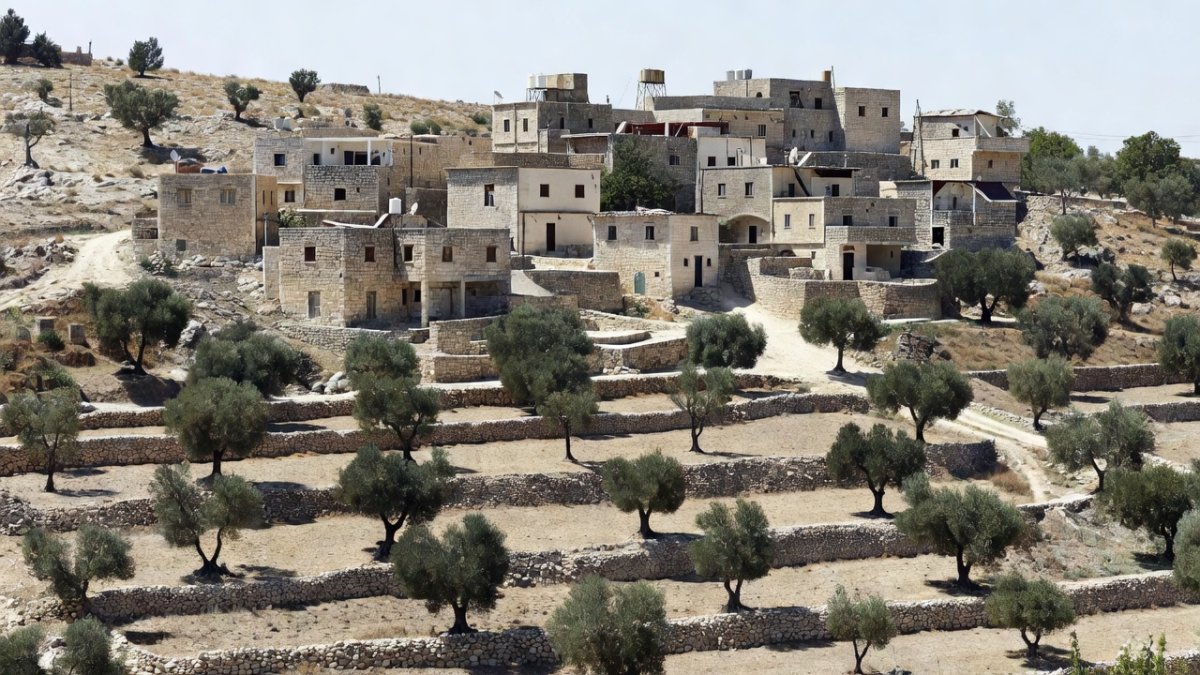
The killing of Sayfollah Musallet did not occur in isolation. It was part of a surge in settler violence that has swept the West Bank since the outbreak of the Gaza war. Villages across the northern West Bank have reported near-daily attacks: olive trees uprooted, homes vandalized, shepherds assaulted, and in the worst cases, lives lost. The village of Sinjil, like many others, has become a frontline in a campaign of intimidation that human rights organizations have described as forced displacement by other means.
The aftermath of Musallet's killing was equally telling. After the attack, settlers followed a CNN vehicle and smashed its rear window with a club, a brazen act of intimidation directed at journalists documenting the violence. The message was clear: witnesses would be silenced, and the truth would be harder to tell. For Palestinian communities, this is not an anomaly but a recurring feature of life under occupation, where the presence of international media is often the only deterrent against further violence.
Local leaders in Sinjil say the fear has not subsided. Farmers now hesitate to work their own land, unsure whether a routine day of tending olive trees could turn deadly. The economic impact is measurable — abandoned fields, reduced harvests, families relocating to safer areas — but the psychological toll is harder to quantify. The Musallet family's farmland, once a source of livelihood and connection to the land, has become a site of mourning.
US Policy and the Question of Accountability
The US government's response to Musallet's killing has been characterized by a notable disconnect between rhetoric and action. Ambassador Huckabee's condemnation was unequivocal, yet the State Department's decision to defer to Israeli authorities has effectively stalled any independent American investigation. For Palestinian-American families, this deference raises a painful question: does the US government value the lives of its citizens equally, regardless of their ethnicity or where they are killed?
Senator Scott's refusal to meet with the Musallet family has become a flashpoint in this debate. Critics argue that a US senator's duty to constituents should extend to their safety and justice, wherever they are in the world. The family's Tampa-based business, a beloved local institution, has become a symbol of the Palestinian-American community's contributions to American society — and of the community's frustration when those contributions are not reciprocated with protection.
The Tucker Carlson episode has added a new dimension to the story, bringing the issue to a broader audience and placing political pressure on Scott. Whether that pressure will translate into action remains unclear. The family has said they will continue to push for answers, regardless of how long it takes. Their persistence, born of necessity, has become a testament to the lengths a father will go to for his son's memory.
Analysis and Implications
The killing of Sayfollah Musallet and the subsequent lack of accountability highlight a structural failure in how the United States addresses violence against its citizens in the occupied West Bank. The pattern — initial condemnation, followed by deference to Israeli authorities, followed by silence — has repeated itself across multiple administrations. The result is a de facto policy of impunity that emboldens perpetrators and deepens the sense of abandonment felt by Palestinian-American communities.
The broader implications extend beyond the Musallet family. The UN's figure of nearly 1,000 Palestinians killed since October 2023 represents a staggering escalation in violence, yet international responses have been muted. The settler movement, emboldened by political support within Israel's governing coalition, continues to expand its footprint in the West Bank, often with the backing of the Israeli military. For Palestinians, the distinction between settler violence and state violence has become increasingly meaningless.
For the Musallet family, the fight is not just about their son. It is about establishing a precedent that American citizens — and by extension, all Palestinians — are entitled to justice. It is about challenging the notion that some lives are worth less than others. And it is about ensuring that the next family that faces this tragedy does not have to fight alone.
As the one-year anniversary of Sayfollah Musallet's death has come and gone, the hills of Sinjil remain quiet. The olive trees still stand. But the absence of accountability hangs over the village like a shadow. Kamel Musallet has vowed to continue his campaign, to keep speaking his son's name, and to demand the answers that have been denied. Whether Senator Scott, the State Department, or the Israeli government will ever respond remains an open question. For now, the family waits, as so many Palestinian families have waited before them, for a justice that has yet to arrive.
By Fatima Al-Rashid, Staff Writer
This article was produced with AI-assisted research and editorial support. Reporting is based on sources cited in the article.
What's Your Reaction?
 Like
0
Like
0
 Dislike
0
Dislike
0
 Love
0
Love
0
 Funny
0
Funny
0
 Wow
0
Wow
0
 Sad
0
Sad
0
 Angry
0
Angry
0

Gulf/MENA Correspondent at Global1.News. Based in Doha, covering Gulf politics, energy markets, diplomacy, and development across the Middle East and North Africa. Tracks the economic transformation of the Gulf states.









Comments (0)