
Trump Declares Hormuz 'New US Territory' as Iran Digs In
Folks, let’s cut straight to it. On Tuesday, August 18, 2026, President Donald Trump posted a map of the Strait of Hormuz on Truth Social with the label “new U.S.
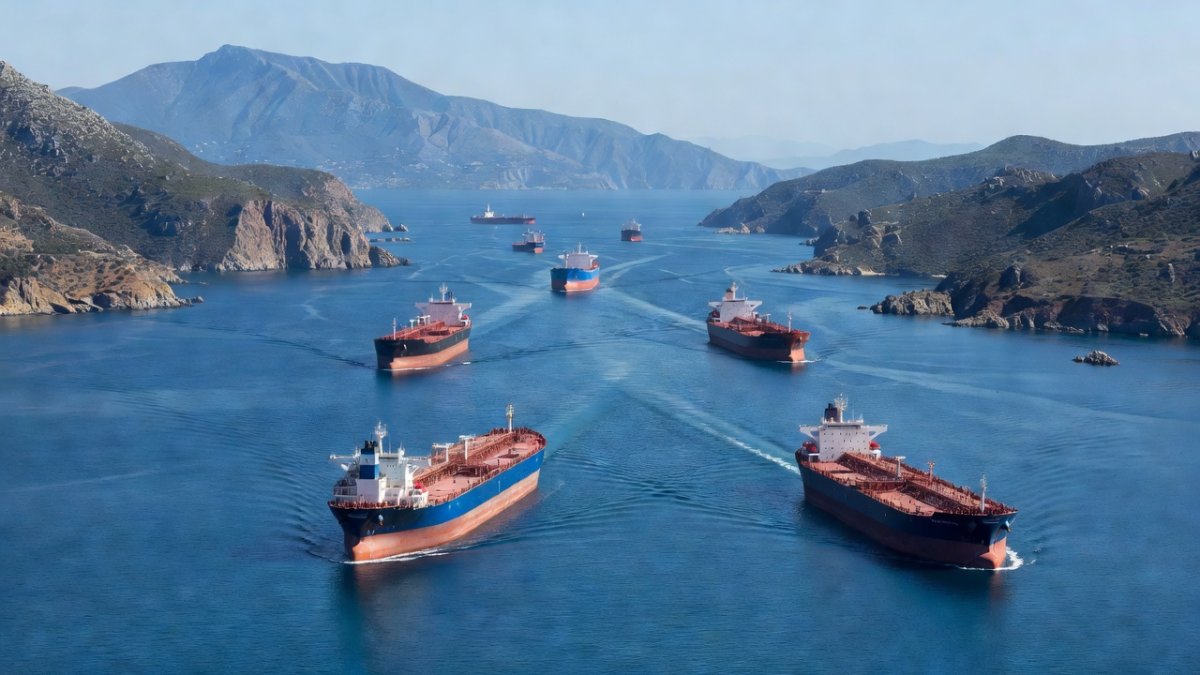
Folks, let’s cut straight to it. On Tuesday, August 18, 2026, President Donald Trump posted a map of the Strait of Hormuz on Truth Social with the label “new U.S. territory.” That came just hours after Iran’s Parliament Speaker, Mohammad Bagher Qalibaf, declared the waterway will not be opened until the United States meets Tehran’s demands and changes its behavior. This is not a drill. This is a superpower staring down a regional power over the single most important oil chokepoint on planet Earth, and your wallet is already feeling the heat.
Trump Declares Hormuz 'New US Territory' as Iran Digs In
Washington, D.C. – Tuesday, August 18, 2026 — The 2026 US-Israel war with Iran has entered a dangerous new phase, one that threatens to rewrite the rules of international waters and send global energy markets into a tailspin. President Trump’s unilateral declaration that the Strait of Hormuz is now “new U.S. territory” is a bombshell, but it’s also a bluff that international law doesn’t recognize. Here’s the thing: you can’t just claim a shipping lane on a map and make it so. The strait sits in Iranian and Omani territorial waters, and a presidential Truth Social post doesn’t change sovereignty. But it does change the temperature of an already boiling conflict.
The Map Heard Round the World
Let’s set the scene. On Friday, August 14, Trump first floated the idea, telling reporters that after the US finishes defeating Iran, he would declare the Strait of Hormuz a territory of the United States, according to USA Today and Political Wire. By Tuesday, he made it official — at least in his own mind — with a graphic that would look at home in a real estate listing. Forbes and The Jerusalem Post both reported the post, which landed hours after Iran’s leadership doubled down on keeping the route closed.
An Iranian official fired back on August 15, insisting the Strait of Hormuz “will remain Iranian,” per Fox News. And on August 18, Qalibaf made it crystal clear: no reopening until Washington meets Iran’s demands. This is a staring contest with nuclear stakes, and neither side is blinking.
Now, legally speaking, this declaration is about as binding as a tweet. Under the UN Convention on the Law of the Sea, territorial waters extend 12 nautical miles from a nation’s coast. The strait is narrow — at its tightest point, it’s about 21 miles wide — meaning it’s carved up between Iranian and Omani waters. A unilateral declaration by the United States doesn’t transfer sovereignty. But what it does do is signal that Washington is prepared to treat any Iranian interference as an act against US territory. That’s a massive escalation, and military analysts are already calling this campaign “Operation Epic Fury,” per Fox News.
Iran’s Position: No Surrender, No Reopening
Let’s give Tehran its due. They’re not backing down. Qalibaf’s statement on August 18 was unambiguous: the strait stays closed until the US changes its behavior. That’s not a negotiating position; that’s a war aim. Iran has restricted transit through the strait since the war began on February 28, 2026, after US-Israeli airstrikes killed several Iranian officials. Roughly one-fifth of global oil demand passes through this waterway, per Press TV and Al Jazeera. Closing it is economic warfare, plain and simple.
But here’s where it gets interesting. Iran’s Foreign Ministry spokesman, Esmaeil Baqaei, said on August 15 that negotiations with Oman are nearing completion on a new maritime route. He also tied full security in Hormuz to an end to the US blockade, according to Press TV and iHeart. So Tehran is building an alternative lane while simultaneously holding the main artery hostage. That’s a chess move, not a panic response.
Qatar, meanwhile, is playing mediator. The Qatari Foreign Ministry said envoys are waiting for Oman and Iran to reach a bilateral agreement on the strait before returning to broader negotiations between the US and Iran, per Liveuamap. In other words, the diplomatic track is stuck in neutral until the Oman-Iran deal is done. And with Trump declaring territory, don’t expect that to happen overnight.
The Economic Shock: Your Gas Tank Is the Front Line
Now let’s talk about what this means for you, because this isn’t just a geopolitical parlor game. The International Energy Agency (IEA) cut its 2026 oil demand forecast on August 12, expecting demand to fall by 1.6 million barrels a day as high fuel prices and Hormuz disruptions weigh on consumption, per CNBC. That’s a staggering number. When the IEA starts slashing demand forecasts, you know the pain is real.
Brent crude has already blown past $108 a barrel and spiked toward $126 at points. Analysts describe this as the largest oil supply disruption in decades, with prices surging as much as 64%, according to economic analysis from maseconomics.com and informedclearly.com. Let me put that in plain English: every time you fill up your car, you’re paying for this war. Every time you buy groceries, you’re paying for the shipping costs that oil prices drive. This isn’t abstract. This is the cost of a closed strait.
The IMF has cut global growth forecasts to around 3.1%, and central banks are in a stagflation-defense posture. That’s the nightmare scenario: stagnant growth plus rising inflation. NATO allies are boosting defense spending, which means taxpayer money is being diverted from infrastructure and social programs to bullets and bombs. The economic ripple effects are hitting every corner of the globe, and the poorest nations are feeling it worst.
The Wider War: From Hormuz to Bab el-Mandeb
Here’s the part that keeps me up at night. Hormuz isn’t the only chokepoint in play. Iran’s Yemen-based allies, the Houthis, have been targeting ships at the Bab el-Mandeb strait between the Red Sea and the Gulf of Aden, per Al-Monitor. That’s a second oil artery under attack. If both straits are compromised, global energy supply chains are effectively severed. We’re not talking about a hiccup; we’re talking about a systemic failure.
The war itself started on February 28, 2026, after US-Israeli airstrikes killed several Iranian officials. Since then, it’s been a grinding conflict with no end in sight. The US has threatened fresh strikes on Iran as it pushes for the reopening of the strait, per India Today. And Trump’s “new territory” gambit suggests he’s willing to escalate further rather than de-escalate.
Military analysts refer to the US campaign as “Operation Epic Fury,” and the name fits. This is a full-throttle military operation with global economic consequences. The question is whether the fury is aimed at a strategic goal or just burning through resources without a clear exit strategy.
Diplomatic Limbo: Qatar, Oman, and the Waiting Game
The Guardian reported on August 13 that Trump’s statements are the latest sign that negotiations to end the war and reopen the strait have stalled. That’s the understatement of the year. Qatar is waiting on Oman and Iran to finalize their bilateral agreement. Oman is trying to broker a new maritime route. And the US is busy declaring territory on social media. This is not a recipe for peace.
Here’s the diplomatic reality: Iran wants the US blockade lifted before it even considers reopening Hormuz. The US wants Iran to reopen the strait before it considers lifting the blockade. It’s a chicken-and-egg standoff with no one willing to move first. Qatar’s role as intermediary is crucial, but they can’t force a deal. They can only facilitate. And right now, the facilitation is going nowhere fast.
The “new maritime route” through Oman is an interesting wrinkle. If Iran and Oman can pull it off, it would provide an alternative to Hormuz, but it wouldn’t replace the volume that flows through the strait. It’s a Band-Aid on a bullet wound. And even if the route is completed, it doesn’t address the underlying conflict that started this war in the first place.
What This Means for You and What to Watch
So, what does this mean for the average American? It means higher prices at the pump, higher costs for everything that moves by truck, ship, or plane, and a growing sense that the global economy is one miscalculation away from a full-blown crisis. The IMF’s growth downgrade to 3.1% is a warning shot. Central banks are in stagflation-defense mode, which means they’re stuck between raising rates to fight inflation and cutting rates to spur growth. That’s a no-win scenario.
For investors, this is a volatility nightmare. For families, it’s a budget crisis. For policymakers, it’s a test of whether they can navigate a conflict that has no clear off-ramp.
Here’s what I’m watching next. First, watch the Oman-Iran negotiations. If they finalize that new maritime route, it could ease some pressure. Second, watch for any US military movement in the strait. Trump’s “territory” declaration could be a precursor to direct action. Third, watch the oil markets. If Brent pushes past $126 and stays there, we’re in uncharted territory. Fourth, watch Qatar. They’re the only player with a foot in both camps, and their patience is finite.
And finally, watch for the human toll. Wars like this don’t just move markets; they move people. The longer this drags on, the more suffering we’ll see in the region and beyond. This isn’t a video game. It’s real life, with real consequences.
Stay informed, folks. This story is far from over, and every development will hit your wallet, your safety, and your future. I’ll be here tracking it every step of the way.
By Jessica Ali, Staff Writer
This article was produced with AI-assisted research and editorial support. Sources: CNBC, Forbes, The Jerusalem Post, USA Today, Al Jazeera, The Guardian, Al-Monitor, Press TV, Political Wire, Fox News.
What's Your Reaction?
 Like
0
Like
0
 Dislike
0
Dislike
0
 Love
0
Love
0
 Funny
0
Funny
0
 Wow
0
Wow
0
 Sad
0
Sad
0
 Angry
0
Angry
0

Editor-in-Chief at Global1.News. Atlanta-based journalist who cuts through the BS and tells it like it is. Lead anchor, host, and the voice you hear when the spin stops and the truth starts.










Comments (0)