
Trump Declares Strait of Hormuz 'New US Territory' as UAE Halts Iran Trade
President Trump declared the Strait of Hormuz "new US territory" as the blockade continues, the UAE halted all trade with Iran after missile strikes, and a seafarer was killed, with at least 17 mariners dead in 65 attacks since the war began.
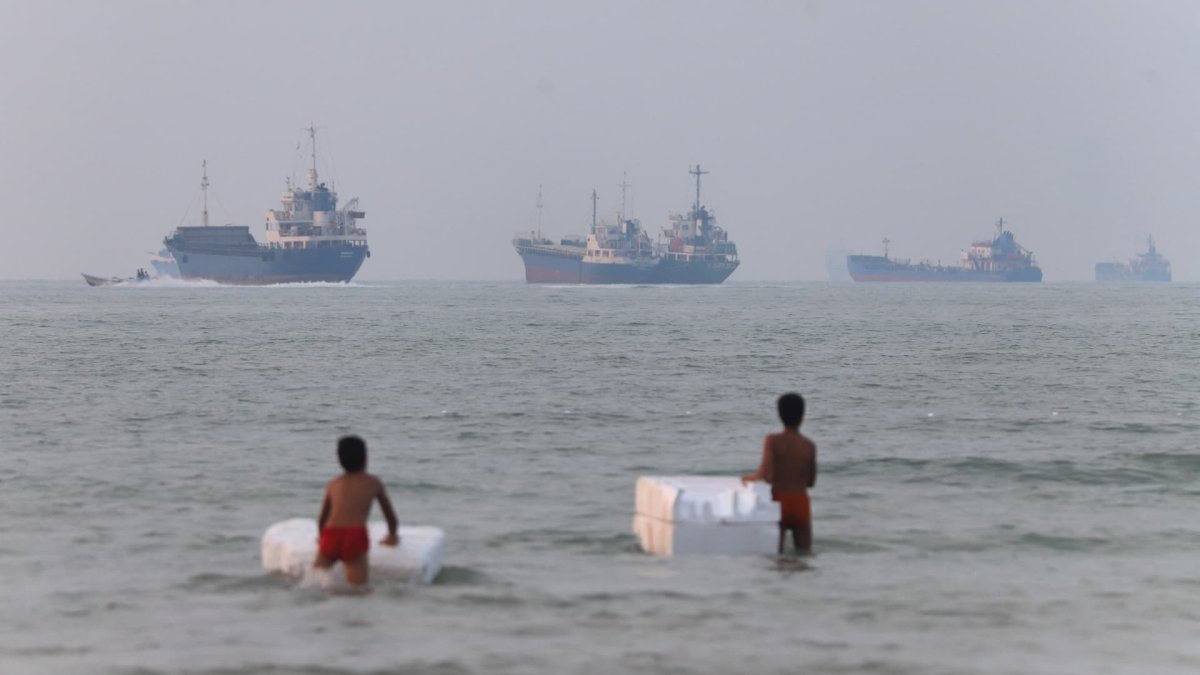
The Middle East's geopolitical map shifted into uncharted legal territory this week when President Donald Trump declared the Strait of Hormuz a "new US territory" in a Truth Social post Tuesday, August 18. The announcement comes as the naval blockade remains in full force, the UAE halts all trade with Tehran after its first missile strike since May, and the International Maritime Organization confirms at least 17 mariners killed in 65 attacks on commercial vessels since the war began.
The declaration is not a formal annexation under international law, but it signals a dramatic escalation — the president told reporters in the Oval Office on Monday the idea was "excellent" because "we control it through the blockade." With the June 17 US-Iran Memorandum of Understanding expiring Monday without a final deal, Washington is cementing a new doctrine of maritime control over a chokepoint that carried roughly 20 million barrels per day — about a fifth of global oil consumption — before the war began February 28, 2026.
Trump's Territorial Claim and the 'Full Force' Blockade
Trump's Tuesday statement was unambiguous: "The Naval Blockade remains in full force and effect. The Hormuz Strait is open and operating. All water mines have been removed or detonated." He added that "no talks or conversations going on, or scheduled, with the Islamic Republic of Iran," slamming the door on the diplomatic track that produced the now-expired 60-day MoU.
The president framed the declaration as a strategic victory: "We're taking out millions of barrels of oil a week. If you look at the numbers we're getting, the strait is open, oil prices are going down, and they'll continue to go down, unless we decide to do something much more drastic than what we're doing now." He repeated his hardline stance on Tehran's nuclear ambitions: "They cannot be allowed to have a nuclear weapon. And right now, after what we did previously with the B-2 bombers, it will take them a long time to build one."
Pressed on extending the MoU, Trump declined to answer and shook his head no. The legal basis remains murky — neither the State Department nor the Pentagon has explained how the US would codify the claim under international maritime law.
UAE Under Fire: First Missile Strike Since May Halts Trade
The United Arab Emirates confirmed Tuesday that two ballistic missiles were fired from Iran toward the Gulf nation — the Islamic Republic's first known attack on the UAE since May. Both fell into the sea, one inside the country's territorial waters and one outside, the UAE defence ministry said, assessing the missiles were likely meant to target maritime traffic.
Dubai residents received a missile threat alert as air defence systems dealt with incoming projectiles; the interior ministry declared the situation "safe" shortly afterwards. Iran denied firing the missiles, with foreign ministry spokesman Esmail Baghaei taking to Telegram to urge regional parties to refrain from making "baseless accusations."
The UAE's response was swift and severe. On August 19, the foreign ministry announced a complete halt to "all trade, commercial exchanges and financial transactions with Iran until further notice," citing "regional escalations that undermine regional and international peace and security." The UAE was one of Iran's primary trading partners and a crucial transshipment hub despite US sanctions — the move severs one of Tehran's last remaining economic lifelines in the Gulf.
A Seafarer's Death and the Rising Toll on Commercial Shipping
The human cost was tragically illustrated on August 17 when a projectile struck the Liberia-flagged bulk carrier Minoan Dignity as it exited the Strait of Hormuz, damaging the engine room and killing the ship's chief engineer, according to UKMTO Warning 115-26. The Omani Coast Guard assisted the remaining crew; no environmental damage was reported.
UKMTO Warning 116-26 separately disclosed another bulk carrier struck at approximately 2200 UTC on August 15, damaging its starboard side and resulting in a crew casualty. Both attacks occurred near the strait's southern approaches off Oman's Musandam Peninsula.
INTERCARGO, the dry bulk shipping association, responded to the Minoan Dignity death: "One seafarer lost is one too many." The attacks follow strikes on three ADNOC-linked vessels over the previous weekend, according to EOS Risk Group's Martine Kelly.
Iran's Demands and the Northern Route Ultimatum
Iran's parliamentary speaker, Mohammad Bagher Ghalibaf, said Tuesday that Hormuz will remain closed until the United States meets its commitments under the expired MoU, according to state news agency Tasnim. Tehran won't return to the table without significant concessions, even as its economy faces mounting pressure from the blockade and the UAE's trade halt.
The core dispute is transit routes. Iran has repeatedly attacked ships on the US-protected southern route, demanding vessels take a northern route through its territorial waters. Tehran warned toll-free passage could end after the 60-day period expired, and the IRGC reportedly stopped the Liberia-flagged tanker Amara near Qeshm Island for allegedly failing to comply with transit requirements, including authorization and payment of fees.
Iran is attempting to impose a licensing regime on the world's most critical oil chokepoint, demanding payment and prior authorization to transit. The United States, through its blockade and now its territorial declaration, asserts the opposite: the strait is under American control and open on US terms.
Oil Markets and the Reality of 'Open' Waters
Despite Trump's assertion that "the strait is open," the data tells a more complicated story. Observed traffic stood at 10 crossings on Monday, August 17, and 2 transits on Sunday, August 16, per trade intelligence firm Kpler — a five-day average of about 10, the lowest since May 11. Before the war, about 130 vessels crossed daily.
Crude exports through Hormuz rose to about 5 million barrels per day in July, up from 4 million in June and 1.6 million in May, per Windward analyst Michelle Wiese Bockmann: "Transits have scaled up very quickly against a backdrop of extreme risk." US Energy Secretary Chris Wright claimed a seven-day average of nearly 9 million bpd, arguing private businesses "undercount the number of ships leaving the Strait of Hormuz due to ships moving covertly through the waterway."
Brent crude fell to $86.67 on August 14 but climbed Monday as the US shifted from military campaign to economic pressure on Iran. By August 19, prices traded around $87-92 per barrel, up 31.61% year-over-year, with the straits.live tracker showing $91.73. The gap between the White House's "open strait" claims and reality — 1 ship on August 16 versus roughly 73 daily normally — suggests markets are pricing in continued disruption, not normalization.
Diplomatic Limbo: Qatar, Oman, and the Search for a Path Forward
With the MoU expired and Trump refusing to extend it, the diplomatic landscape is fragmented. Qatari Foreign Ministry spokesperson Dr. Majed al Ansari said Tuesday that mediators were waiting for Oman and Iran to reach a bilateral agreement on Hormuz before returning to broader US-Iran talks; an agreement would make resuming them "much easier," he added.
The June 17 memorandum was meant to reopen the strait within 60 days, but neither side made meaningful progress on transit routes, inspection regimes, or Iranian territorial waters. Trump's declaration may have taken the strait off the table as a bargaining chip.
Shipping groups including BIMCO, the International Chamber of Shipping, INTERCARGO, and INTERTANKO issued a rare joint statement in June calling for an immediate halt to attacks on merchant vessels, stressing that seafarers "should never be collateral damage, victims or instruments of political or military pressure." That plea has gone unheeded — the Minoan Dignity death is the latest proof that moral suasion carries no weight with parties firing at civilian ships.
What 'US Territory' Means for Global Shipping and the Gulf
The practical implications are staggering. If the United States formally treats the strait as its territory, it could impose its own transit fees, inspection regimes, and even exclusion zones — actions that would almost certainly be challenged internationally. The UN Convention on the Law of the Sea guarantees transit passage through international straits, and no unilateral declaration can override that principle.
For Gulf states like the UAE, Oman, and Qatar, the situation is increasingly untenable — dragged deeper into a conflict that has killed at least 17 mariners and disrupted their trade routes. The UAE's trade halt will ripple across the regional economy, potentially pushing Tehran toward more aggressive action.
The coming weeks will be critical. With the MoU expired, the blockade in force, and Trump's territorial claim on the table, the risk of miscalculation is at its highest since the war began. Every tanker is a potential flashpoint, and every missile fired brings the region closer to a conflagration no one can afford.
This article was produced with AI-assisted research and editorial support. Sources: CNN, CNBC, Jerusalem Post, South China Morning Post/Bloomberg, Le Monde/AFP, gCaptain, UKMTO, Al Jazeera, The New York Times, Reuters, International Maritime Organization.
By Jessica Ali, Staff Writer
What's Your Reaction?
 Like
0
Like
0
 Dislike
0
Dislike
0
 Love
0
Love
0
 Funny
0
Funny
0
 Wow
0
Wow
0
 Sad
0
Sad
0
 Angry
0
Angry
0

Editor-in-Chief at Global1.News. Atlanta-based journalist who cuts through the BS and tells it like it is. Lead anchor, host, and the voice you hear when the spin stops and the truth starts.













Comments (0)