
Russia Strikes the Substations That Carry Nuclear Power to Kyiv
Russia fired 36 ballistic missiles and 172 drones at Kyiv overnight, damaging the substations that carry nuclear power from two plants into the capital, cutting water and heat, and closing the Northern Bridge days before talks in Abu Dhabi.
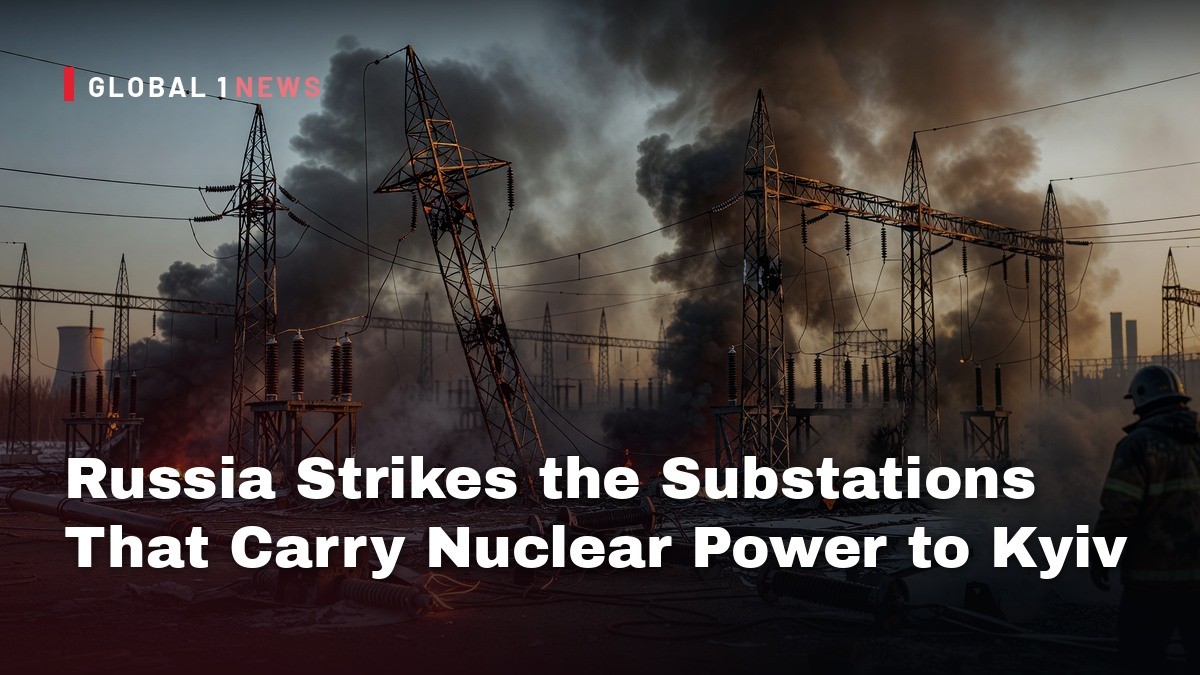
Kyiv spent Saturday morning measuring the damage in the things a city cannot do without. Thirty-six ballistic missiles were aimed at the capital and its surrounding region overnight, backed by 172 strike drones, and the high-voltage substations that carry electricity from two nuclear power plants into a city of millions came out of it damaged.
Russia Strikes the Substations That Carry Nuclear Power to Kyiv
KYIV, Ukraine — The overnight attack into Saturday, 7 November, cut power, water and heat across the capital, closed a main bridge over the Dnipro, and landed days before Ukrainian and Russian delegations are due to sit down with American mediators in Abu Dhabi.
Thirty-Six Ballistic Missiles, One Target
President Volodymyr Zelensky said Russia fired 36 ballistic missiles and 172 strike drones, and that all 36 of the ballistic missiles were directed at the capital and the Kyiv region. Writing on Telegram, he framed the timing as deliberate: "Russia is preparing for trilateral talks by launching ballistics at Ukrainian critical infrastructure." He added that "The main target of the strike was again the energy sector." Beyond the capital, he said, another 12 regions of Ukraine came under attack in the same wave. The assault began overnight and ran into Saturday morning. For a city that has spent the autumn learning to read the sound of a jet-powered drone against the deeper note of a ballistic missile, the sequence was familiar and the target list was not subtle.
What the Air Force Says Came Down
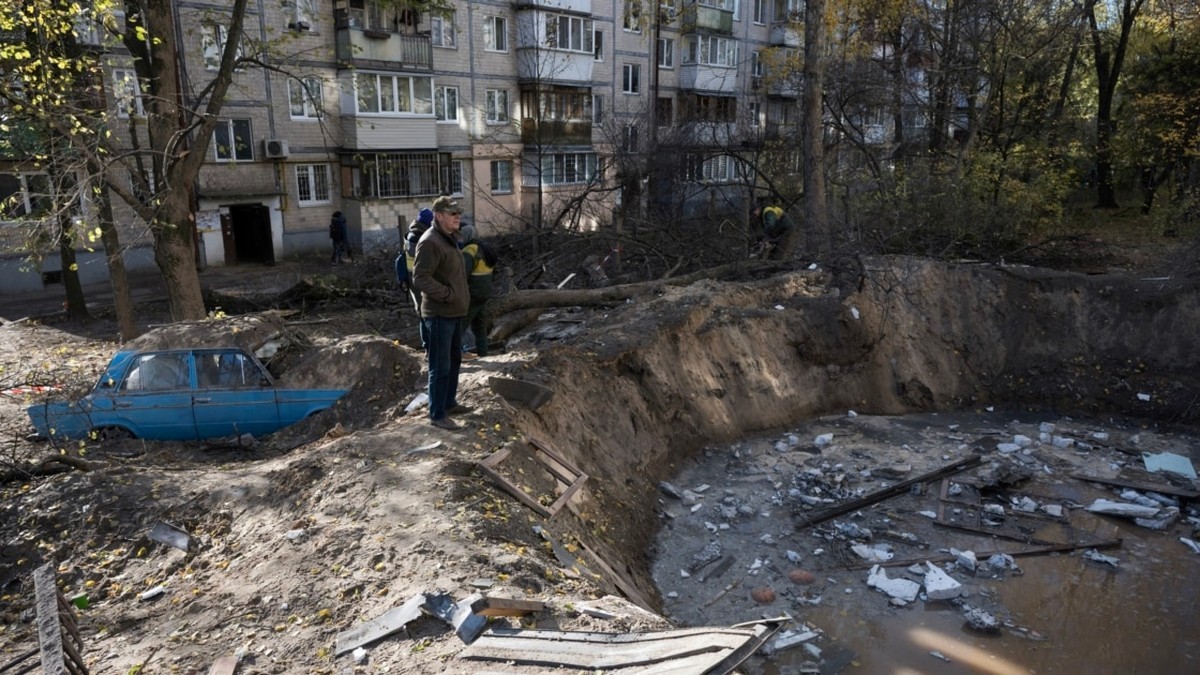
Ukraine's Air Force gave its own accounting of the night. It said four of the ballistic missiles were intercepted and 149 of the drones were destroyed or suppressed, among them 117 jet-powered models. That leaves the arithmetic that matters to the people underneath it: the great majority of the ballistic missiles got through. Ballistic intercepts are the hardest problem in air defence, and the stock of interceptors able to attempt them is the constraint Zelensky has raised repeatedly with Washington. He had warned of exactly this on Friday night, saying Russia was preparing new attacks on energy targets, bridges and other infrastructure — a warning issued before the first missile flew. The Air Force's figures also point to the shape of the attack — a mass of cheap, fast drones sent to stretch defences and draw fire, wrapped around a smaller number of much faster and far more destructive missiles aimed at fixed infrastructure that cannot be moved.
The Lines Between Two Nuclear Plants and the Capital
The most consequential damage was not in the city centre. Zelensky said the strikes hit substations in the Kyiv region that connect the Rivne and Khmelnytskyi nuclear power plants to the capital and to central Ukraine. Those are transmission nodes, not reactors: the plants themselves generate, and the substations move what they generate. Ukraine's Energy Ministry said networks carrying electricity from nuclear power plants to the capital and central regions were damaged, alongside numerous transmission and distribution networks. Prime Minister Sergii Koretskyi said generating equipment and main substations were hit in the Kyiv, Dnipropetrovsk, Kharkiv, Zhytomyr, Vinnytsia and Rivne regions. The ministry said the damage in the capital region had "considerably complicated" electricity transmission to Kyiv and the surrounding area, restricted how much could be sent to neighbouring regions, and that restoring that volume of destroyed equipment would take time. Hitting the connection rather than the reactor is a way of taking a country's cheapest and most reliable electricity out of reach without touching the containment building.
The Bridge, Closed Again
Several Russian missiles hit and damaged the Northern Bridge across the Dnipro, according to Mayor Vitali Klitschko, who said traffic was stopped in both directions while specialists assessed the structure. "The road surface, the trolleybus overhead wires and a power line have been damaged at the site," he said, adding that the blast wave damaged five lorries in a car park. The crossing, which the Associated Press puts at 816 metres, or 892 yards, links the city with large residential districts on the east bank and is one of the capital's main arteries. Russia's Defence Ministry confirmed it had targeted the bridge, saying it carried weapons, military hardware and specialist equipment for Ukraine's armed forces. It is the third time this autumn the span has been hit: drones damaged the same roadway on 3 and 4 October, after which crews repaired the damaged section, reinforced the roadbed and installed a special metal plate.
Water, Heat and Light
Klitschko described the capital's electricity supply as "extremely difficult", and said the damage had disrupted the city's heating and water systems. By his later update the water supply was back to normal and heating was being reconnected, with heating supplied to about 60 percent of the city's apartment buildings. That work had only begun on 2 November. Ukraine's Energy Ministry said consumers in the Dnipropetrovsk, Donetsk, Kyiv, Zhytomyr and Kharkiv regions were without power by morning, though crews had already restored supply to some. Energy Minister Denys Shmyhal said there were power cuts in five regions and did not say how many households were affected. DTEK, the country's largest private power company, said one of its facilities in the Kyiv region was hit again, leaving part of Brovary district without electricity and warning that "the destruction is significant".
The Toll, and Why the Numbers Do Not Agree
On casualties the accounts diverge, and the divergence is worth stating plainly rather than smoothing. Zelensky put the number of wounded across the country at nine, including one child; the BBC reported the same figure. Klitschko and the Guardian said five people were injured in the capital itself, among them a 14-year-old girl, and Ukrainska Pravda reported that two of the injured were taken to hospital. Reuters, in a report carried by NBC News, said at least two people had been killed and around a dozen wounded across Ukraine. POLITICO reported at least one death and nine injured, with one person killed and two injured in the wider Kyiv region. Those numbers describe overlapping but not identical things, and no single total reconciles them on Saturday. The dead and the wounded are real in each account, and the smallest number in the reporting is not the safest one to print.
What Moscow Says It Hit
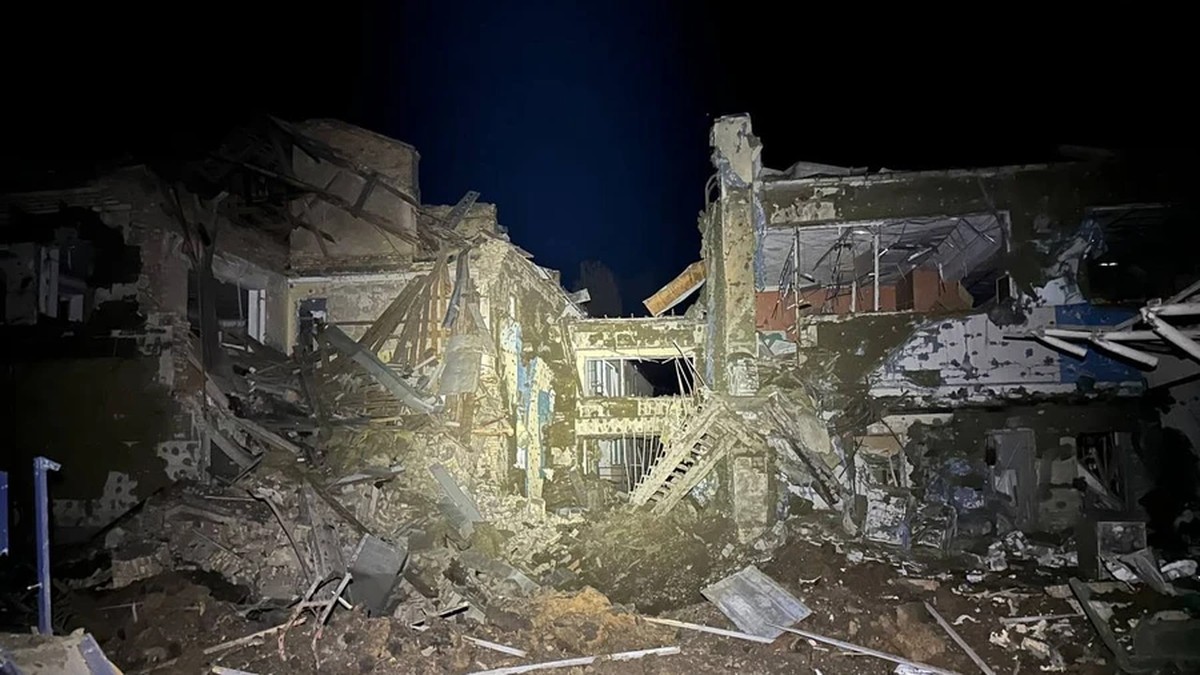
Russia's Defence Ministry described a massive strike on Ukraine's military-industrial sector and on energy and transport infrastructure in and around the capital. Beyond the bridge, it said it had targeted an industrial facility in Kyiv producing Flamingo missiles, a power station, an electrical substation, and a plant producing ammunition, explosives and gunpowder in the wider Kyiv region, as well as a substation in the Zhytomyr region. The Flamingo is Ukraine's long-range cruise missile, the weapon behind the deep-strike campaign Zelensky discussed with his team on Friday night, when he said Russia would "get our response". Naming a missile plant and a bridge in the same release is a way of arguing that civilian suffering is collateral to a military purpose. The energy ministry's account of what broke — transmission networks, substations, generating equipment — describes the same night from the other end.
Days Before the Talks in Abu Dhabi
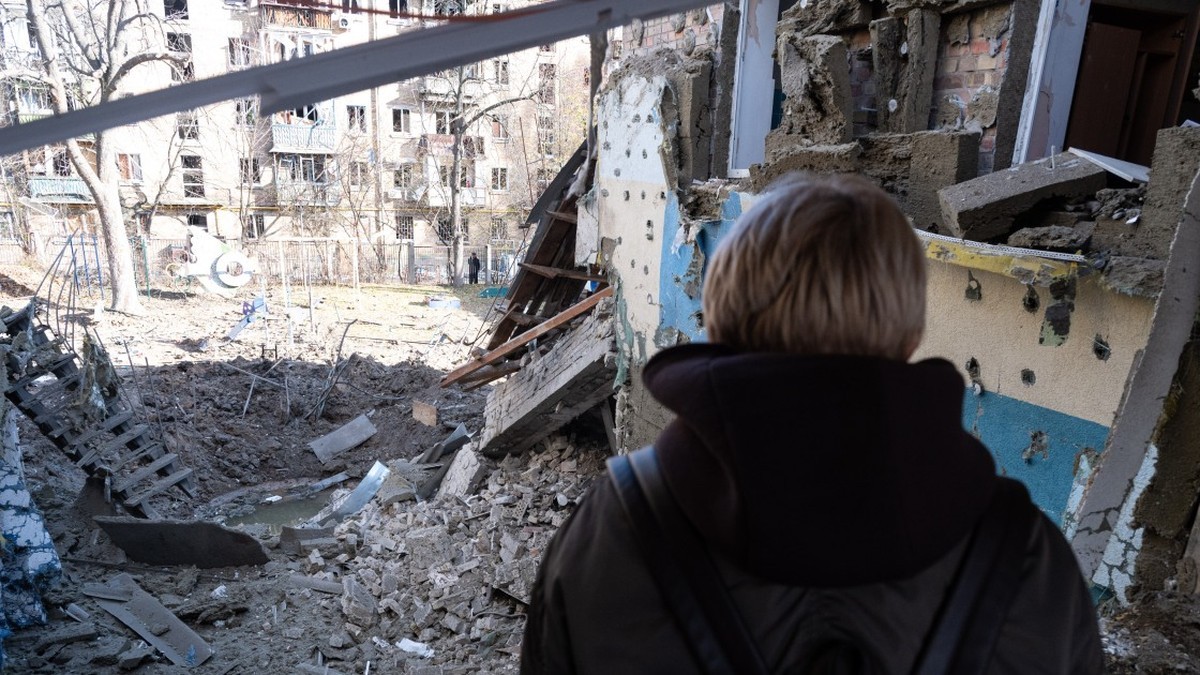
The barrage lands days before a new round of three-way talks in Abu Dhabi between Ukrainian and Russian officials, part of a US-backed push that has produced little so far. It also follows midterm elections in the United States that returned a Democratic-controlled Congress, which Kyiv reads as a possible opening for the military support it has been asking for. Zelensky's statement was aimed squarely at that audience: "When Russia tries to plunge Kyiv — a city of millions — and the entire country into a blackout, Ukraine must not be left to face this alone." He called for bipartisan backing in Congress and stronger sanctions, and repeated his request for Patriot interceptor deliveries, saying Moscow's tactics are aimed at destroying "power grids, transformers and switchgear".
The Month That Broke the Grid
Saturday's attack is the latest in a month of escalating strikes, not a bolt from a clear sky. The Kyiv Independent described the attack of 3 November as the biggest mass strike on Ukraine's energy facilities this year, with substations, transmission systems and power plants hit across 10 oblasts; Ukrenergo chief executive Vitalii Zaichenko said it involved one of the largest waves of Russian ballistic missiles of the war, alongside cruise missiles and jet-powered and propeller-driven drones. DTEK reported significant damage at three thermal plants, halting generation. A thermal power plant was struck again on 30 October, and emergency outages were imposed in Kyiv on 1 November. Reuters notes that Russia has stepped up its air campaign as its ground offensive has largely stalled, and has expanded in recent weeks to Kyiv's bridges — a shift that turns traffic arteries into targets and makes every crossing a calculation. Temperatures are now heading towards zero and parts of the country have had their first snow. The grid is being attacked in the season when it has the least room to fail.
What Happens When the All-Clear Sounds
Repair is now the story, and it is being done under air-raid alerts that stop crews and send them back to shelter. "Energy workers are operating in an enhanced mode," the Energy Ministry said. "Constant air raid alerts are delaying the work. But as soon as the all-clear is sounded, energy workers immediately return to restoring the damaged equipment." Hourly outage schedules remain in effect across most of the country and industrial consumers face capacity limits. The ministry warned the picture could change several times an hour. DTEK said emergency outages had been imposed at Ukrenergo's direction, and that during emergency cuts the published schedules do not apply. Kyiv has been here before, and it knows the routine: the missiles take the transformers, the crews take them back, and the winter decides how much that costs.
By Jessica Ali, Staff Writer
This article was produced with AI-assisted research and editorial support. Sources: Associated Press, BBC News, Reuters via NBC News, The Guardian, Al Jazeera, Euronews, POLITICO, Kyiv Post, Kyiv Independent, Ukrinform, UNN, Radio Free Europe/Radio Liberty, DTEK, and the Ministry of Energy of Ukraine. Cover: Global 1 News editorial image. Photographs: Danylo Antoniuk/Anadolu via Getty Images; RFE/RL; Ukrainska Pravda.
What's Your Reaction?
 Like
0
 Dislike
0
 Love
0
 Funny
0
 Wow
0
 Sad
0
 Angry
0

Editor-in-Chief at Global1.News. Atlanta-based journalist who cuts through the BS and tells it like it is. Lead anchor, host, and the voice you hear when the spin stops and the truth starts.















Comments (0)