
Israel Police Say a Rishon LeZion Money Changer Laundered Half a Billion Shekels for the Jarushi Crime Family
Israeli police say a Rishon LeZion currency exchange laundered about half a billion shekels for the Jarushi crime family. Fourteen suspects were held and luxury cars, watches and cash seized in Operation Flash Royal. No one has been charged.
Folks, while the world's cameras were pointed at a red carpet in Shenzhen, Israeli police were kicking in doors in Rishon LeZion. Fourteen suspects. Half a billion shekels. And behind it all, a currency exchange that investigators say was never really a currency exchange at all.
Israel Police Say a Rishon LeZion Money Changer Laundered Half a Billion Shekels for the Jarushi Crime Family
RISHON LEZION, Israel — The case is called "Flash Royal," and it went public on Wednesday morning after a covert investigation that police say mapped the financial plumbing of one of Israel's most powerful organized crime groups.
The Raids Went Overt at Dawn
Police moved on multiple addresses across central Israel early Wednesday, executing searches simultaneously rather than in sequence, the pattern Israeli units use when they believe evidence can be destroyed in minutes. Fourteen suspects were taken into custody: seven placed under arrest and seven more detained for questioning, according to the police announcement. Police sources quoted by Israeli outlets linked all fourteen to the Jarushi crime organization. All of the detainees were expected to appear before a court later in the day, where investigators would ask judges to extend their remand. The investigation was led by the Economic Enforcement Unit of Lahav 433, the Israel Police's umbrella body for major and organized crime created in 2008. Working alongside it were the Central District police command, officers from the Shfela region, a Border Police unit, and the Israel Tax Authority. The Central District Prosecutor's Office is accompanying the case.
What the Money Changer Was Allegedly For
At the centre of the case sits a currency exchange business in Rishon LeZion. Police allege the operation was not merely unlicensed dealing but a service counter for criminal finance: transactions conducted without a licence, extortion under threat, forgery, and what investigators describe as systematic laundering carried out both for the crime organization's benefit and for the suspects themselves. That last detail is the one worth pausing on. In these cases the laundering mechanism usually has two customers — the syndicate that needs its cash cleaned, and the people running the machinery, who need their own cut to look legitimate. A money changer is the perfect vessel for both, because cash in, cash out, and foreign currency exchanged are ordinary business activities that generate paperwork rather than suspicion. What the police are alleging is that the paperwork was the alibi, and the business itself was the cover.
What Police Actually Seized
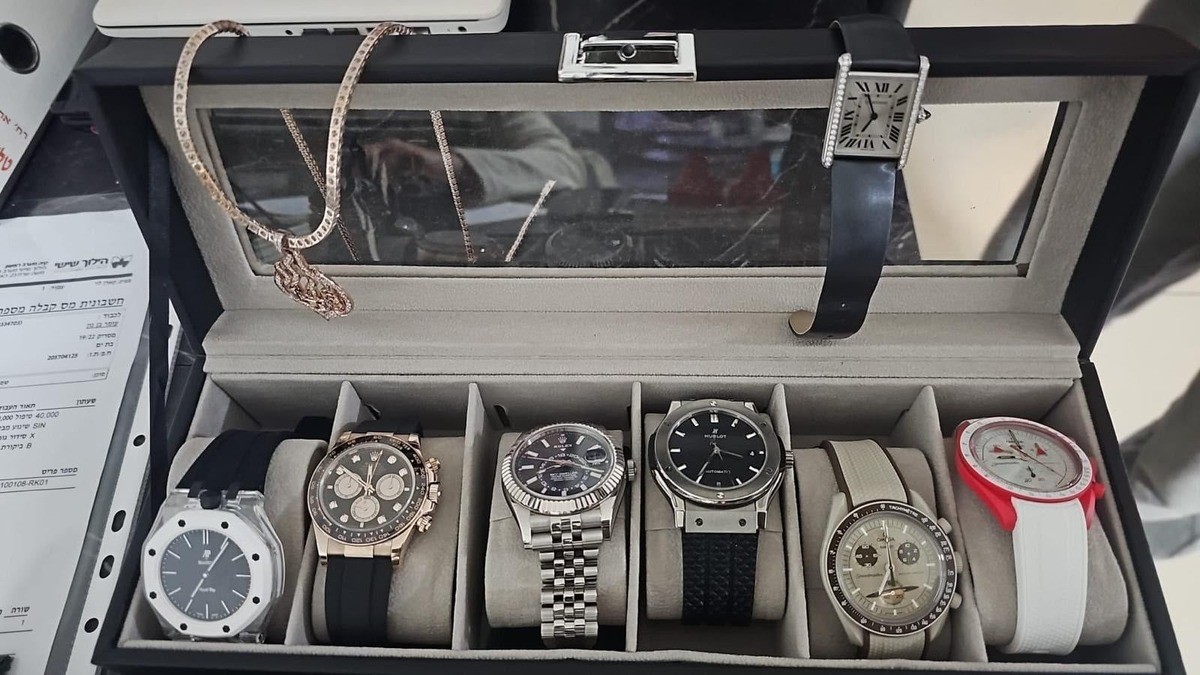
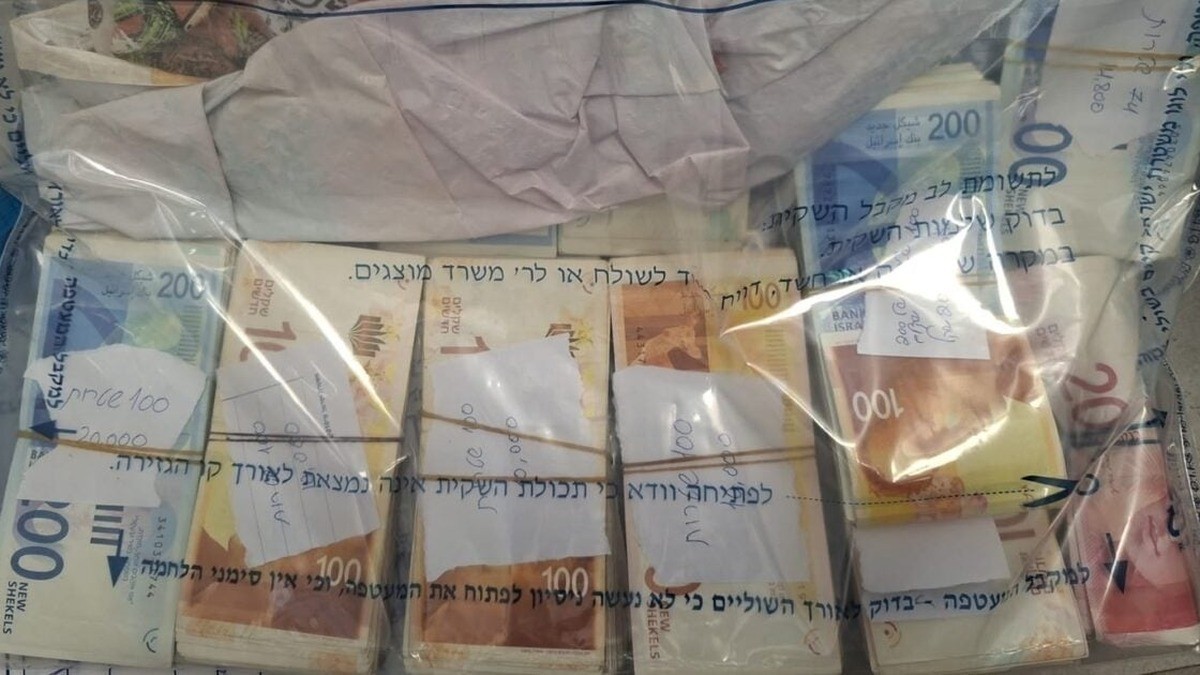
The asset list released Wednesday reads like a page from a lifestyle magazine, which is precisely the point. Officers seized five luxury vehicles, a collection of high-end watches, several open-ended checks, hundreds of thousands of shekels in cash, and an airsoft pistol. Police also said they have begun legal proceedings to seize real estate connected to the suspects. None of it, on its own, proves a crime — expensive cars are legal, and watches are legal. What seizure lists do is establish the scale of the cash economy a case is alleged to have served. And the headline number attached to this investigation is not the value of the cars. It is the estimated volume of money laundered: about half a billion shekels, or roughly 165 million dollars at prevailing exchange rates. That figure is a police assessment at this stage, not a figure established in court.

Who the Jarushi Are
You cannot understand the significance of this raid without understanding the target. The Jarushi family, based in the Jawarish neighbourhood of Ramla, is regarded by Israeli police as one of the country's oldest, strongest and most stable crime syndicates, ranked alongside the Abu Latif and Hariri families among the leading organizations in the Arab sector. The wider clan numbers roughly 2,500 people, descended from Muslims who migrated to the region from Libya about 140 years ago; the criminal organization within it is estimated to have at least 120 foot soldiers. Their revenue has historically come from gambling, drug dealing, the illegal arms trade, debt collection, racketeering and protection money, along with property and construction around Lod, Ramle, Rehovot and Rishon LeZion. A violent feud with the rival Qarajah family in the 1990s killed 24 people before the government brokered a ceasefire.
Why a Currency Kiosk Worries Police More Than a Gun
Here is the shift nobody outside Israel talks about enough. For years the visible war on these organizations was measured in bodies — shootings and explosive attacks in Ramla's Jawarish neighbourhood, an underworld arbitrator shot dead at a mosque entrance. That war has not stopped. But the enforcement strategy has moved decisively toward the money, because a syndicate that cannot bank its proceeds cannot pay its soldiers. The head of the Prime Minister's Office task force combating crime in Arab society framed it in exactly those terms: organized crime, he said, "poses a strategic threat to the nation's economy and sovereignty," and the goal is "to dismantle the economic mechanisms of criminal organizations." That is the theory. Wednesday's raid is the theory being executed on a currency counter in a commuter city. The scale of what is being chased is enormous. Israel's extra-bank lending industry, known locally as the gray market, is largely run by crime syndicates and was estimated to generate 30 billion shekels a year in a Channel 2 expose — with interest rates running from 20 percent to as high as 800 percent annually, aimed at borrowers who cannot turn to a bank. Nobody services that market through a licensed branch. They service it through a changer with a cash drawer and no questions.
The City That Hosted the Emergency Summit
The location is not incidental. On 21 July this year — 120 days ago — government ministries, law enforcement and the chief executives of Israel's largest state-owned companies gathered at the Israel Electric Corporation site in Rishon LeZion for an emergency conference on stopping criminal groups from infiltrating the public sector and seizing control of state infrastructure projects. It was convened on Prime Minister Benjamin Netanyahu's directive, as a joint initiative of the Prime Minister's Office task force and the Government Companies Authority. Officials disclosed then that state-owned companies manage assets exceeding 300 billion shekels and invest tens of billions annually — an enormous surface for protection rackets and rigged tenders. Participants agreed to build interagency cooperation and to examine amending the Public Entities Transactions Law to block criminal-linked corporations from public contracts. Four months later, police are alleging a laundering hub operating in the same city.
The Third Strike in a Fortnight
Wednesday's operation is not a one-off. It is the largest entry so far in a run of cases that has landed in less than three weeks. On 4 November, Lahav 433's National Economic Crimes Unit raided currency exchanges across the Northern District and seized assets estimated at 60 million shekels, bringing in 12 suspects for questioning after investigators concluded the shops were fronting for illicit financial activity. Eight days later, on 10 November, five suspects were arrested over an alleged cryptocurrency exchange run through a WhatsApp group that moved about 16 million shekels without reporting to the tax authorities, with proceeds dressed up as loans. The amounts are not a ladder — 60 million, then 16 million, then an estimate of 500 million — but the template never changes. Together they describe a sustained campaign against a specific vulnerability: the unlicensed financial service provider, the changer, the broker, the man who will take cash and give you a receipt.
The Case Prosecutors Already Won
This is not Israel's first attempt to break a Jarushi money-changer operation through the courts, and the precedent matters. In a case that concluded at the Tel Aviv District Court, the alleged crime boss Ismail Jarushi and 12 other defendants were convicted after admitting offences tied to the extortion of a Tel Aviv money-changer that escalated into gunfire. The dispute centred on a debt of roughly one million shekels. Prosecutors said pressure began no later than February 2025, with a meeting in Ramle that ended in a demand for 200,000 shekels, later rising as high as 500,000. When the complainant refused to pay in full, the case escalated to shooting attacks on the business — and the first one, in May 2025, hit the wrong address. That detail is the whole story of these organizations in miniature: the threat is the product, and accuracy was never the point.
What the Law Allows Them to Take
The legal architecture behind these raids is not glamorous, and it is the reason they work. Israel's Prohibition on Money Laundering Law supplies the core charge. Providing financial asset services without a permit is a separate offence, and it appears in each of this month's cases, because as a matter of law it turns on whether a licence existed rather than on where each shekel came from. Extortion under threat and forgery carry their own weight, and forgery in particular matters here, because falsified paperwork is what turns dirty cash into a plausible balance sheet. Then comes the part that actually hurts: confiscation. Police said proceedings are already under way against real estate. Asset seizure is the closest thing to a knockout blow in this arena, because it reaches the syndicate's balance sheet rather than its foot soldiers.
What Nobody Has Said Yet
So let us be precise about what Wednesday's announcement does and does not establish. No suspect has been named. Nobody has been charged. The headline figure is a police estimate, not a court finding, and the link to the Jarushi organization is described as a police suspicion rather than a proven fact about any individual. Israeli reporting carries the presumption of innocence explicitly, and it applies to every one of the fourteen. Nor has anyone suggested that the organization's leadership was among those detained. What comes next is mechanical and worth watching: the remand hearings on Wednesday, then a decision by the Central District Prosecutor's Office on whether the evidence supports an indictment, then the long, unglamorous fight over whether the state gets to keep the cars, the watches and the property.
By Jessica Ali, Staff Writer
This article was produced with AI-assisted research and editorial support. Sources: Israel Police announcement as reported by Globes, Walla, Mako, Channel 14 and Ynet; WireIsrael; The Times of Israel; The Jerusalem Post; Ynetnews; the Government of Israel press office; Sawa news agency. Photographs: Israel Police Spokesperson handout images, via Channel 14.
What's Your Reaction?
 Like
0
 Dislike
0
 Love
0
 Funny
0
 Wow
0
 Sad
0
 Angry
0

Editor-in-Chief at Global1.News. Atlanta-based journalist who cuts through the BS and tells it like it is. Lead anchor, host, and the voice you hear when the spin stops and the truth starts.













Comments (0)