
Hopes for the North Korean Human Rights Act of 2026
Legislative Foundations of U.S. Policy on North Korean Human Rights The North Korean Human Rights Act of 2004, signed into law by President George W. Bush on October 18, 2004, marked the first instance of any national legislature formally recognizing ongoing crimes against humanity inside the Democratic People's Republic of Korea. The statute established the position of Special Envoy for North Korean Human Rights, authorized refugee admissions for North Koreans into the United States, and direc
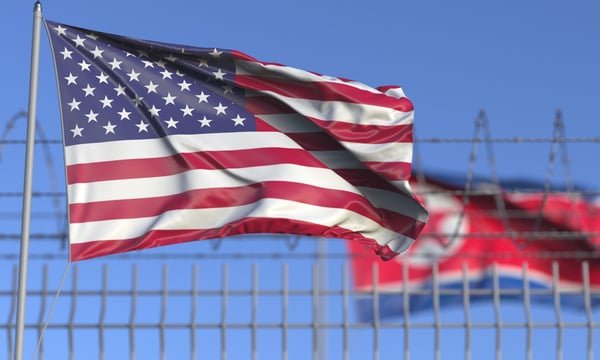
Legislative Foundations of U.S. Policy on North Korean Human Rights
The North Korean Human Rights Act of 2004, signed into law by President George W. Bush on October 18, 2004, marked the first instance of any national legislature formally recognizing ongoing crimes against humanity inside the Democratic People's Republic of Korea. The statute established the position of Special Envoy for North Korean Human Rights, authorized refugee admissions for North Koreans into the United States, and directed funding toward information programs including radio broadcasts. Subsequent reauthorizations occurred in 2008, when the envoy position was elevated to ambassadorial rank, in 2012, and again in 2018, with the final extension expiring in September 2022.
This foundational legislation emerged from a distinctive American recognition that North Korea's internal repression constituted not merely a political dispute but a sustained pattern of crimes against humanity. By designating North Koreans as eligible for refugee status and allocating resources for radio broadcasts, the 2004 Act created institutional pathways for information flow and resettlement that had previously been absent from U.S. policy. The measure reflected a bipartisan consensus that legislative action could address humanitarian concerns even in the absence of diplomatic relations with Pyongyang.
Historical precedent underscores the Act's significance within broader U.S. human rights legislation. Unlike earlier statutes focused on specific countries such as the Soviet Union or China, the 2004 law addressed a regime that permitted no external monitoring and denied its citizens any right to exit. Its sunset provisions ensured periodic congressional review, yet the pattern of reauthorizations demonstrated sustained commitment across administrations despite shifting geopolitical priorities on the Korean Peninsula.
The 2026 Reauthorization Initiative in Congress
On June 24-25, 2026, Senators Tim Kaine of Virginia and Dan Sullivan of Alaska introduced S. 4900, the North Korean Human Rights Reauthorization Act of 2026, on a bipartisan basis and referred the measure to the Senate Foreign Relations Committee. The legislation would extend authorizations for humanitarian aid and democracy programs through 2030, require a formal report to Congress whenever the special envoy position remains vacant, and amend the 2016 North Korean sanctions framework to impose penalties on Chinese and Russian officials involved in the forced repatriation of North Korean defectors. A companion measure introduced in the House of Representatives by Representative Young Kim of California and Representative Ami Bera of California in November 2025 builds on an earlier House passage of reauthorization language in 2024 that the Senate did not complete.
Senator Kaine emphasized that Kim Jong-un and his regime have committed horrendous abuses against North Koreans for decades, and the U.S. must continue to push North Korea to stop oppressing its own people. Senator Sullivan noted that the bill reaffirms the United States' commitment to the fundamental freedoms and human dignity of the North Korean people, adding that sustained efforts to confront this authoritarian regime and support the North Korean people will continue to advance stability and security on the Korean Peninsula. These statements reflect the limited partisan disagreement over the Act's core provisions, with delays attributable primarily to legislative scheduling rather than substantive disputes.
Secretary of State Marco Rubio, while still a senator, co-sponsored an earlier reauthorization effort with Senator Kaine in May 2023, illustrating continuity across party lines. The bill S. 4900 remains in the initial stage of the legislative process within the 119th Congress, having been referred to committee after introduction. Such procedural positioning highlights the challenges of advancing targeted human rights measures amid competing foreign policy priorities.
Deteriorating Conditions Inside North Korea
The 2025 update to the United Nations Commission of Inquiry on Human Rights in the DPRK documented a sharp deterioration in conditions following prolonged border closures. Consumption of foreign media now carries the risk of public execution, while political prison camps continue to detain tens of thousands under circumstances that meet the threshold of crimes against humanity. These developments have occurred against the backdrop of tightened alignment among the governments of China, Russia, and North Korea, which has reduced external leverage over Pyongyang's internal practices.
The COVID-19 border closures have isolated North Korean citizens more completely than at any recent period, severing even limited cross-border information channels that once existed. The 2025 Commission update confirms that political prison camps operate under conditions amounting to ongoing crimes against humanity, with no meaningful international access permitted. This isolation compounds the regime's capacity to enforce indoctrination without external challenge.
Deepening ties among China, Russia, and North Korea have further insulated the regime from accountability mechanisms. As this axis consolidates, opportunities for external engagement narrow, leaving legislative instruments such as the reauthorized Act as one of the few remaining formal expressions of international concern for conditions inside the country.
The Strategic Role of Special Envoys in Washington and Seoul
Julie Turner served as U.S. Special Envoy for North Korean Human Rights from 2023 to 2025, working in coordination with South Korean Special Envoy Lee Shin-wha. Their joint engagement illustrated the potential for aligned bilateral diplomacy on human rights questions. Both positions have since remained vacant for extended periods, limiting sustained attention to refugee protection, information access, and accountability mechanisms. Reauthorization of the underlying statute would restore a legal framework that explicitly supports these appointments and requires reporting on vacancies.
The envoy position remained unfilled from January 2017, following the resignation of the previous officeholder at the end of the Obama administration, until Julie Turner's swearing-in on October 13, 2023. Turner had been nominated on January 23, 2023, and confirmed on July 27, 2023, marking more than six years without an appointed envoy across two administrations. This prolonged vacancy occurred even while the Act itself remained in force until September 2022.
Simultaneous appointment of U.S. and South Korean envoys would restore the coordinated model demonstrated by Turner and Lee Shin-wha. Such alignment enables consistent messaging on refugee protection and information programs, while reauthorization would mandate congressional reporting on any future gaps in appointment, thereby institutionalizing accountability for sustained diplomatic focus.
Implications for Inter-Korean Relations and Regional Stability
Renewed U.S. legislation carries direct relevance for inter-Korean dynamics. Provisions addressing forced repatriation from China would raise the diplomatic costs of a practice that returns defectors to severe punishment, including imprisonment or death. Expanded support for information programs could equip North Koreans with knowledge of alternative political and economic models, potentially influencing long-term perceptions across the peninsula. At the same time, the deepening China-Russia-North Korea alignment constrains the practical reach of legislative instruments, underscoring the need for complementary diplomatic and multilateral efforts.
Forced repatriation remains a central concern because every North Korean returned to the regime faces severe punishment, often imprisonment or death. Explicit sanctions provisions targeting Chinese and Russian officials involved in such returns would elevate the issue within bilateral diplomacy. This approach aligns with the Act's original emphasis on refugee protection while adapting to contemporary patterns of regional cooperation that shield Pyongyang.
Young North Korean defectors who have become professionals, researchers, lawyers, and civic leaders through programs such as the North Korean Young Leaders Assembly offer valuable perspectives for policy formulation. Incorporating these voices as genuine partners rather than symbolic witnesses strengthens the legislation's relevance to conditions on the ground and supports more effective inter-Korean engagement strategies over time.
Forward-Looking Considerations for Sustained Engagement
Reauthorization of the North Korean Human Rights Act would reaffirm an American legislative commitment that originated more than two decades ago without direct prompting from North Korean citizens themselves. The measure's emphasis on information quality, envoy coordination, and sanctions targeting repatriation practices offers concrete avenues for policy continuity. Whether these provisions translate into measurable improvements in accountability or refugee protections will depend on subsequent appropriations, appointment decisions, and the broader geopolitical environment surrounding the Korean Peninsula.
Expanded information access should prioritize substantive content that enables ordinary North Koreans to understand the failures of their political and economic systems. Quality of information matters as much as quantity, particularly as isolation deepens and state indoctrination intensifies. Such efforts build on the 2004 Act's original authorization of radio broadcasts while adapting to contemporary needs for content that supports envisioning alternative futures for the peninsula.
America's role as the first country to legislate formal recognition of crimes against humanity in North Korea carries enduring symbolic weight. Reauthorization through 2030 would sustain this precedent, yet its effectiveness hinges on coordinated action with Seoul, inclusion of defector expertise, and persistent diplomatic pressure on repatriation practices. These elements together determine whether legislative renewal yields tangible advances for North Korean citizens whose voices remain suppressed.
By Prof. David Park, Staff WriterThis article was produced with AI-assisted research and editorial support. Sources: The Diplomat (Eunsook Jang, August 8, 2026), Korea JoongAng Daily, SBS News, KEIA (Robert King), GovTrack S. 4900.
What's Your Reaction?
 Like
0
Like
0
 Dislike
0
Dislike
0
 Love
0
Love
0
 Funny
0
Funny
0
 Wow
0
Wow
0
 Sad
0
Sad
0
 Angry
0
Angry
0

East Asia/Technology Correspondent at Global1.News. Seoul-based voice covering Korean politics, technology, business, and culture. Analyzes how technology and geopolitics intersect across East Asia.













Comments (0)