
Leaner, Meaner, More Networked: The Royal Thai Air Force’s Modernization Drive
The Royal Thai Air Force (RTAF) is reshaping its future in the wake of the 2025 border clash with Cambodia. That confrontation exposed gaps in doctrine, training and the ability to counter unmanned systems, prompting a comprehensive revision of the force’s development roadmap.
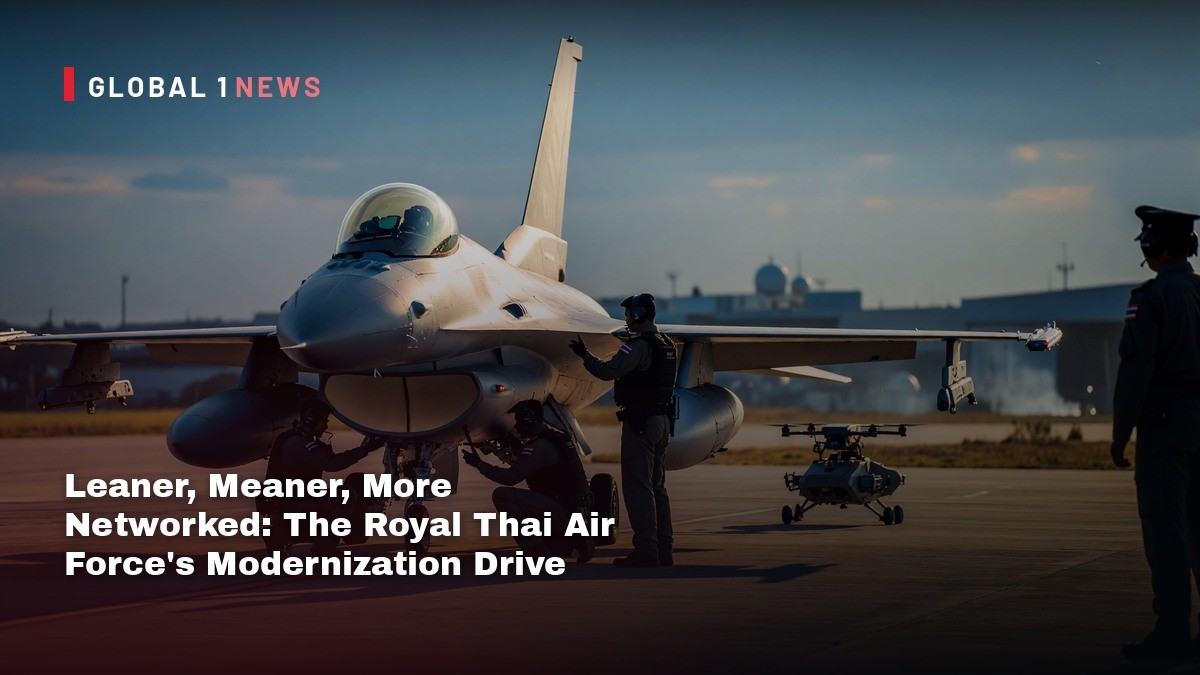
The Royal Thai Air Force (RTAF) is reshaping its future in the wake of the 2025 border clash with Cambodia. That confrontation exposed gaps in doctrine, training and the ability to counter unmanned systems, prompting a comprehensive revision of the force’s development roadmap. Commander‑in‑Chief Air Chief Marshal Seksan Kantha has framed the new direction as a shift toward a leaner, more capable and increasingly network‑centric air force, with an emphasis on self‑reliance and modern combat concepts.
Revised Doctrine and Operational Priorities
In a briefing last month, Air Chief Marshal Seksan highlighted three core priorities: revising doctrine, enhancing training, and mastering the management, control and countering of unmanned aircraft. He also announced the creation of an air warfare centre intended to serve as a hub for tactical and doctrinal knowledge, mirroring similar establishments in other major air forces. These steps aim to embed the lessons of the 2025 clash—particularly the need for rapid information sharing and effective response to unmanned threats—into the RTAF’s everyday operations.
The 10‑year roadmap, detailed in a White Paper released in November 2026, redirects resources toward fewer but more capable crewed combat platforms, a larger fleet of uncrewed ISR and strike aircraft, precision‑guided and standoff weapons, and upgraded command‑and‑control (C2) networks. Integrated air‑defence and counter‑UAS (C‑UAS) capabilities for air bases also feature prominently, reflecting a broader regional trend toward network‑centric warfare.
Modernising the Pilot Training Pipeline
Training modernization has already begun. The RTAF recently acquired the T‑6 Harvard II turboprop trainer from the United States and the TA‑50TH advanced jet trainer from South Korea, together with associated simulators. These platforms replace older trainers and aim to raise the proficiency of new pilots. The next phase will see the retirement of the ageing CT/4 Airtrainer fleet—known locally as the B.F16—and its replacement with a new elementary training aircraft, although the specific type has not yet been disclosed.
By strengthening the training pipeline, the RTAF seeks to ensure that pilots transitioning to next‑generation combat aircraft, such as the forthcoming Gripen E/F, will be equipped with the skills required for high‑intensity, networked operations. The emphasis on simulators also reflects a desire to reduce flight hours while maintaining combat readiness, a practice common among advanced air forces.
Future Force Structure and Wing Realignment
Looking ahead to the 2030s, the RTAF plans to condense its operational footprint around three principal wings: Wing 1 at Korat, Wing 4 at Takhli and Wing 7 at Surat Thani. Other units will be reoriented toward specialised missions, including airlift, special operations and uncrewed missions. This restructuring is intended to concentrate combat power while allowing flexibility for rapid deployment across Thailand’s dispersed geography.
The reallocation also aligns with the broader shift toward a smaller, more capable force. By focusing on a core of highly capable wings, the RTAF hopes to streamline logistics, training and maintenance, thereby improving overall readiness and reducing the burden on the defence budget.
Gripen E/F Procurement and Fleet Modernisation
Following the August 2024 selection of SAAB’s Gripen E/F as the RTAF’s future combat aircraft, the force has begun a phased acquisition to replace the ageing F‑16 fleet of Wing 1. The first three Gripen E/F are scheduled for delivery in 2028, and the RTAF is seeking additional government funding for a second batch of eight aircraft to bring the squadron to its planned strength of twelve aircraft as soon as possible.
The legacy Gripen C/D fleet of Wing 7 was upgraded to the MS20 standard in the early 2020s, enabling compatibility with the MBDA Meteor long‑range air‑to‑air missile. This capability, highlighted in the 2026 White Paper, reflects a direct lesson from the 2025 border clash and from broader observations of long‑range missile developments in the Ukraine war and the Indo‑Pacific strategic environment.
Standoff and Precision‑Strike Enhancements
During the Cambodia border clashes, the RTAF relied heavily on precision‑guided direct‑attack munitions, with a limited number of long‑range glide bombs employed early in the conflict. Recognising the need for greater reach without exposing combat aircraft to hostile airspace, the force has pursued a range of standoff weapons. In September 2026, Bangkok announced the acquisition of 20 Rampage air‑launched ballistic missiles—derived from the Israeli EXTRA artillery rocket—alongside 100 MPR‑500 bunker‑buster munitions and additional LIZARD‑III guidance kits.
The Rampage missiles will be integrated on the F‑16 fleet of Wing 4, substantially extending its strike distance. Simultaneously, the RTAF is evaluating the French Safran 250 XLR and 1000 XLR AASM rocket‑powered precision‑guided bombs for the Gripen fleet, a move that could provide air‑force‑wide standoff precision strike capability if the procurement proceeds.
Uncrewed Systems and Human‑Machine Teaming
Beyond crewed fighters, the White Paper reaffirms the RTAF’s commitment to uncrewed combat platforms as force multipliers. The force envisions a future structure where crewed aircraft operate in concert with uncrewed collaborative combat aircraft (CCA), creating “intelligent human‑machine teaming.” This approach promises to generate greater combat mass at lower cost, while also expanding ISR and strike options.
In addition to high‑end CCAs, the RTAF will continue to acquire a spectrum of uncrewed ISTAR and strike platforms, reinforcing its capability to conduct persistent surveillance and precision attacks without risking pilot lives. The integration of these systems will be underpinned by the domestically developed Link‑T datalink, which proved its value during the 2025 clash by enabling seamless air picture sharing between Erieye AEW aircraft, the air operations centre and compatible combat jets.
Network‑Centric Advances and Indigenous Datalink Development
The RTAF’s partnership with SAAB, initiated with the original Gripen purchase in 2008, has yielded a domestically produced datalink known as Link‑T. Tested successfully during the 2025 border clash, Link‑T facilitated real‑time exchange of air picture and command information between airborne assets and ground‑based control nodes. This capability underscored the importance of network‑centric operations for the RTAF’s future combat effectiveness.
Western suppliers typically retain control over standard datalinks such as Link‑16, raising concerns about technology leakage and interoperability with Eastern systems. The technology‑transfer provisions in the Gripen E/F deal granted the Thai defence industry intellectual‑property rights to modify Link‑T to meet service‑specific requirements. This autonomy is expected to accelerate the RTAF’s move toward greater self‑reliance within the next two years, as domestic engineers adapt and expand the datalink to support the expanding suite of crewed and uncrewed platforms.
This article was produced with AI-assisted research and editorial support. Reporting is based on the source material cited below. Sources: The Diplomat; thediplomat.com; Global1.News (07 November 2026).
By Kenji Tanaka, Staff Writer
What's Your Reaction?
 Like
0
 Dislike
0
 Love
0
 Funny
0
 Wow
0
 Sad
0
 Angry
0

Japan Correspondent at Global1.News. Tokyo-based voice covering Japanese politics, technology, economy, and culture. Tracks the intersection of tradition and innovation in one of the world's most dynamic societies.














Comments (0)