
Social Security Funding Shortfall Hits a Tipping Point — Trustees Warn of 2033 Depletion
The Clock Is Ticking: Social Security's Funding Shortfall Hits a Tipping Point Washington, D.C. – June 5, 2026 — Folks, I'm going to level with you. The numbers are out, and they're not pretty. The latest projections from the Social Security Board of Trustees have landed, and the message is unmistakable: the program millions of Americans depend on is running out of runway. We'r
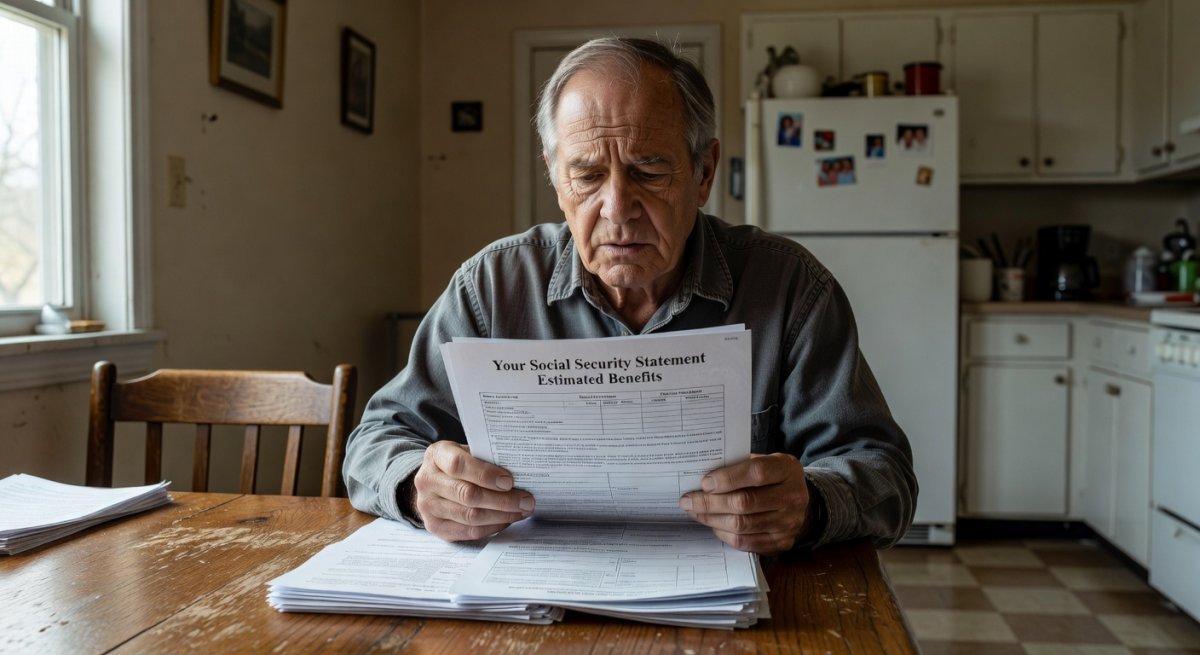
The Clock Is Ticking: Social Security's Funding Shortfall Hits a Tipping Point
Washington, D.C. – June 5, 2026 — Folks, I'm going to level with you. The numbers are out, and they're not pretty. The latest projections from the Social Security Board of Trustees have landed, and the message is unmistakable: the program millions of Americans depend on is running out of runway. We're talking about the difference between a dignified retirement and a financial cliff — and Congress is still dragging its feet.
According to the annual report from the Social Security and Medicare Boards of Trustees, the combined Old-Age and Survivors Insurance and Disability Insurance trust funds are now projected to be depleted by 2035. But here's the part that should make you sit up straight: the OASI trust fund — the one that pays retirement benefits — is on track to run dry by 2033. After that, unless Congress acts, incoming payroll taxes will only cover about 77 percent of scheduled benefits. That's a 23 percent across-the-board cut for every single retiree, disabled worker, and surviving spouse on Social Security.
Let me repeat that: a 23 percent benefit cut. For your grandparents. For your parents. For you, down the line. This isn't a hypothetical anymore — it's a countdown.
What the Trustees Report Actually Says
The 2026 Social Security Trustees Report, released late last month by the Treasury Department, paints a stark picture. The program's long-term deficit has widened by 0.12 percent of taxable payroll compared to last year's projections. That may sound like a small number, but in the world of Social Security financing, these fractions represent hundreds of billions of dollars.
Here are the headline numbers from the report, as covered by Reuters and the Associated Press:
- The OASI Trust Fund reserve — the piggy bank — will be exhausted in 2033, unchanged from last year's projection.
- The DI Trust Fund (Disability Insurance) is fully solvent through 2098, meaning the disability side is actually in decent shape.
- Combined, the two trust funds are projected to last until 2035.
- After OASI depletion, continuing tax revenue would cover 77 percent of scheduled benefits for retirees.
- The 75-year actuarial deficit stands at 3.52 percent of taxable payroll — the gap between what the program owes and what it takes in.
Stephen C. Goss, the Chief Actuary of the Social Security Administration, confirmed these findings in testimony before Congress. The report itself is the most definitive, non-partisan assessment of the program's financial health we have. And folks, it doesn't lie.
Why This Matters More Than Ever in 2026
This isn't new — we've known about the trust fund cliff for years. The Trustees have been sounding the alarm since at least 2010. But here's what's different now: we're under a decade out from depletion. The window for action is closing fast, and every year Congress kicks the can down the road, the fix gets more expensive.
Economists from the Bipartisan Policy Center and the Committee for a Responsible Federal Budget have pointed out that the longer lawmakers wait, the more painful the options become. Early action could mean modest tax increases or modest benefit adjustments spread over decades. Waiting until 2032? That forces emergency cuts that devastate retirees who have no other safety net.
And here's the part that gets me: Social Security isn't some welfare program. Workers pay into it their entire careers. It's earned. The average retired worker receives about $1,976 per month in 2026 — roughly $23,700 a year. Try living on that in Atlanta, in New York, in San Francisco. Now cut it by 23 percent. That puts seniors below the federal poverty line.
The Politics of Inaction
Let's talk about why nothing gets done. Both parties talk a big game about saving Social Security, but when it comes to actual legislation, the issue is radioactive. Proposals to raise the retirement age — currently 67 for anyone born after 1960 — get attacked as "cutting benefits." Proposals to raise the payroll tax cap — right now, earnings above $176,100 in 2026 aren't subject to Social Security tax — get attacked as "a tax hike on job creators." Proposals to means-test benefits or adjust the cost-of-living formula get attacked from both sides.
Meanwhile, the Social Security Administration itself is underfunded. Field offices have been closing. Wait times for disability hearings stretch into years. The agency's administrative budget — which comes from a separate account — hasn't kept pace with inflation, and customer service is suffering as a result. You can't run a program that serves 67 million Americans on a shoestring budget and expect good outcomes.
Senator Bernie Sanders (I-VT) has proposed expanding Social Security benefits and raising the payroll tax cap. Senator Mitt Romney (R-UT) has co-sponsored the TRUST Act, which would create special congressional committees to fast-track solvency proposals. Both approaches have merit. Neither has passed. Because in Washington, it's easier to do nothing than to do something hard.
What a 23 Percent Cut Would Actually Look Like
Let me make this real for you. Mary Johnson, a 72-year-old widow in Columbus, Ohio, receives $1,450 a month in Social Security. That's her primary income. Under a 23 percent cut, she'd get $1,116 a month. That's $334 less. For context, the average monthly rent for a one-bedroom apartment in Columbus is $950. Mary would be choosing between food and shelter.
This isn't an isolated case. According to the National Council on Aging, more than 15 million older adults are already economically insecure — meaning they struggle to afford basic needs like housing, healthcare, and food. A 23 percent benefit cut would push millions more over the edge. It would be the single largest increase in senior poverty in American history.
The Social Security Administration's own data shows that 37 percent of men and 42 percent of women aged 65 and older rely on Social Security for at least half of their income. For 12 percent of men and 15 percent of women, it's their only source of income. You cut that, and you've got a humanitarian crisis on your hands.
Solutions That Are Actually on the Table
I'm not here to just scare you — I'm here to tell you what can be done. There are multiple, bipartisan proposals that would close the funding gap. None of them are painless, but they're all less painful than a 23 percent haircut on Grandma's check.
Option 1: Raise the Payroll Tax Cap. Right now, wages above $176,100 aren't taxed for Social Security. That means a CEO making $10 million a year stops paying into the system after the first $176,100 — paying the same dollar amount as someone making $176,100. Lifting or eliminating that cap would close roughly 70 percent of the funding gap, according to the Social Security Chief Actuary.
Option 2: Modestly Increase the Payroll Tax Rate. The current rate is 12.4 percent split between employer and employee. Increasing it by just 1 percentage point — split 0.5 percent each — would close about half the gap. It's not nothing. But it's a lot less than a 23 percent benefit cut.
Option 3: Adjust the Cost-of-Living Formula. The current COLA is based on the Consumer Price Index for Urban Wage Earners (CPI-W), which doesn't accurately reflect how seniors spend money. Switching to the Consumer Price Index for the Elderly (CPI-E) would better track healthcare and housing costs that hit seniors hardest — but it would also be more expensive for the system.
Option 4: A Hybrid Approach. Most serious proposals actually combine several of these. The Social Security 2100 Act, introduced by Representative John Larson (D-CT), would expand benefits, raise the payroll tax cap, and gradually increase the payroll tax rate. The TRUST Act creates a fast-track process for developing bipartisan solvency plans. Both recognize that there's no silver bullet — but there's a toolbox.
Where We Go From Here
The Trustees report is a warning, not a death sentence. Social Security isn't going bankrupt — it's not even close to bankrupt. Even after the trust fund is depleted, the program still collects payroll taxes and pays benefits. The question is whether those benefits will be at promised levels or sharply reduced.
The difference between the two outcomes is political will. And that's where you come in, folks.
Call your representatives. Ask them where they stand on Social Security solvency. Ask them if they support the TRUST Act, the Social Security 2100 Act, or any concrete plan to close the funding gap. Ask them: what are you doing to make sure I don't lose 23 percent of my benefits when I retire?
This isn't a Democratic issue or a Republican issue. It's a American issue. Every single worker who pays payroll taxes has skin in this game. And every single lawmaker who refuses to take a position is failing in their duty.
The Trustees report is in. The clock is ticking. The solutions are known. What's missing is the courage to act.
Stay informed. Stay loud. And for heaven's sake — make them do their jobs.
By Jessica Ali, Lead Anchor — Global 1 News
This article was produced with AI-assisted research and editorial support. Reporting is based on sources cited in the article.
What's Your Reaction?
 Like
0
Like
0
 Dislike
0
Dislike
0
 Love
0
Love
0
 Funny
0
Funny
0
 Wow
0
Wow
0
 Sad
0
Sad
0
 Angry
0
Angry
0

Editor-in-Chief at Global1.News. Atlanta-based journalist who cuts through the BS and tells it like it is. Lead anchor, host, and the voice you hear when the spin stops and the truth starts.














Comments (0)