
Shadow-Fleet Tanker Burns Off Sochi as the Black Sea's Shipping War Widens
An oil tanker burns in the Black Sea off Sochi after Russia's Transport Ministry said it was struck by unmanned boats. All 23 Indian crew were rescued and beaches were closed, as drone strikes sank two cargo ships off Bulgaria and Russia hit Kyiv with missiles.
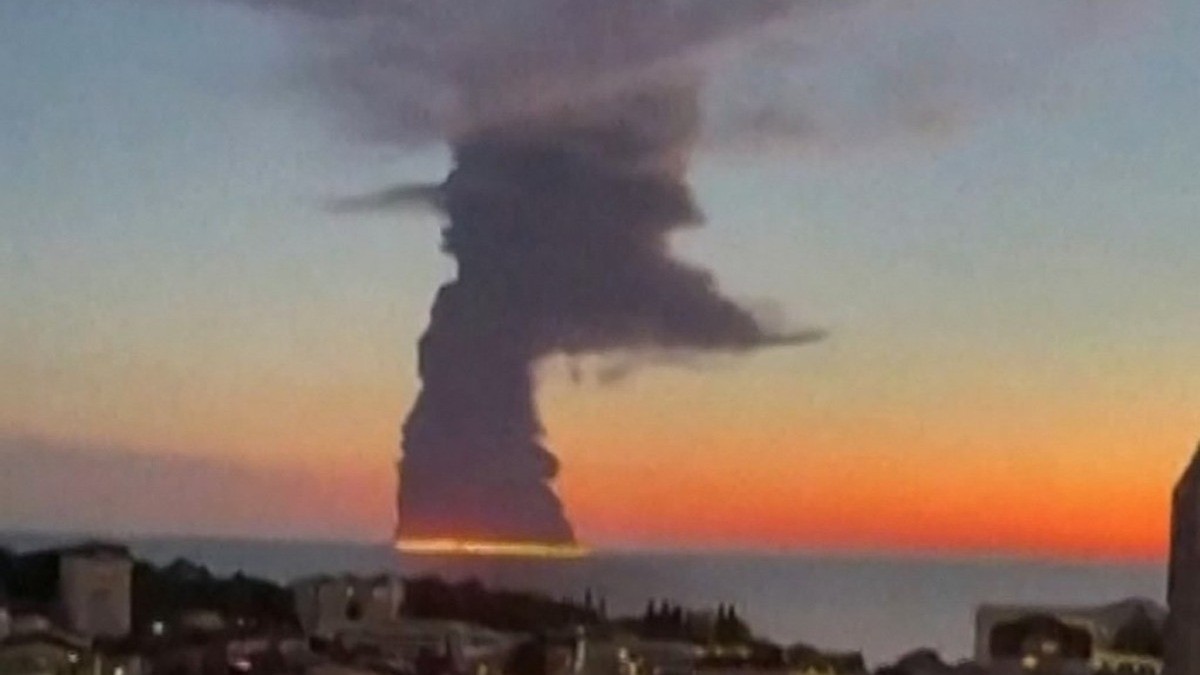
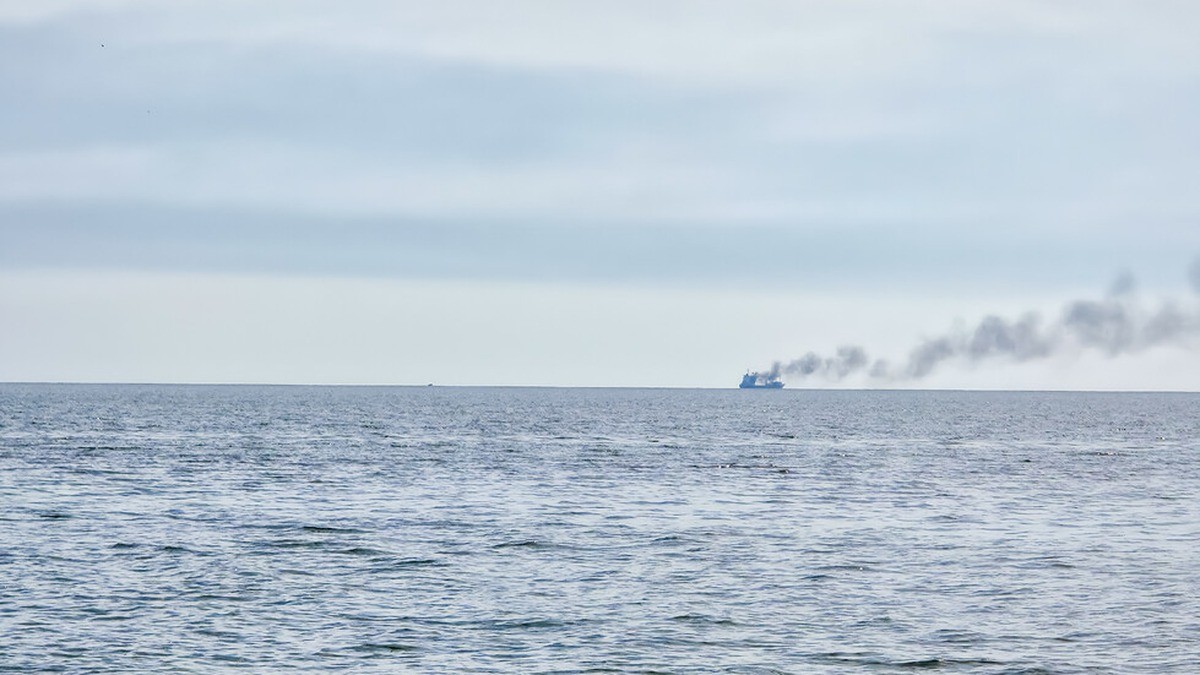
An oil tanker is burning in the Black Sea within sight of one of Russia's biggest resort cities, and the smoke is drifting ashore over the beaches. Russia's Transport Ministry says the Liberian-flagged Aframax Rio was struck by unmanned boats on Tuesday evening off Sochi, and that crude oil is burning openly on the water. All 23 people on board — every one of them an Indian citizen — were pulled off alive.
Shadow-Fleet Tanker Burns Off Sochi as the Black Sea's Shipping War Widens
Sochi, Russia — Firefighters could not approach the vessel because of the intensity of the blaze, the ministry said, and the flames were still burning out at sea into Wednesday. This is not a distant battlefield. It is a holiday coastline of almost half a million people, roughly 650 to 700 kilometers from the Ukrainian border, and the war has now arrived within swimming distance of the sand.
The Fire They Could See From the Shore
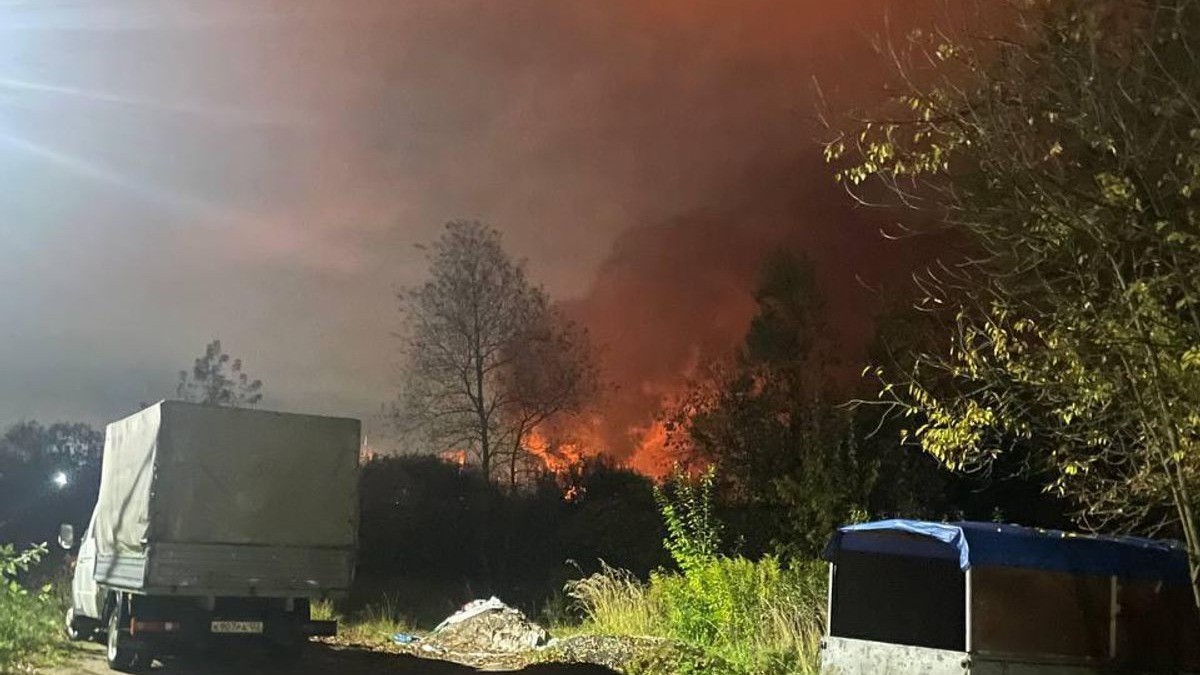
Residents along the coast filmed a column of black smoke rising off the water on Tuesday evening. The fire was visible from across the resort city, and emergency services monitored the vessel and the surrounding water. The settlement of Sirius, in Russia's southern Krasnodar region, closed its beaches to the public, and authorities restricted access to beaches and sections of the coastline.
The Sochi Radar monitoring channel warned that the smoke had partly reached the shoreline, telling residents not to breathe it, to wear masks outdoors and to keep their windows shut. Russian Telegram channel Mash reported that the blaze engulfed the whole tanker at around 6 p.m. local time. None of that is a claim from a war room. It is what people standing on a beach could see with their own eyes.
What the Aframax Rio Was Carrying
The vessel is a large crude oil tanker, flagged in Liberia, with the IMO number 9273844. Ukrainian authorities identified it as part of Russia's so-called shadow fleet — the network of loosely regulated ships used to keep Russian oil exports moving despite Western sanctions and price caps — and Kyiv added it to Ukraine's sanctions list on February 12, 2026, alongside 90 other vessels. It does not appear on European Union or allied sanctions lists.
Marine traffic data last placed the ship 23 hours before the fire near the Russia-Georgia border, close to Nizhneimeretinskaya Bay, about 15 kilometers off Sochi. The Telegram channel Mash reported the tanker was carrying crude from the Russian port of Novorossiysk to India and was loaded almost to capacity. That detail comes from an unofficial channel, not from the ministry, and should be read that way — but if it is right, the cargo was bound for the same country whose citizens were crewing the ship.
Russia Blames Drone Boats. Ukraine Has Said Nothing.
Russia's Transport Ministry attributed the attack to "unmanned boats," a term that covers the small, fast, explosives-laden naval drones Ukraine has used repeatedly against Russian shipping. The ministry did not say who launched them. Ukrainian officials have not claimed responsibility for this particular vessel, and it remains unclear whether Ukrainian forces were behind the strike.
That gap matters. Ukraine has openly claimed similar operations before, so silence here is not the same as denial, but neither is it a confirmation. What is documented is the pattern: Ukraine says its strikes on Russian oil infrastructure are fair retribution for Moscow's nightly bombardment of its towns and cities. Russia says nothing at all about who might have fired on its own flagged tanker. Both sides have vowed to escalate, and both are doing it on the water.
The Same Night, Nearly 900 Drones Over Russia
The tanker fire was the most visible event of a very heavy 24 hours, not the only one. Russian authorities said almost 900 Ukrainian drones were intercepted by air defense systems across multiple regions, including the occupied Crimean Peninsula and the Sea of Azov. Moscow's mayor, Sergei Sobyanin, said 650 drones flew toward the capital region between Monday evening and Tuesday morning, that most were destroyed at a distance, and that 105 were downed as they approached the city. He later reported 68 more brought down over Moscow during daylight on Tuesday.
Russian state media described the overnight assault as the largest drone attack the Moscow region has seen in two years. On October 4, Ukraine's Defense Ministry said more than 51 percent of Russia's oil refining capacity had been disabled by Ukrainian strikes. Those figures come from a belligerent and should be treated as such, but the direction of the campaign is not in dispute: Kyiv has spent months reaching deep into Russia to hit the energy system that funds the war.
The Largest Oil Depot in the Moscow Region
Ukrainian drones targeted a large oil facility in the Moscow region overnight, according to monitoring channels that the Kyiv Independent said it could not immediately verify. The reported target was the Volodarsk linear production and dispatch center near the village of Konstantinovo, roughly 40 kilometers from downtown Moscow and about 450 kilometers from the Ukrainian border. Witness footage appeared to show flames and smoke rising from the site.
The independent Russian outlet Astra described Volodarsk as the largest oil depot in the Moscow region, producing some 3 million tons of petroleum products a year, with pipelines connecting it to major Moscow airports. Separately, unconfirmed media reports said a major fuel depot in the Moscow region had been ignited during the barrage; that has not been independently confirmed.
Russia's Answer Landed on Kyiv at 3:15 A.M.
Moscow's response came down on the Ukrainian capital before dawn on Wednesday, coinciding with President Vladimir Putin's 74th birthday. Multiple explosions were heard in Kyiv at about 3:15 a.m. local time, with journalists on the ground counting at least 10 to 12 blasts. Ukraine's Air Force had warned of several Tu-95 bombers approaching the border.
Kyiv's mayor, Vitali Klitschko, reported a strike on a non-residential area in the Obolon district and hits on warehouse facilities in Podil, where flames and smoke were seen. Missile debris was burning in the Shevchenkivskyi and Darnytskyi districts. The full extent of the damage was not immediately clear, and the account was still developing. A night earlier, Russian drones had damaged cars in Kyiv; over recent days, Moscow has been hammering the bridges that cross the Dnipro and running daytime drone raids that have paralyzed traffic in the capital. President Volodymyr Zelensky had warned hours earlier that intelligence pointed to a coming "massive strike," and said Ukraine was preparing countermeasures.
Three Ships Struck, Two Sunk, and the War Reaches NATO Waters
The same week, the war on shipping moved west into the exclusive economic zones of NATO members. Drones struck several merchant vessels in the Black Sea on Tuesday, including two ships about 112 kilometers off Bulgaria's coast, according to Bulgarian broadcaster Nova. The Togo-flagged Alfa Watan suffered severe structural damage and sank, its crew's fate unknown. The Palau-flagged Able caught fire; all 18 crew were rescued by a Bulgarian ferry, with two sailors seriously injured, one with severe burns and one with a head injury. The crews were Indian and Turkish nationals.
It is believed to be the first reported drone attack on commercial shipping inside Bulgaria's exclusive economic zone. A day earlier, on Monday, a Turkish-owned cargo ship carrying corn loaded at the Ukrainian port of Ismail was struck inside Romania's exclusive economic zone, caught fire and sank, with two crew killed, 11 rescued and one missing. And a Russian drone hit a Marshall Islands-flagged vessel carrying rapeseed oil, killing a steward and injuring seven others. Russia's Defense Ministry also said its forces struck the Odesa region overnight, hitting an ammunition depot, a bulk carrier at Chornomorsk port carrying dual-use goods, and port infrastructure at Izmail.
"They Are Either Russian or Ukrainian"
Responsibility for the Bulgarian strikes is contested, and the competing accounts are worth laying out exactly as they stand. Zelensky said Ukrainian forces conducted no operations in that part of the sea, that Kyiv verified the details with Bulgaria, and that it concluded the attack was Russian — a combined strike using both sea and aerial drones, aimed at making the western Black Sea unfit for navigation.
Bulgaria's prime minister, Rumen Radev, convened an emergency meeting and called it an unacceptable attack inside his country's economic zone and a blatant violation of international law and maritime law. But he pointedly did not assign blame. "We have yet to try to establish where the attack came from," he said, "but it is clear: they are either Russian or Ukrainian." European Commission President Ursula von der Leyen condemned the strikes, writing that attacks on civilian shipping are unacceptable.
Why This Isn't Just a War Story
There is an economic version of the same fight, and it is already running. Ukraine began using drones in early July against ships calling at Russian-controlled ports, and Kyiv says it has since damaged more than 300 tankers and cargo vessels. Russia, in turn, has hit grain carriers carrying Ukrainian goods near the coast of EU member Romania. Insurance costs rise with every hull that burns, and every rise is a tax on food and fuel moving through a corridor that carries grain to Africa and the Middle East.
Bulgaria's prime minister said the attacks pose growing risks to shipping, push up insurance and further complicate maritime transport. Odesa's regional governor, Oleh Kiper, said that by deliberately targeting civilian shipping and port infrastructure, Russia is grossly violating the norms of international law and threatening global food security. Ukraine's air defenses are the other half of the equation: Foreign Minister Andrii Sybiha said last week that Kyiv estimates Russia is holding 600 ballistic missiles in reserve and can build up to 140 a month, while American-made Patriot interceptors remain in short supply.
The Question Nobody Will Answer
So who fired on the Aframax Rio? Russia says unmanned boats and stops there. Ukraine says nothing. The ship was on Kyiv's own sanctions list, which tells you what Ukraine thought of it, but a sanctions listing is not an admission of an attack — and the Kremlin is under no obligation to explain why a tanker it does business with was burning in front of its own beaches.
What is undeniable is the direction of travel. Both governments say they intend to escalate. Poland has announced it will deploy Patriot batteries near the Ukrainian border and a $26 billion civil defense program; the European Union is drafting a new sanctions package. And in a poll published Tuesday by the Kyiv International Institute of Sociology, 62 percent of Ukrainians said they are prepared to endure the war as long as it takes. The fire off Sochi is the latest in a week that has already seen a sanctioned tanker burning at sea, two cargo ships sunk, a reported strike on the largest oil depot in the Moscow region, and missiles over Kyiv before sunrise.
By Jessica Ali, Staff Writer
This article was produced with AI-assisted research and editorial support. Sources: Reuters, AFP, The Associated Press, dpa, ABC News, the Kyiv Independent, the Kyiv Post, Ukrinform, Novaya Gazeta Europe, Bulgaria's Nova, and the Odesa Oblast Military Administration.
What's Your Reaction?
 Like
0
Like
0
 Dislike
0
Dislike
0
 Love
0
Love
0
 Funny
0
Funny
0
 Wow
0
Wow
0
 Sad
0
Sad
0
 Angry
0
Angry
0

Editor-in-Chief at Global1.News. Atlanta-based journalist who cuts through the BS and tells it like it is. Lead anchor, host, and the voice you hear when the spin stops and the truth starts.













Comments (0)