
Trump, Xi and Putin confront AI supremacy at historic China summit
In a striking Al Jazeera English report aired on 18 November 2026, the looming trilateral summit in China between former U.S. This narrative raises a stark question: how resilient is the American infrastructure in the face of growing dependence on complex digital systems?
In a striking Al Jazeera English report aired on 18 November 2026, the looming trilateral summit in China between former U.S. President Donald Trump, Chinese President Xi Jinping and Russian President Vladimir Putin was framed as a decisive moment in the global race for artificial intelligence dominance. The footage highlighted how AI has become a linchpin of economic power, national security and military advantage, while also exposing growing anxieties about the resilience of American infrastructure after a series of recent outages that crippled critical services across the United States. As a journalist who follows the intersection of technology, geopolitics and the everyday lives of Latin Americans, I find the implications of this meeting reverberating far beyond the halls of Beijing, touching on the future of energy, climate policy and the fragile ecosystems of our continent.
The AI race as a new arena of great‑power rivalry
The Al Jazeera segment positioned AI as the newest battlefield where the United States, China and Russia vie for supremacy. It noted that artificial intelligence is now central to economic power, suggesting that the nation that masters the technology will shape global markets for years to come. This framing aligns with the broader narrative that AI is not merely a tool but a strategic asset that can tilt the balance of trade, finance and industrial development.
In the report, former Deputy Assistant Secretary of Defense for East Asia David Sedney and ITIF Vice President for Global Innovation Policy Stephen Ezell were quoted to underscore the security dimension of the competition. Their presence signalled that the United States perceives AI as a matter of national defence, a view echoed in the Pentagon’s recent push to embed AI into weapons systems and intelligence analysis. For Latin America, where many defence budgets are already stretched, the prospect of an AI‑driven arms race raises concerns about a new wave of militarisation that could spill over our borders.
Meanwhile, the video highlighted the participation of Russian President Vladimir Putin, indicating that Moscow seeks to leverage AI to offset sanctions and sustain its strategic ambitions. The convergence of three leaders at a single summit underscores how AI has become a diplomatic currency, a point of leverage that each power hopes to turn into political capital in negotiations ranging from trade to climate accords.
American infrastructure vulnerabilities exposed
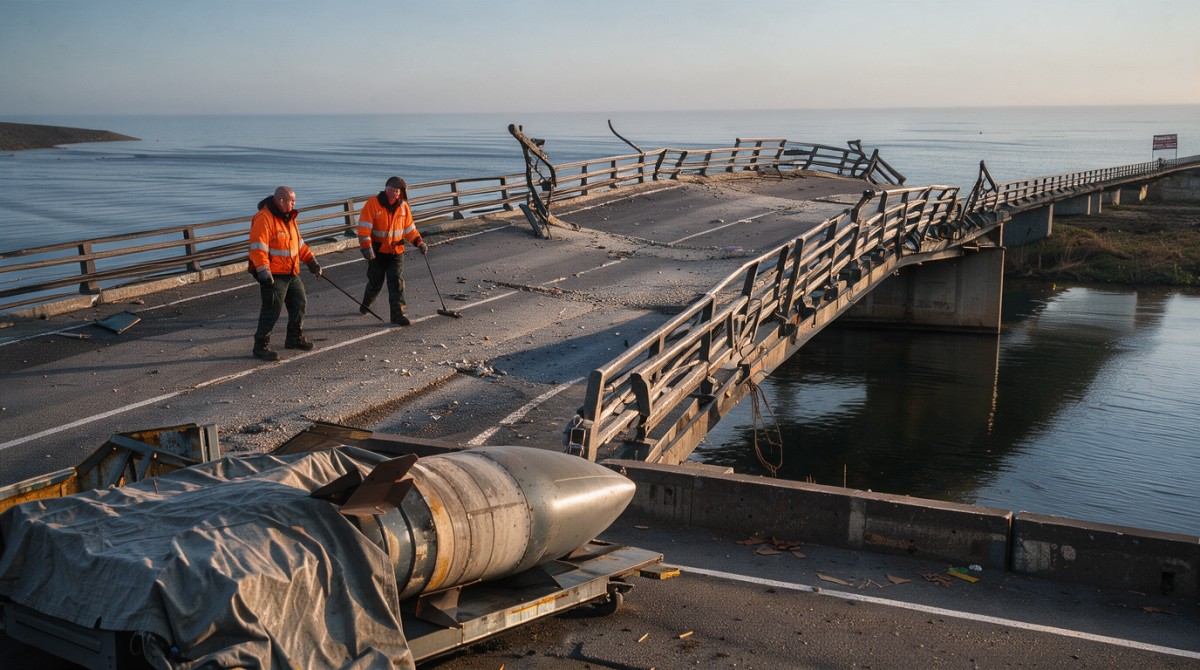
Al Jazeera’s report drew particular attention to a series of recent outages that disrupted critical services across the United States. While the video did not specify the exact nature or duration of these disruptions, the mention of “critical services” implies that sectors such as electricity, water, telecommunications or transportation were affected. This narrative raises a stark question: how resilient is the American infrastructure in the face of growing dependence on complex digital systems?
The footage suggested that these outages have sparked a debate about the United States’ technological dependence, especially on foreign‑made hardware and software. For Latin American nations that import much of their technology from the United States, the fragility of American supply chains could translate into secondary risks for our own critical sectors, from power grids to water treatment plants that rely on U.S.‑origin AI‑enabled monitoring tools.
From a climate perspective, the reliability of energy and water infrastructure is essential for adaptation and mitigation efforts. If the United States, a major donor of climate finance and technology, grapples with its own systemic failures, the ripple effects could undermine regional projects that depend on stable data streams and digital coordination, such as Amazon rainforest monitoring networks that rely on satellite‑based AI analytics.
Economic stakes: AI as a driver of future growth
The Al Jazeera video positioned AI as a core engine of future economic growth, noting that the technology is increasingly central to national wealth creation. While no specific figures were offered, the emphasis on AI’s role in “economic power” implies that the three powers anticipate substantial returns from AI‑driven productivity gains, new industries and export potential.
For Brazil and its neighbours, the AI race presents both opportunity and threat. On one hand, the continent’s burgeoning tech hubs in São Paulo, Buenos Aires and Bogotá could attract investment if multinational firms seek to diversify AI research beyond the traditional centres of Silicon Valley, Shenzhen and Moscow. On the other hand, the concentration of AI talent and capital in the United States, China and Russia could widen the technology gap, leaving Latin America dependent on external solutions for climate modelling, agricultural optimisation and disaster response.
The report’s inclusion of Alex Marquardt as presenter, a figure known for his work on AI policy, hinted at a broader conversation about governance frameworks. Latin American policymakers must therefore engage early in shaping standards for data privacy, algorithmic transparency and equitable access, lest the continent be relegated to a peripheral role in the AI‑driven global economy.
Military implications and the spectre of an AI arms race
By featuring former defence officials, the Al Jazeera segment underscored the militarisation of AI. The presence of David Sedney, with his background in East Asian defence policy, signalled that the United States is keenly aware of how AI could reshape the battlefield, from autonomous weapons to predictive logistics. The report implied that the summit could become a forum where the three leaders discuss not only cooperation but also competition in AI‑enabled warfare.
Latin America’s security landscape is already complex, with transnational organised crime, drug trafficking and border disputes. An AI arms race among the great powers could exacerbate these challenges if advanced surveillance and targeting technologies proliferate. Indigenous communities in the Amazon, for instance, have long resisted incursions that rely on satellite and drone surveillance; a surge in AI‑powered monitoring could intensify pressures on their territories.
Moreover, the potential for AI to accelerate cyber‑attacks raises the stakes for regional cyber‑defence. The report’s mention of “outages affecting critical services” hints at the vulnerability of digital infrastructure to sabotage or hacking. Latin American ministries, such as Brazil’s Ministry of the Environment (MMA) and Colombia’s Ministry of Environment and Sustainable Development, must therefore bolster their cyber‑resilience to protect climate data and biodiversity monitoring systems that are increasingly AI‑dependent.
Environmental justice and the risk of technology‑driven exclusion
While the Al Jazeera video focused on geopolitical and security dimensions, the underlying climate narrative cannot be ignored. AI is being hailed as a tool for climate mitigation—optimising renewable energy grids, modelling deforestation, and forecasting extreme weather. Yet the report’s cautionary tone about outages and dependence warns that without robust, locally controlled AI systems, vulnerable populations may be left behind.
In Brazil, agencies such as the Brazilian Institute of Environment and Renewable Natural Resources (IBAMA) and the Chico Mendes Institute for Biodiversity Conservation (ICMBio) are already integrating AI into enforcement and monitoring. If the United States, China and Russia dominate AI standards and platforms, Latin American institutions could find themselves forced to adopt foreign tools that may not align with local legal frameworks or community needs.
The summit’s outcome could therefore shape the future of environmental justice in the region. A scenario where AI governance is dictated by the three powers might marginalise Indigenous knowledge systems that rely on centuries‑old ecological practices. Conversely, a cooperative framework that recognises the value of local data—such as the Amazon’s forest carbon stock—could empower regional actors to harness AI for climate resilience while safeguarding sovereignty.
Looking ahead: what the summit could mean for Latin America
In the Al Jazeera report, the question “Who is winning the AI race?” loomed large, alongside concerns that America’s technological dominance could become its greatest vulnerability. For Latin America, the answer will be shaped not only by the decisions made in Beijing but also by how regional governments and civil society respond.
If the trilateral summit results in deeper AI collaboration among the United States, China and Russia, Latin American nations may face increased pressure to align with one of the blocs, potentially compromising policy autonomy. Yet the same gathering could also open diplomatic channels for the continent to negotiate joint research initiatives, technology transfer agreements and capacity‑building programmes that address climate change, renewable energy and sustainable development.
Ultimately, the video’s emphasis on AI as a strategic asset underscores the need for Latin America to develop its own AI ecosystems, grounded in regional priorities and environmental stewardship. By investing in local talent, protecting data sovereignty, and ensuring that AI tools serve the needs of Indigenous peoples, farmers and urban communities, the continent can turn the AI race from a source of vulnerability into an engine of inclusive, climate‑smart growth.
By Elena Vasquez, Staff Writer
This article was produced with AI-assisted research and editorial support. Reporting is based on the source material cited below. Sources: Al Jazeera English video report (18 November 2026); Al Jazeera English; Global1.News
What's Your Reaction?
 Like
0
 Dislike
0
 Love
0
 Funny
0
 Wow
0
 Sad
0
 Angry
0

Latin America Correspondent at Global1.News. Based in Mexico City, covering politics, economics, energy, and culture across the region. Brings an on-the-ground perspective to stories spanning from the Rio Grande to Patagonia.













Comments (0)