
How new US chip restrictions on South East Asia will hit China
Washington’s latest move to tighten control over advanced semiconductor exports and the associated computing power marks a pivotal escalation in the technology rivalry between the United States and China.
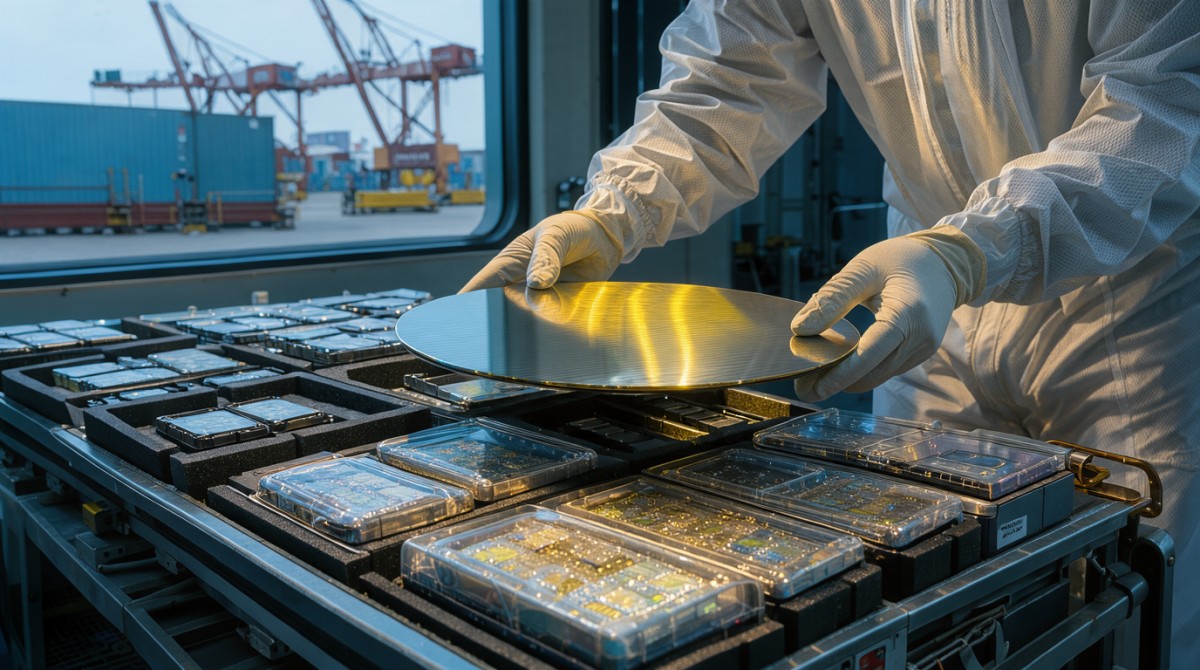
Washington’s latest move to tighten control over advanced semiconductor exports and the associated computing power marks a pivotal escalation in the technology rivalry between the United States and China. By extending export scrutiny to data‑centre operators in Singapore, Malaysia, Thailand, Indonesia and Brazil, the United States seeks to choke a critical conduit through which Chinese artificial‑intelligence firms have accessed the high‑performance chips needed to train large language models. The policy shift not only reshapes the commercial calculus for Southeast Asian data‑centre developers but also forces Beijing to confront a strategic dilemma: accelerate domestic chip development or risk a slowdown in its AI ambitions. Understanding the geopolitical underpinnings of this decision, its historical trajectory, and the strategic consequences for the region and for global tech competition is essential for assessing the next phase of US‑China rivalry.
From Export Controls to Computing‑Power Restrictions
The new interim rules announced on Monday broaden the scope of US export controls beyond the physical shipment of advanced chips. Under the measures, operators of large data centres in the targeted jurisdictions must obtain a US licence before purchasing high‑end GPUs from Nvidia or other American chipmakers. The licence requirement enables Washington to verify whether the chips will be used by Chinese firms or diverted to China through third‑party arrangements. This represents a shift from earlier controls that focused primarily on the export of hardware to a regime that also monitors the “remote computing arrangements” that have become a de‑facto channel for Chinese AI developers.
According to the US Commerce Department’s Bureau of Industry and Security, the selected countries present a “higher‑than‑normal risk of diversion” of sensitive technology. By insisting on case‑by‑case licences, the United States signals a willingness to intervene directly in the supply chain of foreign data‑centre operators, a step that underscores the centrality of compute capacity to modern AI development and the perception that China’s reliance on overseas compute threatens US strategic interests.
China’s Dependence on Overseas Compute
China’s AI ecosystem has increasingly leaned on foreign data‑centre capacity to compensate for domestic shortages of cutting‑edge GPUs. Research by the US‑based Institute for Progress projects that at least 30 % of China’s advanced AI compute will be sourced from overseas rentals or illicit channels by 2027. This reliance grew after earlier US export restrictions limited Beijing’s ability to import the most powerful chips, prompting Chinese firms to rent compute abroad or to seek indirect routes through third‑party data‑centre operators.
Chinese AI firms such as DeepSeek and MoonShot have narrowed the performance gap with US rivals, with Institute for Progress estimates indicating that top US models lead the best Chinese platforms by only about six and a half months. The modest lead persists despite US firms’ superior access to compute and financing, highlighting how critical overseas compute has become to China’s AI competitiveness.
The Southeast Asian Data‑Centre Boom and Its Vulnerabilities
Southeast Asia has emerged as a hub for data‑centre construction, driven by a combination of cheap land, supportive investment incentives, and strong demand from Chinese tech giants like Alibaba and Tencent. Singapore pioneered the region’s data‑centre expansion, but after tightening its own construction approvals, investment flowed to neighboring jurisdictions. Malaysia’s Johor, Thailand’s eastern provinces, and Indonesia’s Batam have each approved multi‑billion‑dollar data‑centre projects to capture spill‑over demand.
These facilities have become attractive to Chinese firms seeking to rent compute without violating US export controls. The presence of firms such as Megaspeed, the largest buyer of Nvidia chips in the region, underscores the depth of this integration. Megaspeed’s alleged involvement in smuggling chips to Chinese customers—allegations it denies and is investigating internally—illustrates the regulatory gray zone that the new US rules aim to close.
Political Repercussions for Targeted Countries
The United States’ focus on Singapore, Malaysia, Thailand, Indonesia and Brazil places these economies at a crossroads between attracting high‑value tech investment and complying with US export policy. Official statements from the affected governments reveal a cautious stance. Singapore says it is “engaging relevant US authorities” to understand the rules and is “exploring how to facilitate trusted access” for local firms, indicating a desire to maintain a cooperative relationship with Washington while protecting its own tech sector.
Malaysia, which has welcomed data‑centre investment, asserts it will not allow its infrastructure to be used to circumvent export controls. Thailand and Indonesia have not issued formal comments, but the broader regional sentiment suggests a balancing act: preserving the inflow of foreign capital while avoiding the perception of aiding US sanctions. Brazil’s ministry similarly notes it is “closely monitoring” the developments, reflecting the global reach of the policy.
Strategic Implications for Beijing
For Beijing, the new restrictions eliminate one of the most practical pathways to acquire frontier compute. As Reema Bhattacharya of Verisk Maplecroft notes, the data‑centre boom is unlikely to stall entirely, but the loss of easy access to advanced GPUs will pressure Chinese AI developers to seek alternative solutions. This could accelerate domestic semiconductor initiatives that have already been elevated to a national priority under China’s “self‑sufficiency” agenda.
At the same time, the tightening of overseas compute channels may push Chinese firms toward illicit procurement methods, heightening the risk of further confrontations with US authorities. The Chinese foreign ministry has labelled the rules “economic coercion” and pledged “necessary measures” to safeguard its legitimate rights, signalling that Beijing may respond with diplomatic protests, reciprocal restrictions, or intensified efforts to develop homegrown alternatives.
Broader Geopolitical Context and Future Trajectories
The timing of the announcement—just days before President Donald Trump’s scheduled meeting with Xi Jinping in Shenzhen—underscores the integration of technology policy into high‑level diplomatic negotiations. The move reflects a broader US strategy of leveraging export controls to shape the global tech supply chain, a tactic that has been refined since the initial 2022 curbs on advanced chips.
Looking ahead, the effectiveness of the new regime will hinge on its enforcement and on the willingness of targeted data‑centre operators to obtain licences. If the licensing process proves cumbersome, firms may shift investment to jurisdictions not subject to US pressure, potentially reshaping the regional data‑centre landscape. Conversely, a successful implementation could force Chinese AI firms to rely more heavily on domestic chip production, potentially narrowing the technology gap over the longer term.
In sum, the United States’ extension of chip export controls to include computing power in Southeast Asia and Brazil represents a calculated escalation in the tech rivalry with China. It targets a critical supply‑chain node, challenges the regional data‑centre ecosystem, and forces Beijing to confront a strategic choice between accelerating self‑reliance and seeking new workarounds. The policy’s ripple effects will be felt across the global AI value chain, influencing investment flows, diplomatic postures, and the pace of technological convergence between the two superpowers.
This article was produced with AI-assisted research and editorial support. Reporting is based on the source material cited below. Sources: BBC News China; bbc.co.uk; Global1.News (19 November 2026).
By Prof. Marcus Chen, Staff Writer
What's Your Reaction?
 Like
0
 Dislike
0
 Love
0
 Funny
0
 Wow
0
 Sad
0
 Angry
0

World Politics Analyst at Global1.News. Based in Beijing, covering US-China relations, global trade, and geopolitical strategy. Brings deep analytical perspective to the power dynamics shaping international affairs.














Comments (0)