
South Africa Cuts Western Cape Water Allocations 11% as Dams Slip and El Nino Builds
South Africa will cut Western Cape water allocations by 7% for towns and industry and 15% for irrigation, an 11% reduction across the system, as dam levels slide and a strong El Nino builds. No gazetting date has been given.
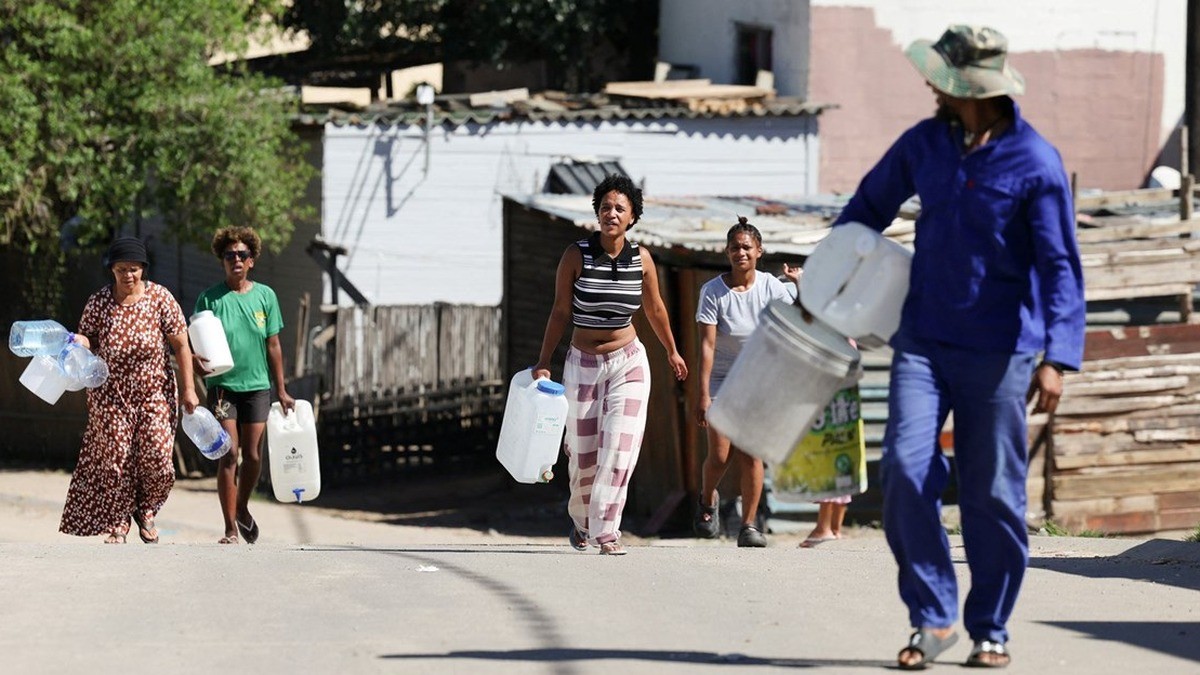
South Africa will cut water allocations across the Western Cape, with farms taking a deeper reduction than towns and industry. Water and Sanitation Minister Pemmy Majodina announced the curtailment in Cape Town, citing dams depleted by two poor rainfall seasons and a forecast strong El Nino. The measures take effect only once gazetted. No date has been given.
South Africa Cuts Western Cape Water Allocations 11% as Dams Slip and El Nino Builds
Cape Town, South Africa - The curtailment was confirmed at a briefing on Monday, after a rerun of the Western Cape water-resource model. Ntombizanele Bila-Mupariwa, the department's provincial head, had said the model would confirm whether restrictions were needed and what their magnitude should be. It confirmed both.
What Majodina Actually Announced
Majodina told stakeholders in Cape Town that domestic and industrial allocations will be reduced by 7%, amounting to 27.2 million cubic metres a year. Irrigation allocations will fall by 15%, or 29.6 million cubic metres a year. Combined, the curtailment totals about 56.8 million cubic metres a year, or 11% of total system allocations.
The department described the cuts as precautionary and said the system remains operationally stable and able to meet current demand. Majodina said the measures will be implemented as soon as they are gazetted. No gazetting date has been given. The reductions apply across the Western Cape Water Supply System.
"These measures are intended to protect strategic water reserves, strengthen resilience against future droughts, and ensure that sufficient water remains available for households, economic activities, and essential environmental requirements," she said.
"Let us act now, not when our dams are empty," she said. "By working together, we can secure water for our communities, our economy and future generations."
Why Now: Two Dry Winters and a Falling System
The rainfall record explains the decision. The province recorded 722.7 mm in 2024/25 and 752.8 mm in 2025/26, against a long-term average of 964 mm. Those are the two seasons the department blames for the shortfall, and they arrived back to back, each one leaving the dams lower than the last.
At the start of November, the six-dam system stood at 72.5% of capacity, or 646.5 million cubic metres, down from 84.4% a year earlier. That is below the department's preferred operating threshold of 80% and about 11.9 percentage points under the 10-year average of 84.49%.
Storage is still well above the levels of the 2016-2017 drought, which is why the department calls the cuts precautionary rather than emergency measures. The trigger was its Annual Operating Analysis for the 2026/27 hydrological year, the assessment that sets annual allocations for the system. The numbers it produced left little room for a third dry season.
A Seven Percent Cut Is Not a Seven Percent Cut at the Tap
An allocation is a bulk number. It is not a meter reading, a tariff band or a by-law. The department cut what municipalities may draw from the system. What a household or a factory experiences depends on decisions taken downstream of that cut.
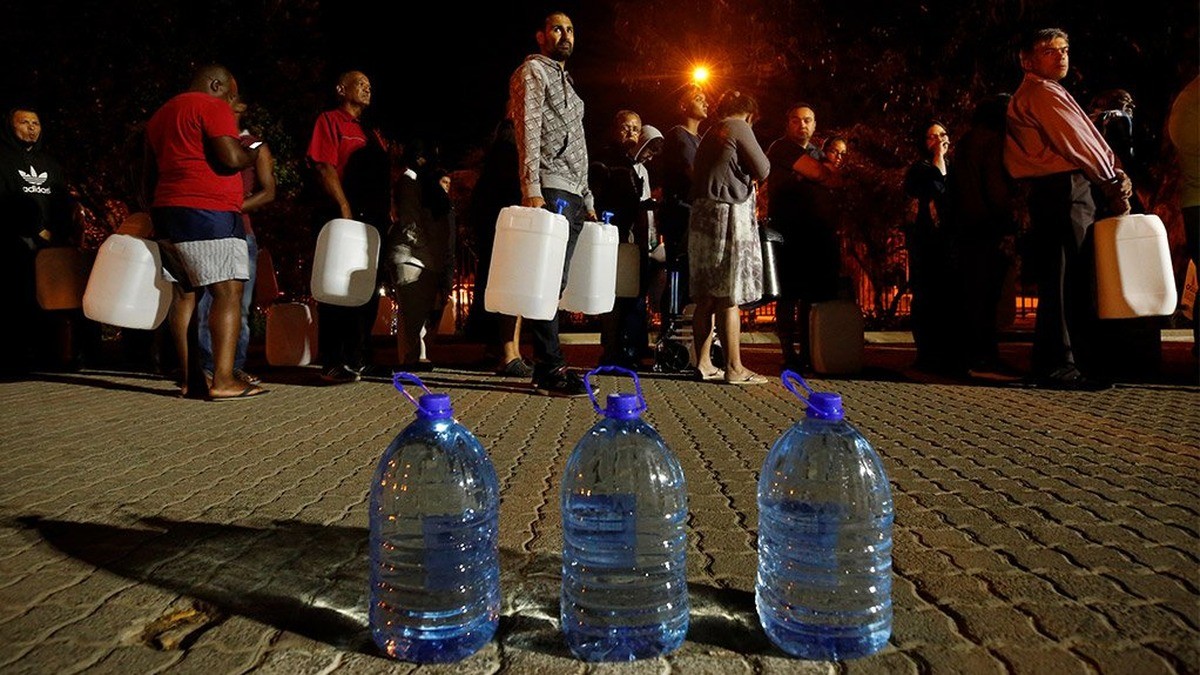
Municipalities will need to manage their reduced allocations. If consumption stays high, or storage keeps falling, that could mean tighter local water-saving measures than the national announcement implies. The City of Cape Town has urged residents, businesses and visitors to use water sparingly.
The instrument is volume, not price. No national tariff increase was announced for the system; what a user pays per kilolitre is a municipal decision, taken under municipal pressure.
The practical burden sits with local government: enforcement, leak repair and communication. A municipality that cannot measure or police its own consumption cannot pass a bulk reduction on with any precision. The national percentage is uniform. The local consequence will not be.
The Farmers Take the Harder Blow
Agriculture absorbs the deeper reduction. Irrigators face more than double the percentage cut applied to towns and industry, and the timing is unforgiving: the system's fruit, wine and vegetable producers draw on allocated water through the dry summer months.
The department did not say which crops would be cut, and it published no farm-level or job-loss estimates.
The options it named are the ones growers already know. Farmers may prioritise higher-value crops, invest in more efficient irrigation, or leave some land fallow. Each is a decision about which part of an operation to keep alive for a season.
Fallow land is not a neutral outcome. It carries through to packhouses, seasonal labour and the export volumes that make the province's agricultural belt a foreign-currency earner. None of that arithmetic appeared at the briefing. The announcement set a volume; the adjustment will be made field by field, by growers working out what they can afford to water.
Two Dam Numbers, Both Real, Measuring Different Things
Two storage figures circulated around the announcement. They do not contradict each other. The 77.7% put on the record by the DA's Western Cape spokesperson is total provincial dam storage, measured on 9 November. The department's figure covers the six-dam system alone, measured on 2 November. One tracks every provincial dam; the other tracks the system that was cut.
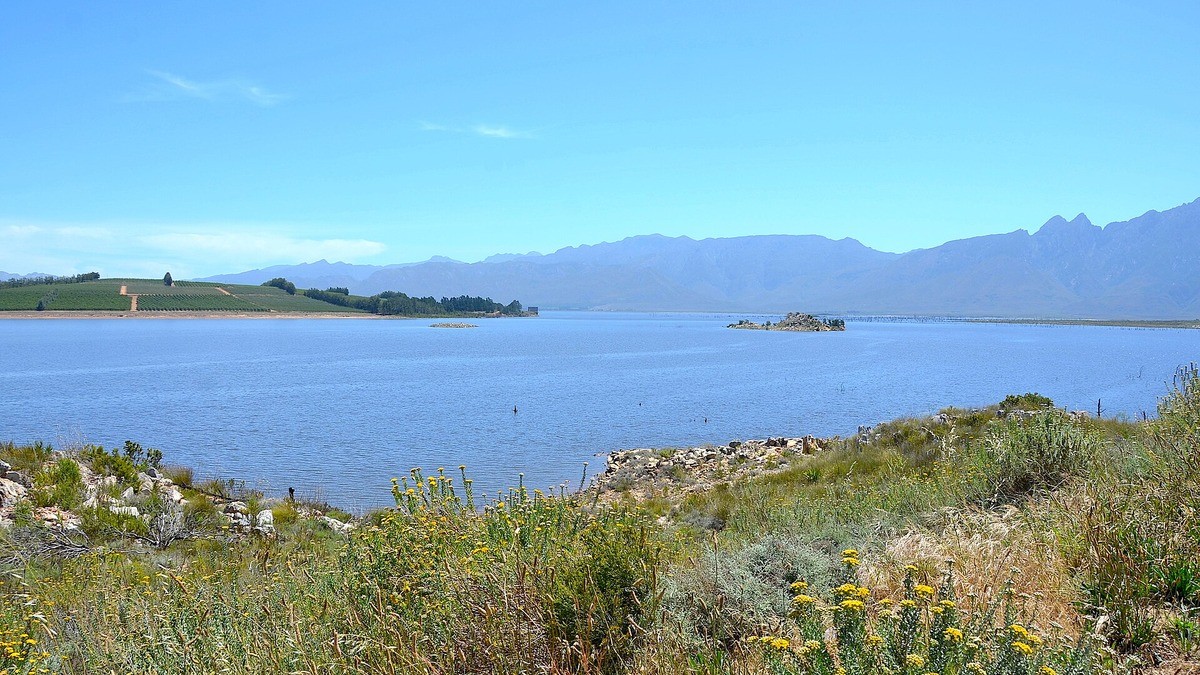
The detail underneath is worse than the headline. Klipheuwel Dam sits at a critical 7.6% of capacity, against 11.5% at the same time last year. Steenbras Lower has dropped to 44.8%. Theewaterskloof stands at 70.9% and Greater Brandvlei at 68.5%, both showing year-on-year declines ahead of peak summer drawdowns.
Anton Bredell, the Western Cape's minister for local government, environmental affairs and development planning, said taking measured steps early would preserve water before demand peaks between December and March. Dave Bryant, the DA's spokesperson on the same portfolio, put it more bluntly. "Waiting for dam levels to crash before taking action is a recipe for failure," he said.
The Losses Municipalities Have Not Fixed
Before a single household is asked to save, the system loses water it never bills. The department listed eight Western Cape municipalities above the 30% non-revenue water threshold. Beaufort West loses 65.9% of the water entering its network. Theewaterskloof municipality, on a different measure from its reservoir, loses 41%. Matzikama loses 38.6%.
Non-revenue water is the gap between what enters a network and what is billed: leaks, burst pipes, unmetered connections, illegal use. In a cut year it is the share of the reduction that never reaches a customer.
Majodina urged municipalities to enforce water-use by-laws and cut those losses. The instruction is not new. The numbers suggest it has not been carried out.
That is the awkward arithmetic of asking residents to conserve while networks lose more than a household can save: part of the shortfall is managed, not weather-driven.
El Nino, and a Forecast for the Warmest Year on Record
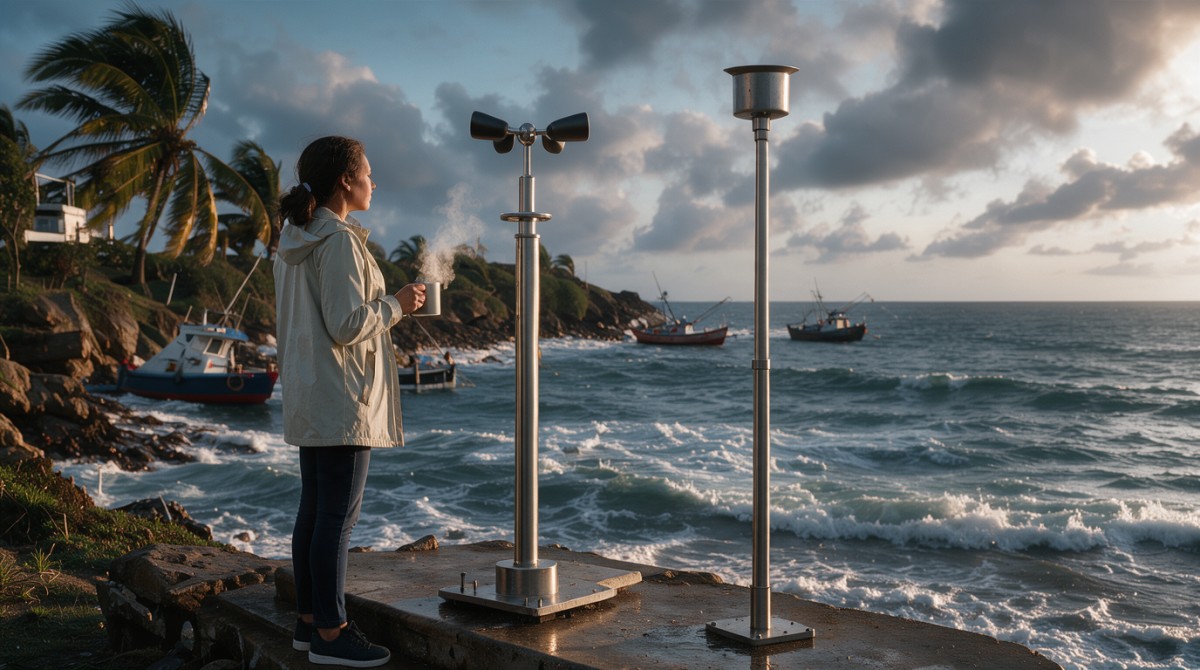
The forecast sitting behind the announcement is not a rainfall forecast. It is a heat forecast. The South African Weather Service said "the expected very strong 2026/27 El Nino event, combined with global warming, will likely result in 2027 being the warmest year ever recorded." The 2015/16 very strong El Nino event brought unprecedented heatwaves to the southern African region, the service said.
Heat matters to a dam as much as drought does. The department warned that a strong-to-extreme El Nino could raise temperatures and evaporation and reduce runoff into dams.
El Nino is a naturally occurring phenomenon, not directly linked to fossil fuel-driven climate change. Scientists note it can be intensified by warmer ocean temperatures, which are rising as the planet heats up.
Bryant said the province is in an El Nino cycle, bringing hotter temperatures, higher evaporation rates and significantly lower seasonal rainfall. The distinction between natural variability and its amplification is not academic for water planners: it decides whether the next two seasons look like the last two, or worse.
Day Zero, Eight Years Later
Cape Town has been here before, and that memory is why the phrase Day Zero still travels. Between 2015 and 2018 the city endured what Mayor Geordin Hill-Lewis has described as a one-in-400-year drought, which took a metropolitan area of about 4.6 million people to the brink of running out of water. Day Zero was the name for the point at which municipal supply would have been largely switched off.
The city avoided it by cutting consumption rather than finding new water. The city recorded savings of 70 million litres a day at the peak of the 2018 drought. Three temporary desalination plants were also commissioned, able to deliver up to 16 million litres a day. Restrictions were eased in September 2018 with dam levels close to 70 percent.
Majodina framed these measures as protection against the possibility of Day Zero. No such day is forecast, and none has been declared. The risk now is reputational as much as hydrological: memories of 2018 could make travellers wary if storage keeps falling through summer, the province's peak tourist season.
What Happens Now, and What Nobody Has Decided
The cuts exist on paper until they are gazetted, and no date has been set. Until then, the legal instrument is unchanged, even as the province moves ahead of national government.
Bredell's department advised municipalities to implement level 1 restrictions by 15 November, escalating to level 2 by 1 December, to preserve water before demand peaks in mid-summer. In Tshwane, level 2 restrictions took effect on 12 November, with households charged more per kilolitre for an initial 30 days.
For Cape Town itself, no restriction level has been announced. The city had none in place and has classified the situation as "early drought caution".
The department said it will keep monitoring storage, climate and demand and will act if conditions worsen, with vulnerable communities' basic needs as the priority. What remains undecided is the timing of the gazette and the local level each municipality chooses.
The Bill That Comes Due in 2027
The department's modelling puts the harder choice further out: the risk of water shortages and mandatory restrictions rising substantially from 2027 onwards if users keep drawing their full allocations. This year's cuts are the cheaper version of that decision.
Supply-side answers move slowly. Majodina visited the Clanwilliam Dam wall-raising project on 7 November and said it was 40% complete. Cape Town's New Water Programme, set out by Mayor Geordin Hill-Lewis, is intended to deliver around 300 million litres per day by 2030 from alternative sources.
"Water conservation is no longer a temporary response to drought. It must become a permanent feature of how we manage this precious resource," Majodina said.
Whether that becomes practice is the open question. The department has pulled a lever it reviews each hydrological year. A permanent change in how a city and its hinterland use water is a different kind of project.
By Jessica Ali, Staff Writer
This article was produced with AI-assisted research and editorial support. Sources: Reuters, News24, eNCA, Engineering News, Bizcommunity, BusinessTech, NovaNews, City of Cape Town and the South African Weather Service. Photographs: Reuters/Esa Alexander (lead image); Olga Ernst, Wikimedia Commons CC BY-SA 4.0; Reuters. Cover: Global 1 News editorial card.
What's Your Reaction?
 Like
0
 Dislike
0
 Love
0
 Funny
0
 Wow
0
 Sad
0
 Angry
0

Editor-in-Chief at Global1.News. Atlanta-based journalist who cuts through the BS and tells it like it is. Lead anchor, host, and the voice you hear when the spin stops and the truth starts.











Comments (0)