
‘Very clear’ evidence sought in VP trial
Manila – As the Senate impeachment court reconvenes today after a brief recess for the ASEAN Summit, the nation’s eyes are once again on Vice President Sara Duterte.
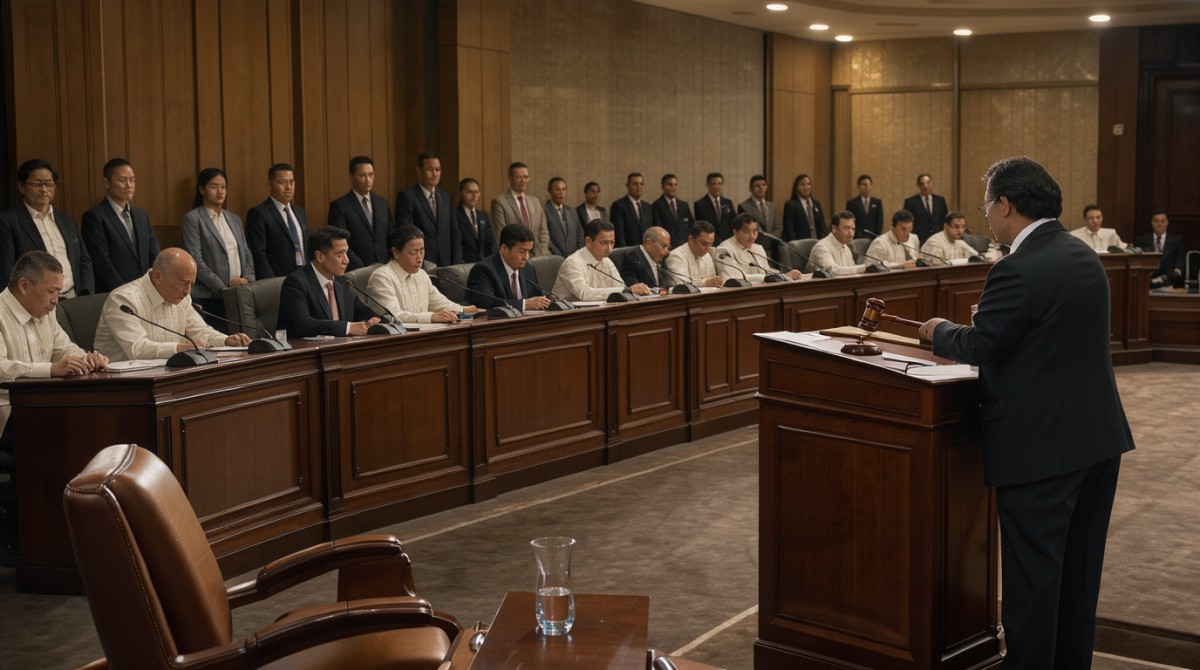
Manila – As the Senate impeachment court reconvenes today after a brief recess for the ASEAN Summit, the nation’s eyes are once again on Vice President Sara Duterte. Senate Minority Leader Alan Peter Cayetano, speaking after the 51st National Prayer Breakfast at Club Filipino, stressed that “very clear” evidence will be essential for senators to decide whether to convict or acquit the vice president. The stakes are high; a verdict perceived as lacking solid proof could deepen the already sharp political divide that has gripped the country.
Political Context and the Call for Clear Evidence
Senator Cayetano’s remarks underscore a broader concern that the impeachment trial has become more than a legal proceeding—it is a flashpoint in the Philippines’ “political, spiritual and economic battle,” as he put it. The minority leader warned that a decision not anchored in strong, transparent evidence would “further divide the country,” a sentiment that resonates in barangays across Luzon, Visayas, and Mindanao where families watch the proceedings with apprehension.
His call for clarity reflects the deepening polarization that has marked recent elections, where supporters of the Duterte administration and opposition groups often find themselves at odds over issues ranging from pandemic response to overseas Filipino workers’ (OFW) welfare. In this climate, the Senate’s handling of the trial will be scrutinized not only by political elites but also by ordinary Filipinos who fear that partisan maneuvering could eclipse justice.
The Defense’s Witness Line‑up
According to Senate impeachment court spokesman Reginald Tongol, the defense will present four witnesses over the next two days. Their testimonies are expected to focus on CALE88 Foods Corp., a banana‑chips manufacturer that prosecutors allege received a P319‑million remittance from Chinese companies. The witnesses include Rainer dela Fuente, who will discuss the Anti‑Money Laundering Act (AMLC); Ceferino Rodolfo, a Department of Trade and Industry (DTI) undersecretary, who will speak on CALE88’s registration with the Board of Investments; Pilar Marilyn Pagayunan of the Food and Drug Administration (FDA), who will address the product registration of the sweetened banana chips; and Rowena Mendoza from the DTI Center for International Trade Expositions and Missions, or her representative, who will detail communications and invitations sent to CALE88 for food expos.
All four witnesses are subject to subpoenas “Ad Testificandum and Duces Tecum,” Tongol said, indicating that the defense is prepared to contest the allegations under Article II of the impeachment rules. Their testimonies will likely aim to demonstrate that CALE88’s operations are legitimate and that any funds received were not part of a money‑laundering scheme.
Prosecution’s Focus on Money‑Laundering Allegations
Last month, the prosecution called Ronel Buenaventura, executive director of the AMLC, to testify. Senators probed whether CALE88 might have been used as a conduit for illicit funds from China, a question that strikes at the heart of the case. The alleged P319‑million “remittance” has been a focal point for the House prosecution panel, which argues that the funds could be linked to money‑laundering activities.
The anti‑money‑laundering angle is significant because it ties the Vice President’s personal business interests to broader concerns about foreign influence and financial transparency. If the prosecution can substantiate that the remittance was tied to illicit activity, it could bolster calls for accountability not just against Duterte but also against other officials implicated in similar financial dealings.
Family Ties to CALE88 Foods Corp.
Adding another layer to the controversy, Vice President Duterte’s husband, Manases Carpio, holds a 47.5 percent share in CALE88 Foods Corp. This substantial ownership stake raises questions about the extent to which the vice president may have benefitted from the company’s operations, especially if the alleged remittance is proven to be illicit.
Critics argue that the proximity of Carpio’s shareholding to the alleged financial irregularities could suggest a conflict of interest, while supporters maintain that the Vice President’s involvement in the business is limited to a “honest mistake” in her statement of assets, liabilities, and net worth (SALN). The House prosecution panel, however, noted that Duterte listed the company and its predecessors in her SALN for two consecutive years, challenging the “honest mistake” narrative.
Prosecutorial Arguments on the SALN Discrepancy
House prosecutor Manila Rep. Joel Chua, alongside adviser Ace Barbers, highlighted that Vice President Duterte repeatedly declared CALE88 and its predecessor entities in her SALN. Their point underscores a pattern that, in their view, contradicts the claim that the omission was merely an oversight. By emphasizing the consistency of the listings over two years, the prosecution seeks to demonstrate that Duterte was fully aware of her business interests.
This line of argument is crucial because the SALN is a legal document meant to promote transparency and deter corruption. If the prosecution can prove that the Vice President knowingly concealed or misrepresented her holdings, it could strengthen the case for conviction on grounds of falsification or breach of public trust.
Political Pressure and Public Perception
Amid the legal wrangling, the political atmosphere remains charged. Duterte’s spokesperson, Paolo Panelo, claimed that some senators are being “pressured” to convict the vice president. While the source does not elaborate on the nature of this pressure, the allegation reflects the intense lobbying that often surrounds high‑profile impeachment cases in the Philippines.
For ordinary Filipinos, the perception of external pressure can be as damaging as any legal finding. Communities that rely on the stability of government programs—such as the Department of Health’s pandemic response or the Department of Education’s school funding—watch closely to see whether political maneuvering undermines confidence in public institutions.
Implications for Democracy and the Way Forward
The outcome of this impeachment trial will reverberate beyond the Senate chamber. A conviction could set a precedent for holding high‑ranking officials accountable for financial misconduct, reinforcing the rule of law and the spirit of bayanihan that underpins Filipino society. Conversely, an acquittal based on insufficient evidence could fuel skepticism about the efficacy of democratic checks and balances.
As the nation awaits the testimonies of the four defense witnesses, the Senate’s commitment to a transparent, evidence‑based process will be a litmus test for the health of Philippine democracy. Whether the verdict leans toward conviction or acquittal, the trial underscores the enduring struggle to align political power with accountability—a struggle that every barangay, sari‑sari store owner, and OFW family watches with hope that justice will indeed be clear.
This article was produced with AI-assisted research and editorial support. Reporting is based on the source material cited below. Sources: Philstar.com; Global1.News (19 November 2026).
By Bella Reyes, Staff Writer
What's Your Reaction?
 Like
0
 Dislike
0
 Love
0
 Funny
0
 Wow
0
 Sad
0
 Angry
0

Philippines/Southeast Asia Correspondent at Global1.News. Manila-based journalist covering Philippine politics, environment, maritime security, and social issues. Passionate about marine conservation and the communities protecting the Philippines' natural heritage.














Comments (0)