
Trinidad Bans Hosepipes From Midnight as WASA's Own Reservoir Readings Run Near Full
WASA has banned hosepipes nationwide from 12:01 a.m. Monday until further notice, citing El Nino and reduced raw water, while its own bulletin puts three of the four published reservoirs at 78 per cent or more of capacity.
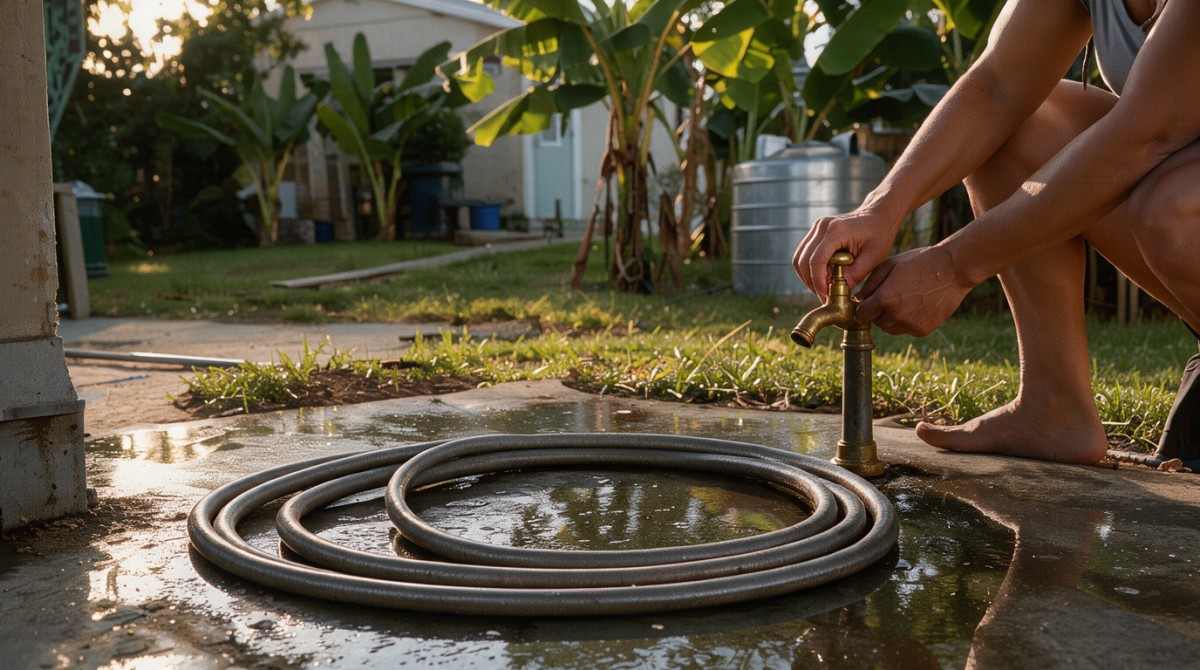
Trinidad and Tobago wakes up on Monday under a nationwide hosepipe ban ordered by the Water and Sewerage Authority, which says El Niño is strangling the country's raw water. Three days before the notice went out, WASA's own bulletin put the Hollis reservoir at 99.29 per cent of capacity.
Trinidad Bans Hosepipes From Midnight as WASA's Own Reservoir Readings Run Near Full
Port of Spain, Trinidad — The restrictions took effect at 12:01 a.m. on Monday 16 November 2026. They apply until further notice. The notice as published carries no end date, no review date and no figure for the fine.
The Order That Starts at 12:01
WASA issued the public notice on Sunday, and the wording is blunt. Under section 49(1) of the Water and Sewerage Act, Chapter 54:40, customers are prohibited from using the authority's water, drawn through hosepipes or similar equipment, to water private gardens or wash private motor vehicles.
The stated cause is not a burst main or a failed plant. It is "reduced raw water availability at source" as a result of El Niño conditions, according to the notice. The authority says it is acting early to protect supplies for drinking, cooking, sanitation and hygiene, and for schools and health facilities.
The restrictions sit inside AquaForward, the national water resilience programme launched in August 2026 with the Ministry of Public Utilities and the Trinidad and Tobago Meteorological Service. WASA has said the aim is to protect drinking, cooking, sanitation and hygiene supplies before the dry season arrives.
What the Ban Actually Covers
The prohibition runs wider than the headline suggests. Hosepipes, sprinklers and pressure washers are all named, and TTT News reported that outdoor water features, including fountains and waterfalls, fall under the same order.
Owners and occupiers are also put on notice about their own plumbing. The release states that the owner or occupier of any premises is responsible for keeping water fittings in good condition, so that supply is not wasted, misused, unduly consumed or contaminated before it is used.
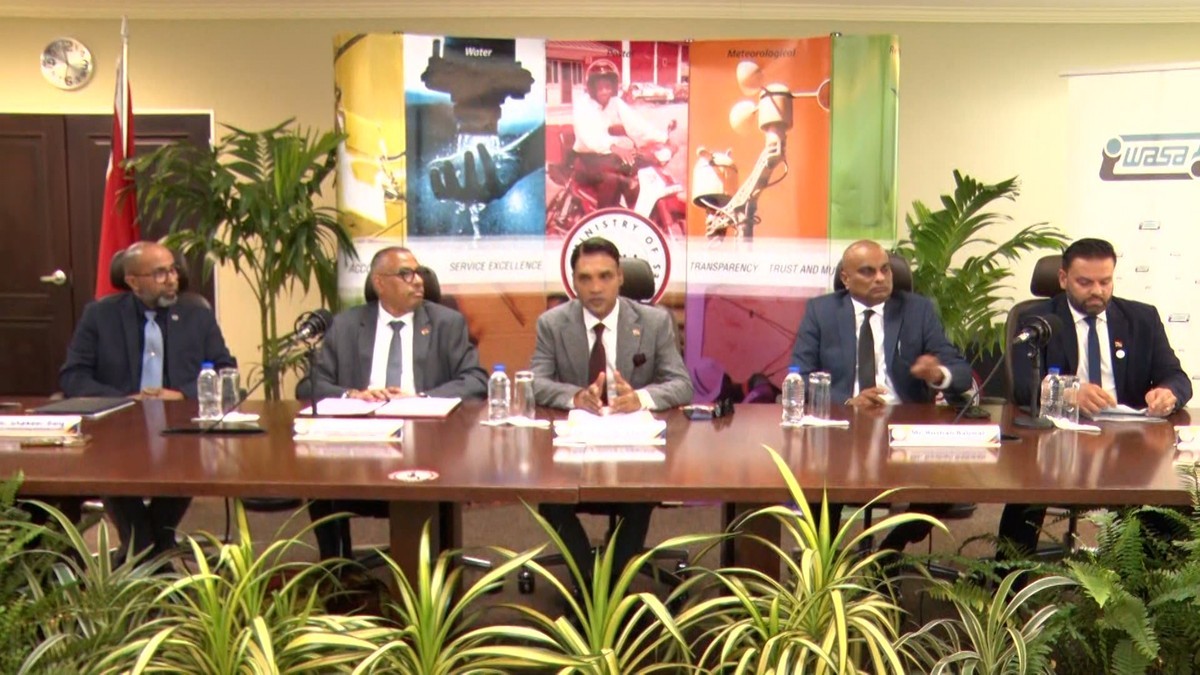
Enforcement is written into the notice. Authorised officers may, on production of authenticated documents, enter premises supplied with water at all reasonable hours to check for waste or misuse. The release said: "Any person who breaches this prohibition is liable to a fine upon summary conviction." It added that patrols would be increased for the duration.
Why WASA Says It Is Acting Early
The authority's case rests on the Met Service. TTMS advised that El Niño conditions are established in the tropical Pacific, and that its August 2026 assessment indicated an 80 per cent chance of the phenomenon strengthening between August and October, with a likely peak between November 2026 and February 2027.
In Trinidad and Tobago, El Niño is associated with reduced rainfall in the back half of the wet season. TTMS director Shakeer Baig put the consequence plainly in August: "This could result in lower inflows into our reservoirs, which in turn may affect the availability of water for domestic, agricultural, industrial and commercial use."
WASA's release leans on the same logic. It said: "Wet-season rainfall normally replenishes the country's raw water sources." And: "With less replenishment expected this year, WASA is acting early to stretch available supplies and protect water for drinking, cooking, sanitation and hygiene, as well as for schools, health facilities and other essential services." Acting WASA chief executive Dain Maharaj said in August that recent rain had allowed reservoirs to recover partially, but that they remained below full capacity.
Three Days Earlier, WASA Published These Numbers
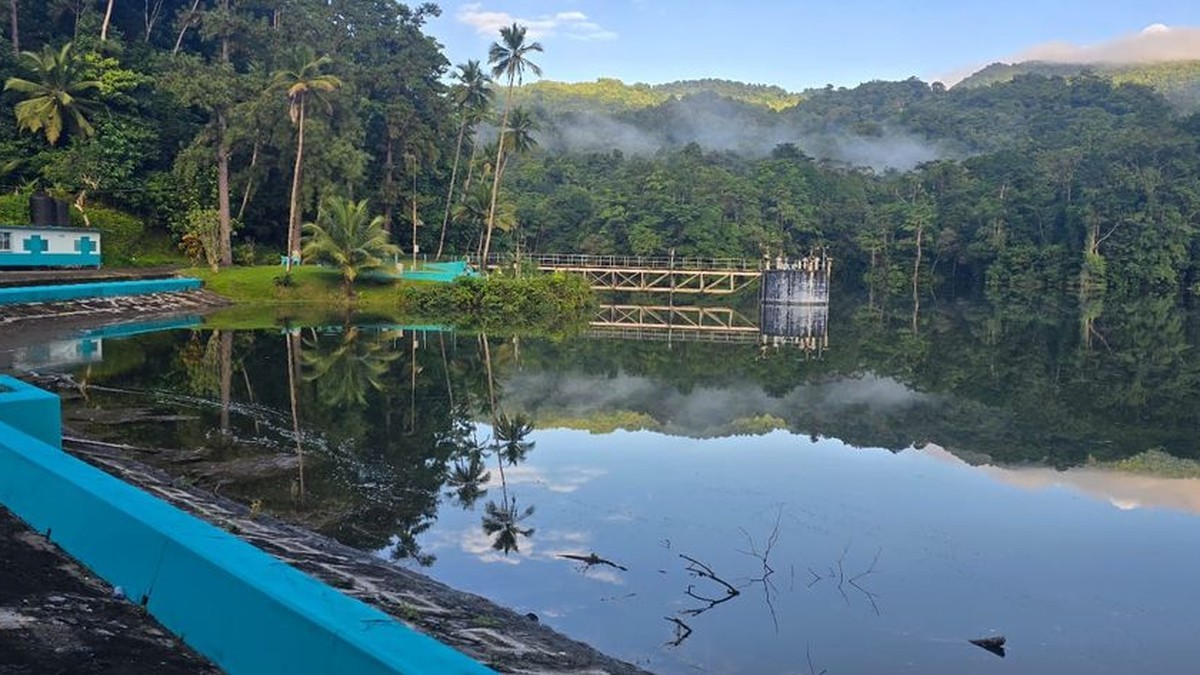
On 13 November at 6 a.m., WASA's own Water Watch bulletin listed lake levels as a percentage of capacity. Hollis stood at 99.29 per cent. Arena was at 83.71 per cent. Navet sat at 78.27 per cent. Hillsborough, in Tobago, was at 42.9 per cent.
That is a different picture from six weeks earlier. On 6 October, Public Utilities Minister Barry Padarath said on the record that "all of the dams are right now below 70% capacity", as he announced that the Desalcott plant was expected to resume operations and that extra water trucks had been deployed.
Between those two statements, three of the reservoirs moved above 70 per cent. By mid-November only one of the four published readings, Hillsborough, remained below 70 per cent. The notice published on Sunday does not cite any of these figures, and it does not explain which source is short.
A Full Reservoir Is Not a Running Tap
Six days before the ban, WASA gave a partial answer in a different dispute. Responding to complaints from Olton Road, Arica, the authority blamed reduced production capacity at the Hollis Water Treatment Plant and "limitations within the existing distribution infrastructure".
It said the eastern section of Olton Trace was particularly vulnerable to low pressure "because of the condition, size and configuration of its existing pipelines", while the western section benefited from a more favourable arrangement. The statement gave no timeline for improvements and did not say whether upgrades were planned.
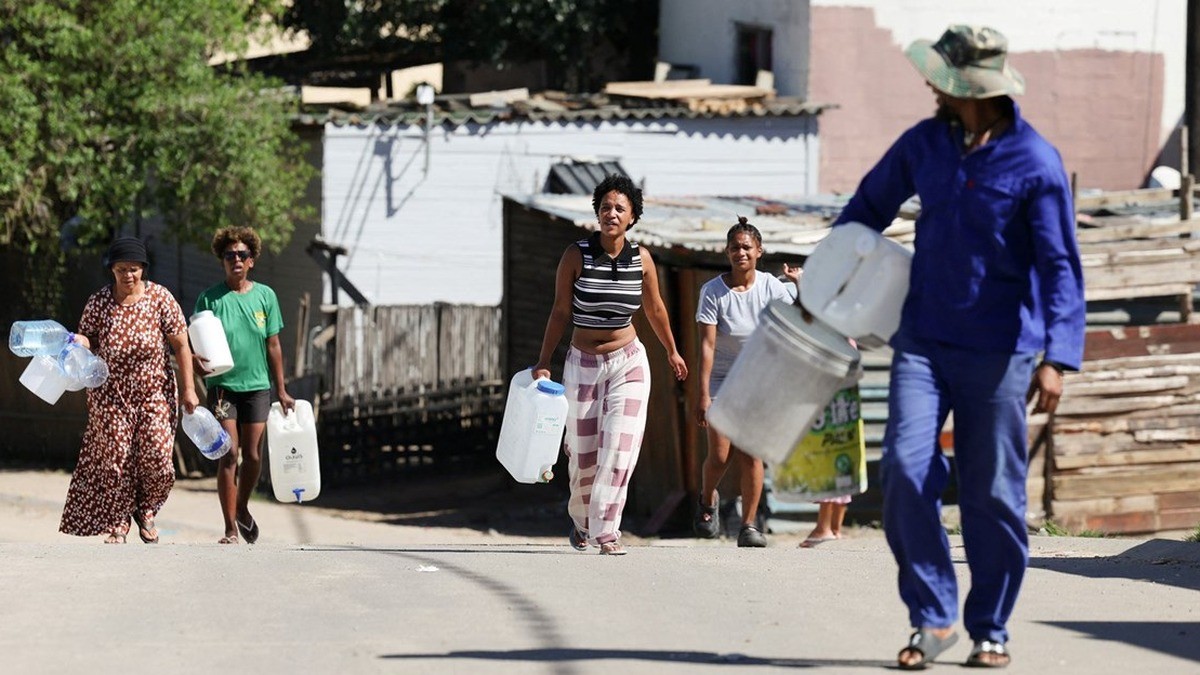
Residents told the Guardian their supply had grown steadily worse over the past year, forcing them to carry water from other communities, buy tanks and pumps, and cut back on household routines and business. Some alleged the deterioration amounted to political victimisation, saying it worsened after the general election, an allegation the authority's statement did not address.
Tobago Went First, Eighteen Days Ago
Tobago has been under its own restrictions since 29 October, when WASA banned hosepipes, sprinklers and pressure washers on the island's system until further notice. The authority cited drier El Niño conditions and the extra demand of Tobago Carnival, and said section 49(1) empowers it to act where a serious water shortage exists or is threatened.
That order applied specifically to the authority's supply system in Tobago. Sunday's notice is national, and it arrives with Hillsborough still the weakest of the four published reservoirs at 42.9 per cent, against 78 per cent or better on the other three.
There is no published threshold linking those percentages to the timing of either order. What exists is a sequence: Tobago in October, the country in November, and a Met Service forecast that runs hot and dry through February.
The Trucks, the Tanks and the $16 Million
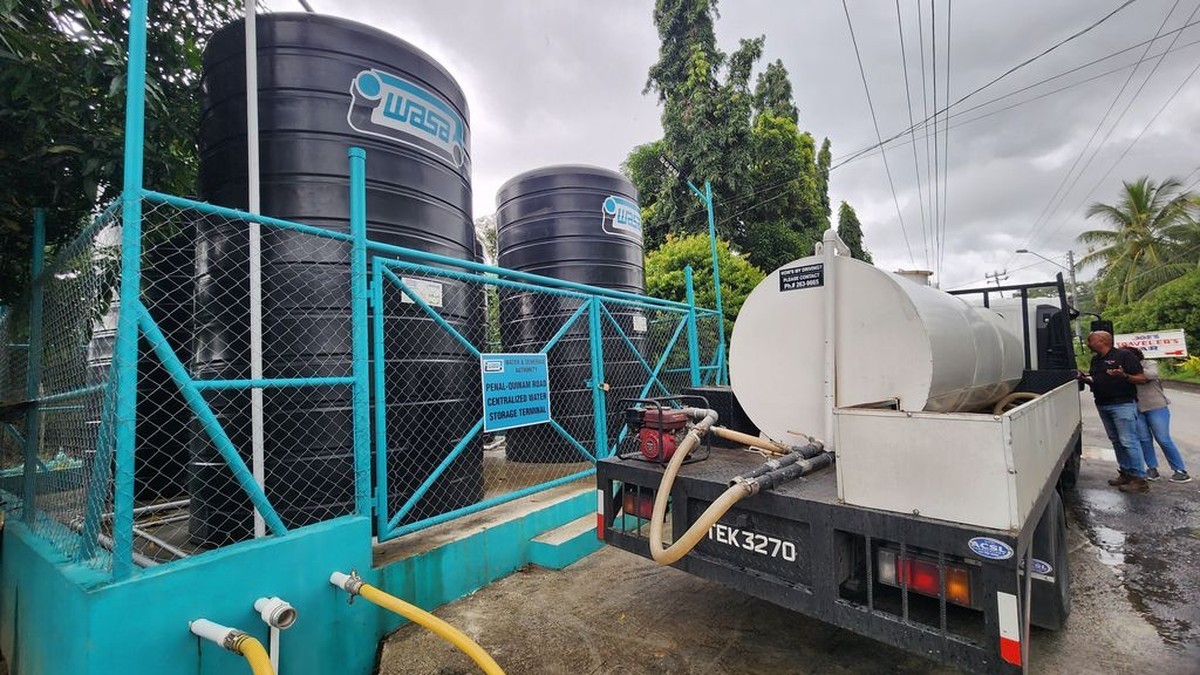
Water has been arriving by road for a year. A Guardian Media investigation published on 8 November found more than $16 million awarded in water-trucking contracts between December 2025 and June 2026, alongside ten tank farms still pending construction.
The contracts came fast. On 19 December 2025, WASA awarded $15 million to 11 companies to truck water nationwide within one month. Eleven days later, nine contractors shared $1.6 million for five weeks. In April 2026, eight companies were contracted for five months on rates rather than a fixed price, and in June, 20 contractors were signed for three months on a month-to-month basis.
A separate $7.5 million tank farm programme was meant to shorten the haul. The Clarke Rochard Road facility in Siparia had already been commissioned by Padarath on 16 January 2026, three months before the initiative was announced. He has described tank farms as a short-term measure, conceding: "It's not a quick fix."
The Half of the Water Nobody Bills
The deeper problem is measured in the pipes, not the sky. The Ministry of Public Utilities' own water resources document puts non-revenue water at 40 to 50 per cent, based on a 2019 water balance, and attributes it to an absence of pressure management, district and customer metering, proactive maintenance, and to illegal connections. The Regulated Industries Commission said in a 2021 analysis that non-revenue water accounts for over 50 per cent of what is produced, with only about four per cent of customers metered.
Padarath took a version of that arithmetic to Parliament. He said the administration found a transmission system losing an estimated six million imperial gallons of potable water a day, with losses of roughly $250 million across six years, and that leak repairs launched on 8 December 2025 had closed 20 of 21 confirmed leaks.
Former public utilities minister Marvin Gonzales called that statement a distraction from "the revelation of illegal and underhanded hirings inside WASA".
What the Next Four Months Look Like
The Met Service outlook, published earlier this year, maps the risk. Trinidad was placed on drought watch for September and Tobago on drought warning for October. A short-term drought was projected across Tobago, north-east Trinidad and the lower Caroni River basin through November.
By the end of this month, TTMS expects a drought warning across Tobago and a drought watch for the Caroni basin into north-western Trinidad. A long-term drought watch may be required in December 2026 or January 2027.
For households, the practical list is short. Fix leaking taps, tanks, hoses and connections. Use a bucket rather than a running hose for any washing still permitted. Fit low-flow devices on taps and showers. Report leaks on WASA's network. Store water responsibly during scheduled supply hours. The authority's own forecast has drier conditions continuing into the 2027 dry season.
The Question the Notice Leaves Open
Three of WASA's four published reservoir readings sit at or above 78 per cent of capacity. One, in Tobago, is at 42.9 per cent. The authority's justification is not a national drought emergency but a forecast, and its own infrastructure statements point at treatment capacity and pipe condition as much as at rainfall.
That does not make the ban wrong. A utility that loses 40 to 50 per cent of its water before billing, in a country where the Met Service expects El Niño to peak between November and February, has a genuine reason to conserve. Acting early is defensible.
What is missing is the part residents will ask about: which sources are short, how the restriction will be reviewed, and what happens when a household that already receives water once a week is told to save it. Until WASA publishes that, the patrols will do the talking.
The notice is live. Check your fittings, report leaks through WASA's channels or wasa.gov.tt, and expect the patrols.
By Jessica Ali, Staff Writer
This article was produced with AI-assisted research and editorial support. Sources: Trinidad and Tobago Guardian, Trinidad Express, TTT News, IzzSo, the Water and Sewerage Authority of Trinidad and Tobago, the Trinidad and Tobago Meteorological Service and the Ministry of Public Utilities. Photographs: Trinidad and Tobago Guardian (WASA water truck at a centralised water storage terminal); Trinidad and Tobago Guardian, file photograph of a reservoir intake basin; TTT News photograph of a Ministry of Public Utilities briefing. Cover: Global 1 News editorial image.
What's Your Reaction?
 Like
0
 Dislike
0
 Love
0
 Funny
0
 Wow
0
 Sad
0
 Angry
0

Editor-in-Chief at Global1.News. Atlanta-based journalist who cuts through the BS and tells it like it is. Lead anchor, host, and the voice you hear when the spin stops and the truth starts.














Comments (0)