
Caribbean Airlines Joins a Breach List That Now Runs to More Than a Dozen Carriers
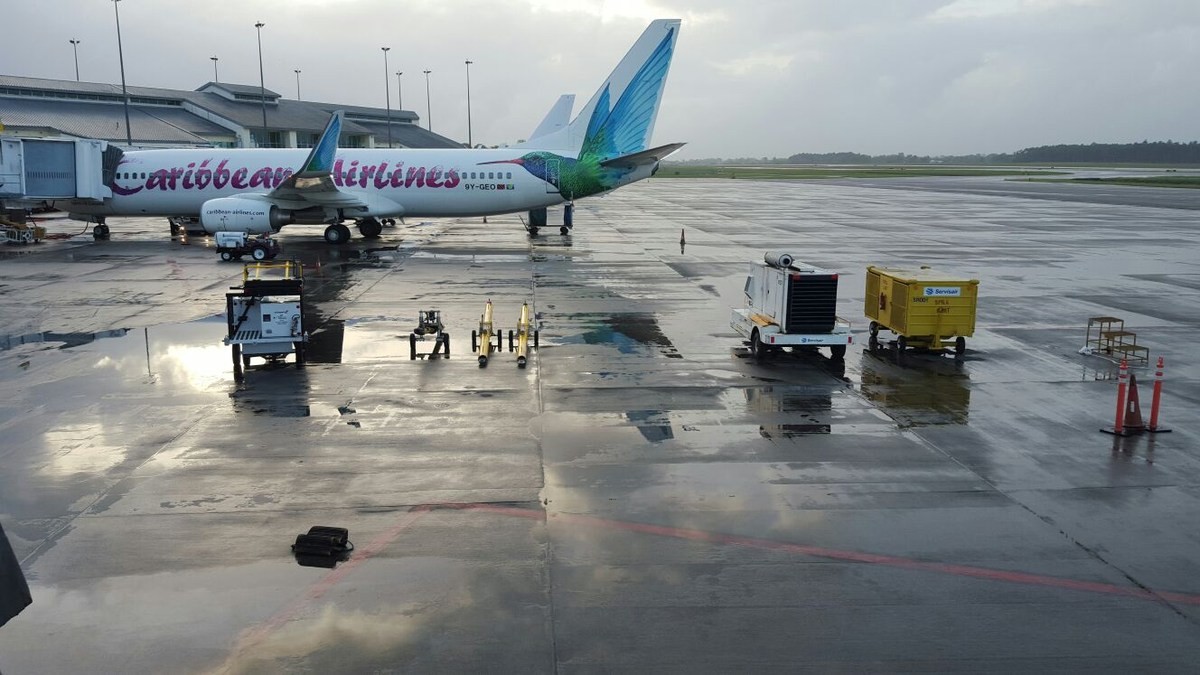
Caribbean Airlines has confirmed that its passenger booking records were exposed in the Amadeus breach that ran for 1,140 days, telling affected customers on 5 November and the public ten days later. More than a dozen carriers have now disclosed exposure.
Caribbean Airlines Joins a Breach List That Now Runs to More Than a Dozen Carriers
Port of Spain, Trinidad and Tobago — The flag carrier's disclosure lands fifty-three days after the hole was closed, and after at least thirteen other airlines had already disclosed publicly.
What Caribbean Airlines Told Its Passengers
The public statement, issued under a Port of Spain dateline, is brief. Caribbean Airlines confirmed it had been informed by Amadeus IT Group, S.A. that an unauthorised party exploited a vulnerability to reach booking and reservation information. It listed the other carriers affected. It said preliminary Amadeus data "suggests that no payment card data was accessed and that the breach was limited to passengers' booking or travel data."
The letter that reached passengers was more specific. Dated 5 November, it told recipients an unauthorised party had gained access to reservation information "through a compromised system account," and that the record involved "may include reservation-related details such as your name, booking reference, travel itinerary, contact information, and other information contained in your booking record." It added a caution that matters: "Not every reservation record contains the same information."
The airline's stated priority is notification. "The airline's primary concern is notifying affected customers of the incident, and this process is ongoing," it said.
Ten Days Between Knowing and Saying
Caribbean Airlines learned of the breach on 5 November. It published its statement on 15 November. In between, the carrier contacted affected passengers directly and said nothing publicly — the Trinidad and Tobago Guardian reported that the company had not made the breach public except to identified customers.
Asked why it was writing to people at all, a company official told Guardian Media that Caribbean Airlines had "a legal requirement to do so because of data protection laws in the various jurisdictions in which it operates." The airline has not said which jurisdictions, or which statute, created that duty. The same official confirmed the breach had occurred but declined to elaborate, citing the investigation.
Other carriers moved faster. Japan Airlines was notified on 23 October and disclosed publicly five days later. Cathay Pacific was told on 28 October and published two days after that. Caribbean Airlines took ten days.
One Thousand One Hundred and Forty Days
The window is the part that should stop a reader cold. Amadeus told Japan Airlines that unauthorised access ran from 10 August 2023 to 23 September 2026 — 1,140 days, a little over three years and one month. Thai Airways, in its own notice, described "misuse of account credentials" occurring across the same dates.
Amadeus closed the vulnerability on 23 September. It published a statement on its website eight days later, on 1 October, saying it "became aware of a vulnerability affecting a travel booking display environment" and that certain booking-display data had been accessible.
Airline notifications followed between 20 and 28 October — nineteen days after Amadeus went public, and twenty-seven days after the hole was shut. Korean Air and Asiana were told on 20 October. Japan Airlines on the 23rd. Cathay Pacific on the 28th. Caribbean Airlines not until 5 November, forty-three days after the fix.
The Credential, Not the Hack
Nothing in the public record describes a break-in. Cathay Pacific said the unauthorised party gained access "using login credentials assigned to its system account." Caribbean Airlines told its passengers the access came "through a compromised system account." Thai Airways called it misuse of account credentials. Korean Air and Asiana's investigations point the same way.
That distinction matters to every airline that relies on Amadeus, because it means the exposure did not require defeating a firewall. Someone held a working login to a system built to display booking data, and the access ran for more than a thousand days.
Cathay Pacific told its customers that Amadeus had confirmed "it has taken actions to contain the incident, including a password reset, and has implemented enhanced monitoring and detection capabilities on its systems."
What Was Actually in the Record
Booking records are not financial records, and the airlines have been careful to say so. But the contents are more personal than a flight number.
At the base level, the exposed data across carriers is consistent: booking reference, passenger name, flight date, route and cabin class. Japan Airlines put roughly 90,000 customers in that band, and about 2,000 more whose records also carried email addresses, phone numbers, passport numbers, nationalities, frequent flyer numbers and ticket and seat details.
Thai Airways reported 60,529 compromised bookings, with 376 of them carrying passport numbers, nationalities, mileage membership numbers and ticket numbers as well. Singapore Airlines said about 620 of its 46,000 affected records included travel document details and KrisFlyer numbers. Cathay Pacific said a smaller subset of its 53,000 bookings carried contact details, travel documents and frequent flyer numbers.
Seven Airlines Have Put Numbers on It
The published figures count different things — bookings in some cases, travellers in others — so they cannot simply be added into one total. But the scale of the individual disclosures is not in dispute.
SAS said booking details for 350,164 travellers may have been exposed, the largest figure any carrier has reported. Finnair said about 116,000 of its bookings sat on flight lists that were accessed. Japan Airlines reported about 92,000 customers. Thai Airways 60,529 bookings. Cathay Pacific about 53,000. Singapore Airlines about 46,000. ANA about 37,800 passenger records.
Beyond those, Korean Air, Asiana, StarFlyer, Malaysia Airlines and Condor have confirmed involvement without publishing a count. Norwegian and the travel agency Berg-Hansen have reported the incident to Norway's data regulator. Qantas is still working out whether any of its bookings were touched, and has notified Australia's cyber security agencies.
Why a Booking Engine Is a Single Point of Failure
Amadeus is not a household name, which is precisely the problem. The company supplies reservation, ticketing and check-in platforms to more than four hundred airlines, 210 airport operators, 34 cruise and ferry lines and about two million hotels. It reported more than $6.5 billion in revenue last year.
That concentration is efficient. One vendor, one interface, one set of standards, and a passenger can book a Bangkok to Doha leg and a Madrid connection in the same itinerary. It also means one misused login reaches across carriers, borders and continents at once.
The pattern is not unique to Amadeus. Qantas lost six million customer records in a separate 2025 breach, an incident that ended with senior executives fined hundreds of thousands of dollars. Iberia and Air Côte d'Ivoire have both dealt with intrusions this year.
An Island With No Breach Clause
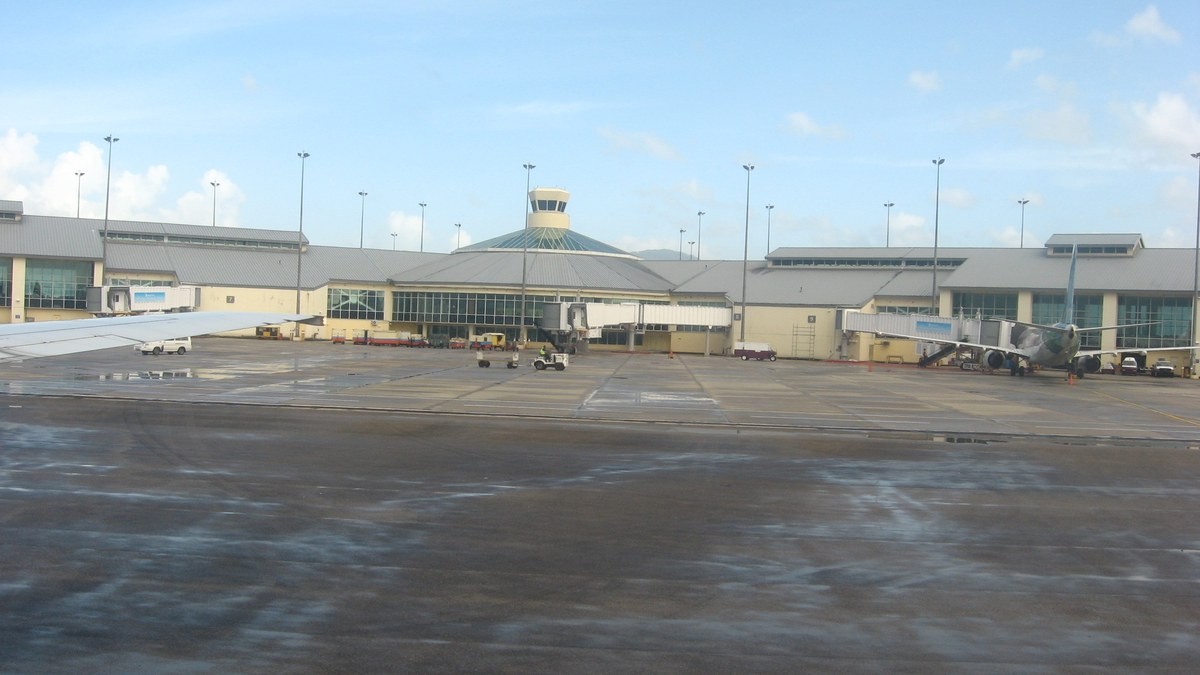
Caribbean Airlines is 88.06 per cent owned by the Government of Trinidad and Tobago, with Jamaica holding 11.94 per cent. It is the national carrier of both Trinidad and Tobago and Jamaica, headquartered at Piarco outside Port of Spain, and it reports to governments that own it. Its data obligations are therefore a matter of public interest, not only commercial practice.
Which makes the legal position worth stating plainly. DLA Piper's guide to Trinidad and Tobago's data protection law records no provision in the Data Protection Act 2011 requiring notification of a security breach to data subjects or to the Information Commissioner. The Act itself was only partially proclaimed in 2012, and the firm notes no timetable has been set for enacting the remainder.
That does not make the airline's notification unlawful or unnecessary. It means the duty it cited most likely comes from somewhere other than Port of Spain — and the carrier has not said where.
The Scam That Comes After the Disclosure
The immediate risk to passengers is not a stolen card. It is a convincing message. Anyone holding a name, a booking reference and a flight date can write an email that looks exactly like the airline's own.
Caribbean Airlines warned its passengers to "remain alert for unexpected emails, messages, or phone calls that reference your travel or booking information and avoid sharing personal information unless you are satisfied that the request is legitimate."
Singapore Airlines went further, contacting passengers with upcoming travel to change their booking reference numbers, since an exposed reference is what makes a fake message credible. It said no bookings were changed as a result of the unauthorised access. Finnair is doing the same for active bookings, and its security chief said the airline was demanding a detailed clarification from Amadeus. Japan Airlines opened a dedicated help line for affected customers.
What Nobody Has Answered
Four questions remain open, and the companies involved have had weeks to answer them.
How many airlines in total? Amadeus has declined to say, telling Recorded Future News only that it is in dialogue with customers and authorities. How many passengers? No total exists, because no one has published one. Has any of the data been used? Amadeus says it has found no evidence of misuse, and the airlines repeat that, but absence of evidence after a three-year window is a statement about detection, not safety.
And who answers for it in Trinidad? Caribbean Airlines has not said how many of its customers are affected, whether it has reported the incident to any regulator in Trinidad and Tobago, or what it will offer them. It has apologised, and asked passengers to stay watchful.
By Jessica Ali, Staff Writer
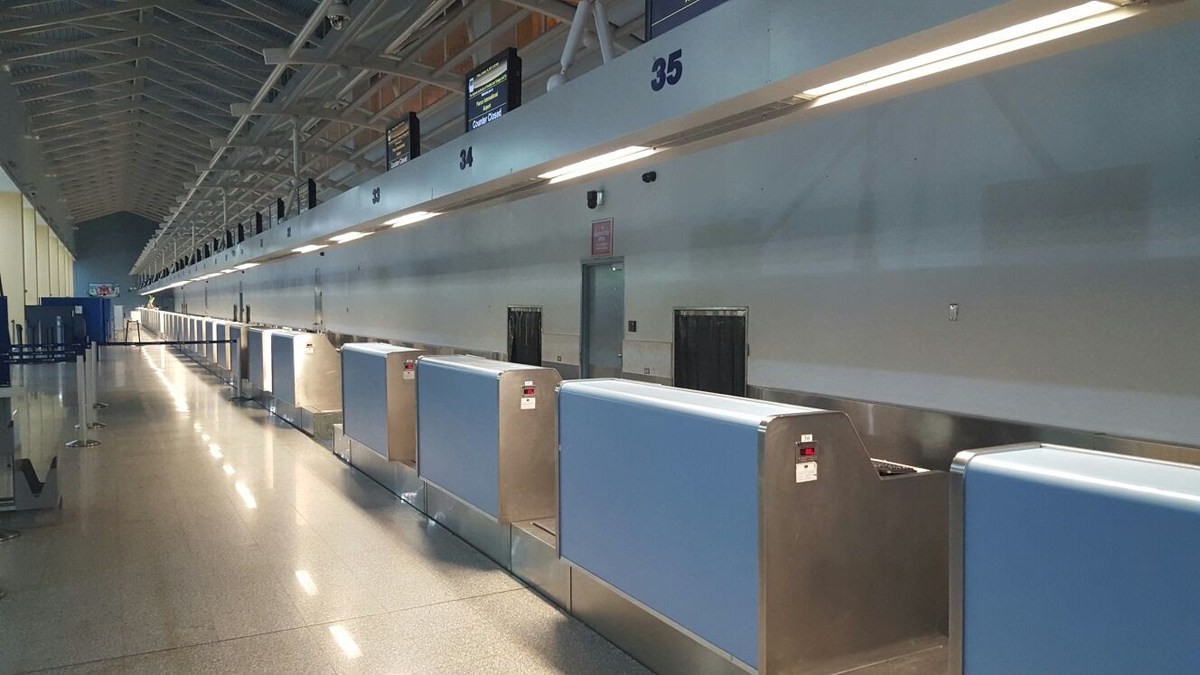
This article was produced with AI-assisted research and editorial support. Sources: Caribbean Airlines statement, 15 November 2026; Caribbean Airlines customer notification, 5 November 2026; Amadeus statement, October 2026; Cathay Pacific customer notice, 30 October 2026; Japan Airlines notice via BleepingComputer; Singapore Airlines statement via Channel NewsAsia; Thai Airways International notice via Bangkok Post; Qantas statement via 7NEWS; The Record (Recorded Future News); The Contrail; Information Age; Jamaica Gleaner; Trinidad and Tobago Guardian; INews Guyana; DLA Piper Data Protection Laws of the World. Photographs: a Caribbean Airlines Boeing 737 at Piarco, Trinidad (Chris Fitzpatrick, CC BY-SA 4.0, via Wikimedia Commons); the check-in area at Piarco International Airport (Chris Fitzpatrick, CC BY-SA 4.0, via Wikimedia Commons); the apron and terminal at Piarco (public domain, via Wikimedia Commons). Cover: Global 1 News editorial image.
What's Your Reaction?
 Like
0
 Dislike
0
 Love
0
 Funny
0
 Wow
0
 Sad
0
 Angry
0

Editor-in-Chief at Global1.News. Atlanta-based journalist who cuts through the BS and tells it like it is. Lead anchor, host, and the voice you hear when the spin stops and the truth starts.













Comments (0)