
Supporting Asia’s Energy Transition
In the wake of the Iran war’s disruption of the Strait of Hormuz, the Asia‑Pacific region confronts a stark convergence of energy security concerns and the colossal financing gap that underpins its transition to low‑carbon power.
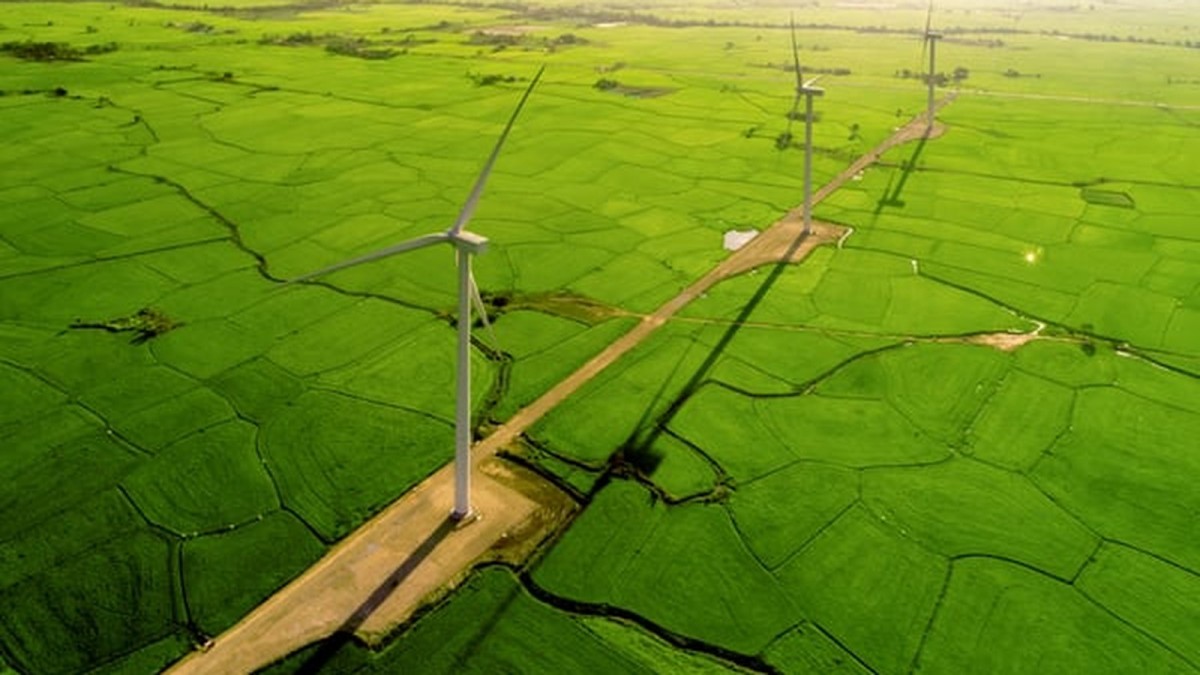
In the wake of the Iran war’s disruption of the Strait of Hormuz, the Asia‑Pacific region confronts a stark convergence of energy security concerns and the colossal financing gap that underpins its transition to low‑carbon power. Deloitte’s recent assessment places the total investment required to meet net‑zero targets at between $79 trillion and $89 trillion through 2050, implying that annual low‑carbon spending must surge from roughly $840 billion in 2023 to about $2.3 trillion by 2030. Yet, as the Global Energy Alliance for People & Planet notes, the Asian Development Bank’s $10 billion and the World Bank’s $2.5 billion commitments together represent only about 1.5 percent of the total need, underscoring the imperative for private capital to assume a far larger role.
Geopolitical Shock and the Imperative of Energy Independence
The Iran war’s closure of the Strait of Hormuz sent fuel prices soaring and exposed the fragility of Asia’s reliance on imported crude. The region draws nearly 60 percent of its oil from the Middle East—approximately 14.74 million barrels per day—leaving economies such as Japan and South Korea with more than 70 percent of their supply routed through the Hormuz chokepoint. The shock revealed that most Asian refiners have locked in over half of their crude through long‑term contracts, limiting their ability to pivot quickly when supply routes are jeopardized.
Among the most exposed was the Philippines, which sources roughly 98 percent of its oil from the Middle East. The conflict precipitated sharp spikes in electricity bills, a near‑doubling of cooking‑gas prices, and diesel rates climbing toward PHP 85 per liter (about $1.38). Rather than merely absorbing the cost shock, Filipino households and businesses accelerated pre‑existing trends toward rooftop solar and electric vehicles, reshaping payback calculations and reducing long‑standing wariness of Chinese‑made technology.
Demand‑Side Dynamics: Household Shifts Toward Clean Energy
The consumer‑level response in the Philippines illustrates a broader regional appetite for clean‑energy alternatives when conventional fuel supplies become uncertain. As households confront higher utility costs, the economics of rooftop solar installations improve, prompting a surge in installations that were previously constrained by cost and policy uncertainty. Similarly, electric‑vehicle adoption gains traction as consumers seek to hedge against volatile gasoline and diesel prices.
These shifts, while still nascent, signal a growing willingness among Asian consumers to invest in low‑carbon technologies when the price signal aligns with geopolitical risk. The acceleration of such demand at the household level complements the larger utility‑scale financing challenge, creating a more diversified market for clean‑energy capital.
Supply‑Side Innovations: Emerging Financing Mechanisms
Parallel to the demand‑side momentum, a suite of financing mechanisms is maturing, offering new avenues for capital to flow into utility‑scale projects. Although the source material does not enumerate specific instruments, it emphasizes that these mechanisms are largely independent of the Iran conflict, suggesting that they are rooted in broader market developments such as green bonds, climate‑linked loans, and blended finance structures that combine public guarantees with private equity.
These emerging channels aim to bridge the gap left by government and multilateral development bank contributions, which, as noted, cover only a fraction of the required investment. By leveraging private sector risk appetite and aligning returns with climate outcomes, these instruments can mobilize the scale of capital needed to approach the $2.3 trillion annual target projected for 2030.
Role of Multilateral Development Banks and Their Limitations
The Asian Development Bank’s $10 billion commitment and the World Bank’s $2.5 billion pledge together constitute a modest 1.5 percent of the total financing gap. While these contributions are symbolically important, they underscore the limited capacity of multilateral institutions to shoulder the bulk of the investment burden. Their role remains pivotal in de‑risking projects, providing technical assistance, and catalyzing private sector participation, but the scale of their direct financing is insufficient to close the gap alone.
Consequently, multilateral banks are increasingly focusing on guarantee mechanisms, concessional financing, and co‑financing arrangements that can unlock private capital. By absorbing a portion of the risk, they make projects more attractive to commercial investors, thereby amplifying the impact of their relatively modest direct outlays.
Private Capital: The Crucial Engine for Transition
Given that public and multilateral sources account for a small share of the financing need, private capital must assume the central role in funding the transition. Institutional investors, sovereign wealth funds, and corporate balance sheets are all potential sources of the trillions required. The challenge lies in aligning their risk‑adjusted return expectations with the long‑term nature of energy infrastructure projects.
Innovative financing structures—such as green securitization, climate‑linked bonds, and blended finance—can bridge this alignment gap. By offering risk mitigation tools, performance‑based incentives, and transparent reporting, these instruments can attract a broader investor base, including pension funds and insurers seeking stable, long‑duration assets that also meet environmental, social, and governance (ESG) criteria.
Policy Implications for Korea: Leveraging Diplomatic and Institutional Assets
South Korea, as a major energy importer and a hub for technology and capital, stands at a strategic crossroads. The Ministry of Trade, Industry and Energy (MOTIE) and the Ministry of Foreign Affairs (MOFA) can coordinate to promote policies that both enhance energy security and attract private investment. For instance, Korea could expand its green finance initiatives, offering sovereign guarantees or credit enhancements for projects that reduce dependence on Middle‑East oil.
Think tanks such as the Asan Institute for Policy Studies and the Korea Development Institute (KDI) can provide analytical support, modeling the macro‑economic benefits of accelerated clean‑energy deployment. Moreover, collaboration with regional bodies like the Asian Development Bank can position Korea as a conduit for private capital, leveraging its strong corporate sector and sophisticated financial markets to channel funds into utility‑scale projects across the region.
Forward‑Looking Assessment: Closing the Gap Amid Ongoing Uncertainty
The convergence of heightened demand for clean energy—spurred by geopolitical shocks—and the maturation of private‑sector financing mechanisms creates a pivotal moment for Asia’s energy transition. While the financing gap remains vast, the combined force of private capital, innovative financing structures, and targeted public policy can progressively narrow the shortfall.
In the coming years, monitoring the evolution of these financing channels will be essential. Should private investors respond to risk‑mitigation tools and ESG incentives, the annual low‑carbon investment could approach the $2.3 trillion target projected for 2030, thereby reducing the region’s vulnerability to external supply disruptions. For Korea, aligning diplomatic outreach, policy design, and financial market development will be key to both securing its own energy future and contributing to a resilient, low‑carbon Asia.
This article was produced with AI-assisted research and editorial support. Reporting is based on the source material cited below. Sources: The Diplomat; thediplomat.com; Global1.News (07 October 2026).
By Prof. David Park, Staff Writer
What's Your Reaction?
 Like
0
Like
0
 Dislike
0
Dislike
0
 Love
0
Love
0
 Funny
0
Funny
0
 Wow
0
Wow
0
 Sad
0
Sad
0
 Angry
0
Angry
0

East Asia/Technology Correspondent at Global1.News. Seoul-based voice covering Korean politics, technology, business, and culture. Analyzes how technology and geopolitics intersect across East Asia.











Comments (0)