
Thomas: A State Cannot Regulate Its Way Out of First Amendment Scrutiny
The Supreme Court denied certiorari in two cases on Monday. Justice Thomas dissented from the denial in a California compelled-speech challenge to an implicit-bias rule for doctors' courses, and filed a statement agreeing with the denial in a Maryland gun case.
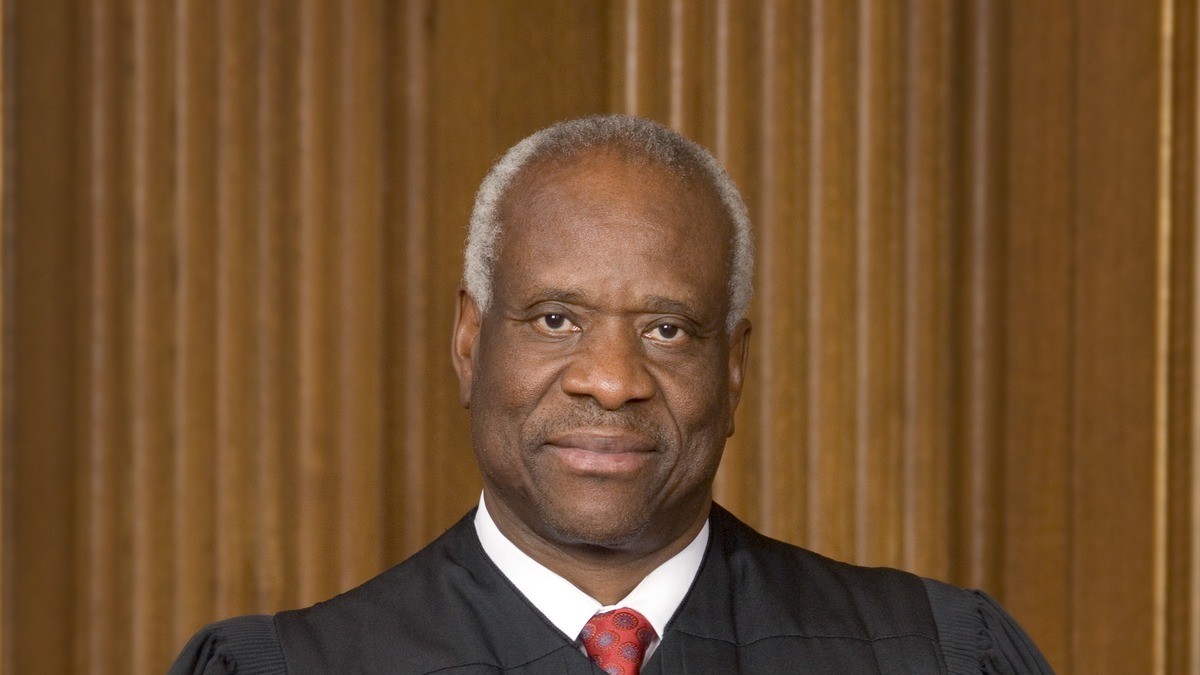
The Supreme Court turned away two petitions on Monday, November 16, 2026, and Justice Clarence Thomas used both denials to say what he thinks the lower courts are getting wrong. In a California compelled-speech case he dissented, joined by Justice Samuel Alito, while Justice Neil Gorsuch noted he would have granted the petition. In a Maryland gun case he filed a statement respecting the denial and agreed with the Court's decision not to grant.
Thomas: A State Cannot Regulate Its Way Out of First Amendment Scrutiny
Washington, D.C. — The order list in the 610 U.S. volume carried two separate writings from Justice Thomas, each attached to a different petition from a different circuit, and each arguing that the Court should have taken up a doctrine it has not yet clarified. Neither denial resolved the merits of the underlying challenge. Both leave the lower-court judgments in place, which means the rules that were challenged continue to operate while the justice who wants them examined has recorded his objections in writing.
Two Statements on One Order List
The Monday order list denied certiorari in Azadeh Khatibi, et al. v. Felix C. Yip, et al., No. 25-1240, from the Ninth Circuit, and in Katherine Novotny, et al. v. Wes Moore, et al., No. 25-1324, from the Fourth Circuit. The first concerns what a state may require of the people who teach its doctors. The second concerns where a state may forbid a licensed gun owner from carrying a firearm. In Khatibi, Thomas dissented from the denial, joined by Alito, and Gorsuch noted that he would have granted the petition. In Novotny, Thomas filed a statement respecting the denial and wrote that he agreed with the Court's decision not to grant certiorari. The two writings take different postures toward the Court's judgments even as they press a common concern about doctrine.
What California Actually Requires
According to Thomas's dissent, California-licensed physicians must complete 50 hours of approved continuing medical education every two years under Cal. Code Regs., tit. 16, §1336(a) (2026). Credit-eligible courses are often organized by private entities, certified by private accreditors, and taught by private instructors, and the State does not preapprove course content but reserves the right to audit courses for compliance. In 2019, the Legislature added a requirement that after January 1, 2022, all CME courses must "contain curriculum that includes the understanding of implicit bias," §2190.1(d)(1). The dissent names the challengers: Dr. Azadeh Khatibi, a California-licensed ophthalmologist who creates and teaches CME courses and who, the complaint says, "disagrees that implicit bias is the primary factor driving disparities in healthcare" and does not want to devote time to the subject; and Do No Harm, a nonprofit whose member who teaches CME believes such trainings "have not been shown to successfully reduce barriers to healthcare, and instead risk infecting healthcare decisions with divisive and discriminatory ideas."
How a Regulation Became 'Government Speech'
The district court dismissed the challenge on May 2, 2024, on the theory that the implicit-bias-training requirement "constitutes government speech," and the Ninth Circuit affirmed in 2025, holding that all three Shurtleff factors indicate that "CMEs eligible for Board credit constitute government speech." Thomas writes that at every step the panel emphasized the breadth of the State's regulation, reasoning that "licensees could attribute approved CMEs' content to California" because "their profession is heavily regulated," and pointing to what it called California's "extraordinary control over accredited CMEs." He quotes Judge VanDyke's dissent from the denial of rehearing en banc, that the approach "boil[ed] down to a single-factor analysis: does the government 'heavily' or 'actively' regulate CMEs?" Thomas adds that the requirement leaves the petitioners "no choice but to discuss the topic in a way that affirms the State's view."
The Narrow Corner the Doctrine Should Occupy
Thomas writes that the government-speech doctrine "occupies a narrow corner of our First Amendment jurisprudence," and that the First Amendment "does not prevent the government from speaking for itself." He quotes Shurtleff v. Boston for the caution that courts "must be very careful when a government claims that speech by one or more private speakers is actually government speech," and Matal v. Tam for the warning that government could "muffle the expression of disfavored viewpoints." He cites Johanns, Pleasant Grove City and Walker as cases where the government exercised final approval authority over the message itself, and notes that since Walker the Court has distinguished control over messages from control over the scheme through which messages are communicated. His closing formulation is blunt: "It cannot be the case that compelled speech becomes government speech because the government has compelled the speech."
The Test Thomas Wants Reconsidered
Thomas writes that before Shurtleff, the Court had identified history, public perception and government control as "relevant" but not mandatory "considerations," citing Walker. Shurtleff converted them into a three-factor test, and he says he joined Alito's concurrence warning that the test could lead courts to conclude extensive regulation transforms a private message into government speech. "Shurtleff is leading courts astray," Thomas writes, adding that the Court "should reconsider whether the Shurtleff test is the proper mode of analysis for identifying government speech." Even applying the test as written, he says, California's requirement does not qualify: the State has not historically used CME to carry its own messages, the public is unlikely to hear a private instructor as the government, and there is "little evidence" that California shapes the messages delivered in those courses.
Three Hypotheticals That Carry the Warning
The dissent poses a series of questions. Could California require a CME instructor to communicate the State's preferred message on the availability of abortion, citing National Institute of Family and Life Advocates v. Becerra? Could the State require an instructor to inform participants that for certain patients, gender-transition surgery is ethically required, citing Chiles v. Salazar? And could California require a keynote speaker at a continuing legal education conference to oppose racial preferences in law firm hiring? Thomas writes that under the Ninth Circuit's logic, "enough government regulation of the field would convert the private speaker's message in each of these hypotheticals into government speech unprotected by the First Amendment." He closes the sequence by saying that result "does not follow from this Court's precedents, and it certainly does not follow from the Constitution."
Who Joined, and Who Held Back
The Khatibi lineup is recorded on the order list itself: the petition was denied, Gorsuch would have granted it, and Thomas, with whom Alito joins, dissented from the denial. Gorsuch's reasons are not public, and he did not join the Thomas opinion. No position of Chief Justice Roberts or of Justices Sotomayor, Kagan, Jackson, Barrett or Kavanaugh is recorded in either document, and the denials do not disclose how any of them voted. That silence is the ordinary arithmetic of a cert denial. It takes four votes to grant a petition, and neither one mustered them. What is documented is narrower: three justices wanted one of these questions answered, and two of them wrote down why.
The Second Statement: Maryland's List
In Novotny, Thomas described Maryland's restrictions on carrying firearms in public demonstrations, mass transit, places of amusement, healthcare facilities, locations that sell alcohol for onsite consumption, and tens of thousands of acres of state park and forest land. The Fourth Circuit upheld the laws against a Second Amendment challenge by concluding each banned firearms in a "sensitive place," in Kipke v. Moore, 165 F. 4th 194 (2026). Thomas wrote that he is "skeptical that each of these laws 'is consistent with this Nation's historical tradition of firearm regulation'" under the standard in New York State Rifle & Pistol Assn., Inc. v. Bruen. He nonetheless agreed with the denial, because each statute implicates a distinct historical tradition and, in his words, "the breadth of petitioners' challenge would complicate our review."
What Thomas Says the States Have Built
Thomas wrote that States "have seized on the idea of 'sensitive places' to prohibit the peaceable carry of firearms in locations that bear little resemblance to legislatures, polling places, or courthouses," that "these restrictions stand on questionable historical ground," and that "their cumulative effect is to prohibit firearms wherever people gather for eating, drinking, recreation, amusement, and free speech." He warned that "expanding the category of 'sensitive places' to all places of public congregation would eviscerate the general right to publicly carry arms for self-defense." The Washington Times reported that he name-checked New Jersey's ban at zoos, libraries, casinos and state beaches, and California's ban on 29 gun-free locations, and that Maryland Attorney General Anthony Brown told the justices the laws cover "only those discrete locations" consistent with history and tradition.
What Comes Next
Thomas closed his Khatibi dissent with the line that gives this article its headline — "A State cannot regulate its way out of First Amendment scrutiny" — and with the warning that the doctrine should not be wielded as "a cover for censorship" or a cloak for compelled speech. On the gun side he wrote that, in an appropriate and more narrowly focused case, the Court "should consider the scope of States' authority to ban firearms in 'sensitive places.'" The Washington Times reported the Court has agreed to hear a challenge to bans on AR-15s and similar semiautomatic rifles, and that no ruling has been issued. Duke's Center for Firearms Law noted the Court denied certiorari in 15 firearms-law-related petitions on Monday, and that the next orders list is Monday, December 7. For the California rule, the case is over: the Ninth Circuit's judgment stands.
By Jessica Ali, Staff Writer
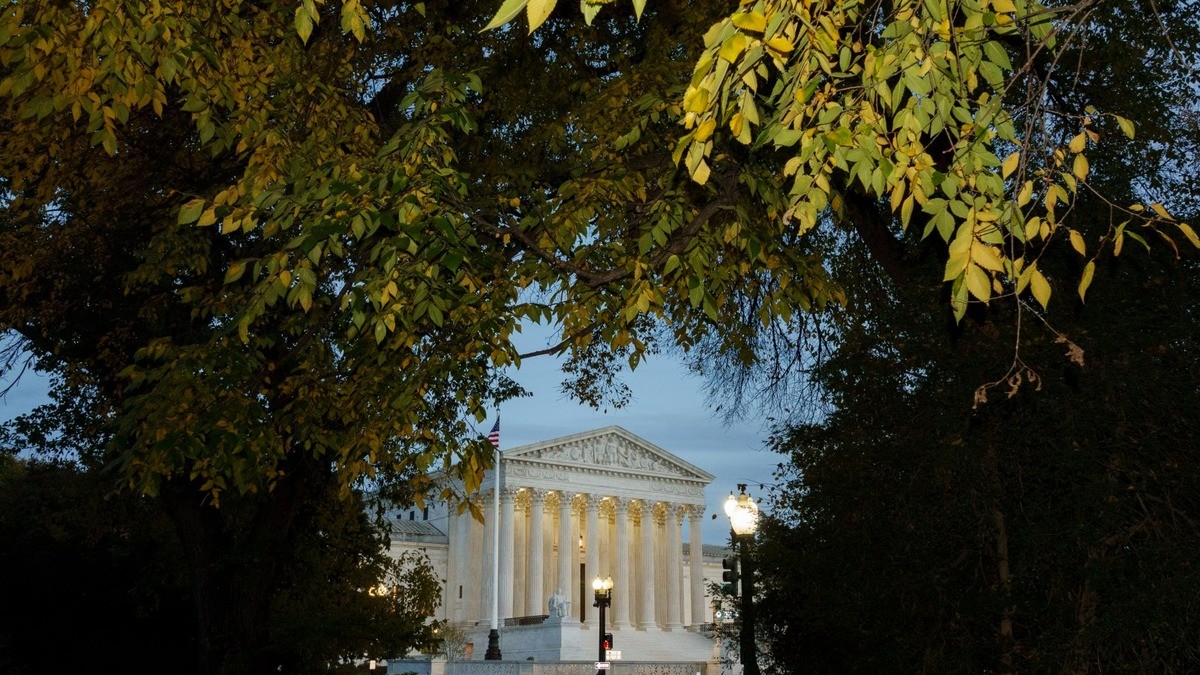
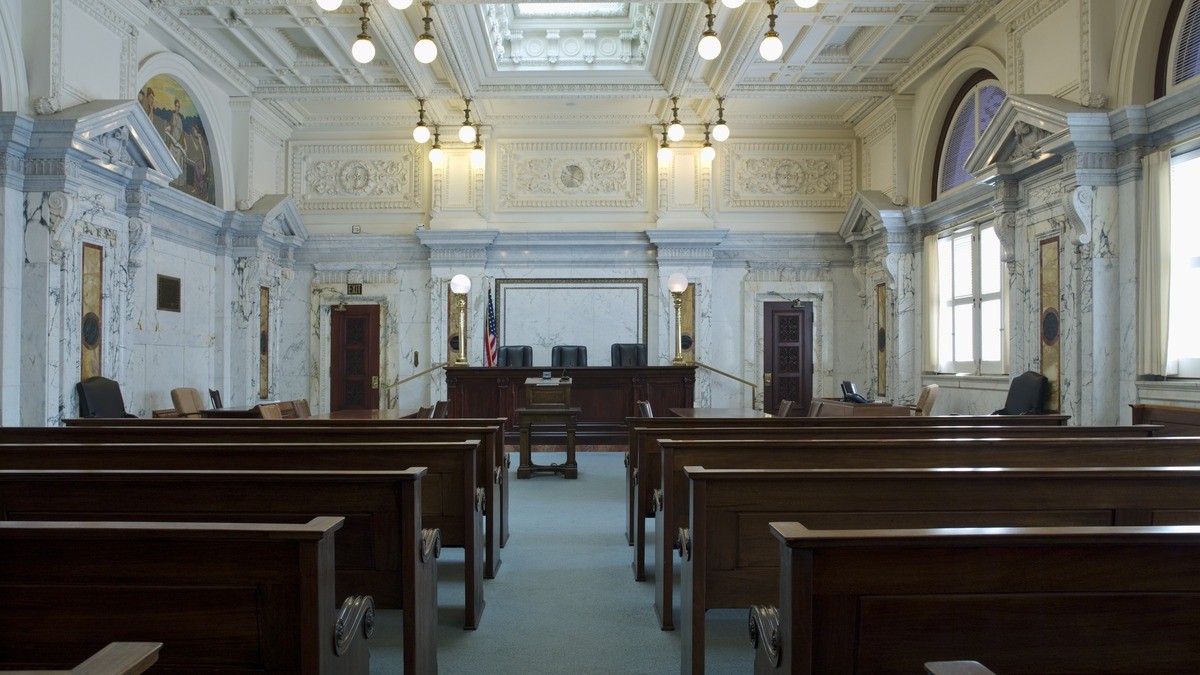
This article was produced with AI-assisted research and editorial support. Photographs: Steve Petteway, Collection of the Supreme Court of the United States (Clarence Thomas); Kevin Carter/Getty Images via Newsweek (the Supreme Court at dusk on November 4, 2026); Carol M. Highsmith, Library of Congress (a courtroom of the James R. Browning U.S. Court of Appeals Building). Where a social cover card appears, it is a Global 1 News editorial image. Sources: Supreme Court order list of November 16, 2026; dissenting opinion of Justice Thomas in Khatibi v. Yip, No. 25-1240; statement of Justice Thomas in Novotny v. Moore, No. 25-1324; Courthouse News Service; Newsweek; Fox News; The Washington Times; The Federalist; Duke Center for Firearms Law; Reuters.
What's Your Reaction?
 Like
0
 Dislike
0
 Love
0
 Funny
0
 Wow
0
 Sad
0
 Angry
0

Editor-in-Chief at Global1.News. Atlanta-based journalist who cuts through the BS and tells it like it is. Lead anchor, host, and the voice you hear when the spin stops and the truth starts.









Comments (0)