
Second Qatari LNG Tanker Attacked in Hormuz as Crisis Deepens
A second Qatari LNG tanker was struck in the Strait of Hormuz on July 31 as QatarEnergy's force majeure spread to 24 cargoes. With a new U.S. shipping advisory and Oman talks in flux, the world's key energy chokepoint remains a live economic threat.
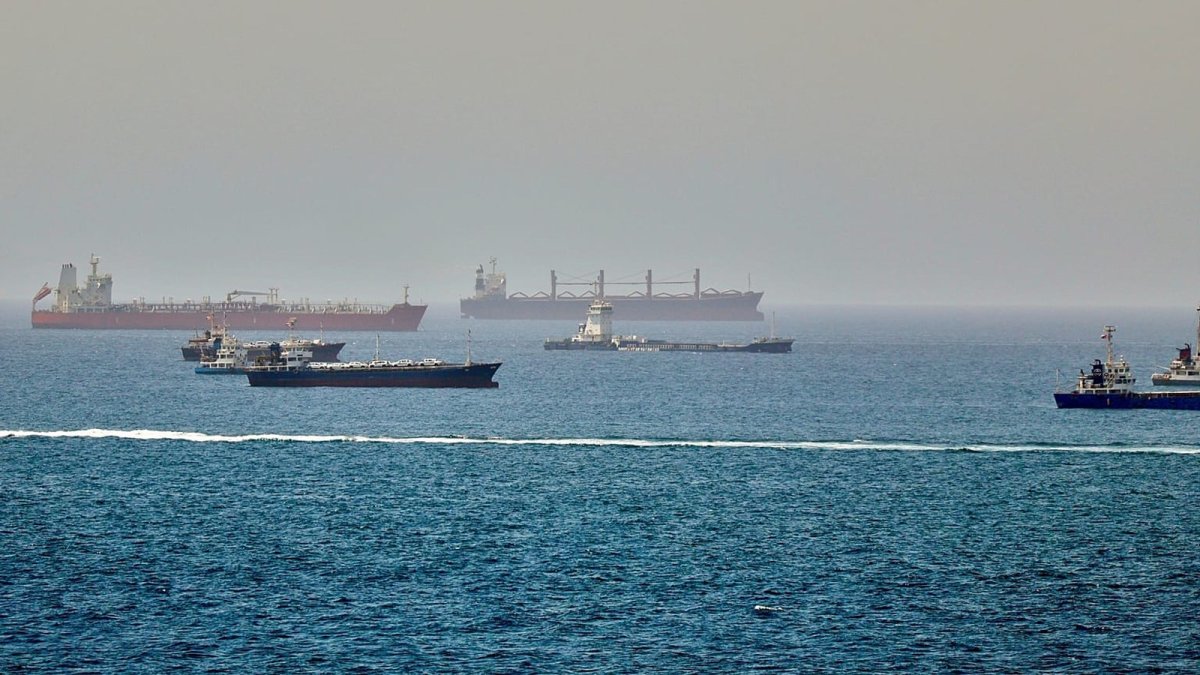
The Strait of Hormuz has become a live pressure point for global energy flows. A second Qatari LNG tanker came under attack in less than a month, extending a pattern of disruption that already forced QatarEnergy to declare force majeure on dozens of cargoes. Shipowners and utilities now face concrete choices about routing, insurance, and contract performance.
A Second Strike on Qatar's LNG Lifeline
On Friday, July 31, 2026, the GasLog Shanghai, an LNG tanker that had loaded cargo in Qatar around Monday, July 27, was struck by a projectile while exiting the Strait of Hormuz off Oman. The UK Maritime Trade Operations reported an unidentified vessel hit; security firms Vanguard Tech and Marisks confirmed the identity as the GasLog Shanghai. GasLog stated that all crew members remained safe and the vessel stayed stable after the incident.
The tanker stopped transmitting its position near the strait's western entrance on the day of the strike. Ownership of the LNG cargo on board has not been disclosed. QatarEnergy did not respond to immediate inquiries about the shipment. This marks the second direct attack on a Qatari-linked LNG carrier in the same waterway within four weeks.
GasLog, the Monaco-based operator that manages vessels for QatarEnergy and other producers, has not altered its public stance on continued transits. The incident occurred days after a separate drone strike on the Energos Winter at Egypt's Damietta port, which also involved a GasLog-managed vessel.
When an LNG tanker takes damage near the strait, salvage operations face restricted access and elevated war-risk conditions. GasLog's decision to keep transiting signals that carriers accept these hazards only when contract terms and insurance cover the downside.
Al Rekayyat Precedent and Widening Force Majeure
The July 31 strike follows the July 7 attack on the Al Rekayyat, a Qatari-owned tanker carrying LNG near the strait. That earlier incident prompted QatarEnergy to pause shipments through the waterway for three weeks. Italian utility Edison reported that QatarEnergy extended force majeure to three additional cargoes, bringing the total affected shipments to 24 through September.
This represents the third force majeure extension QatarEnergy has issued to Edison this year. An earlier round covered five cargoes originally scheduled for delivery to the Adriatic LNG terminal from July through mid-August. Edison has received no firm revised delivery dates for the latest batch.
QatarEnergy has operated under force majeure declarations on select contracts since March, when strikes on the Ras Laffan complex and the subsequent strait closure halted both production and exports. The current extensions compound those earlier disruptions for European buyers reliant on Qatari volumes.
European utilities like Edison must secure spot cargoes or draw on storage while Asian buyers face similar uncertainty over rerouted or delayed Qatari volumes. With 24 shipments affected, the cumulative shortfall tightens available supply for the remainder of the year and forces contract counterparties to renegotiate or litigate the scope of relief. The pattern shows that force majeure declarations compound rather than resolve when the underlying chokepoint remains contested.
Hormuz Remains Qatar's Sole Maritime Route
Qatar ranks as the world's second-largest LNG exporter after Australia, shipping roughly 77 million tonnes annually. QatarEnergy LNG runs 14 trains at Ras Laffan with a combined annual capacity of 77 million tonnes. Nearly every cargo must transit the Strait of Hormuz, Qatar's only sea outlet to international markets.
Two production trains at Ras Laffan sustained damage during the March strikes attributed to Iranian forces. Those losses reduced available supply even before the latest tanker attacks. Shipping traffic through the strait has fallen sharply, with one late-June weekend recording just 10 crossings on a Saturday against a normal range of 40 to 50 earlier in the week.
Iraqi Oil Ministry officials confirmed that some tankers carrying Iraqi crude have continued to move under the restricted transit regime. The strait itself carries roughly one-fifth of global oil supply, making any sustained closure a direct threat to both crude and LNG balances.
The absence of alternative routes means any sustained restriction immediately scales across Qatar's entire 77 million tonne annual export program. Iraqi crude movements under the same restricted regime demonstrate that even non-Qatari volumes depend on the same passage, linking regional crude and LNG balances under one set of transit rules. Damage at Ras Laffan therefore compounds the effect of each subsequent vessel incident.
U.S. Maritime Advisory Highlights Boarding Risks
The U.S. Maritime Administration issued advisory 2026-001 for commercial vessels transiting the Strait of Hormuz and Gulf of Oman. The notice warns that vessels have long faced the risk of being hailed, queried, boarded, detained, or seized by Iranian forces. The advisory remains active until August 8, 2026.
The guidance draws in part from the February 3, 2026 encounter involving the Stena Imperative, a U.S.-flagged product tanker in the Tanker Security Program. Two Islamic Revolutionary Guard Corps fast boats and an Iranian Mohajer drone approached the vessel at high speed, ordered it to stop engines, and threatened boarding. The tanker increased speed and continued under escort from the USS McFaul before the situation eased.
The advisory recommends that masters decline boarding requests when safety permits and advises crews against forcible resistance. Vessels should remain as far as possible from Iran's territorial sea, transit eastbound near Oman's waters, and keep AIS transponders active unless directed otherwise by U.S. Naval Forces Central Command.
The February 3 approach to the Stena Imperative, involving two IRGC boats and a Mohajer drone, supplied the concrete trigger for the advisory. Hours earlier, a U.S. Navy F-35C downed an Iranian Shahed drone near the Abraham Lincoln group, revealing how quickly encounters can escalate from hailing to kinetic action. The advisory therefore translates recent near-misses into standing operational rules for all U.S.-flagged vessels in the region.
Diplomatic Brinkmanship Between Washington and Tehran
Indirect nuclear talks between the United States and Iran have resumed in Oman even as Washington imposed fresh sanctions on Iran's shadow fleet. President Donald Trump stated publicly that bad things would probably happen if the talks fail, while Tehran demanded limits on the U.S. military presence near its waters.
On Monday, August 3, Iran declared through Fars news agency that no talks were under way and no meetings were planned, contradicting President Trump's earlier reference to afternoon discussions. Tehran further stated that the strait will remain restricted while U.S. hostile actions continue, with transit permitted only via designated routes and IRGC naval approval.
As of Tuesday, August 4, Al Jazeera reported that Oman talks on Hormuz were advancing positively, while President Trump described the negotiations as the last chance to reach a deal. Shipping traffic remains at near-standstill levels at multiple points along the route.
Shadow fleet sanctions add financial pressure while the diplomatic track remains the stated last chance for a deal. Any agreement must still reconcile Tehran's insistence on naval oversight of Hormuz with Washington's sanctions posture.
Insurance Costs and Shipping Traffic Collapse
Insurance premiums for vessels transiting the region have climbed in response to the repeated attacks. Jean-Christian Heintz of Wideangle LNG noted that QatarEnergy faces identical exposure whether it uses its own fleet or third-party carriers such as GasLog. The second strike on a Qatari LNG tanker underscores that risk persists across ownership structures.
Analysts describe current traffic volumes as near standstill during peak restriction periods. The three-week pause after the Al Rekayyat incident already demonstrated how quickly Qatari exports can be curtailed when the strait becomes contested. Utilities holding force majeure notices now weigh alternative supply sources against uncertain restart dates.
Traffic volumes at near-standstill levels, with one late-June weekend recording only 10 crossings against a normal 40-50, show how quickly a chokepoint can throttle global supply chains. Iraqi crude tankers that continue under the restricted regime highlight selective movement, yet the overall reduction still removes meaningful volumes from both oil and LNG markets. Utilities holding force majeure notices must therefore price in both delay and elevated insurance when planning replacements.
Oil Price Swings and Recovery Timeline
Brent crude rose more than 5 percent to around $78 a barrel in early July after President Trump declared an Iran deal over, then fell again on August 3 when he called off planned strikes. Market participants expect oil and gas prices to remain above pre-crisis levels for months even if Hormuz reopens under restricted conditions.
The combination of damaged Ras Laffan trains, repeated tanker strikes, and force majeure on 24 cargoes has removed meaningful volumes from the market. Shipowners must now decide whether to accept higher war-risk premiums or reroute around Africa, adding weeks to delivery schedules for European and Asian buyers.
Recovery timelines extend because rerouting around Africa adds weeks to delivery schedules and war-risk premiums remain elevated. Shipowners deciding between higher insurance or longer voyages will sustain upward pressure on delivered costs for European and Asian buyers. Market participants therefore watch both the Oman talks and actual traffic counts rather than any single reopening announcement.
By Jessica Ali, Staff Writer By Jessica Ali, Staff WriterThis article was produced with AI-assisted research and editorial support. Reporting is based on sources cited in the article.
What's Your Reaction?
 Like
0
Like
0
 Dislike
0
Dislike
0
 Love
0
Love
0
 Funny
0
Funny
0
 Wow
0
Wow
0
 Sad
0
Sad
0
 Angry
0
Angry
0

Editor-in-Chief at Global1.News. Atlanta-based journalist who cuts through the BS and tells it like it is. Lead anchor, host, and the voice you hear when the spin stops and the truth starts.










Comments (0)