
Judge Blocks Trump's Border Wall Across Big Bend, After Two Days and Two Rulings
A federal judge in El Paso granted a preliminary injunction blocking border wall construction across the Big Bend region of Texas and stayed three federal waivers, one day after a different judge in the same district court refused to stop the work.
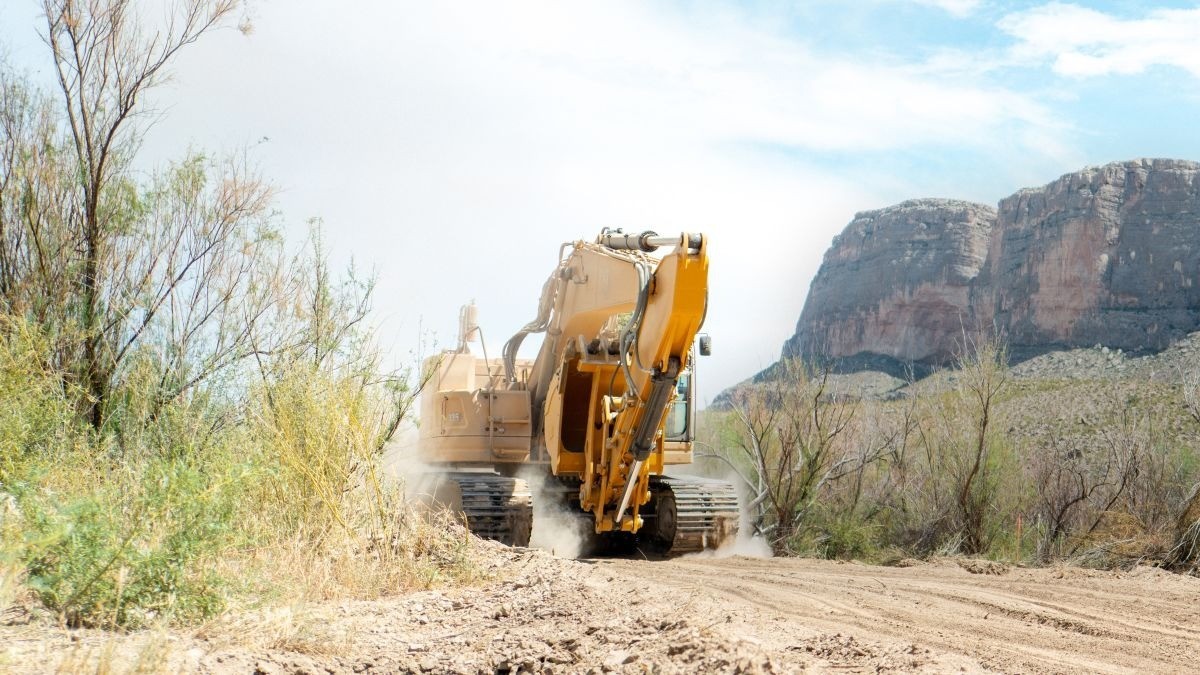
A federal judge in El Paso has ordered the bulldozers to stop across the Big Bend region of West Texas, granting a preliminary injunction that halts border barrier construction and stays three federal waivers covering roughly 60 miles of the Rio Grande. The ruling, read aloud from the bench Friday, came one day after a different judge in the same district court refused to stop the work. Within 48 hours, two judges reached opposite answers on whether construction could proceed.
Judge Blocks Trump's Border Wall Across Big Bend, After Two Days and Two Rulings
El Paso, Texas — U.S. District Judge Kathleen Cardone granted a preliminary injunction Friday blocking border barrier and road construction across the Big Bend region, capping a week in which the legal ground shifted twice in two days.
What Judge Cardone Ordered
Cardone, of the U.S. District Court for the Western District of Texas, El Paso Division, read the order aloud at the end of a day of testimony and asked the courtroom to remain calm. It was entered Friday, 2 October 2026, in Friends of the Ruidosa Church et al. v. Markwayne Mullin et al., Cause No. EP-26-CV-1099-KC.
The operative language is broad. "Effective immediately and until the Court orders otherwise, Defendants SHALL NOT build border barrier or related infrastructure, or engage in any construction or ground disturbing activities, in the Big Bend Sector until and unless Defendants comply with all applicable laws," the order states.
Cardone found the plaintiffs likely to succeed on the merits of at least one claim, likely to suffer serious, irreparable harm without an injunction, and said the balance of the equities and the public interest weighed in their favor. She stayed the waivers themselves: "The effect of all 'Big Bend Waivers' is STAYED for the duration of this Injunction." A memorandum opinion will follow.
Cardone was appointed by President George W. Bush. The pause covers the entire Big Bend Sector — within one mile of the Rio Grande and inside the state and national parks — and lasts until a decision on the merits.
Two Days, Two Rulings
Construction in and around Big Bend National Park had been paused through September. That pause lapsed on 30 September.
On Thursday 1 October, a judge rejected a request for a temporary restraining order in a different case that sought to halt work in and around the national park. On Friday 2 October, Cardone granted the preliminary injunction in this case. Two different judges in the Western District of Texas, roughly 48 hours apart, reached opposite answers on whether the bulldozers had to stop.
Bloomberg Law reported that a different judge, in a separate case in the same district court, had on 30 September allowed the wall construction to proceed. On 3 August, a judge had declined to block the Big Bend area border wall, noting that the DHS Secretary has broad authority to waive legal requirements for border infrastructure. The docket has moved faster than the equipment.
A Waiver With No Precedent
Three waivers were named in Cardone's order and stayed: the West Waiver (91 Fed. Reg. 7297, amended at 91 Fed. Reg. 40550), the National Park Waiver (91 Fed. Reg. 27969, amended at 91 Fed. Reg. 34831) and the Lower Canyons Waiver (91 Fed. Reg. 46939).
They were issued under Section 102(c) of the Illegal Immigration Reform and Immigrant Responsibility Act of 1996, which lets the Homeland Security Secretary waive "all legal requirements" deemed necessary to ensure expeditious construction. The May waiver was signed by Homeland Security Secretary Markwayne Mullin.
The laws set aside include the Endangered Species Act, the National Wild and Scenic Rivers Act, the Clean Water Act, the National Park Service Organic Act, the National Environmental Policy Act, the Native American Graves Protection and Repatriation Act and the Administrative Procedure Act. The May notice covered more than 30 federal statutes to clear roughly 60 miles of river.
The Center for Biological Diversity says the waiver "marked the first time in U.S. history that the federal government has cast aside a broad slate of environmental laws — including the National Park Service Organic Act, Endangered Species Act and National Wild and Scenic Rivers Act — inside a national park."
The Numbers the Waiver Left Out
The Big Bend Sector stretches about 517 miles — roughly a quarter of the roughly 2,000-mile southwestern border with Mexico. In fiscal year 2025 the sector recorded 3,096 apprehensions out of 237,538 across the U.S.-Mexico border, or 1.3 percent.
Common Dreams reported the sector accounts for "roughly a quarter of the international boundary's length, but no more than 3% of annual migrant apprehensions." Conserve Big Bend and a coalition of landowners, in their own complaint, say the sector "has recorded the fewest apprehensions of any Southwest border sector every year for the past 53 years."
Opponents argue the region is so remote and the landscape so rugged that it serves as its own deterrent to illegal immigration. The government's own determination describes the sector as an area of high illegal entry with an "acute and immediate need" for barriers.
That gap is now central to the litigation. A separate suit filed in Washington argues the sector does not meet the legal standard for the designation at all.
What the Bulldozers Already Did
Bulldozers started tearing into Big Bend National Park near the iconic Santa Elena Canyon on 6 August, and were documented plowing new routes for vehicle barriers into both the east and west sides of Mariscal Mountain. Contractors have stockpiled heavy equipment across the region; staging yards have been cleared, worker camps built and water wells drilled.
The administration erected the first border wall panels in the Big Bend sector in mid-September. Customs and Border Protection announced a pause in construction on 17 August after widespread, nonpartisan outrage; that pause lapsed on 30 September.
According to CBP's online map, the agency plans vehicle barriers and patrol roads across Big Bend National Park, including in Mariscal Mountain — which the Center for Biological Diversity says would require extensive dynamite blasting — and in remote walled canyons where no unauthorized vehicle crossings have been documented and where vehicles cannot reach the border.
More than 140 outfitters, local businesses and recreation groups urged Texas leaders to protect public access. When bulldozers were spotted clearing land in the park in August, both Republicans and Democrats called for the administration to stop.
The River Guide and the Rancher
Danny William Miller, a Rio Grande river guide and landowner who stands to lose property in Redford, compared the government building a wall across his land and cutting off his river access to "a bullet to the head." Once altered, he said, the desert landscapes could never be replaced, and his work would become "a tour of the military industrial complex, rather than a tour of the wilderness."
Hudspeth County resident Bill Guerra-Addington testified that a border barrier would be a death sentence for his ranch on the Texas-Mexico border. "They're taking the river away from us, and it's devastating," he said.
Zeynep Graves, a lawyer with the Center for Biological Diversity, said in closing arguments that the impact reached the community at every level: "The harm reaches far beyond the landscape itself."
Miller is one of three plaintiffs, alongside the Center for Biological Diversity and Friends of the Ruidosa Church, a nonprofit preserving a historic church in Presidio County.
Six Lawsuits and Three Waivers
The suit was filed in April 2026 against the Department of Homeland Security and its secretary. It argues the five contracted border wall projects in the region are unconstitutional — violating the separation of powers and depriving citizens of their land. The Texas Civil Rights Project is also involved.
Six lawsuits have been filed over the Big Bend wall. Conserve Big Bend and a coalition of landowners filed a separate federal suit in Washington on 14 September, arguing DHS cannot invoke its expedited construction powers because the sector does not meet the standard for "high illegal entry," and asking the court to vacate the determinations.
According to the plaintiffs' account of the legal history, the REAL ID Act of 2005 expanded the list of laws the government may waive and confines challengers to seeking review directly from the Supreme Court. Three waivers are now stayed, and the underlying authority to issue them remains contested in two fe
 deral courthouses.
Since news of the plans for border barriers in Big Bend broke in January 2026, a grassroots bipartisan backlash has formed across the region.
What the Government Says
DHS determined the Big Bend Sector "is an area of high illegal entry." Between fiscal year 2021 and fiscal year 2025, Border Patrol apprehended over 89,000 people attempting to enter between ports of entry in the sector, and seized more than 87,574 pounds of marijuana, 867 pounds of cocaine and 1,156 pounds of methamphetamine. The determination cited an "acute and immediate need."
In October 2025, then-Secretary Kristi Noem declared the entire U.S.-Mexico border an area of "high illegal entry" and waived dozens of laws along its full expanse.
The project is part of a $46 billion effort to line the southern border with a mix of 30-foot steel walls, vehicle barriers, roads and surveillance technology. Physical border infrastructure in the region — walls, roads, fences, lights, sensors — totals over $7.5 billion. CBP Commissioner Rodney Scott issued a statement that the agency's goal was to protect the national park from future cartel activity.
A Customs and Border Protection spokesperson said: "We stand by our assessment and remain confident in our legal authorities to secure the border while preserving the unique landscape of the Big Bend region." The agency added that it is "working with the Department of Justice on next steps." The Department of Homeland Security did not immediately respond to a request for comment.
What Comes Next
In a document filed in the case earlier in the week, the agencies indicated they would move to file eminent domain cases against Big Bend area landowners who are not cooperating with the border wall. The injunction bars construction but does not resolve the underlying claims, which now proceed toward a decision on the merits.
Laiken Jordahl, national public lands advocate at the Center for Biological Diversity, called the ruling "a historic victory for Big Bend and everyone who loves this wild corner of Texas." He added: "No administration has the right to destroy a crown-jewel national park for political theatre. With a federal court ordering the bulldozers to stop, Big Bend gets to breathe. But this fight is far from over."
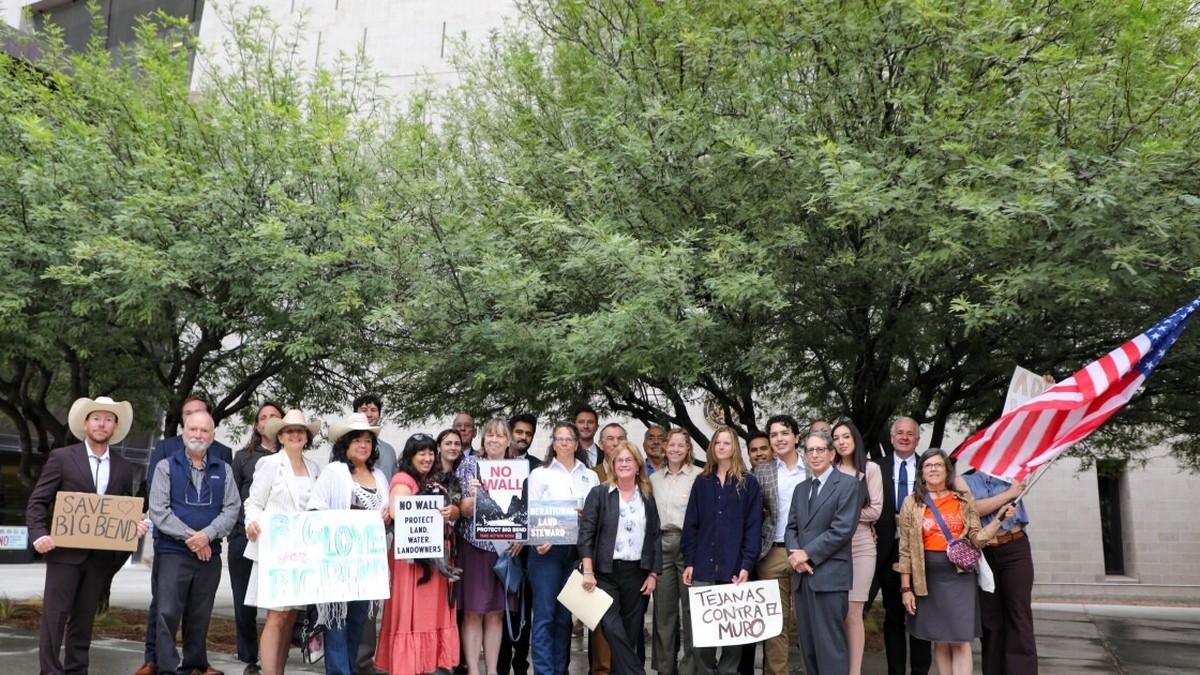
Outside the courthouse, Jordahl said: "The bulldozers are going to be sent packing until she rules on the merits. This is such a historic day for Big Bend and for Texas and the Constitution." Locals reacted with tears, hugs and applause. Advocates called on the administration to repair the damage already done to the park and to meet with local residents.
Why This Corner of Texas
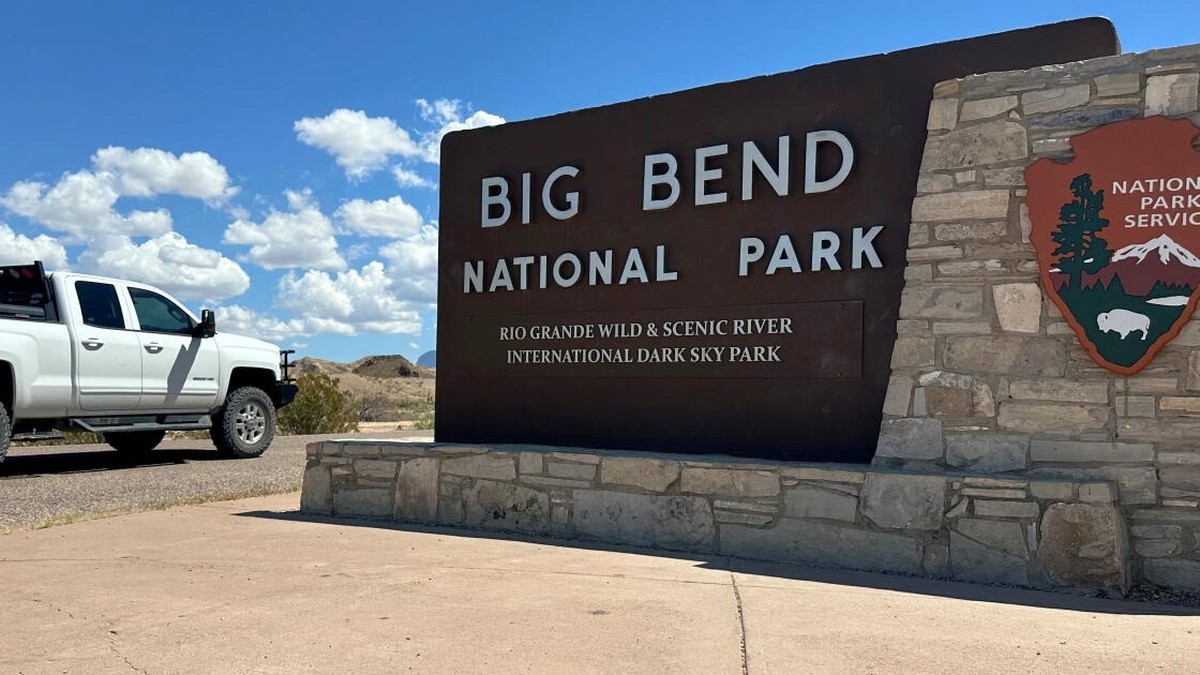
Big Bend National Park is prized for its desert landscapes, limestone cliffs and crystal-clear night sky views. It sits on a bend of the Rio Grande. Big Bend Ranch State Park is also within the affected area.
The park's remoteness has defined both the debate and the terrain. The river runs through canyons vehicles cannot reach, and the surrounding desert has historically drawn far fewer crossings than other stretches of the border.
That combination — a quarter of the border's length, a fraction of its apprehensions, and a landscape that opponents say polices itself — is why the fight over roughly 60 miles of river has drawn ranchers, river guides, outfitters and environmental groups into the same courtroom.
For now the bulldozers are idle across the sector, the three waivers are stayed, and the case moves to the merits.
By Jessica Ali, Staff Writer
This article was produced with AI-assisted research and editorial support. Sources: the U.S. District Court for the Western District of Texas, the Federal Register, the Associated Press, CNN, NBC News, Axios, Marfa Public Radio, The Texas Tribune, the Los Angeles Times, Bloomberg Law, PBS NewsHour, Common Dreams and the Center for Biological Diversity.
What's Your Reaction?
 Like
0
Like
0
 Dislike
0
Dislike
0
 Love
0
Love
0
 Funny
0
Funny
0
 Wow
0
Wow
0
 Sad
0
Sad
0
 Angry
0
Angry
0

Editor-in-Chief at Global1.News. Atlanta-based journalist who cuts through the BS and tells it like it is. Lead anchor, host, and the voice you hear when the spin stops and the truth starts.













Comments (0)