
Russian Adviser Quits After Azerbaijan Arrest Warrant
An unpaid adviser to Russia's transport minister, Alexei Chadayev, resigned after Azerbaijan charged him and two commentators with calls for terrorism and violent overthrow over YouTube livestream comments, deepening Moscow-Baku tensions.
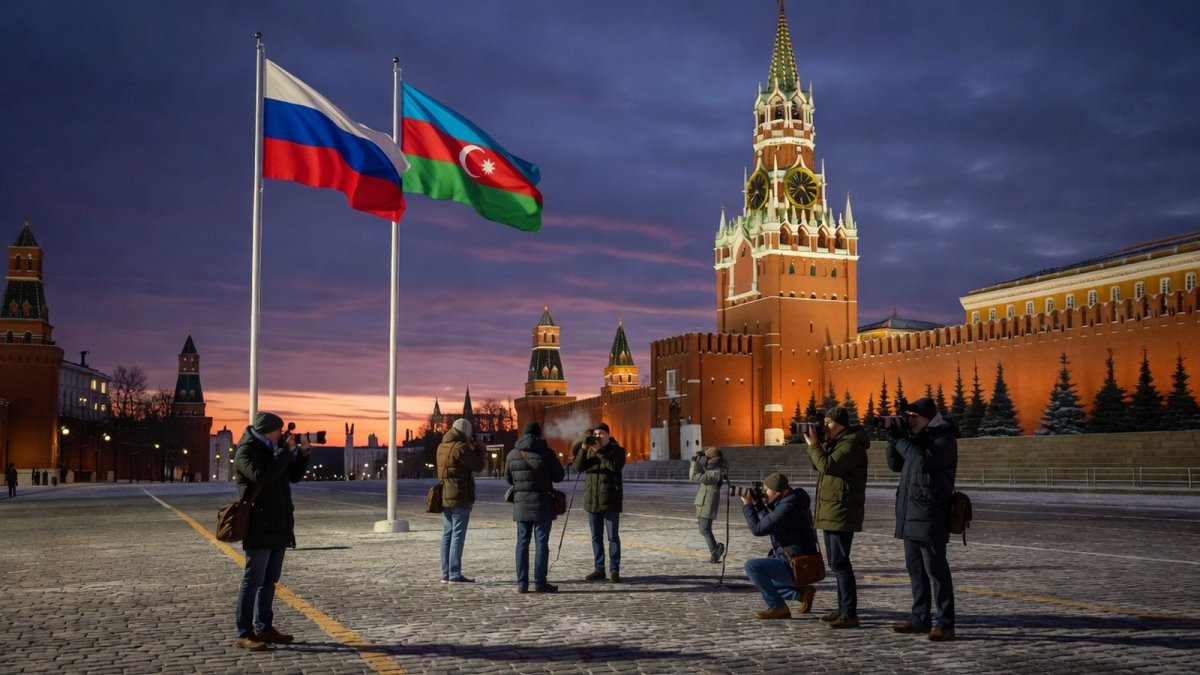
An adviser to Russia's transportation minister has resigned from his post after Azerbaijan issued an international arrest warrant for him over comments made during YouTube livestreams earlier this summer. The move comes as tensions between Moscow and Baku continue to simmer over a range of unresolved disputes, including the aftermath of a deadly plane crash and reciprocal arrests of citizens.
Russian Adviser Quits After Azerbaijan Arrest Warrant
Moscow, Russia – August 20, 2026 — Alexei Chadayev, a journalist and unpaid adviser to Russia's Transportation Minister, announced his resignation on Tuesday, a day after Azerbaijan's Prosecutor General's Office charged him with inciting terrorism and calling for the violent overthrow of the Azerbaijani government. The charges, which also target political commentator Semyon Uralov and Moscow 24 presenter Ivan Knyazev, stem from comments made during July and August livestreams on the YouTube channel "Chistota Ponimaniya" (Clear Understanding).
Chadayev Steps Down to Protect Interstate Relations
In a Telegram post explaining his decision, Chadayev said he was stepping down to ensure his personal opinions do not interfere with government work. "The logic behind my decision is straightforward: I don't believe anyone's personal expert opinion or public statements should impact interstate relations or create obstacles for joint government efforts," he wrote.
Chadayev, who stressed that his role at the Transportation Ministry was unpaid, emphasized that his public statements, podcast appearances and publications reflect solely his personal expert position, particularly on issues of drones, technological sovereignty and the political processes connected with them. "I do not believe it is right when someone's personal expert position or public statements affect interstate cooperation and create obstacles to joint work between states," he added.
Azerbaijan's Charges and the Removed Livestream
Azerbaijan's Prosecutor General's Office announced Monday that it had charged the three men with "public calls for terrorism," "violent change of the constitutional order," and "violating Azerbaijan's territorial integrity." Investigators asserted that in a July 14 program, the trio called for the use of violence against Azerbaijan, changes to the constitutional system and violations of territorial integrity.
The July livestream in question has since been removed from YouTube, leaving it unclear which specific comments triggered the charges. The "Chistota Ponimaniya" channel said it was "taking a break" following the allegations. The channel has previously hosted Foreign Ministry spokeswoman Maria Zakharova as a guest.
Baku Summons Russian Ambassador
Azerbaijan's Foreign Ministry summoned Russia's ambassador to Baku on Tuesday to express "serious concern and firm protest" over "provocative, insulting and threatening statements" made against Azerbaijan in Russian media. In a statement, the ministry said: "Our expectation to take urgent and effective measures to end the provocations, threats and violent rhetoric against Azerbaijan in the information and media space was once again conveyed to the Russian side."
The diplomatic rebuke underscores the fragility of relations between the two post-Soviet states, which have been strained since a Russian missile accidentally shot down an Azerbaijani passenger plane in December 2024, killing 38 people. While Russia acknowledged responsibility for the deadly incident, tensions have persisted, accompanied by reciprocal arrests of each other's citizens.
Moscow Distances Itself but Offers Legal Defense
Russia's Foreign Ministry sought to distance itself from the views of the three commentators, stating they "in no way reflect Moscow's position towards Azerbaijan or our relations with the Republic." However, Foreign Ministry spokeswoman Maria Zakharova said the Russian government stands ready to provide legal defense for the accused men, alleging that "hostile narratives toward Russia are also constantly present in Azerbaijan's media landscape."
"We have repeatedly invited our Azerbaijani colleagues to address these media environment concerns in a calm, non-politicized, and non-sensationalized manner through specialized consultations," said Zakharova, who has previously appeared as a guest on "Chistota Ponimaniya." Her appearances on the program highlight the blurred lines between official diplomacy and media commentary in Moscow, a dynamic analysts say complicates the Kremlin's position.
Chadayev's Background and Future Plans
Chadayev is a well-known figure in Russian media and political circles, having worked as a journalist before joining the Transportation Ministry as an adviser. He noted that he does not regard his departure from the post as a dramatic event and intends to continue working in the field of unmanned technologies, civil-military integration and other areas.
"There is no drama here. My main focus remains exactly the same: drones, Ushkuynik, civil-military integration and everything necessary for the front and victory. There are many tasks, we are continuing," he wrote on Telegram. His reference to "the front" suggests his work is closely tied to Russia's military efforts, a detail that may further complicate relations with Baku.
Transport Ministry's State Tasks Continue
According to Chadayev, Russia's Transport Ministry is carrying out state tasks, including developing the North–South international transport corridor and ensuring transit transportation, including in the Azerbaijani direction. The corridor, which connects Russia to India via Azerbaijan and Iran, is a strategic priority for Moscow, and any disruption in bilateral relations could have economic consequences.
His resignation, while framed as a personal decision, removes a potential flashpoint from the ministry's work. However, the underlying tensions between Moscow and Baku remain unresolved, and the arrest warrants for Chadayev, Uralov and Knyazev could complicate future cooperation on transport and other projects.
Deportation of Azerbaijani Diaspora Leader
Earlier this week, Russian law enforcement authorities deported the head of an Azerbaijani diaspora organization in Moscow who had been stripped of his Russian citizenship last year, though official reasons for the deportation were not disclosed. The move adds another layer of friction to bilateral relations, which have seen a series of reciprocal actions since the December 2024 plane crash.
Analysts suggest that the deportation and the arrest warrants are part of a broader pattern of escalating tensions, with both sides using legal and administrative measures to signal displeasure. The lack of transparency around the deportation, in particular, has fueled speculation about the Kremlin's intentions toward the Azerbaijani community in Russia.
Analysis and Implications
The resignation of Chadayev and the diplomatic protest from Baku could indicate that both sides are seeking to manage the fallout from the livestream controversy without allowing it to spiral into a full-blown crisis. However, the arrest warrants remain a significant obstacle, as they expose the three men to potential detention if they travel to countries with extradition agreements with Azerbaijan.
Analysts suggest this signals a new phase in Russia-Azerbaijan relations, where media rhetoric and personal statements are increasingly being treated as matters of state. The fact that Moscow has offered legal defense for the accused men, while simultaneously distancing itself from their views, reflects the Kremlin's delicate balancing act between domestic audiences and international obligations.
Looking ahead, the resolution of this dispute will likely depend on whether both sides can separate personal commentary from official policy. The North-South transport corridor and other joint projects require a level of cooperation that is difficult to maintain amid mutual accusations and legal actions. For ordinary Russians and Azerbaijanis, the immediate impact may be limited, but the longer-term consequences for regional stability and economic integration could be significant.
As the situation develops, all eyes will be on Moscow and Baku to see whether diplomatic channels can contain the damage or whether this incident becomes another chapter in a deteriorating relationship. For now, Chadayev's resignation offers a temporary reprieve, but the underlying issues remain unresolved.
This article was produced with AI-assisted research and editorial support. Sources: The Moscow Times, NEWS.am, APA.
By Irina Volkov, Staff Writer
What's Your Reaction?
 Like
0
Like
0
 Dislike
0
Dislike
0
 Love
0
Love
0
 Funny
0
Funny
0
 Wow
0
Wow
0
 Sad
0
Sad
0
 Angry
0
Angry
0
Russia/Eastern Europe Correspondent at Global1.News. Covering Russian politics, energy, security, and the shifting dynamics of the post-Soviet space. Provides clear-eyed analysis on one of the world's most opaque regions.












Comments (0)