
Quebec Farmers Fight Alto High-Speed Rail Impact
In a recent CBC News report, Quebec farmers are raising serious concerns about the proposed Alto high-speed rail line, arguing that the project will divide their land and fragment rural communities.
In a recent CBC News report, Quebec farmers are raising serious concerns about the proposed Alto high-speed rail line, arguing that the project will divide their land and fragment rural communities. The federally-owned Crown corporation, which aims to connect Toronto to Quebec City, is facing mounting opposition from agricultural producers in the Montérégie region who say the project threatens their livelihoods and the future of family farming.
The proposed 1,000-kilometre line, which will run at speeds up to 300 km/h, is slated to cut through some of Quebec's most productive agricultural territory. For farmers like Daniel Legault of Ferme Legault in Rigaud, Que., the project represents an existential threat to a business his family has operated since 1929.
Quebec Farmers Fight Alto High-Speed Rail Impact
Montreal, Que. – This week —
A family farm facing an uncertain future
Legault, who runs a dairy and cereal operation with roughly 200 cows spread across 1,200 acres, received a flyer in the mail about the Alto project, followed by a notice asking to study his land — a request he refused. The proposed route would divide his farm and cut off his access to the main road, forcing large detours multiple times a day.
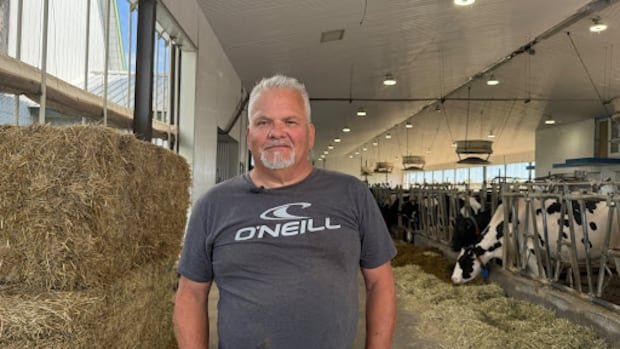
"My father and I have worked our whole lives to build a business like this. And we have no control over the future," Legault said in the CBC report. He described the logistical nightmare that would follow: "It won't be logistically feasible. It's going to be impossible to feed all these animals."
Legault has run the farm for the past 30 years alongside his wife and son, and hopes to pass the legacy to his three grandsons. But that dream is now in jeopardy. "[My son] doesn't see the future as clearly as he did before this," he said.
Agricultural federation warns of catastrophic impacts
Jérémie Letellier, president of the Fédération de l'UPA de la Montérégie, a regional branch of the Union des producteurs agricoles (UPA), Quebec's largest agricultural federation, did not mince words about the project's potential consequences. "It's catastrophic the impact on a single farm," he said. "A lot of farms will be thinking about reorienting or even terminating their activities because of a project like that."
Letellier said everyone along the proposed path from Rigaud to the North Shore is concerned. The train line will cut farmland in two with no possibility of going over the rails. "Instead of having a couple 100 metres to go, you might have 15 to 20 kilometres to go," he explained, highlighting the practical challenges farmers would face moving equipment, livestock, and supplies between divided parcels.
Road closures and severed access create operational headaches
Bruno Proulx, a dairy farmer and co-owner of Ferme M.G Proulx Inc. in Saint-Placide, Que., near the Quebec-Ontario boundary, echoed these concerns. "You're basically cutting all the farming communities in half," he said. His biggest worry centres on the fences built on both sides of the railway, which would block roads giving direct access to farmland.
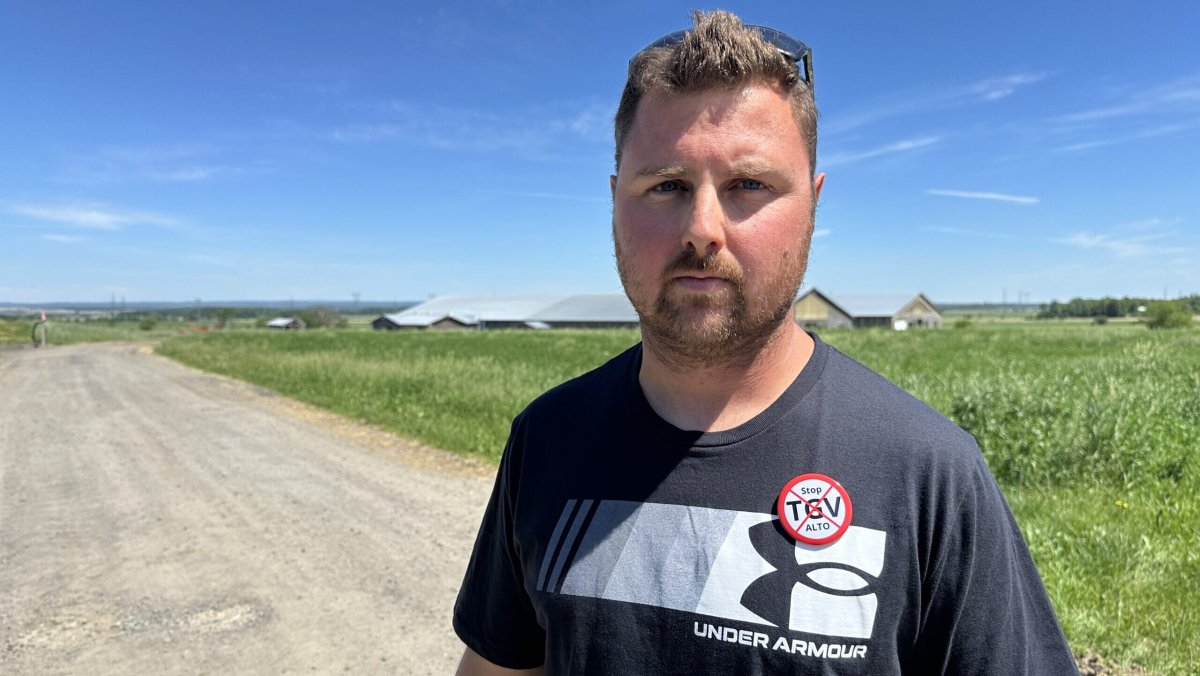
"With roads being blocked by Alto and fields being cut in half, what are we going to do? How can we get the feed for the cows? How we get rid of the manure? It's a headache," Proulx said. He produced a map showing a three-kilometre stretch of road where his farm and a number of other farms would be divided by the tracks.
In Saint-Placide, signs and billboards denounce the project with a pointed message: "A high-speed train at $90 billion. Not a priority." The local opposition reflects a broader sentiment among rural communities who feel the megaproject is being imposed without adequate consultation.
Alto project: a federal Crown corporation with ambitious goals
Alto is a federal Crown corporation, legally known as VIA HFR – VIA TGF Inc., wholly owned by the Government of Canada. The project was announced on February 19, 2025, by Prime Minister Justin Trudeau and then-Minister Anita Anand. The Cadence consortium — which includes Airbus Atlantic Canada, CDPQ Infra, SNCF Voyageurs, Systra, and Keolis Canada — was selected as the private partner for design and development.
The line will connect Toronto, Peterborough, Ottawa, Montreal, Laval, Trois-Rivières, and Quebec City, cutting travel times in the corridor in half. Ottawa–Montreal has been chosen as the starting segment, with construction of the first 200-kilometre segment between Montreal and Ottawa scheduled to begin in 2029 or 2030.
Alto estimates the overall project will cost between $60 billion and $90 billion. The corporation acknowledges that the proposed project will impact about 1,700 properties, including at least 500 farms between Ottawa and Montreal. For Canadian taxpayers, this represents one of the largest infrastructure investments in the nation's history.
Political uncertainty clouds the project's future
The political landscape adds another layer of uncertainty. Parti Québécois Leader Paul St-Pierre Plamondon said in June that if his party wins this fall's Quebec provincial election, scheduled for October, it would remove Quebec from the project. He values the project at "potentially $200 billion" and suggests Quebec's share would be around $40 billion.
This federal-provincial tension is a familiar dynamic in Canadian infrastructure politics. The Alto project, like many national megaprojects before it, finds itself caught between federal ambitions and provincial priorities. Farmers from both Ontario and Quebec have also called for a pause on the rail corridor through farm groups, adding pressure on all levels of government to reconsider the route.
Food security and agricultural land protection at stake
The concerns raised by Quebec farmers touch on a broader national issue: food security and the protection of agricultural land. Canada's agricultural land base is finite, and the best farmland is often located precisely where infrastructure projects want to build. The fragmentation of farms along the proposed corridor could have long-term consequences for domestic food production capacity.
For rural communities in the Montérégie, the project threatens not just individual farms but the entire social and economic fabric of the region. When farms are divided and access routes severed, the viability of family operations comes into question. This, in turn, affects local suppliers, equipment dealers, and the agricultural service sector that depends on a thriving farming community.
Comparing international models and Canadian realities
High-speed rail projects in other countries have faced similar challenges with agricultural land. In France, where the TGV network has been developed over decades, route planning has often been adjusted to minimise impacts on prime agricultural land. In Japan, the Shinkansen system has coexisted with intensive farming, but with careful planning and compensation mechanisms.
Canadian agricultural land protection varies by province. Quebec has a strong agricultural zoning regime through the Commission de protection du territoire agricole, which is designed to preserve farmland. However, federal Crown corporations are not always subject to the same provincial regulations, creating a jurisdictional grey zone that farmers find deeply concerning.
What happens next for affected farmers
For farmers like Legault, Proulx, and their neighbours, the coming months will be critical. With the Quebec provincial election approaching in October, the political calculus could shift significantly. If the Parti Québécois forms government, the project's future in Quebec would be in doubt. If the current government remains, farmers will need to engage in the consultation process to seek route adjustments or fair compensation.
The UPA and other farm groups have called for a pause on the rail corridor, arguing that more time is needed to assess the full impact on agriculture. They want detailed studies on how the project will affect individual farms, and they want those studies completed before any land acquisition begins.
A test of federal-provincial cooperation
The Alto project represents a significant test of federal-provincial cooperation on infrastructure. The federal government has positioned high-speed rail as a nation-building project that will transform transportation in the Quebec City–Windsor corridor. However, the provincial government in Quebec, which has jurisdiction over land use and agriculture, must balance these ambitions against the needs of its rural constituents.
The coming election will be a pivotal moment. Voters in agricultural ridings along the proposed route will have an opportunity to express their views on the project. For the farmers who have worked the land for generations, the outcome will determine whether they can continue their way of life or whether they will be forced to adapt to a radically changed landscape.
As Legault put it, the sense of powerlessness is palpable. "We have no control over the future." For a family that has farmed the same land for nearly a century, that uncertainty is perhaps the hardest burden to bear.
By Alex Thompson, Staff Writer
This article was produced with AI-assisted research and editorial support. Reporting is based on sources cited in the article.
What's Your Reaction?
 Like
0
Like
0
 Dislike
0
Dislike
0
 Love
0
Love
0
 Funny
0
Funny
0
 Wow
0
Wow
0
 Sad
0
Sad
0
 Angry
0
Angry
0

Canada Correspondent at Global1.News. Based in Toronto, covering Canadian politics, energy, trade, and US-Canada relations. Provides the Canadian perspective on North American and global affairs.















Comments (0)