
Worker prospects in Hong Kong hair, beauty sector not cut and dried amid staff shortages
Terrence Wu Chung‑ting’s daily routine in a Hong Kong salon—apron tied, comb in hand, gently massaging hair essence into a client’s scalp—offers a vivid illustration of a broader shift within the city’s hair and beauty sector.
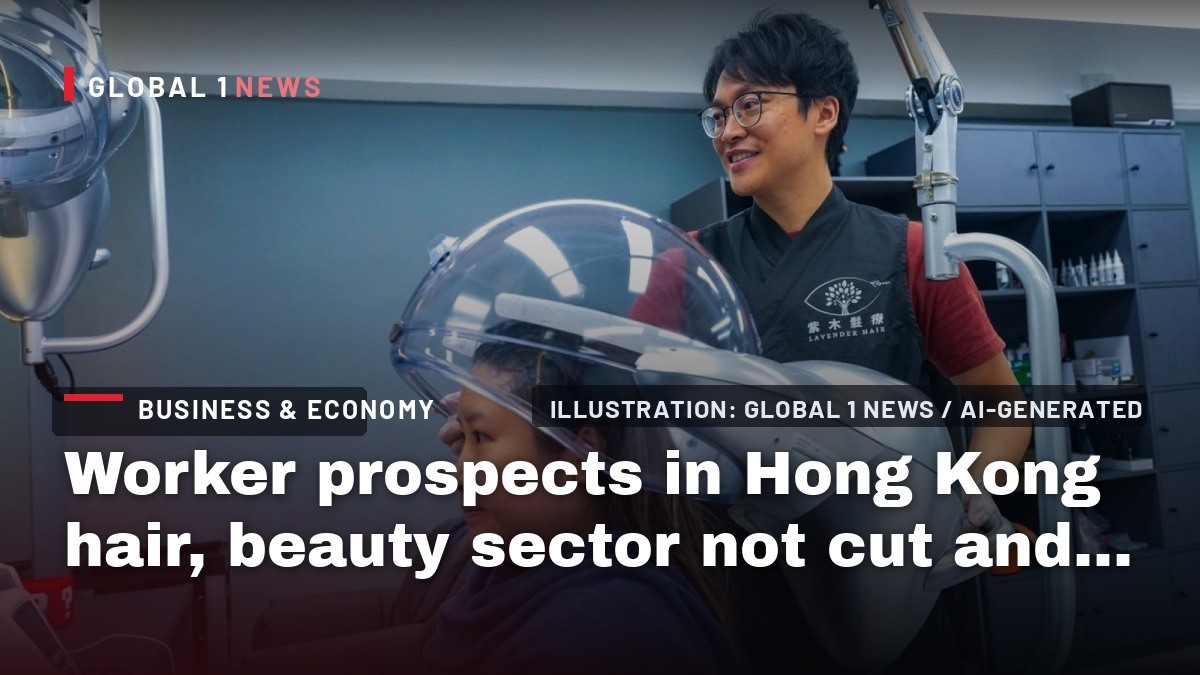
Terrence Wu Chung‑ting’s daily routine in a Hong Kong salon—apron tied, comb in hand, gently massaging hair essence into a client’s scalp—offers a vivid illustration of a broader shift within the city’s hair and beauty sector. While the industry reports a vacancy rate of 4.9 per cent, salon owners continue to grapple with recruitment difficulties, suggesting that the raw figure masks deeper challenges in attracting and retaining talent. Wu’s personal journey, from a finance graduate and corporate marketer to a hands‑on scalp therapist, encapsulates the tension between perceived prestige and the practical realities of work in the hair‑care field.
From White‑Collar to Blue‑Collar: A Personal Pivot
Wu’s transition eight years ago was not merely a career change; it represented a deliberate move across the cultural divide between Hong Kong’s highly regarded white‑collar professions and the traditionally undervalued blue‑collar trades. Armed with a degree from a leading university and experience in marketing beauty products, Wu possessed a clear understanding of the industry’s commercial side. Yet he identified an “untapped potential” in the hands‑on segment of hairdressing, prompting him to abandon a conventional corporate trajectory for the tactile, client‑facing world of scalp therapy.
His early days in the salon involved mastering foundational tasks—shampooing, blow‑drying, and the precise handling of tools—skills that he had not required in his previous marketing role. This apprenticeship underscores the steep learning curve that newcomers to the sector must navigate, a factor that may deter candidates accustomed to the structured career ladders of finance or technology.
Vacancy Rates and the Illusion of Availability
The reported 4.9 per cent vacancy rate suggests a modest level of unfilled positions across Hong Kong’s salons. However, the persistence of hiring challenges indicates that the statistic does not fully capture the difficulty of filling roles with suitable candidates. Many prospective employees view hair and beauty care as a less rewarding career path, a perception that persists despite the sector’s growth and the steady demand for personal grooming services.
This disconnect between vacancy figures and recruitment realities points to a qualitative gap: the availability of jobs does not equate to their attractiveness. Employers must therefore address not only the numerical shortage but also the underlying image of the profession, which influences the willingness of job seekers to enter the field.
The Appeal of Direct Client Interaction
One of the sector’s intrinsic strengths lies in its emphasis on personal service. Wu’s role as a scalp therapist involves direct, tactile interaction with clients, fostering a sense of immediate impact and personal satisfaction that can be less evident in corporate settings. This client‑centric model can be a compelling draw for individuals seeking tangible outcomes from their work.
Nevertheless, the appeal of such interaction must be balanced against the physical demands and skill acquisition required. The need to master techniques ranging from basic shampooing to specialized scalp treatments presents a barrier to entry, particularly for those accustomed to office‑based roles where physical labor is minimal.
Economic Incentives and Career Progression
While the source material does not provide specific wage data, it highlights a broader economic context: the hair and beauty sector in Hong Kong is expanding, creating opportunities for upward mobility for those willing to invest in skill development. Wu’s own progression from a novice to a specialist therapist illustrates a pathway where experience and expertise can translate into higher earning potential and professional recognition.
However, the sector’s reliance on apprenticeship and on‑the‑job training means that initial earnings may be modest, potentially discouraging candidates who prioritize immediate financial returns. Employers therefore face the challenge of structuring compensation and career ladders that reflect both short‑term realities and long‑term growth prospects.
Training Infrastructure and Skill Transferability
The narrative of Wu’s self‑directed learning underscores the importance of accessible training programs within the industry. Formalized curricula, mentorship schemes, and certification pathways can lower the entry barrier for individuals transitioning from unrelated fields. By institutionalizing skill transfer, salons can cultivate a more reliable pipeline of qualified staff.
Moreover, the transferable nature of certain competencies—such as customer service, product knowledge, and basic hygiene practices—offers a bridge for professionals from adjacent sectors. Highlighting these overlaps can help reframe the industry as a viable alternative for talent traditionally anchored in finance, marketing, or other corporate domains.
Societal Perceptions and the Prestige Gap
Hong Kong’s cultural landscape traditionally accords higher social status to professions linked to finance, law, and technology. This prestige hierarchy influences career aspirations, often relegating hair and beauty services to a secondary tier in the public imagination. Wu’s experience illustrates how personal conviction can challenge these norms, yet the broader workforce may remain hesitant to follow suit.
Addressing the prestige gap requires concerted effort from industry bodies, educational institutions, and media outlets to showcase success stories, professional standards, and the economic contribution of the hair and beauty sector. By elevating the narrative around the profession, the industry can gradually shift societal attitudes and broaden its appeal.
Future Outlook: Aligning Supply with Demand
Looking ahead, the sector’s ability to reconcile the 4.9 per cent vacancy rate with the persistent hiring challenges will hinge on strategic interventions that enhance the profession’s attractiveness. Initiatives could include clearer career pathways, competitive remuneration structures, and robust training frameworks that reduce the learning curve for newcomers.
Wu’s personal story serves as both a testament to the opportunities available within the hair and beauty field and a reminder of the obstacles that still deter many potential entrants. As Hong Kong’s economy continues to evolve, the sector’s capacity to adapt its image and operational practices will determine whether it can fully capitalize on its growth potential and secure a stable, skilled workforce for the years to come.
This article was produced with AI-assisted research and editorial support. Reporting is based on the source material cited below. Sources: South China Morning Post; scmp.com; Global1.News (10 October 2026).
By Kenji Tanaka, Staff Writer
What's Your Reaction?
 Like
0
Like
0
 Dislike
0
Dislike
0
 Love
0
Love
0
 Funny
0
Funny
0
 Wow
0
Wow
0
 Sad
0
Sad
0
 Angry
0
Angry
0

Japan Correspondent at Global1.News. Tokyo-based voice covering Japanese politics, technology, economy, and culture. Tracks the intersection of tradition and innovation in one of the world's most dynamic societies.















Comments (0)