
Trump Cuts a Diesel Deal With Putin and Lifts Sanctions Weeks Before the Midterms
President Donald Trump said Russia will supply millions of tons of diesel to the United States and global markets, and the Treasury issued a temporary licence lifting sanctions on Russian diesel until April 2027, weeks before the midterms. Ukraine called it a gift.
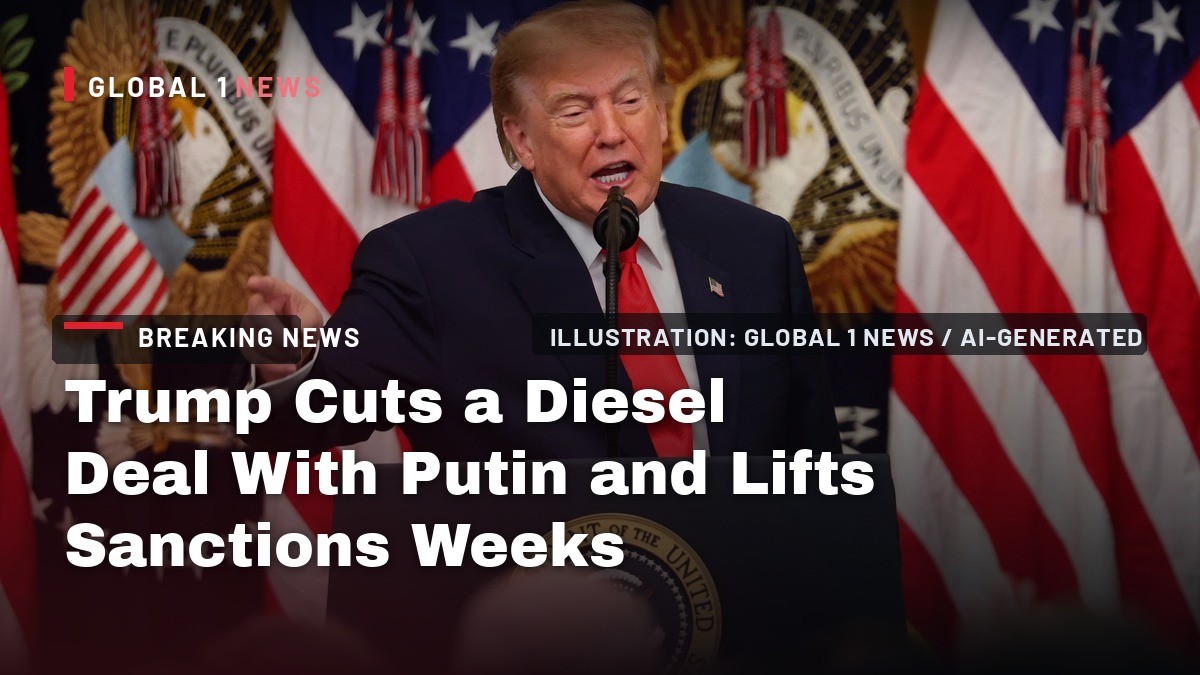
President Donald Trump said on Friday that Russia will ship diesel to the United States and to world markets, and within hours his Treasury Department had suspended the sanctions meant to stop exactly that. The deal, struck in a phone call with Vladimir Putin, lands less than four weeks before the midterm elections and reverses four years of American policy toward Moscow's energy exports. Ukraine's president called it a gift.
Trump Cuts a Diesel Deal With Putin and Lifts Sanctions Weeks Before the Midterms
Washington, D.C. — The announcement came on social media, the waiver came the same afternoon, and the objections came from Kyiv, from Capitol Hill and from the analysts watching the barrel.
The Call, the Post and the Numbers
Trump announced the arrangement in a Truth Social post on Friday, 9 October 2026, describing it as the product of a "highly successful discussion" with Putin. By his own account the fuel arrives in four tranches: more than 300,000 metric tons of diesel "immediately," another 500,000 tons during November, 1,000,000 tons "immediately thereafter," and then a further 3,000,000 tons "within a short period of time" based on the condition of Russia's refineries. Added together, those tranches come to 4.8 million tonnes, a total carried by Merco Press and others, while CNBC described it more cautiously as "more than 4 million tons." Reuters put the opening tranche alone at about 2.25 million barrels. Trump framed the reason simply: "Lower prices for Americans, especially our Great Farmers, Ranchers, and Truckers, is my Greatest Priority." In the same post he said prices would be coming down "IN RECORD NUMBERS, AND FAST!"
What the Treasury Actually Did
The mechanism matters as much as the announcement. The Treasury Department said on Friday that, "at President Trump's direction," its Office of Foreign Assets Control was "immediately issuing a temporary general license to allow the supply of Russian diesel to the global market." That licence — General License No. 135 — authorises the sale, delivery, unloading and importation of Russian-origin diesel, including import into the United States, until 12:01 a.m. United States Eastern time on 7 April 2027. According to reporting on the licence text, it does not cover transactions in which money is transferred directly from the accounts of the Bank of Russia, the National Welfare Fund or Russia's Ministry of Finance held in American banks. It is not the first such carve-out this year. OFAC General License 133, issued on 5 March, let Indian refiners buy Russian oil already at sea, and General License 134, issued on 12 March and amended twice, extended that to Russian crude and petroleum products loaded onto vessels by set dates.
Why Diesel Costs So Much
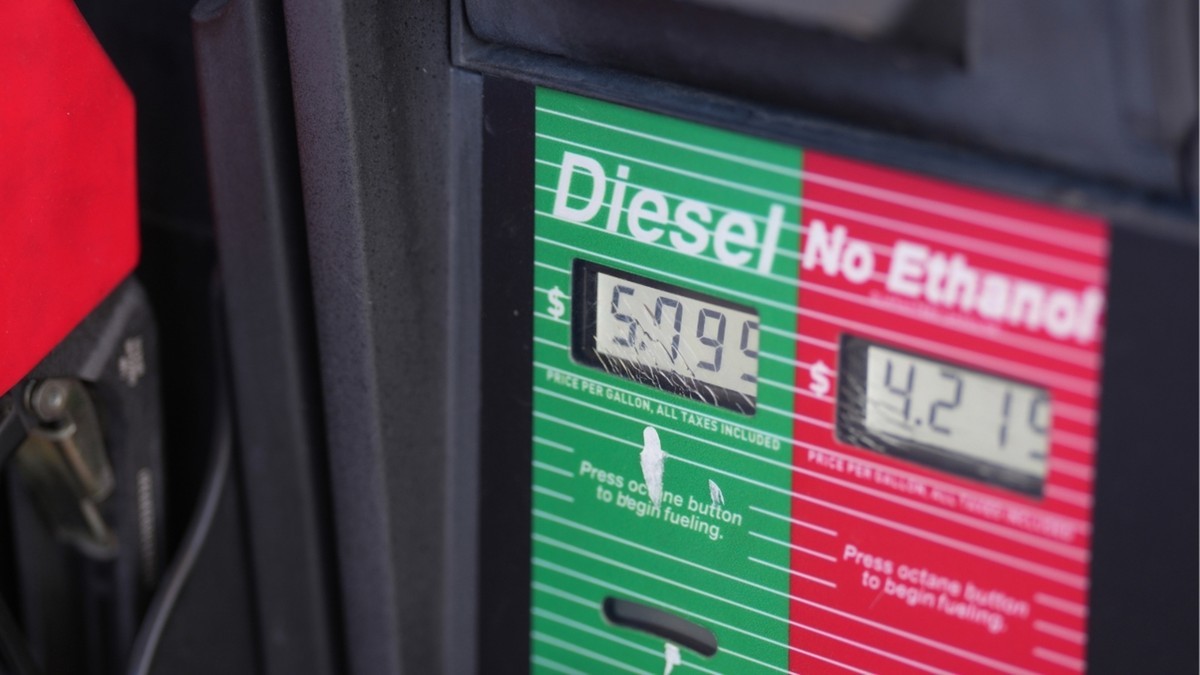
Three forces have collided, and it helps to keep them separate. The first is Ukraine's campaign against Russian refining: the International Energy Agency has reported that Ukrainian drones struck a Russian refinery on average once every three days in the first eight months of 2026. Russia banned diesel exports by producers on 8 July and, on 30 September, extended that producer ban to 31 October, saying the measure would "maintain stability in the domestic fuel market." The second is the war with Iran, now in its eighth month, which began with United States and Israeli air strikes in February and has also seen attacks on Middle Eastern refineries. The third is the arithmetic that follows: ICE gasoil futures, Europe's diesel benchmark, settled at $1,509.25 a tonne on 8 October, close to double the $752.75 on 27 February. In the United States, AAA put the national average for a gallon of diesel at $6.23 on Friday, after a record $6.52 on 22 September. WHEC reported the same AAA average as $6.28. Those two figures do not match, and we are holding both.
The Price Reaction, and What Analysts Say It Is Worth
The market moved, but not far. Diesel futures fell about 4 percent after the announcement while remaining more than 110 percent higher than at the start of the year. Brent crude traded around $103.79 to $104 a barrel, down roughly 0.3 percent on the day. At the 8 October gasoil price, the first 300,000 tonnes are worth about $453 million and the full 4.8 million tonnes about $7.24 billion; Reuters rounded the latter to roughly $7 billion. Andy Lipow of Lipow Oil Associates estimated in September that Russia's export ban had removed about 800,000 barrels a day of diesel from the world market, meaning the opening 300,000 tonnes would replace fewer than three days of that supply. Lipow told The Hill that the 300,000- and 500,000-ton figures are "quite small" compared with the entire global diesel market, though he called the 3 million tons more significant.
The Kremlin's Read, and Its Envoy's Cheer
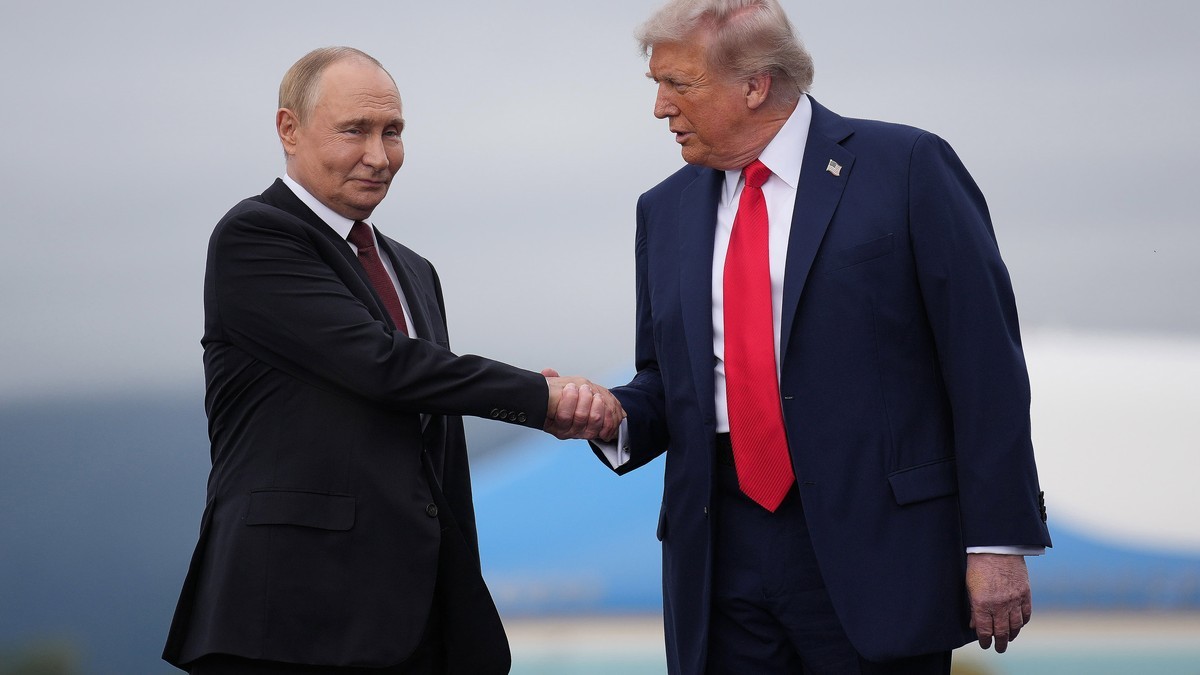
Moscow framed the call as a conversation about energy and economics. "In discussing the state of the global energy sector, the Russian side reaffirmed its readiness to supply oil and petroleum products to U.S. and global markets," the Kremlin said in its readout, adding that Putin told Trump he was "confident that this will have a positive impact on the global economy as a whole." Kirill Dmitriev, Putin's special envoy, reposted the Treasury announcement and said that "Russia-US cooperation on diesel and energy will benefit the world." Russian Deputy Prime Minister Alexander Novak said Moscow was ready to increase supplies in October, with exports expected to rise in November and December as refineries come back from maintenance. Trump's call with Putin had, according to the Associated Press, been expected to cover a suspected case of plague in Russia; instead it produced the diesel announcement.
Zelensky's Answer: 'A Gift'
Ukraine's response was immediate and blunt. "Gifts to Putin will not bring peace or any benefit to the civilized world," President Volodymyr Zelenskyy wrote. "Russia will 'repay' the diesel with further terror and perfidy. Allowing Russia to sell petroleum products is an investment in a war that must be ended, not prolonged. What is needed is real de-escalation with Russia on a reciprocal basis." Zelenskyy also questioned why Ukrainian, American and European negotiators were meeting in Miami at the very moment Washington was opening a revenue channel to Moscow. "I believe our team is simply being used as a smokescreen," he said. Ukraine's sanctions commissioner, Vladyslav Vlasiuk, made the sharper argument: if easing diesel sanctions produces market relief, then the primary driver of the global diesel squeeze was the Iran conflict and the blockade around it, not Ukrainian strikes on Russian refineries.
The Politics: Three Weeks Before the Midterms
The timing is not incidental. The announcement came less than a month before the 3 November midterm elections, with diesel costs feeding inflation and straining states that depend on the fuel. Farmers in Iowa, Kansas and Nebraska have felt the pinch, and Alaska relies heavily on diesel for electricity and heating in remote communities, making all of them unexpected battlegrounds. The White House did not answer questions about who is paying for the diesel or when the fuel will actually arrive, and did not clarify whether the November tranche would land before Election Day. The week had already produced two related moves: an executive order letting truckers use tax-exempt offroad diesel on highways without federal penalties, which only defers the tax obligation, and, last month, a flirtation with a full diesel export ban that Trump dropped after the oil industry and big business warned it would simply raise gasoline prices.
The Sanctions Law This Reverses
The waiver sits awkwardly against what Congress did weeks earlier. Trump signed a sweeping, bipartisan Russia sanctions law that envisions penalties on Russian officials, banks and a shadow fleet of tankers, bans new United States investment in Russia and the handling of its sovereign debt, and directs tariffs of up to 100 percent on the top five importers of Russian oil or natural gas. The announcement casts doubt on whether the White House will move on those measures this month, since the law directs the administration to target the biggest buyers of Russian energy. It also raises questions about the Ending Importation of Russian Oil Act of 2022, which bars Russian oil imports unless the president certifies that Russia has agreed to withdraw from Ukraine, recognised Ukrainian sovereignty and poses no threat to NATO. The United States has imported no Russian oil or gas since 2022, when the Biden administration banned them, according to the Energy Information Administration.
Objections From Both Parties
Criticism arrived from the right as well as the left. "It surely looks bad. The president has always had a moral blindness when it comes to Putin. Propping up Russia's war economy is terrible," Republican Representative Don Bacon told RFE/RL. Democratic Senator Richard Blumenthal, a co-author of the sanctions legislation, called the decision an embarrassment that would benefit Russia and China, writing that it "will only benefit the Chinese & Russian economies & lead to the slaughter of more innocents in Ukraine." He called the agreement "a stain on our nation's character" and warned American companies weighing purchases of Russian fuel that "Congress is watching." Daniel Fried, a former United States diplomat and sanctions expert, criticised the timing, calling it "not a promising start to the imminent talks on ending the war." Kerri Bitsoff, a former senior Treasury official who worked at OFAC, said the licence showed Trump was prioritising the Iran conflict over pressure on Russia and likely does not intend to use much of the authority in the new law.
What Comes Next
Three things to watch. First, whether the barrels actually move: the licence runs to 7 April 2027, but Russia's own producer export ban is not due to expire until 31 October, and the largest tranche is explicitly tied to the condition of refineries that Ukrainian drones are still hitting. Second, the diplomacy: American, Ukrainian, European and NATO officials concluded their Miami talks on Friday without a breakthrough, with United States envoy Steve Witkoff saying only that the exchange was "productive." Third, the reaction on Capitol Hill, where a sanctions law Congress just passed now depends on a White House that has paused one of its levers. Meanwhile Ukrainian authorities reported at least 41 people killed in the day to 9 October alone. The price of diesel is now tangled up with all of it. Stay with Global1.News.
By Jessica Ali, Staff Writer
This article was produced with AI-assisted research and editorial support. Sources: Reuters, CNBC, USA TODAY, The Associated Press (via ABC7 News and WHEC), The Hill, Radio Free Europe/Radio Liberty, the US Treasury Department and its Office of Foreign Assets Control (General License No. 135), YAC News, The Moscow Times, Admiral Markets, the New York Post, APA and the Kremlin readout of the Trump-Putin call.
What's Your Reaction?
 Like
0
Like
0
 Dislike
0
Dislike
0
 Love
0
Love
0
 Funny
0
Funny
0
 Wow
0
Wow
0
 Sad
0
Sad
0
 Angry
0
Angry
0

Editor-in-Chief at Global1.News. Atlanta-based journalist who cuts through the BS and tells it like it is. Lead anchor, host, and the voice you hear when the spin stops and the truth starts.















Comments (0)