
Maduro Charged With Torturing Americans as a Deposed Dictator Faces a New York Court
A superseding indictment in New York charges deposed Venezuelan president Nicolas Maduro and his wife Cilia Flores with conspiring to torture detainees, including American citizens, to hold on to power. Both deny the charges and are presumed innocent.
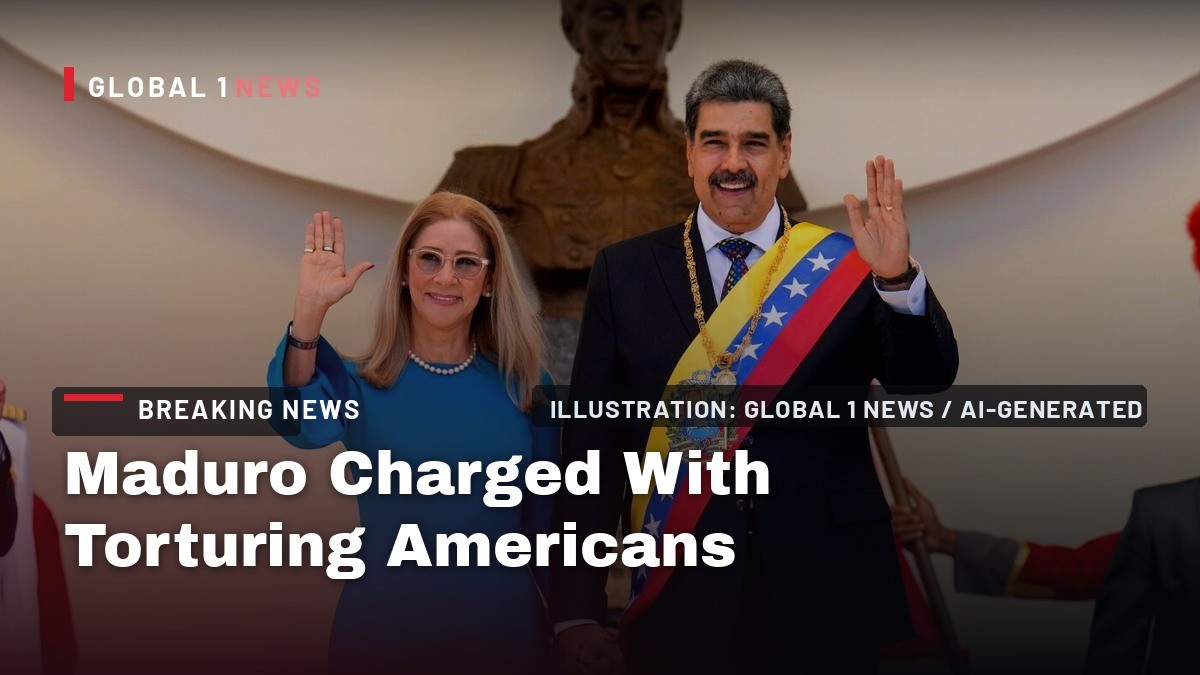
Nicolas Maduro ruled Venezuela for 13 years, and the allegation that trailed him for most of them was torture. On Thursday, federal prosecutors in New York put it in writing, formally charging the deposed president and his wife with conspiring to torture detainees, including American citizens, to hold on to power.
Maduro Charged With Torturing Americans as a Deposed Dictator Faces a New York Court
New York, United States — A superseding indictment unsealed in the Southern District of New York accuses the ousted Venezuelan leader, 63, and his wife, former first lady Cilia Flores, 69, of conspiring to commit torture. Both already face drug-trafficking charges. Both have pleaded not guilty. Both are being held without bail in Brooklyn.
The New Charge
Count Two of the superseding indictment charges Maduro and Flores with conspiracy to commit torture, an offense that carries a maximum penalty of 20 years in prison. The charge does not replace what was already there. The couple still stands accused of participating in a narcoterrorism conspiracy, which carries a 20-year mandatory minimum and a maximum of life in prison; of conspiring to import cocaine into the United States, which carries a 10-year mandatory minimum and a maximum of life; and of using and carrying machine guns and destructive devices, which carries a 30-year mandatory minimum and a maximum of life. The indictment runs to about 30 pages. Assistant U.S. Attorneys Kaylan E. Lasky, Henry L. Ross, Kevin T. Sullivan and Kyle A. Wirshba are handling the prosecution. A trial is scheduled for June 1, 2027.
The Two Defendants
Maduro served as Venezuela's president from 2013 until his capture by American forces in January, a span of 13 years. He was a former bus driver who took over from his mentor Hugo Chavez and never commanded the loyalty of the armed forces in the way his predecessor had. Flores, a former attorney general, is his wife and for years his closest political partner; she is also a defendant in the drug case that first brought the couple to a Manhattan courtroom. Both have been held at the Metropolitan Detention Center in Brooklyn since early January, when a United States military raid on their Caracas home ended Maduro's rule in a single night. His lawyer has called the capture a kidnapping. The administration calls it a surgical law enforcement operation.
A System Built to Silence Dissent
The indictment describes a machine of repression that began long before the torture charge and outlasted the moment that produced it. Through drug trafficking, the corrupt use of the military and police, the abuse of the judicial system and the theft of public funds, it alleges, Maduro, Flores and other Venezuelan leaders enriched themselves at the expense of the Venezuelan people. Because that corruption was deeply unpopular, the indictment says, the same leaders presided over a system that relied on violence against political opposition, arbitrary detention and torture. Since at least 1999, it alleges, thousands of Venezuelans have been harassed, threatened, arrested, prosecuted, assaulted, tortured or killed by people wielding the authority of the state. The torture methods catalogued in the filing include electric shock, asphyxiation, rape, forced nudity, prolonged isolation, starvation, punishment cells and psychological torture, including threats to harm and kill victims' families.
The American Victims
The indictment says the abuse was compounded for Americans because Maduro assigned blame to the United States for Venezuela's instability. More than a dozen U.S. citizens were detained in Venezuelan prisons during his rule, according to officials, and the filing describes three of them in detail without naming them. One was punched in the face and abdomen, subjected to electric shocks and forced to eat his own vomit during eight months of imprisonment. Another was beaten badly enough to require a long hospital stay, and had a gun stuck in his mouth. A third was handcuffed, hooded and beaten every half hour for two days, suffering permanent injury to his eye. Federal Bureau of Investigation Director Kash Patel said the regime subjected American citizens to torture while they were in Venezuelan government custody, "including drugs, electric shock, sexual assault, and more."
The Officials Who Carried It Out
Maduro and Flores did not act alone, the indictment alleges, and it identifies three high-ranking Venezuelan officials responsible for the mechanics of the abuse, referring to them as CC-1, CC-2 and CC-3. CC-1, it says, ordered the murders of people who opposed Maduro, oversaw torture carried out by officials under his command, and personally threatened the murder of a prisoner's child as a form of psychological torture. CC-2, a senior officer who reported directly to Maduro, developed torture methods that he presented for approval to the president and led an agency responsible for torturing scores of victims. CC-3, the filing alleges, personally ordered and took part in the torture of civilians and military members, including Americans; one U.S. citizen was subjected to simulated drowning, electric shock to his testicles and forced injections. Much of the apparatus ran through Venezuela's DGCIM military intelligence agency. The indictment also names the partner groups Washington accuses the couple of working with, among them FARC, the ELN, the Sinaloa Cartel, the Zetas and Tren de Aragua.
From Caracas to Brooklyn
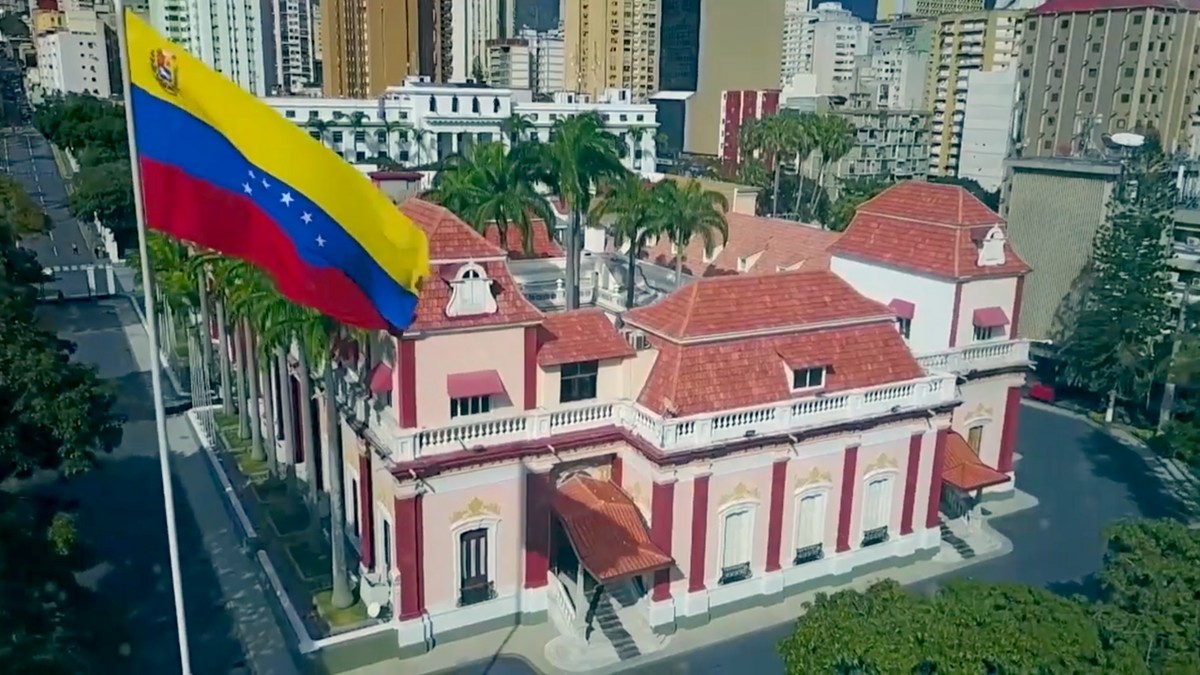
The road from power to a Brooklyn cell was short and violent. In a middle-of-the-night raid in January, U.S. forces seized Maduro and Flores from the presidential palace in Caracas. Patel described the operation as "one of the most daring Foreign Transfers of Custody in United States history," carried out with the Department of War. The raid ended 13 years of socialist rule in a country sitting on the world's largest proven oil reserves. Since then, Venezuela has been led by Maduro's former vice president, Delcy Rodriguez, who has moved to boost cooperation with Washington and struck deals granting the United States access to Venezuelan oil. Her government has so far said nothing about the new accusations against her predecessor, a silence that reflects the balancing act of appeasing the country's security forces without alienating President Donald Trump.
The First Lady's Bail Fight
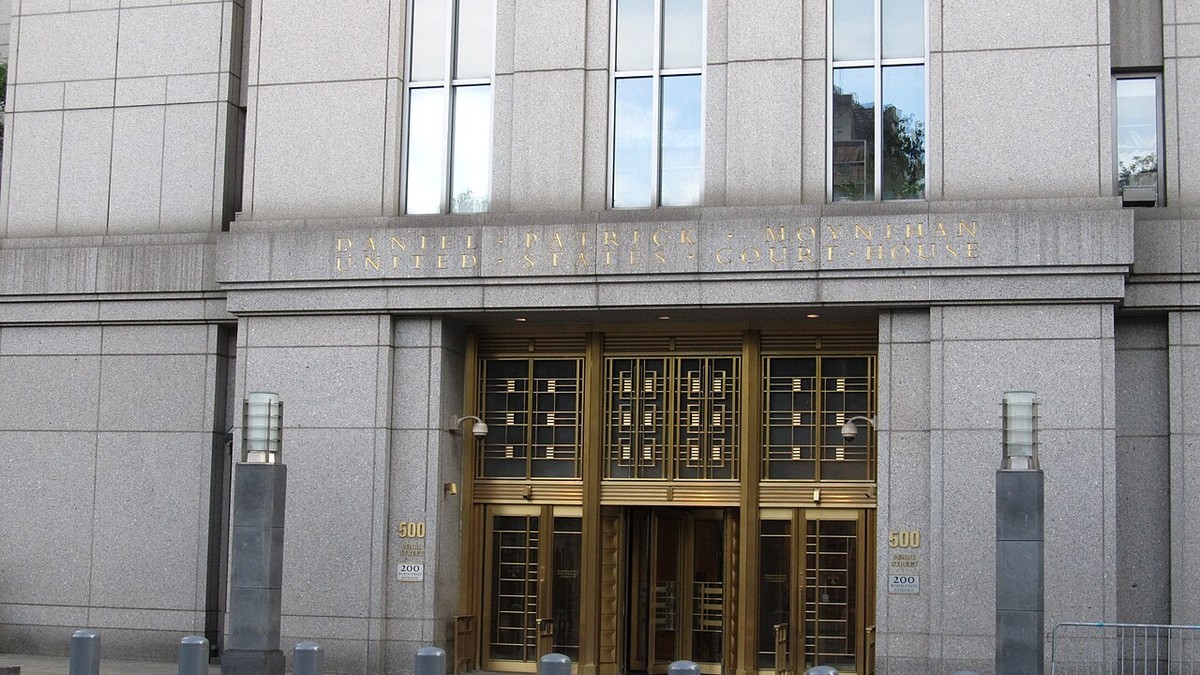
The new counts were unveiled the same day Flores appeared in court to ask to be released. Her lawyers argued she is too ill to remain in jail: the 69-year-old has lost 25 pounds at the Metropolitan Detention Center, they said, may have suffered a minor heart attack in July, has been told she might need heart surgery, and suffers lingering lightheadedness, dizziness and shortness of breath. They also said she suffered permanent scarring when she was thrown against a wall or a dresser during the raid that captured her. Prosecutors opposed the request, calling her an extreme risk of flight and danger to the public, and accusing her of horrific acts. Judge Alvin Hellerstein sided with the government. "Jail is not a nice place to be, but these are serious allegations," he said, adding that he did not think conditions were there to release her. He noted she had been unwilling to undergo catheterization in jail to determine the cause of her heart problems, and pushed back on the idea that her blood pressure was life-threatening when she was already on medication for it. Outside the courthouse, demonstrators chanted in support of her release.
The Defense and the Denials
The defense has not engaged with the substance of the new allegations. Maduro's attorney, Barry J. Pollack, said his client "denies the charges in the new indictment and looks forward to his day in court." Flores' lawyer told the court he had not yet had time to review the new torture allegations. The couple has moved to have the case dismissed on the grounds that they hold immunity as the leader and first lady of a foreign country, an argument the government contests. In the underlying drug case, both have pleaded not guilty. Maduro has for years called himself a prisoner of war and insisted he is innocent of wrongdoing. He also remains the subject of a long-running International Criminal Court investigation into allegations of crimes against humanity tied to his crackdown on opponents.
A Cooperator Called El Pollo
The revised indictment appears to lean in part on one of Maduro's own co-defendants. General Hugo Carvajal, known across Venezuela by the nickname El Pollo, was Chavez's spymaster and headed the DGCIM for more than a decade. He broke with Maduro years ago, was extradited from Spain and pleaded guilty last year to drug trafficking charges in New York. Since then he has been meeting with prosecutors building the case against his former boss. In an open letter to Trump last year, Carvajal said he wanted to atone by telling the full truth so that the United States could protect itself from the dangers he had witnessed. The indictment arrives as a group of Americans who say they were tortured in Venezuelan custody presses its own claims: in May, a U.S. court entered a $300 million default judgment against Maduro and other top officials for overseeing what it described as a pattern of torture.
What Comes Next
Speaking outside the Manhattan courthouse where the case is being heard, U.S. Attorney Jamie McDonald called the alleged conduct unthinkable and described the case as the epitome of corruption. "American citizens were tortured, and so were thousands of Venezuelans," he said. It is the first time Maduro has faced criminal charges over the torture allegations, even though human rights groups and U.S. officials have accused his government of abusing detainees for years. The case now heads toward the June 2027 trial date, with the couple's immunity defense and Flores' medical condition both still live disputes. Matthew Heath, a former U.S. Marine corporal who was detained in Venezuela and released in a 2022 prisoner exchange, said the prosecution mattered more than international condemnations ever had. "It's incredible to see a dictator in court," he said. "The Maduro prosecution will do more to prevent the kidnapping of Americans by rogue regimes than a hundred press releases from the United Nations." The charges remain accusations, and the defendants are presumed innocent unless and until they are proven guilty.
By Jessica Ali, Staff Writer
This article was produced with AI-assisted research and editorial support. Sources: U.S. Department of Justice, U.S. Attorney's Office for the Southern District of New York, the Associated Press, NPR, PBS Frontline, POLITICO, The Telegraph, ABC News and Good Morning America.
What's Your Reaction?
 Like
0
Like
0
 Dislike
0
Dislike
0
 Love
0
Love
0
 Funny
0
Funny
0
 Wow
0
Wow
0
 Sad
0
Sad
0
 Angry
0
Angry
0

Editor-in-Chief at Global1.News. Atlanta-based journalist who cuts through the BS and tells it like it is. Lead anchor, host, and the voice you hear when the spin stops and the truth starts.













Comments (0)