
Las Dunas Yucatán Project Halted After Activists, Profepa
Yucatán activists are fighting the Las Dunas luxury beach development in Chuburná Puerto, warning it could harm fragile dunes, endangered species and Maya communities. Profepa found violations; construction is on hold.
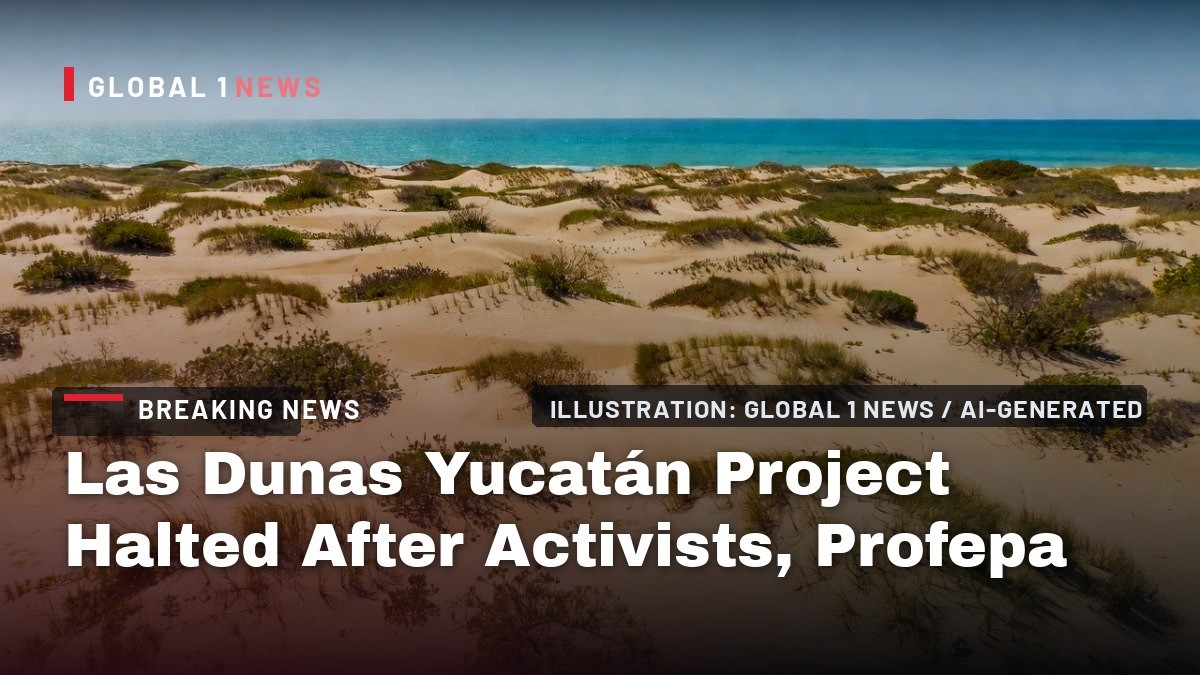
Las Dunas Luxury Project in Chuburná Puerto Halted After Community Uprising and Federal Inspection
MÉRIDA, Yucatán — The sound of heavy machinery that had been clearing ancient coastal vegetation in Chuburná Puerto has fallen silent. Following weeks of intense community mobilization and a federal inspection that uncovered serious environmental violations, the luxury residential development known as Las Dunas has been placed on hold, leaving the future of more than 22 acres of pristine Yucatán coastline hanging in the balance.
The project, spearheaded by Mérida-based developer Designia Desarrollos — the firm behind Paseo 60 and the Tívoli hotel — aimed to construct more than 70 luxury apartments across six towers, complete with commercial spaces, roads, and parking. Spread across more than 92,000 square meters of virgin beach roughly an hour from the state capital, the development was poised to transform one of the last relatively untouched stretches of coast near the popular El Playón de Chuburná and the Isla Columpios tour site.
But for the residents of Chuburná Puerto and the activists of the collective Salvemos Las Dunas, this was never just another real estate deal. It was a fight for their identity, their safety, and their heritage. "The dunes represent our identity as Maya people," activists told La Jornada, capturing a sentiment that has galvanized more than 140,000 people to sign a Change.org petition demanding the project's cancellation.
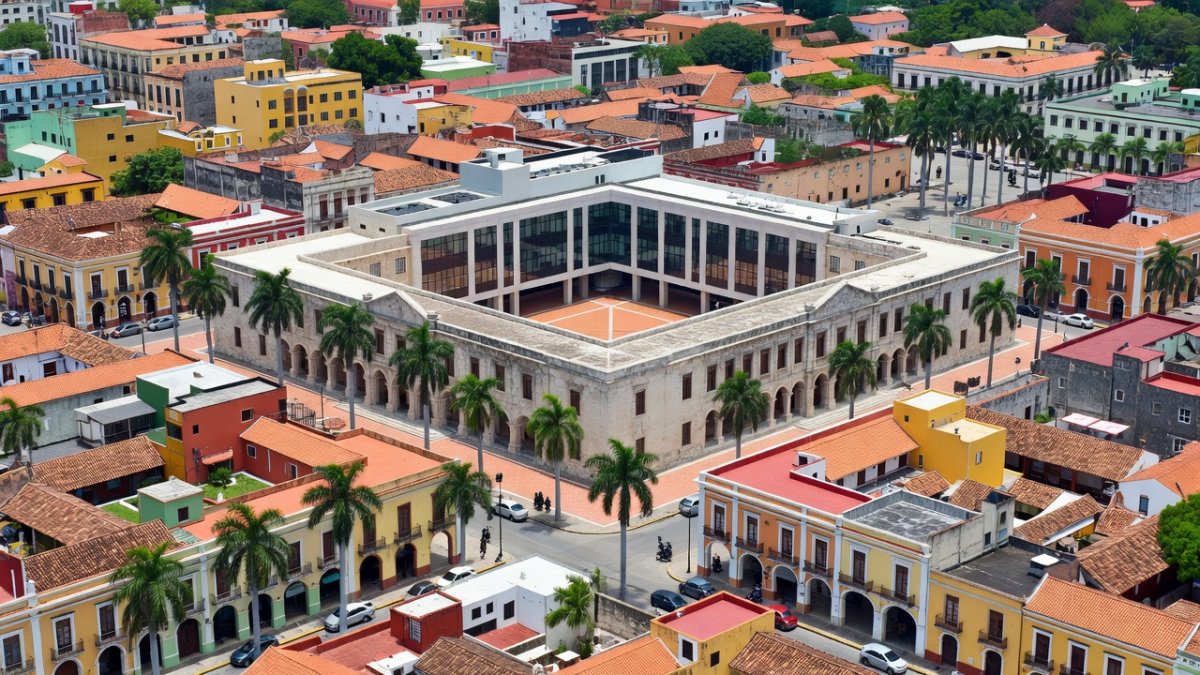
A Timeline of Rejection, Revision, and Regulatory Failure
The path to this moment has been anything but straightforward. In December 2023, Mexico's Ministry of Environment and Natural Resources (Semarnat) initially rejected the proposal outright, citing the site's profound ecological vulnerability. Yet, in April 2025, federal approval was granted after the developer submitted revised plans — a decision that local communities say was made without their knowledge or consent.
It was not until July 2026 that residents realized the true scale of what was coming. Heavy machinery rolled onto the dunes, beginning to clear vegetation without, residents say, any meaningful community consultation. The response was swift. Salvemos Las Dunas organized protests in Mérida and launched a digital petition that exploded from 43,000 signatures in late July to over 140,000 in a matter of weeks.
The turning point came in late July when the Federal Prosecutor's Office for Environmental Protection (Profepa) conducted a three-day inspection. What they found was alarming: site clearing had already destroyed 1.3 hectares of coastal vegetation, impacting protected flora and fauna that had been conspicuously omitted from the developer's environmental filing. Inspectors documented damage to endangered cactus species and endemic birds, warning that the violations could constitute criminal offenses against biodiversity.
Following these findings, Profepa and Yucatán's state government officially paused construction. By August 26, Mexico News Daily confirmed the halt on environmental grounds, and by August 29, activists rallied once more as The Yucatan Times reported the project formally "placed on hold." Earlier this week, a federal judge in Yucatán granted a provisional suspension of construction within an amparo filed by residents, as Global1.news reported — the legal measure freezes the destruction while the court examines whether the project's approval violated residents' rights to meaningful consultation.
The Dunes: A Natural Fortress Under Threat
To understand why this fight matters so deeply, one must understand what the dunes actually do. These sandy formations are not merely scenic backdrops; they are critical natural barriers against hurricanes and storm surges, absorbing wind and wave energy before it can reach homes and roads farther inland. For a coastal community like Chuburná Puerto, which has weathered its share of Yucatán's fierce tropical storms, the dunes are a first line of defense that no concrete wall can replace.
The ecological stakes are equally profound. The dunes serve as nesting grounds for hawksbill sea turtles and green sea turtles, both protected species that return to these shores year after year. Above them flit the Mexican sheartail hummingbird and the Yucatán wren — both listed under Mexico's endangered-species standard NOM-059-SEMARNAT and found almost nowhere else on Earth. Researchers have documented that damaged dune systems can take decades to recover, and some damage never fully heals.
For the Maya communities of the region, the connection runs even deeper. The dunes are woven into the cultural fabric of the Yucatán Peninsula, representing a living link to ancestral territories and traditional ways of life. The La Jornada quote — "The dunes represent our identity as Maya people" — is not poetic hyperbole; it is a statement of cultural survival in the face of development pressures that have intensified across the peninsula in recent years.
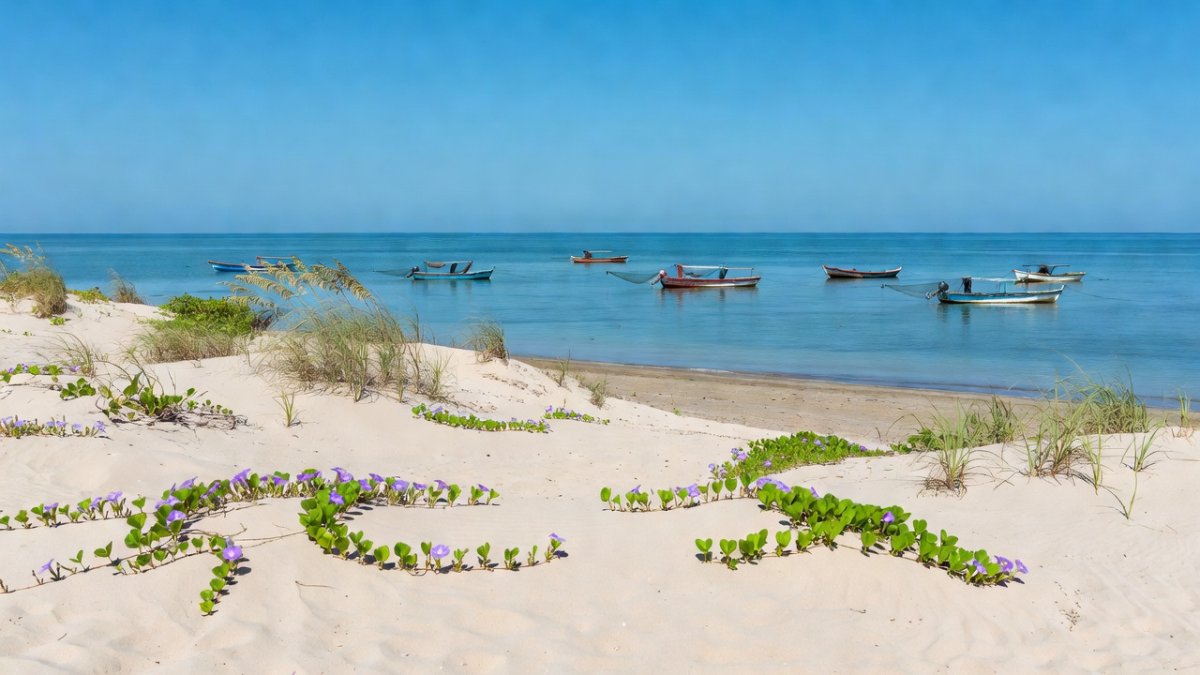
State and Federal Authorities Draw a Line in the Sand
Governor Joaquín Díaz Mena has made his position clear: protecting the state's natural heritage will take priority over private developments. His administration, through Sustainable Development Secretary Neyra Silva Rosado, has emphasized that state environmental mandates strictly require the total conservation of 58,740 square meters — over half of the property's total area. This includes 55,305 square meters of coastal wetlands, 3,435 square meters of Federal Maritime-Terrestrial Zone, and mangrove habitats protected under NOM-022-SEMARNAT-2003, all of which must remain entirely free from construction.
State officials have also moved to clarify a critical point of confusion: the Urban Environmental Feasibility (FUA) document issued by previous administrations serves merely as a technical compatibility study regarding land carrying capacity. It does not constitute a building permit, nor does it authorize construction. This distinction matters because it undermines any argument that the developer had secured all necessary approvals.
Jurisdiction over environmental impact statements (MIA) rests exclusively with the federal ministry Semarnat, and because the site touches wetlands and federally protected coastline, final authority over the project lies with the federal government rather than the state. Existing permits already require the developer to preserve 45,728 square meters (about 11.3 acres) of coastal wetland plus 2,880 square meters (0.71 acres) of federal maritime-terrestrial zone — together more than half the property. The question now is whether those requirements were ever going to be honored.
Community Solidarity and a Broader Movement
The response from the local business community has been notable. Several tourism operators working near Isla Columpios issued public statements distancing themselves from the project after social media posts suggested a connection. This is no small matter in a region where tourism dollars often trump environmental concerns; it signals a shift in how even those who depend on coastal commerce view the balance between development and preservation.
There is precedent for this kind of pushback succeeding. In a prior Chuburná case, Profepa temporarily shut down a beachfront project in 2018 after protected thatch palms were cleared without an environmental permit. That earlier victory gave local activists a template for organizing and a belief that the system could work when communities mobilized.
Las Dunas also reflects a broader surge in environmental activism across the Yucatán Peninsula, where local communities have increasingly challenged large-scale real estate and infrastructure projects. From the fight to protect cenotes near Mérida to opposition to mega-resorts along the coast, residents are demanding a seat at the table when decisions about their land are made. The Salvemos Las Dunas collective has become a symbol of this movement, proving that a petition and sustained public pressure can force even well-connected developers to pause.
What Happens Next for Las Dunas and Chuburná Puerto
The future of the luxury complex remains uncertain pending further legal and environmental proceedings. The legal action filed by Salvemos Las Dunas and Chuburná Puerto residents seeks a court-ordered suspension while authorities review the project's compliance with federal and state environmental laws. Given the severity of the violations documented by Profepa — including the destruction of protected species habitat that was omitted from the developer's filings — the path forward for Designia Desarrollos appears fraught with legal obstacles.
For the people of Chuburná Puerto, the pause is a victory, but the war is not over. They know from experience that developers can revise plans, submit new filings, and return with fresh proposals. The 140,000 signatures on the petition represent a national and international wave of solidarity, but sustained vigilance will be required to ensure the dunes remain protected.
What is clear is that this fight has changed the conversation in Yucatán. Governor Díaz Mena's administration has staked its reputation on prioritizing natural heritage over private interests, and the state's environmental mandates are now a matter of public record. The dunes of Chuburná Puerto — with their turtles, their endemic birds, and their deep cultural significance — have become a symbol of what is at stake when development meets nature on the Yucatán coast.
As the legal proceedings unfold, one thing is certain: the eyes of Mexico are on this small fishing community, watching to see whether the dunes will be allowed to stand as they have for millennia, or whether they will be sacrificed for luxury apartments. For the Maya families who call this coast home, the answer is not in question. The dunes must remain.
Tags: Las Dunas, Chuburná Puerto, Yucatán, Profepa, Semarnat, Salvemos Las Dunas, luxury development halted, coastal dunes, endangered species, Joaquín Díaz Mena, environmental activism, Designia Desarrollos, NOM-059-SEMARNAT, hawksbill turtles, Maya heritage
By Rosa Martinez, Staff Writer
This article was produced with AI-assisted research and editorial support. Sources: Mexico News Daily, The Yucatan Times, Yucatán Magazine, La Jornada, Por Esto!.
What's Your Reaction?
 Like
0
Like
0
 Dislike
0
Dislike
0
 Love
0
Love
0
 Funny
0
Funny
0
 Wow
0
Wow
0
 Sad
0
Sad
0
 Angry
0
Angry
0

Latin America/Andes Correspondent at Global1.News. Based in Bogota, covering politics, environment, energy, and social movements across the Andean region. Passionate about environmental journalism and communities protecting their land.














Comments (0)