
Hazel McCallion LRT Four Years Behind Schedule,...
Hazel McCallion LRT Plagued by Delays, Internal Metrolinx Documents Reveal Ontario's transit agency has been battling a series of issues with the consortium tapped to build the Hazel McCallion LRT, internal documents reveal, as the project falls four years behind its initial completion date.
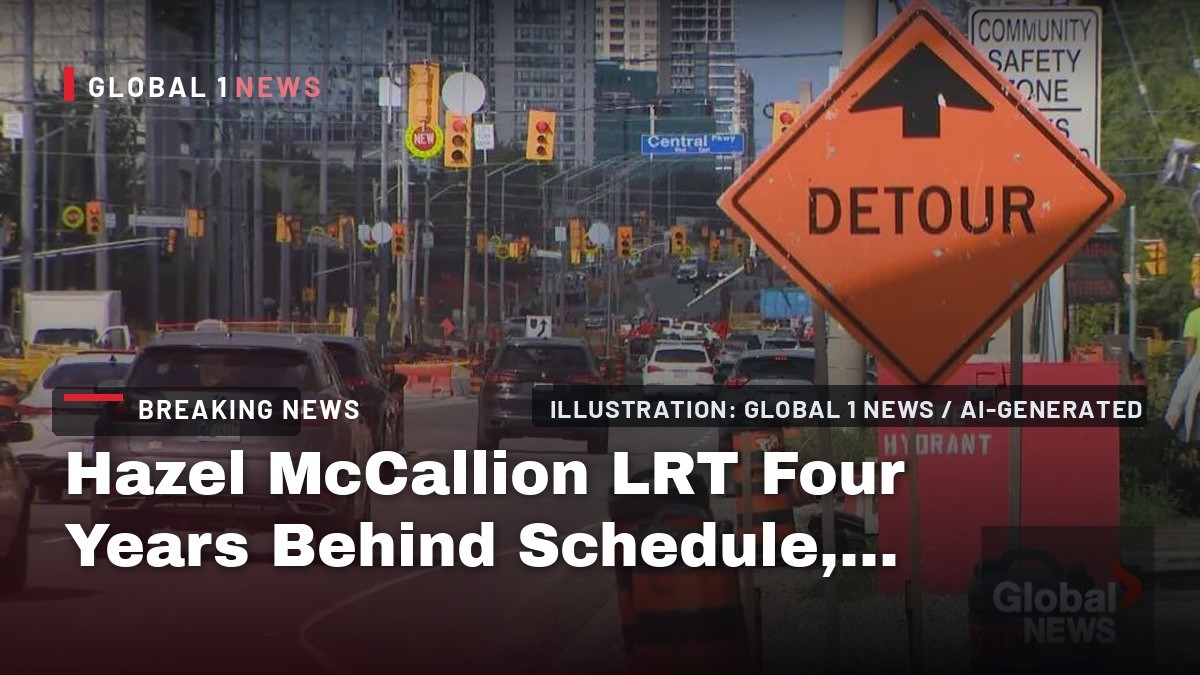
Hazel McCallion LRT Plagued by Delays, Internal Metrolinx Documents Reveal
Ontario's transit agency has been battling a series of issues with the consortium tapped to build the Hazel McCallion LRT, internal documents reveal, as the project falls four years behind its initial completion date. Briefings obtained by Global News show that throughout 2025, Metrolinx and the Ford government were worried the light rail build was "experiencing a number of issues," ranging from liquidity concerns and design problems to trouble obtaining necessary work permits. The revelations come as the province has quietly restructured the massive contract governing the delayed 18-kilometre route between Port Credit and Steeles Avenue.
Tags: Hazel McCallion LRT, Metrolinx, Mobilinx, Ontario transit, Mississauga, Brampton, P3 contract, Doug Ford, Tom Rakocevic, Hurontario Street, transit delays, infrastructure, public-private partnership
Project Four Years Behind Schedule
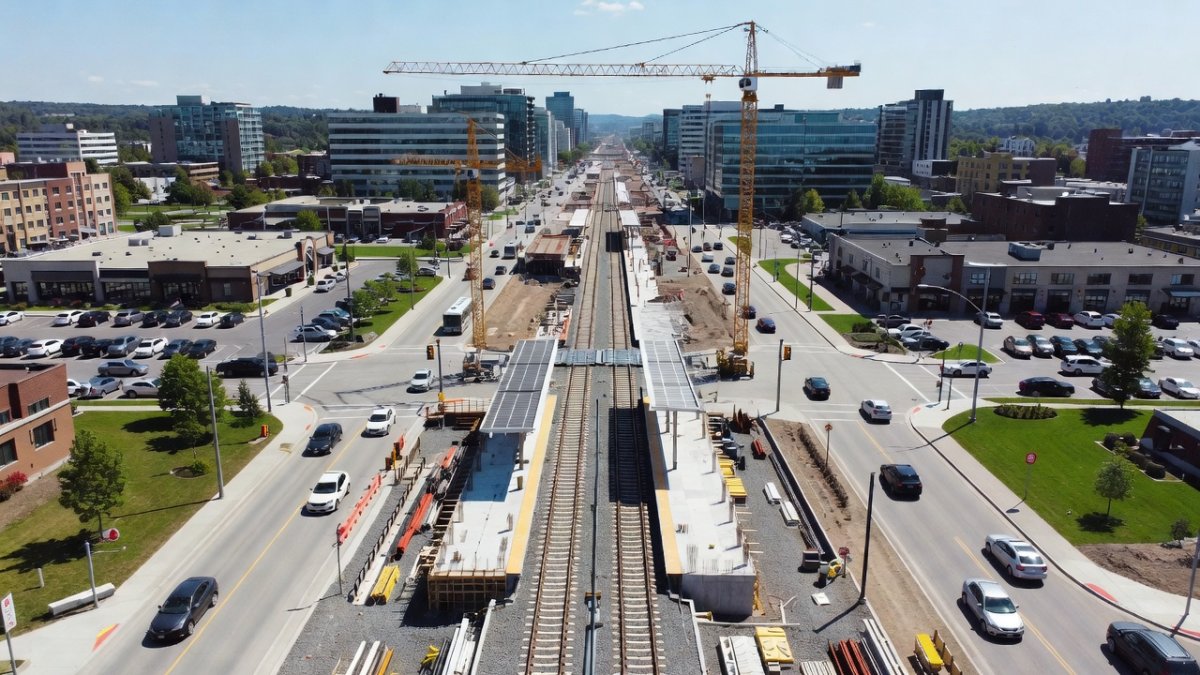
Work on the Hazel McCallion LRT began in 2020 and was originally supposed to be completed in 2024. The documents, however, confirm completion of the route now isn't expected until 2028, after the consortium Mobilinx hit a series of hurdles. The light rail line, which will run along Hurontario Street connecting Mississauga's Port Credit waterfront to Brampton's Steeles Avenue, features 19 stops and was touted as a transformative project for the rapidly growing western GTHA corridor.
"The project is experiencing a number of issues related to performance with its Project Co, Mobilinx, that have led to significant delays to the project schedule," one government briefing, obtained using freedom of information laws, explains. The briefing goes on to list "issues related to quality of work performed, lost productivity due to liquidity challenges, lack of progress on design, and resulting inability to obtain necessary work permits."
According to one briefing from March 2025, officials with the Ministry of Transportation and Metrolinx worried that the problems with the Hazel McCallion LRT might force them to act. "The project will require a significant project management effort to get back on track or Metrolinx will need to seek an alternative commercial and delivery strategy," the presentation explained.

Metrolinx Defends Progress Despite Setbacks
A spokesperson for Metrolinx said work on the project was pushing ahead despite the documented difficulties. "Construction continues to advance, with track work complete at 46 of 55 intersections," they wrote in a statement sent to Global News. The agency maintains that the line remains a priority and that progress is being made on the ground, even as the internal documents paint a picture of a project struggling to maintain momentum.
The internal warnings came roughly a year before Metrolinx agreed to completely restructure its agreement with Mobilinx, splitting the unfinished work into two new contracts. In a routine update published in July, Metrolinx disclosed that the $4.6-billion contract signed with the consortium in 2019 had been rewritten and split into two parts. The project was previously governed by one massive public-private partnership (P3) contract for Mobilinx to design, build, operate and maintain the line.
The two new agreements — which are both with the same consortium — will be an alliance agreement to build the route and the existing P3 terms to maintain and operate the line, the government said. Alliance deals allow more options for governments to release payments to private-sector companies and are seen to offer more flexibility. Both Metrolinx and the Ford government have indicated they see alliance contracts as better than P3 in most circumstances.
NDP MPP Calls Out Mismanagement
Ontario NDP MPP Tom Rakocevic said the Hazel McCallion LRT has been mismanaged, pointing to the litany of problems documented in the internal briefings. "We see that there are issues of management, there's design issues, they're not even able to get permits," he said. "This is a project that was supposed to have been completed two years ago and you're still working on design and permits? This is just, this is the typical management we see from the Ford government and Metrolinx under their watch."
Rakocevic, who has been a vocal critic of the province's transit procurement approach, said there should be more transparency from Metrolinx on what had led to the recontracting and the issues the Hazel McCallion LRT has struggled with since construction began. "We, the people of Ontario, pay for these projects and yet all the decisions are made behind closed doors all the time," he said. "The result of these decisions have always been projects that are either late, overpriced or never starting to begin with."
The Shifting Landscape of Ontario Transit Procurement
The Hazel McCallion LRT's troubles highlight a broader shift in how Ontario approaches major transit infrastructure. The project was originally procured under a P3 model, where the private sector signs up to build infrastructure at a certain price, theoretically transferring risk to the consortium. But for Ontario transit projects, P3 contracts have been marked by stoppages and messy legal disputes over who is responsible for delays.
Metrolinx would not directly confirm they were forced to restructure the contract because of the series of issues faced by the consortium building the delayed line. "The Alliance contract is with Mobilinx, the project partner selected through a competitive P3 procurement in 2019. P3s are no longer used for new projects," the agency wrote in its statement. "The Alliance model strengthens accountability, shares risk and supports faster decision-making and project delivery."
The move to an alliance model represents a significant philosophical shift for the province. Under an alliance contract, the government and the private partner work more collaboratively, sharing both risks and rewards, rather than operating at arm's length through a traditional P3. Proponents argue this allows for more flexibility when problems arise, while critics suggest it may blur accountability lines and make it harder for the public to understand who is responsible when projects go off the rails.
What This Means for Transit Users and Taxpayers
For the hundreds of thousands of residents in Mississauga and Brampton who were promised a modern light rail connection, the delays mean continued reliance on buses and cars along the congested Hurontario Street corridor. The line was expected to be a key piece of the region's transit network, connecting to GO Transit services at Port Credit and providing a north-south spine through two of Ontario's fastest-growing cities.
For taxpayers, the cost implications remain unclear. The $4.6-billion figure attached to the original 2019 contract was already substantial, and restructuring agreements often come with additional costs. Neither Metrolinx nor the Ministry of Transportation has disclosed whether the recontracting will add to the project's price tag, and the internal documents obtained by Global News do not specify cost overruns beyond the schedule delays.
The Hazel McCallion LRT's struggles also raise questions about the province's broader transit ambitions. With the Ford government planning billions in new transit spending across the Greater Toronto and Hamilton Area, the lessons from this project — about design readiness, permit acquisition, and the limits of P3 delivery — will likely inform how future lines are procured. The shift away from P3s for new projects suggests the province has already drawn some conclusions, but whether the alliance model delivers better results remains to be seen.
As the project limps toward its revised 2028 completion date, residents along the Hurontario corridor will be watching closely. The internal documents obtained by Global News paint a picture of a project that has struggled from design through construction, and the restructured contract represents a significant bet that a more collaborative approach can finally get the line built. Whether that bet pays off will determine not just the fate of the Hazel McCallion LRT, but the template for Ontario's transit future.
By Alex Thompson, Staff Writer
This article was produced with AI-assisted research and editorial support. Sources: Global News (globalnews.ca).
What's Your Reaction?
 Like
0
Like
0
 Dislike
0
Dislike
0
 Love
0
Love
0
 Funny
0
Funny
0
 Wow
0
Wow
0
 Sad
0
Sad
0
 Angry
0
Angry
0

Canada Correspondent at Global1.News. Based in Toronto, covering Canadian politics, energy, trade, and US-Canada relations. Provides the Canadian perspective on North American and global affairs.















Comments (0)