
Grenada’s Coat of Arms: Visual identity of government
When the Grenadian government rolls out a press release, a tourism brochure or a partnership announcement, the little shield‑and‑sword that sits atop the page does more than add a splash of colour – it signals the authority of the state and the nation’s visual identity to the world.
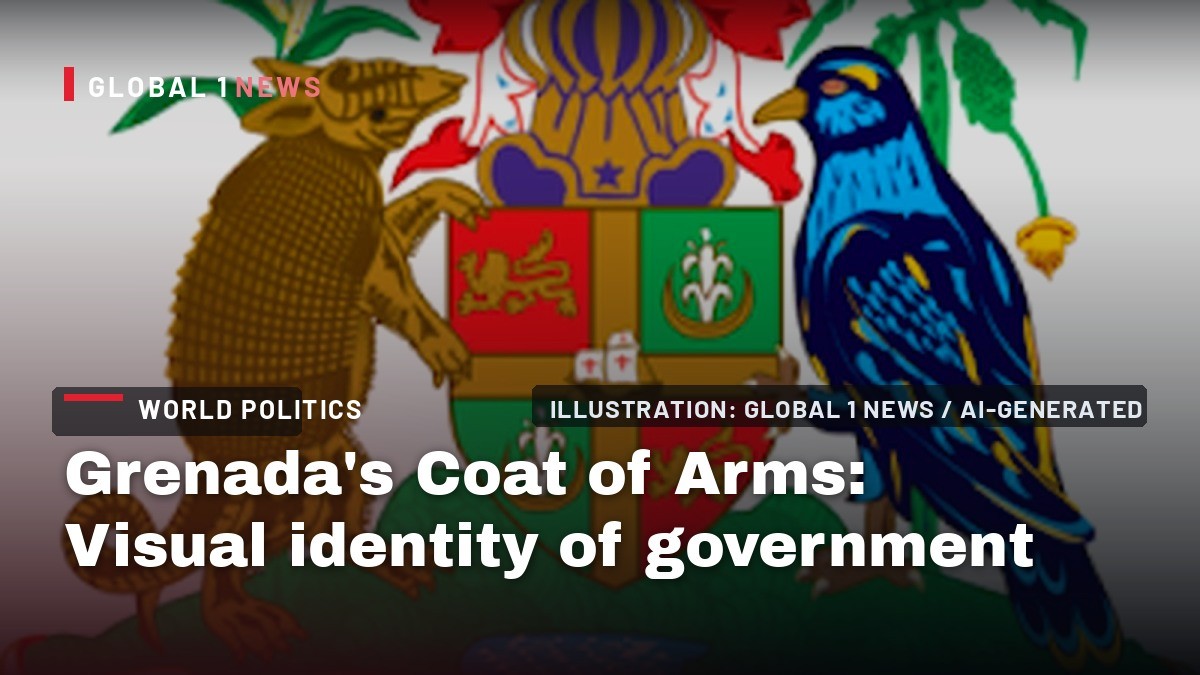
When the Grenadian government rolls out a press release, a tourism brochure or a partnership announcement, the little shield‑and‑sword that sits atop the page does more than add a splash of colour – it signals the authority of the state and the nation’s visual identity to the world. Yet, as a recent commentary on the Now Grenada website points out, the way the Grenada Coat of Arms (COA) is being used across ministries is anything but uniform, and the inconsistencies could eventually lead to legal or diplomatic headaches. In a region where visual symbols of sovereignty – from the Jamaican crest to the Trinidad and Tobago emblem – are treated with reverence, Grenada’s lax approach to its own emblem raises eyebrows and calls for urgent policy action.
Historical roots of the Grenada emblem
The Grenada COA is one of the national emblems adopted at independence in 1974. Its design owes a debt to Anthony Conrad George BEM, the same creative mind behind the Grenada National Flag, as documented in his biography “Beyond Belief”. The emblem was intended to be a visual representation of the authority of the Grenadian government, a badge that would sit alongside the flag and anthem as a marker of national sovereignty.
In many Commonwealth nations, the coat of arms carries a similar weight. For instance, the Jamaican and Trinidad and Tobago crests are reserved for official government use, while Australia’s guidelines insist the COA must dominate any document it appears on, never to be eclipsed by political logos. The United Kingdom’s Royal COA, likewise, is a primary symbol of governmental identity, underscoring the importance of uniformity and prominence in official communications.
Guidelines elsewhere: a regional benchmark
Across the Caribbean, detailed branding manuals dictate exactly where and how the COA should sit on a page. Jamaica’s rules, for example, allow the emblem at the top left, top right or centre, with departmental logos placed at the bottom centre or directly beneath the COA in the top left corner. Australia’s policy goes further, demanding the COA always outrank any other graphic element and prohibiting its use on material bearing political logos.
Trinidad and Tobago’s guidelines are perhaps the most exhaustive, spanning over thirty pages that outline acceptable typefaces, secondary ministry logos, and partnership branding. The core principle is clear: the COA “takes precedence over all other government sub‑brands”, ensuring that no subsidiary logo can compete with the national symbol for visual attention. These regional standards illustrate a shared understanding that a nation’s emblem is not a decorative afterthought but a cornerstone of governmental legitimacy.
Grenada’s current regulatory landscape
Grenada does have a legislative foundation for the protection of its national symbols. The National Emblems and National Anthem of Grenada (Regulation) Act empowers the Prime Minister to issue regulations governing the proper use of the COA and anthem on all occasions. However, the source material makes clear that, unlike its neighbours, Grenada lacks a comprehensive, publicly‑available visual identity guide that translates this legislative authority into day‑to‑day design practice.
Without such a framework, ministries and their sub‑divisions have taken it upon themselves to interpret the emblem’s placement. The result is a patchwork of practices: some documents feature the COA in black and white, others in colour; some place the emblem prominently at the top of the page, while others tuck it away or omit it entirely. This ad‑hoc approach runs counter to the intent of the 1974 design, which sought a unified visual front for the nation.
Inconsistent usage across ministries
Observations from the Now Grenada article highlight several troubling patterns. The Ministry of Tourism, Creative Economy and Culture, for example, has released documents where the COA appears in one version but is missing in another. Similar discrepancies surface in the Grenada Office of Creative Affairs (GOCA), a division of the Ministry of Planning and Economic Development, and the Division of Youth within the Ministry of Youth and Sports. In some releases, the COA is paired with a ministry logo that competes for visual space, while in others, the emblem is reduced to a small stamp against a patterned background, diminishing its prominence.
Even more concerning is the practice of prioritising the words “Press Release” or “News Release” over the line ministry’s name, and in some cases, over the COA itself. When the emblem is absent, the document loses the immediate visual cue that it represents an official government communication, potentially confusing both domestic audiences and international partners about the document’s authority.
Potential legal and diplomatic ramifications
The article warns that misusing or inconsistently placing the COA could become “legally or diplomatically problematic”. In practice, this could manifest in several ways. Internationally, partner governments and multilateral organisations rely on clear visual markers to verify the authenticity of official communications. A document lacking a correctly placed COA might be questioned, delaying aid, investment or collaborative projects.
Domestically, the erosion of the emblem’s authority could undermine public confidence in government messaging. If citizens see the COA used haphazardly, they may doubt the legitimacy of the information presented, especially in a climate where misinformation spreads quickly across social media platforms. The legal risk also extends to potential breaches of the National Emblems Act, should the Prime Minister or a designated authority decide to enforce stricter compliance.
Calls for a unified visual identity framework
Given the clear gaps, the author of the Now Grenada piece urges the Prime Minister – or a designated delegate – to develop detailed guidelines for the COA’s use. Such a framework would mirror the extensive manuals seen in Jamaica, Australia and Trinidad and Tobago, outlining permissible placements, colour variations, and the relationship between the COA and subsidiary ministry logos.
Beyond drafting a policy, the recommendation includes regular compliance audits to ensure ministries adhere to the standards. By institutionalising the visual identity, Grenada could safeguard the emblem’s significance, prevent inadvertent diplomatic faux pas, and present a cohesive brand to both its citizens and the international community.
Why visual identity matters for Grenada’s future
In an era where branding extends beyond corporate logos to national reputation, the visual consistency of government symbols is a subtle yet powerful tool. For Grenada, a small island nation navigating the challenges of climate change, tourism recovery post‑pandemic, and regional integration, a strong, recognisable visual identity can reinforce its credibility on the world stage.
When a foreign delegation receives a Grenadian policy brief that bears a correctly placed, vibrant COA, the emblem acts as a seal of authenticity, signalling that the document is an official statement of the state. Conversely, a mismatched or missing emblem may raise doubts, forcing Grenadian officials to expend additional diplomatic capital to verify their own communications.
In sum, the call for a unified COA guideline is not merely a bureaucratic nicety; it is a strategic imperative. By aligning its visual practices with regional best‑practices, Grenada can protect the integrity of its national symbols, streamline inter‑governmental interactions, and bolster public trust at home. The time to act, as the source material stresses, is now – before the emblem’s prestige is further diluted by inconsistent design choices.
This article was produced with AI-assisted research and editorial support. Reporting is based on the source material cited below. Sources: Now Grenada; nowgrenada.com; Global1.News (10 October 2026).
By Sharon Sahatoo, Staff Writer
What's Your Reaction?
 Like
0
Like
0
 Dislike
0
Dislike
0
 Love
0
Love
0
 Funny
0
Funny
0
 Wow
0
Wow
0
 Sad
0
Sad
0
 Angry
0
Angry
0

Caribbean Correspondent at Global1.News. Based in Port of Spain, Trinidad, covering Caribbean politics, economy, energy, climate, and culture. Amplifying the voices and stories of the Caribbean region.











Comments (0)