
Private hospitals urged to adopt PhilHealth no co-payment policy
President Marcos urged private hospitals to adopt PhilHealth's no co-payment policy as St. Luke's-Global City signed on, with 53 beds allocated. Expanded under RA 11223 to cover all Filipinos, the policy eases hospital bill fears for ordinary families.
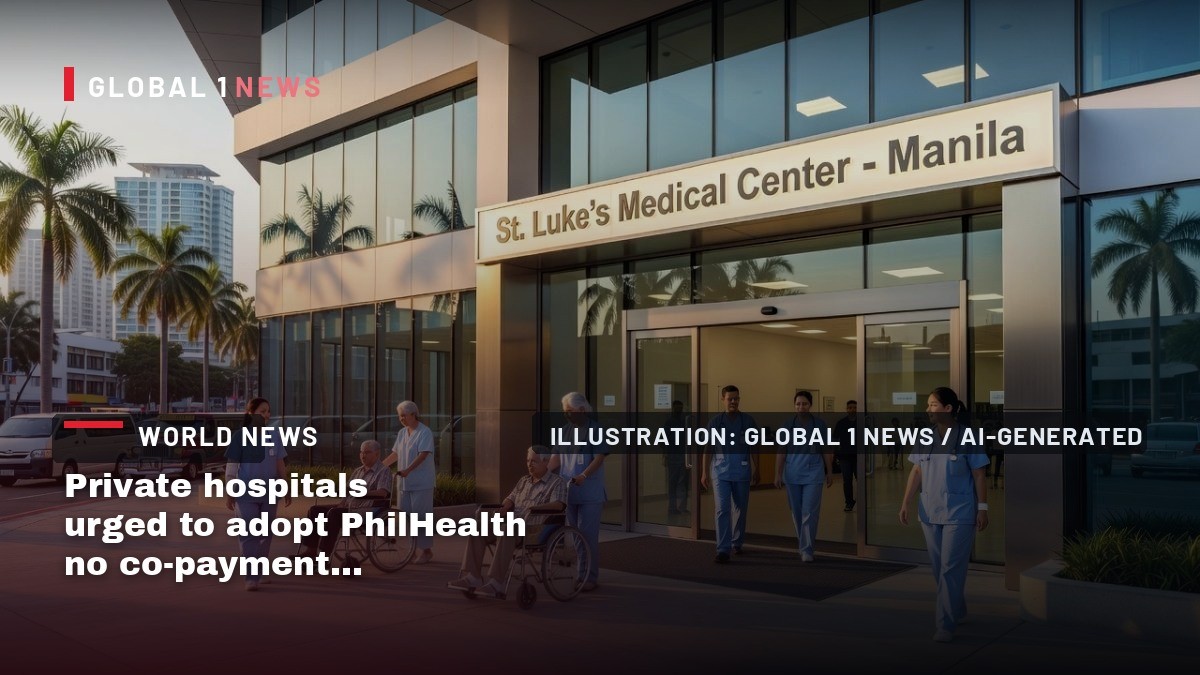
MANILA — For countless Filipino families, the fear of a hospital bill has always been as heavy as the illness itself. The hesitation to seek treatment, the dread of the "pa-deposit" counter, and the quiet panic over how to pay for a private room when public hospitals are full — these are stories told in every barangay, from urban poor communities to provincial towns.
On Tuesday, President Ferdinand Marcos Jr. took a significant step toward easing that burden, personally witnessing the signing of a memorandum of agreement between the Philippine Health Insurance Corp. (PhilHealth) and St. Luke's Medical Center-Global City. The deal brings one of the country's premier private hospitals into the fold of the "no co-payment policy," a move that could change how ordinary Filipinos access specialized care.
"People with ailments should no longer be afraid to go to a private hospital due to lack of funds to pay for treatment," Marcos said in his speech at the signing ceremony.
The message is clear: the government is pushing to make quality health care a right, not a privilege reserved for those who can afford it.
What the No Co-Payment Policy Means for Patients
Under the no co-payment policy, eligible PhilHealth members admitted to basic or ward accommodations in participating private hospitals do not have to pay additional charges for medical services covered by PhilHealth. In simple terms, a patient who qualifies and is admitted to a basic room will leave the hospital with a zero billing balance after PhilHealth and government medical funds are applied.
This is a game-changer for families who have long avoided private hospitals due to cost. For a tricycle driver in Quezon City or a sari-sari store owner in Cebu, the difference between a public hospital with months-long waiting lists and a private facility with immediate specialized care is not just about comfort — it is about survival.
The policy was initially limited to indigent patients, but it was expanded under Republic Act 11223, or the Universal Health Care Act, to cover all Filipinos regardless of their financial or employment status. This means that even middle-class families, OFWs, and self-employed workers can benefit, provided they meet the eligibility requirements and are admitted to the designated basic accommodation areas.
Dr. Beverly Lorraine Ho, acting president and chief executive officer of PhilHealth, confirmed that St. Luke's Medical Center-Global City has initially allocated 53 beds dedicated specifically to the no-balance billing policy. These beds are designed to ease patient backlogs in public hospitals by allowing individuals who need specialized care to receive treatment at SLMC without incurring extra charges.
"St. Luke's will help us to serve more patients who do not need to pay extra," Ho said in an interview.
St. Luke's: A Symbol of Accessible Quality Care
The choice of St. Luke's Medical Center-Global City as one of the first top-tier private hospitals to formally join this initiative is deeply symbolic. St. Luke's has long been associated with world-class medical care, often the destination for the country's elite and even foreign patients seeking advanced treatment. For many ordinary Filipinos, walking through its doors has felt like entering a different world — one reserved for those with deep pockets or comprehensive health insurance.
By joining the no co-payment policy, St. Luke's is sending a powerful message, as Marcos noted: "that quality care in leading private hospitals can be made more accessible to qualified PhilHealth members, and that both government and the private sector have a role in making Universal Health Care work."
This is not just about one hospital. It is about breaking down the invisible walls that have separated the haves from the have-nots in Philippine health care. A farmer from Nueva Ecija who needs a complex heart procedure, a public school teacher from Leyte requiring specialized cancer treatment — these are the patients who stand to benefit most from this expansion.
Marcos described the agreement as an initial milestone in a broader strategy to scale up health care access nationwide.
"This is a very big thing, and this is just the beginning. We started with St. Luke's, and we will increase it so that all our health care facilities will be included in our programs," Marcos added.
From Indigent-Only to Universal Coverage: The RA 11223 Shift
The expansion of the no co-payment policy from indigent patients to all Filipinos is a cornerstone of the Universal Health Care Act. Signed into law in 2019, RA 11223 aims to provide all Filipinos with access to a comprehensive set of health services without financial hardship. The law mandates the automatic enrollment of all citizens into PhilHealth, with premium subsidies for the poor.
This shift is significant because it recognizes that financial hardship is not limited to the poorest of the poor. A contractual worker in Manila earning minimum wage, a freelance graphic designer, a small business owner — all of these individuals can face catastrophic health expenses that push families into debt or force them to sell assets like a jeepney or a piece of farmland.
By expanding the policy, the government is acknowledging that health care should not be a source of financial ruin. The fear of "utang" (debt) after a hospital stay is a real and present concern for many Filipino families. The no co-payment policy, when fully implemented, aims to remove that fear.
Ho noted that since Marcos took office, out-of-pocket spending from patients decreased from 45 percent to 41 percent in 2025. While this is progress, there is still a long way to go. The goal is to reduce out-of-pocket expenses further, making health care truly accessible to all.
What About HMO and Private Insurance Holders?
One common question from Filipinos who have Health Maintenance Organization (HMO) coverage or private health insurance is whether they can still benefit from the no co-payment policy. PhilHealth has clarified that patients with HMO coverage or private health insurance can still use their benefits, with PhilHealth coverage applied first before any supplemental insurance is factored in.
This is an important detail for many middle-class families who pay for HMO plans through their employers. It means that even if you have an HMO, you can still be admitted under the no co-payment policy, and PhilHealth will be the primary payer. Your HMO or private insurance can then cover any additional services or upgrades, such as a private room instead of a ward accommodation.
This arrangement provides flexibility and ensures that patients are not penalized for having additional coverage. It also encourages more people to maintain their HMO plans while benefiting from the government's expanded health care programs.
The Road Ahead: Expanding to More Private Hospitals
PhilHealth is currently in discussions with other private hospitals to further expand the initiative nationwide. This is crucial because private facilities already account for 80 percent of providers in specific care programs. Without their participation, the goal of universal health care would remain incomplete.
The challenge, however, is convincing more private hospitals to join. For many private institutions, the no co-payment policy may seem financially burdensome, as they would be providing services at rates set by PhilHealth, which are often lower than their standard private rates. However, the agreement with St. Luke's demonstrates that it is possible to balance financial sustainability with social responsibility.
Marcos called on more hospitals to follow suit: "We encourage more hospitals across the country to support PhilHealth in advancing Universal Health Care by embracing the no co-payment policy. Together, let us ensure that no Filipino is denied the care that they need only because of financial hardship."
The President also emphasized the need to continue removing financial, geographic, and institutional barriers to health care access. This includes not just hospital partnerships but also improving the PhilHealth system itself — making it easier for members to claim benefits, reducing processing times, and ensuring that the benefits are sufficient to cover actual medical costs.
A Ray of Hope for Filipino Families
For ordinary Filipinos, the expansion of the no co-payment policy is a ray of hope. It means that a mother in a remote province can bring her child to a top-tier hospital for a serious condition without selling their carabao or borrowing from loan sharks. It means that a senior citizen with a chronic illness can receive specialized care without choosing between medication and food.
The bayanihan spirit — the Filipino tradition of communal unity and cooperation — is at the heart of this initiative. The government, PhilHealth, and private hospitals are coming together to ensure that no Filipino is left behind in the pursuit of health and well-being.
As the program expands, the hope is that more families will no longer have to choose between their health and their livelihood. The fear of hospital bills will not disappear overnight, but with each new hospital that joins the no co-payment policy, that fear grows a little smaller.
For now, the 53 beds at St. Luke's Medical Center-Global City represent a start — a promise that quality health care is within reach for more Filipinos. And as Marcos said, this is just the beginning.
This article was produced with AI-assisted research and editorial support. Sources: Philstar.com, Manila Times, Philippine News Agency.
By Bella Reyes, Staff Writer
What's Your Reaction?
 Like
0
Like
0
 Dislike
0
Dislike
0
 Love
0
Love
0
 Funny
0
Funny
0
 Wow
0
Wow
0
 Sad
0
Sad
0
 Angry
0
Angry
0

Philippines/Southeast Asia Correspondent at Global1.News. Manila-based journalist covering Philippine politics, environment, maritime security, and social issues. Passionate about marine conservation and the communities protecting the Philippines' natural heritage.













Comments (0)