
Zambia Courts Sealed Off as Election Petition Deadline Looms
Zambia's capital was on edge Monday as authorities sealed off court premises in Lusaka and other areas, blocking access on the final day opposition candidate Brian Mundubile can file a petition challenging the presidential election result. The unusual security lockdown, which included armed personnel and.
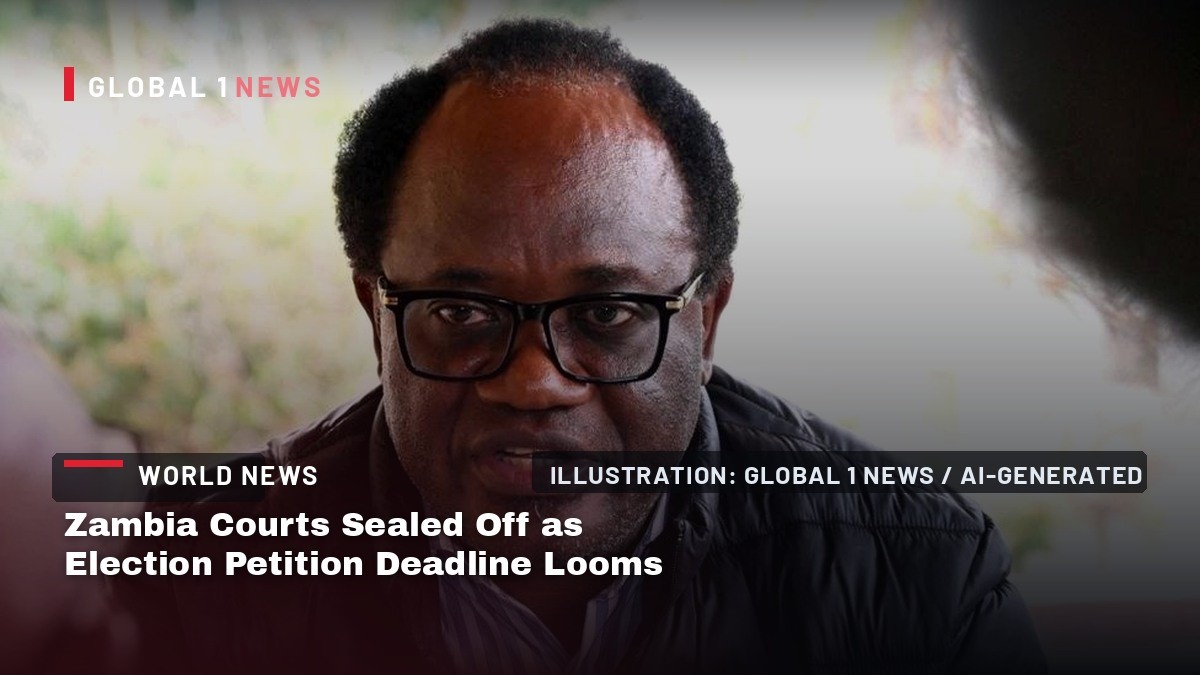
Zambia Courts Sealed Off as Election Petition Deadline Looms
Zambia's capital was on edge Monday as authorities sealed off court premises in Lusaka and other areas, blocking access on the final day opposition candidate Brian Mundubile can file a petition challenging the presidential election result. The unusual security lockdown, which included armed personnel and taped-off perimeters, has raised serious questions about judicial independence and the rule of law in Africa's second-largest copper producer.
The closure comes as preparations for President Hakainde Hichilema's second inauguration, scheduled for 1 September, appear to be moving forward despite the legal uncertainty. Mundubile, who came second with 38% of the vote against Hichilema's 60%, has said he will challenge the outcome, citing irregularities. He remains in hiding over alleged threats, a situation that has cast a shadow over the post-election period following the shooting death of a former minister and the arrest of several opposition figures.
Monday marks the statutory deadline for filing a presidential election petition, a legal move that could potentially delay or complicate the inauguration. Yet lawyers arriving at the courts were being asked to depart, with one telling the BBC that three armed men approached his vehicle, identified themselves, and instructed him to leave the area.
Courts Shut for 'Security Reasons' as Deadline Expires
The sealed-off facilities include the High Court in Lusaka, the Supreme Court, which also houses the Constitutional Court, and several local courts. Local media cite a directive by a judiciary administrative official telling all staff not to report to work following the closure for "security reasons." The memo, which has been shared online by some opposition figures, does not provide details about the nature of the security threat.
The Law Association of Zambia (LAZ) said it was concerned by the closure and the presence of heavily armed military personnel around court premises in Lusaka. In a statement, the association noted there was no formal public explanation for the closure nor its expected duration. Referring to the "unsigned memorandum" from the judiciary addressing staff, LAZ said no further official information had been provided to lawyers and the public.
"The closure of the courts has immediate implications for access to justice, particularly for persons requiring urgent judicial intervention," the statement read. The timing was "particularly significant in the present electoral context," it added, citing a "seven-day period" in which a person may "petition the Constitutional Court to nullify the election of a President-elect."
The BBC has contacted the Zambian police and the judiciary for comment, but no response has been reported. The lack of official communication has fueled speculation and concern among legal experts and civil society groups who see the move as a troubling precedent for the country's democratic institutions.
Mundubile in Hiding, Citing Threats to His Safety
Mundubile, who leads the opposition after a contentious campaign, has been in a secure location under the protection of what his campaign describes as an "international human rights body." He went into hiding following the arrests of opposition figures and the death of former minister Mutotwe Kafwaya during a raid by security officers, in what officials described as an exchange of fire in a security operation in the capital.
The circumstances surrounding Kafwaya's death have drawn sharp criticism from rights groups. Amnesty International described the killing as "deeply alarming" and called for prompt, thorough and impartial investigations. The Law Association of Zambia similarly expressed "grave concern" and demanded an investigation into the incident.
Mundubile last week rejected the presidential election results and said he planned to challenge the outcome through the courts. His campaign has alleged that the court closures are aimed at preventing him from filing his petition, a claim echoed by prominent opposition voice Emmanuel Mwamba, who alleged the action was specifically designed to block Mundubile's legal challenge.
The political tension in Zambia echoes patterns seen elsewhere on the continent, where disputed elections often lead to prolonged legal battles and, in some cases, instability. The role of courts in adjudicating electoral disputes has become a critical test for young democracies across Africa, from Kenya to Malawi to Ghana, where judicial independence is seen as a cornerstone of constitutional governance.
Inauguration Preparations Continue Despite Legal Uncertainty
Despite the court closure, preparations for Hichilema's inauguration appear to be continuing. The youth and sport ministry has issued a media invitation for journalists to accompany a cabinet official on an inspection of arrangements at National Heroes Stadium, where the ceremony is expected to take place.
The decision to move forward with inauguration plans while the legal window for challenging the election remains open has raised eyebrows among political analysts. In many African countries, the period between an election and an inauguration is considered a delicate time, with all parties expected to respect legal processes and allow for the resolution of disputes.
Hichilema, who won a second term with 60% of the vote, has not publicly commented on the court closures. His supporters celebrated when the election results were announced on 13 August, but the post-election period has been marked by controversy, including the arrests of opposition figures and the deadly raid that killed Kafwaya.
The political climate in Zambia is reminiscent of other African nations where electoral disputes have tested the resilience of democratic institutions. In Kenya, for example, the Supreme Court's nullification of the 2017 presidential election was seen as a landmark moment for judicial independence on the continent. Similarly, in Malawi, the Constitutional Court's decision to annul the 2019 election results led to a historic rerun and a change in government.
Observers Raise Concerns About Election Conduct
The election day itself was described by regional and international observers as largely peaceful, but they raised concerns about late electoral reforms, media freedom and access to the media in the run-up to the poll. The EU observation mission said restrictions on the opposition may have contributed to an "uneven contest."
On vote tallying, the mission described a heavy military presence as intimidating and said it had received reports of attacks on some tallying centres. It said staff in many centres did not record results on tally sheets as soon as they were announced, and cited weak verification between digital entries and paper records. It added that returning officers frequently paused proceedings while awaiting instructions from headquarters.
The EU mission also called for "maximal transparency" over the poll outcome, noting that the electoral commission did not publish separate polling-station results. This lack of transparency, observers say, undermines public confidence in the electoral process and provides fertile ground for disputes and allegations of manipulation.
The concerns raised by international observers are particularly significant given Zambia's history of peaceful transitions of power. The country has often been cited as a model of democratic stability in a region where elections have sometimes led to violence and constitutional crises. The current situation, with courts sealed and an opposition leader in hiding, threatens to tarnish that reputation.
Regional Context: Courts as Arbiters in African Elections
The Zambian standoff highlights the critical role that courts play in resolving electoral disputes across Africa. From the Supreme Court in Kenya to the Constitutional Court in Malawi, judicial bodies have increasingly become the final arbiters in contested elections, often with profound implications for political stability.
In Zambia, the Constitutional Court has the power to nullify a presidential election if a petition is successful. The seven-day window for filing such a petition is a constitutionally mandated period, and the closure of courts during this time raises serious questions about whether the legal process can be properly followed.
Legal experts note that the sealing of courts is an extraordinary measure that should only be taken in the most extreme circumstances, with clear communication to the public and a defined timeline for reopening. The lack of transparency in the Zambian case is particularly concerning, as it leaves citizens and legal practitioners in the dark about their rights and options.
The situation also underscores the challenges facing African democracies in balancing security concerns with the need to uphold constitutional processes. While governments may cite security reasons for such actions, the perception of political interference can undermine public trust in institutions and fuel instability.
Civil Society and Rights Groups Demand Answers
The Law Association of Zambia has been at the forefront of calls for transparency and accountability. Its statement expressing "grave concern" over the court closures and demanding investigations into Kafwaya's death reflects broader anxieties within Zambian civil society about the direction of the country's democracy.
Amnesty International's call for prompt, thorough and impartial investigations into the killing adds international pressure on the Zambian government to address the concerns raised by the opposition and civil society groups. The arrests of opposition figures and the death of Kafwaya have prompted widespread condemnation, with rights groups warning of a crackdown on dissent.
The coming days will be crucial for Zambia. If the courts remain closed beyond the petition deadline, Mundubile may lose his legal window to challenge the election result, effectively cementing Hichilema's victory without judicial scrutiny. Such an outcome would likely deepen political divisions and raise questions about the legitimacy of the electoral process.
Alternatively, if the courts reopen and Mundubile is able to file his petition, Zambia could see a prolonged legal battle that tests the independence of its judiciary and the resilience of its democratic institutions. Either way, the country stands at a crossroads, with the world watching to see how it navigates this delicate moment in its political history.
The situation in Zambia is a reminder that democracy is not just about holding elections, but about respecting the rule of law and ensuring that all voices are heard. As African nations continue to strengthen their democratic institutions, the handling of electoral disputes will remain a key indicator of their commitment to constitutional governance and the peaceful resolution of political conflicts.
This article was produced with AI-assisted research and editorial support. Sources: BBC News.
By Amara Diop, Staff Writer
What's Your Reaction?
 Like
0
Like
0
 Dislike
0
Dislike
0
 Love
0
Love
0
 Funny
0
Funny
0
 Wow
0
Wow
0
 Sad
0
Sad
0
 Angry
0
Angry
0

West Africa/Sahel Correspondent at Global1.News. Dakar-based journalist covering politics, security, climate, and development across Francophone and Anglophone West Africa. Tells the stories of a region undergoing profound transformation.













Comments (0)