
Plane Found in Kawartha Lakes as Search for Missing Pilot David Douglas Continues
In a recent CBC News report, the search for a missing 73-year-old pilot in Ontario's cottage country has taken a sombre turn after his home-built aircraft was discovered in Wolf Lake, within Queen Elizabeth II Provincial Park in the Kawartha Lakes region.
In a recent CBC News report, the search for a missing 73-year-old pilot in Ontario's cottage country has taken a sombre turn after his home-built aircraft was discovered in Wolf Lake, within Queen Elizabeth II Provincial Park in the Kawartha Lakes region. The pilot, David Douglas, who departed from Oshawa Executive Airport on Friday morning, remains missing as the investigation shifts from a search-and-rescue operation to a missing person case led by the Ontario Provincial Police. For Canadians who know the Kawartha Lakes as a beloved summer destination, this story is a stark reminder of the risks that recreational aviation can carry, even for experienced pilots.
Plane Found in Kawartha Lakes as Search for Missing Pilot David Douglas Continues
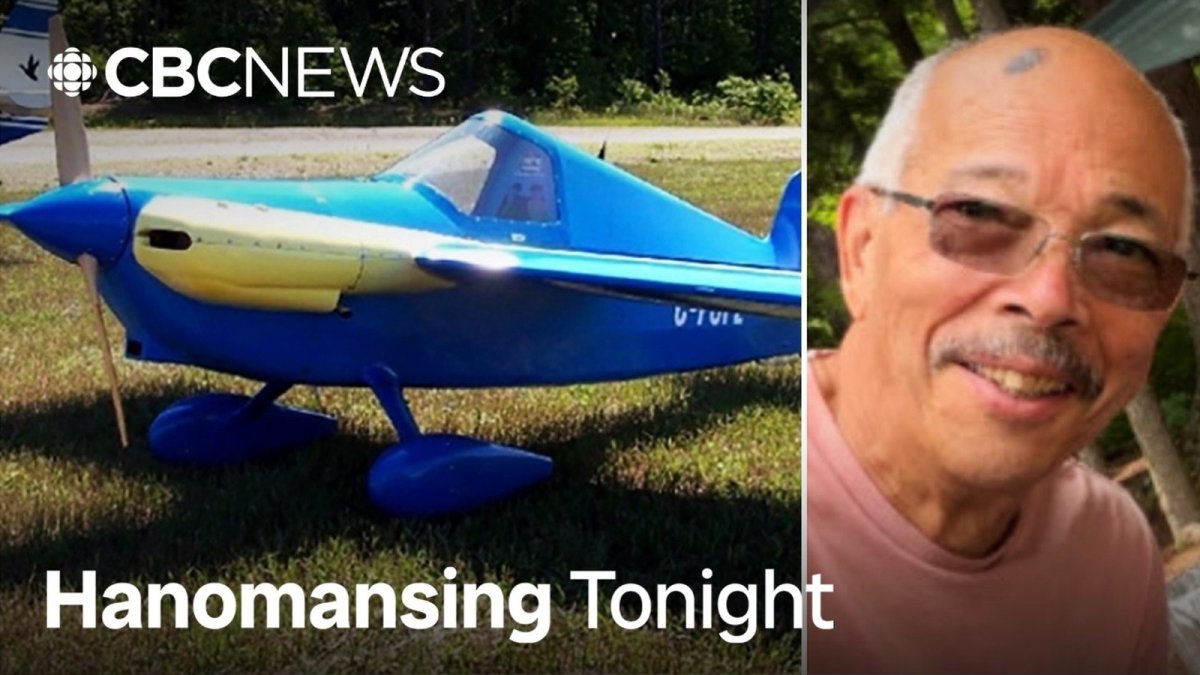
Kawartha Lakes, Ont. – Aug. 18, 2026 — The Trenton Joint Rescue Coordination Centre (JRCC) confirmed on Monday that the wreckage of the small, light blue and yellow, single-seat amateur-built aircraft was observed in Wolf Lake, bringing an end to the active search for the plane itself. However, Douglas's whereabouts remain unknown, and the OPP has now assumed jurisdiction over the case as a missing person investigation, with search units continuing to support efforts to locate the man.
The Flight and the Disappearance
David Douglas, described by police as an experienced pilot and leisure flyer, departed Oshawa Executive Airport at approximately 8:30 a.m. on Friday, Aug. 14, believed to be heading north toward the Kawartha Lakes. He was expected to return to the airport by 9:30 a.m. the same morning but never arrived. His last known location was believed to be around Balsam Lake, part of the Trent-Severn Waterway system and one of the largest lakes in the region.
Durham Regional Police issued a public assistance request on Friday, stating that Douglas had planned to arrive back at the airport about an hour after departure. "He did not return as expected and has not been located," read a news release issued on behalf of the family. Over the weekend, a large, co-ordinated search operation was launched involving JRCC Trenton, the OPP, and Durham Regional Police, with both air and ground crews scouring the cottage country landscape.
The flight itself was routine on its face: a departure from Oshawa Executive Airport at 8:30 a.m. on a Friday morning, a planned return just an hour later. For a pilot of David Douglas's experience, a short hop into cottage country is the kind of flight that thousands of Canadian recreational aviators undertake each summer, often to check on a property, survey the autumn colours, or simply enjoy the freedom of a clear morning. The route from Oshawa to the Kawartha Lakes region crosses a patchwork of farmland, small towns, and increasingly dense forest and water as the Trent-Severn Waterway system unfolds below. Balsam Lake, a hub of that waterway, is a natural landmark for any pilot navigating by visual reference, and its broad surface would normally offer an easy point of orientation. When an experienced pilot fails to return within a short window, the alarm is raised quickly not because of any presumption of trouble, but because the margin for error in a single-seat home-built aircraft is so slim, and the terrain below is so unforgiving.
The geography of the Kawartha Lakes region is a double-edged sword for search teams. On one hand, the area is heavily travelled by cottagers and boaters, which means there are many eyes on the water and shorelines. On the other, the region is a labyrinth of interconnected lakes, narrow channels, and densely treed islands, where a downed aircraft can be invisible from the air within minutes. The Trent-Severn Waterway, with its locks and dams, adds a layer of complexity: water levels are managed, currents can be unpredictable, and a wreckage site may be obscured by sediment or debris. The decision to launch a large co-ordinated response, involving aerial surveillance and ground teams, reflects the reality that in this environment, time is the most critical resource. Every hour that passes without a signal or sighting increases the likelihood that the search will shift from a rescue to a recovery operation, and the response is scaled accordingly from the outset.
Discovery in Wolf Lake
On Monday, Durham Regional Police confirmed that plane debris had been discovered in the Kawartha Lakes area, and JRCC Trenton subsequently identified the location as Wolf Lake, situated within the 4,693-hectare Queen Elizabeth II Provincial Park. The park, a natural environment class park, is a remote and heavily forested area, presenting significant challenges for ground search teams. The Kawartha Lakes OPP detachment is now assisting JRCC with the search, which includes dive technicians prepared to work in the lake areas where the wreckage was found.
In its latest update, Trenton JRCC expressed cautious hope: "We hope that Search and Rescue efforts will contribute to continuing the search." The statement underscores the reality that while the aircraft has been located, the pilot has not, and the operation is far from over.
The discovery of debris in Wolf Lake marks a significant turning point in the search, but it is far from a conclusion. For search teams, finding wreckage in a lake is both a relief and a challenge: it confirms the aircraft's location, but it also signals that the operation has entered a new, more complex phase. Underwater search is painstaking work, often involving side-scan sonar to map the lakebed, followed by dive teams operating in conditions that are frequently cold, dark, and murky. Wolf Lake, situated within Queen Elizabeth II Provincial Park, is a remote and relatively undeveloped body of water, which means access for heavy equipment is limited and the shoreline may be difficult to navigate on foot. The park's natural environment classification prioritises preservation over infrastructure, so there are no paved roads or boat launches designed for emergency response. The cautious language from the Joint Rescue Co-ordination Centre (JRCC) Trenton, which confirmed the debris but offered no further details, is typical of an operation still in its investigative phase, where officials are careful not to speculate on the condition of the pilot or the cause of the crash until evidence has been gathered and analysed.
Canadian Search and Rescue in Cottage Country
JRCC Trenton, located at CFB Trenton, is one of three joint rescue co-ordination centres operated by the Royal Canadian Air Force and the Canadian Coast Guard, responsible for co-ordinating search and rescue across Ontario, Quebec, and the Arctic. In cases involving aircraft crashes into lakes, the response typically involves aerial surveillance, ground search teams, and underwater search capabilities, including dive teams and sonar equipment. The OPP, which is responsible for policing in Kawartha Lakes—a municipality with no local police service of its own—has now taken the lead on the missing person investigation.
This case also highlights the role of amateur-built aircraft in Canadian aviation. Transport Canada regulates home-built planes under the Canadian Aviation Regulations, and they are commonly flown by experienced pilots who assemble or maintain their own aircraft. While these planes are popular among recreational flyers, they are also subject to rigorous safety scrutiny, and the Transportation Safety Board of Canada (TSB) may investigate this occurrence to determine its cause and improve safety for the broader aviation community.
The fact that JRCC Trenton is leading the co-ordination of this response underscores the federal role in what might otherwise appear to be a local incident. JRCC Trenton is one of three such centres in Canada, operated jointly by the Royal Canadian Air Force and the Canadian Coast Guard, and it is responsible for co-ordinating search and rescue across a vast area that includes Ontario, Quebec, and the Arctic. In a case like this, the centre will task aerial assets, such as RCAF aircraft, to conduct systematic grid searches, while also liaising with the Ontario Provincial Police, who have jurisdiction over the ground and underwater response in Kawartha Lakes. The OPP, as the police service for the municipality, will manage the missing person investigation, secure any debris, and co-ordinate with the Transportation Safety Board (TSB) if the crash is deemed to warrant a full investigation. The TSB's involvement is not automatic for every amateur-built aircraft incident, but given the fatality potential and the need to understand what went wrong, it is highly likely that investigators will be dispatched to examine the wreckage, the aircraft's maintenance records, and the pilot's history.
Canada's search-and-rescue system in cottage country is a model of layered co-operation, but it relies heavily on the willingness of volunteers and local communities to fill the gaps. While JRCC Trenton provides the federal co-ordination and military assets, and the OPP provides the provincial law enforcement and investigative capacity, the ground search often depends on organisations like the Civil Air Search and Rescue Association (CASARA), whose volunteer pilots and observers are trained to scan the terrain from small aircraft. On the water, local cottagers and boaters become de facto search parties, checking shorelines and coves that official teams may not reach for hours. This community-based response is particularly effective in the Kawartha Lakes, where the seasonal population swells in the summer and many residents have intimate knowledge of the local waterways. The challenge is co-ordinating these disparate efforts without duplication or confusion, which is why the JRCC and OPP establish clear command structures and communication protocols early in the operation.
Transport Canada's regulations for amateur-built aircraft are designed to ensure a baseline of safety, but they also acknowledge the experimental nature of these machines. Under the Canadian Aviation Regulations, home-built aircraft must undergo a flight test and receive a special certificate of airworthiness, but they are not subject to the same manufacturing standards as factory-built planes. Pilots who fly them are typically experienced and passionate about aviation, but the aircraft themselves can have quirks that are not fully understood until they are flown in a variety of conditions. When an incident occurs, the TSB's investigation will focus on the aircraft's design, construction, and maintenance, as well as the pilot's actions and the weather at the time of the flight. The goal is not to assign blame, but to identify safety lessons that can be applied to the broader recreational aviation community. In a region like the Kawarthas, where such aircraft are a common sight, the findings of any investigation will be watched closely by pilots and regulators alike.
Family Appeal and Community Response
Douglas's family has issued an emotional appeal to cottagers and residents in the area, asking anyone who saw or heard anything unusual on Friday morning to come forward. "Anyone who heard an aircraft flying unusually low on Friday morning, or heard an engine change pitch or stop, should call 911," the release said. The family also asked anyone with camera footage from Friday to preserve it and contact authorities immediately.
Richard Wiltshire, a cousin of Douglas, spoke to Global News about the ordeal. "This trip is, my understanding, this trip is quite normal for him to go on a flight. We want him home, we want him safe with his family again." Wiltshire's words reflect the anguish of a family waiting for answers, and the broader community's hope that the experienced pilot, described as five-foot-seven with a slim build, black and grey hair, and a moustache, will be found.
For the family of David Douglas, the days since his disappearance have been an agonising wait, punctuated by the hope of a sighting and the dread of a recovery. The appeal issued by his cousin, Richard Wiltshire, who said simply, "We want him home, we want him safe with his family again," speaks to the raw emotion that accompanies any missing-person case. In cottage country, the response to such appeals is often overwhelming: neighbours, cottagers, and complete strangers volunteer their time, their boats, and their expertise to help with the search. Social media becomes a vital tool, with posts sharing photographs of the light blue and yellow aircraft and its "FOFZ" tail marking, asking anyone with a dock camera, a trail camera, or a memory of seeing the plane to come forward. The psychological toll on the family is immense, and the uncertainty is often harder to bear than a definitive answer, no matter how painful that answer might be. The community's role is not just to search, but to support the family through the long hours of waiting, and to preserve any evidence that might help investigators piece together what happened.
The preservation of camera footage is a critical element of any such investigation. In a region dotted with cottages, many properties are equipped with security cameras, and boaters may have dashcams or handheld devices that recorded the sky on the morning of the flight. Even a brief glimpse of the aircraft, or the sound of an engine, can help investigators narrow the search area or establish a timeline. The OPP has asked anyone with relevant footage to come forward, and this appeal is likely to yield results, as the cottage community is generally co-operative and attentive to local news. The challenge is that footage may be stored on devices that are not immediately obvious, such as a boat's navigation system or a trail camera hidden in the woods, and it may take days or weeks for such evidence to surface. For the family, every piece of information is a thread to hold onto, and the community's willingness to share what they have seen is a source of comfort, even as the search continues.
What Happens Next
The investigation now falls under the jurisdiction of the OPP, with dive technicians and search units continuing to work in the Wolf Lake area. The transition from a search-and-rescue operation to a missing person investigation marks a shift in focus, but the commitment of the agencies involved remains unchanged. The TSB may also become involved to examine the wreckage and determine what led to the crash, providing answers not only for Douglas's family but for the broader aviation community.
For Canadians, this story is a reminder of the dedication of search and rescue teams who operate in challenging conditions across the country, and the importance of community vigilance in rural and cottage regions. As the search for David Douglas continues, his family, friends, and neighbours hold onto hope that he will be brought home safely. The Kawartha Lakes, a region known for its natural beauty and recreational appeal, now serves as the backdrop for a painstaking and heartfelt effort to find a missing member of the flying community.
By Alex Thompson, Staff Writer
As the search enters its next phase, the focus will shift from finding the aircraft to understanding what happened and, if necessary, recovering the pilot's remains. The OPP will treat the site as a potential crime scene until it is determined otherwise, which means securing the area, documenting the debris field, and ensuring that no evidence is disturbed. If the pilot is found, the coroner will be called in to determine the cause of death, and the TSB will conduct a thorough examination of the wreckage to establish the sequence of events leading to the crash. In similar cases in Ontario, the outcome has varied: some have ended in miraculous rescues, with pilots found alive after days in the wilderness, while others have concluded with the recovery of remains and a determination of mechanical failure or pilot error. The process is methodical and can take months, but it is designed to provide answers to the family and to improve safety for the aviation community as a whole. For now, the immediate priority remains the search, and the hope that David Douglas will be found, whatever the circumstances.
This article was produced with AI-assisted research and editorial support. Reporting is based on sources cited in the article.
What's Your Reaction?
 Like
0
Like
0
 Dislike
0
Dislike
0
 Love
0
Love
0
 Funny
0
Funny
0
 Wow
0
Wow
0
 Sad
0
Sad
0
 Angry
0
Angry
0

Canada Correspondent at Global1.News. Based in Toronto, covering Canadian politics, energy, trade, and US-Canada relations. Provides the Canadian perspective on North American and global affairs.














Comments (0)