
Mekong arsenic concerns grow as 17 residents test high
The Mekong River, a lifeline for communities from the northern highlands to the fertile plains of Thailand, is facing a quiet crisis that is now touching the health of residents in Nong Khai province.
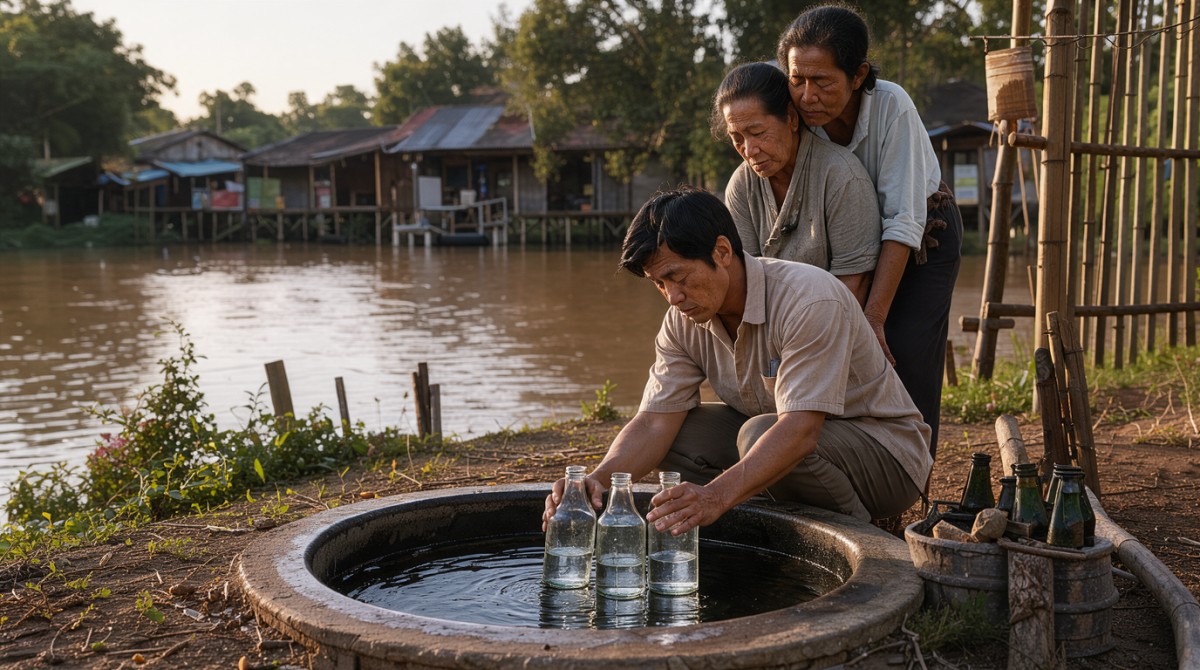
The Mekong River, a lifeline for communities from the northern highlands to the fertile plains of Thailand, is facing a quiet crisis that is now touching the health of residents in Nong Khai province. Recent testing has revealed that arsenic levels in the river and in the bodies of local people have risen beyond safe limits, prompting concern among fishermen, health officials and the wider Mekong Basin community. While the river continues to flow, the shadow of contamination is prompting a reassessment of how river‑dependent livelihoods are sustained, how traditional diets are prepared, and how Buddhist teachings on compassion and stewardship can guide a collective response.
Arsenic in the water and in the body
Measurements taken by the Udon Thani Environment and Pollution Control Office in September showed arsenic concentrations of 0.011 mg per litre in Sangkhom district, 0.010 mg per litre in Mueang Nong Khai district and 0.012 mg per litre in Phon Phisai district. These figures, while still low in absolute terms, are notable because they exceed the reference level used by Thai health authorities to gauge safe exposure.
The Department of Disease Control’s Division of Occupational and Environmental Diseases expanded the picture by testing urine samples from 177 residents in the Hat Kham and Hin Ngom subdistricts of Mueang Nong Khai. The laboratory results placed the group in a moderate‑to‑high risk category. More strikingly, 17 individuals showed arsenic concentrations above the reference value of 100 µg per litre. All 17 were referred to Nong Khai Hospital for further examinations, including physical checks, blood cell counts and liver function tests. The fact that the arsenic is appearing in human urine indicates that the river’s contamination is moving beyond the water itself and into the bodies of those who rely on it for food, work and daily living.
Fishermen see a changing river
For many families along the Mekong, the river is more than a source of water; it is a cultural anchor. Khamfai Saisuda, a fisherman who began his career at age 20, described a river that has visibly altered. “I used to catch many kinds of fish,” he said, “but now I find Kaeng fish, the Goonch catfish, with lumps and sores on their bodies, and my catches have clearly fallen.” The physical ailments observed on the fish echo the laboratory findings of heavy metal contamination, suggesting that the river’s ecosystem is under stress.
Beyond the personal loss of catch volume, the perception of risk is reshaping market behavior. Fish sellers report that customers are hesitant to purchase Mekong fish, a shift that threatens the income of entire villages that depend on daily sales at local markets. The decline in confidence underscores how environmental health issues ripple through the social fabric, affecting not only the environment but also the economic stability of riverine communities.
Community monitoring and regional trends
The Mekong Basin Community Organisation Council Network, which spans seven provinces, has taken a proactive stance. Chair Ormbun Thipsuna explained that the network began its own monthly testing after members discovered sick fish. Their findings confirm that arsenic levels are rising not only in Nong Khai but also in neighboring provinces of Loei, Bueng Kan and Nakhon Phanom. In Loei, arsenic concentrations are reported to be more than four times the reference level, while in Nong Khai the levels are two to three times higher.
This regional pattern suggests that the contamination is not an isolated incident but part of a broader environmental shift affecting the lower Mekong basin. The network’s ongoing monitoring provides a grassroots data set that complements official testing, offering a more nuanced picture of how the river’s health is evolving across provincial boundaries.
Health advice rooted in tradition
While the presence of arsenic raises alarm, Ormbun offered a measured reassurance: the flesh of Mekong fish remains safe to eat, though internal organs and intestines should be avoided. She also advised against consuming bottom‑dwelling creatures such as shellfish and prawns, which are more likely to accumulate heavy metals from sediment. This guidance aligns with long‑standing Thai culinary practices that often separate meat from organs, and it reflects a pragmatic approach to risk mitigation.
In Buddhist thought, the principle of “ahimsa” – non‑harm – extends to the environment. By adjusting dietary habits and avoiding parts of the fish most likely to carry contaminants, communities can protect their health while honoring a tradition of mindful consumption. Such adaptations illustrate how cultural values can shape practical responses to modern environmental challenges.
Economic ripple effects
The decline in fish sales is already being felt in local markets. Vendors note that customers, aware of the contamination reports, are buying less Mekong fish and turning to alternative protein sources. This shift could have longer‑term implications for regional trade, as the Mekong has historically been a conduit for both goods and cultural exchange. If consumer confidence does not recover, the river’s role as an economic artery may be diminished.
Moreover, the fishing sector is a key employer in Nong Khai. A reduction in catch volume translates directly into reduced wages for boat crews, processors and market sellers. The emerging health concerns could therefore exacerbate existing socioeconomic vulnerabilities, especially among households that lack diversified income streams.
Policy response and future monitoring
Thai authorities have begun to respond by classifying the affected population as moderate‑to‑high risk and by referring the 17 individuals with elevated arsenic levels for comprehensive medical evaluation. However, the source material does not detail any immediate remediation measures for the river itself. The ongoing monthly testing by the Mekong Basin Community Organisation Council Network suggests a gap that could be filled by more coordinated governmental monitoring and cross‑border cooperation, given that the Mekong flows through multiple nations.
Future policy steps might include stricter regulation of upstream industrial discharges, investment in water treatment infrastructure and public education campaigns that draw on Buddhist teachings of stewardship. By linking scientific data with cultural narratives, policymakers can foster community engagement and collective action.
Looking ahead: resilience rooted in community
The story of arsenic in the Mekong is still unfolding. For the people of Nong Khai, the river remains central to daily life, spiritual practice and communal identity. As they navigate the health risks, they draw on a deep well of cultural resilience. The act of testing water, monitoring fish health and adjusting diets reflects a community that is actively confronting the challenge rather than passively enduring it.
In the months ahead, the collaboration between health officials, environmental agencies and community networks will be crucial. Continued testing, transparent communication and culturally informed guidance can help ensure that the Mekong remains a source of sustenance and spiritual renewal for generations to come. By honoring both scientific insight and Buddhist compassion, the river’s guardians hope to restore balance to the waters that have long nourished their lands and souls.
This article was produced with AI-assisted research and editorial support. Reporting is based on the source material cited below. Sources: Khaosod English; khaosodenglish.com; Global1.News (18 November 2026).
By Ann Srisawat, Staff Writer
What's Your Reaction?
 Like
0
 Dislike
0
 Love
0
 Funny
0
 Wow
0
 Sad
0
 Angry
0

Southeast Asia Correspondent at Global1.News. Based in Bangkok, covering Thai and Southeast Asian politics, economy, technology, and culture. Deep regional perspective on one of the world's most dynamic regions.













Comments (0)