
47 Palestinian Families Face Imminent Displacement in West Bank as Israel Cuts Water Supplies
Israeli rights group B'Tselem reports 47 Palestinian families (over 300 people, nearly half children) face imminent displacement in the northern Jordan Valley after Israeli forces cut water supplies to Ras al-Ahmar, Al-Thaala, and eastern Atouf. The cutoffs coincide with construction of a 22-kilometer separation barrier threatening 50,000 dunams of Palestinian land. Since March, olive trees, crops, greenhouses, and water lines have been destroyed. The families depend on...
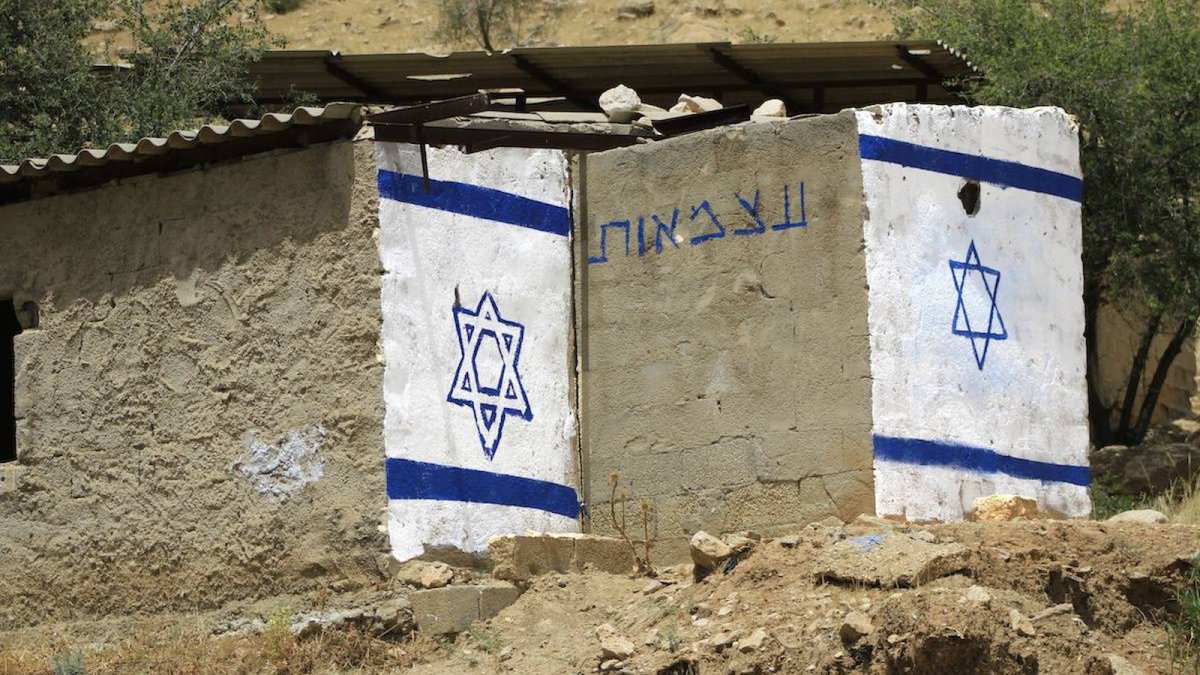
Water Cutoffs in the Northern Jordan Valley Threaten 300 Palestinians With Displacement
RAMALLAH — The Israeli human rights group B'Tselem reported Tuesday that 47 Palestinian families, comprising more than 300 people—nearly half of them children—face the risk of imminent displacement from their homes in the northern Jordan Valley after Israeli forces cut the water supply to their communities. The development marks the latest escalation in a sustained campaign of pressure on Palestinian herding and farming communities in one of the most strategically sensitive areas of the occupied West Bank.
According to B'Tselem's statement, Israeli forces and settlers last week severed the last remaining water pipes serving the communities of Ras al-Ahmar, Al-Thaala, and eastern Atouf. The group said that in most cases, Israeli forces are actively preventing water from being transported into the area by tanker or other means, effectively strangling the communities' ability to sustain themselves. The families, who depend almost entirely on agriculture and livestock for their livelihoods, now face the stark choice of remaining without water or abandoning their land.
Repeated Attacks on Infrastructure Aimed at Expulsion
B'Tselem's report frames the water cutoffs not as an isolated incident but as part of a deliberate pattern. "Repeated attacks on water infrastructure aim to expel the few remaining Palestinian communities in the area," the group said in its statement. The timing is significant: the cutoffs coincide with excavation work to build a new segment of Israel's separation barrier in the northern Jordan Valley, a project that has already caused severe damage to Palestinian farmland and water networks.
The communities affected are small, rural, and largely unrecognized by Israeli authorities, making them particularly vulnerable. Ras al-Ahmar, Al-Thaala, and Atouf are home to families who have lived on this land for generations, raising sheep and goats and cultivating small plots of grains and vegetables. Without water, their herds cannot survive, and their crops will fail. For these families, displacement is not a distant threat—it is a daily reality closing in around them.
The Barrier Route: A 22-Kilometer Seizure of Land
The wall route announced by the Israeli army approximately one year ago extends nearly 22 kilometers from Ein Shibli to the Tayasir checkpoint area. According to B'Tselem, the barrier passes directly through the lands of Khirbet Atouf, Ras al-Ahmar, and other communities, cutting through farmland owned by Palestinians from Tubas, Tammun, Atouf, and surrounding areas. The route slices through orchards, greenhouses, wells, and water networks, severing the physical and economic lifelines of these communities.
B'Tselem warned that the wall is expected to isolate residents from their land and allow the seizure of around 50,000 dunams—an area equivalent to roughly 12,350 acres. For context, the northern Jordan Valley is one of the most arid and sparsely populated regions of the West Bank, yet it holds strategic importance for both Palestinians and Israel. The valley is part of Area C, which remains under full Israeli military control, and Palestinian construction and development there are heavily restricted.
Destruction Since March: Olive Trees, Greenhouses, and Water Lines
Since excavation work on the barrier began in March, the area has suffered severe and systematic damage. B'Tselem documented the uprooting of olive trees, the destruction of crops and greenhouses, the demolition of kilometers of water and irrigation lines, and extensive damage to farmland that provides a livelihood for dozens of residents. The group also reported a rise in settler attacks on Palestinian communities along the wall route, a pattern that has become increasingly common as the barrier project advances.
The destruction of water infrastructure is particularly devastating in this region, where annual rainfall is low and communities rely on springs, wells, and piped water for both domestic use and irrigation. The cutting of the last water pipes to Ras al-Ahmar, Al-Thaala, and eastern Atouf is not merely an inconvenience—it is a death sentence for the agricultural economy that sustains these families. The Israeli army and settlers have escalated attacks on Palestinians across the occupied West Bank since the outbreak of the Gaza war in October 2023, and the northern Jordan Valley has been a focal point of this pressure.
Broader Context: A Pattern of Forced Displacement
The situation in the northern Jordan Valley is part of a wider trend documented by Palestinian, Israeli, and international rights organizations. Dozens of Palestinians from several West Bank communities have been forced to leave their areas due to Israeli military measures and settler attacks since the Gaza war began. These displacements have occurred in the Jordan Valley, the southern Hebron Hills, and other areas where Palestinian communities are scattered and isolated.
For the families now facing imminent displacement, the loss of water is the final push. Many have already endured years of home demolitions, movement restrictions, and settler violence. The Israeli authorities have long pursued a policy of "quiet transfer" in Area C—using bureaucratic obstacles, military orders, and infrastructure destruction to make life so untenable that Palestinians leave voluntarily. The water cutoffs in the northern Jordan Valley are a stark illustration of this policy in action.
Human Impact: Lives Built on Land and Water
The human cost of these measures is difficult to overstate. The families in Ras al-Ahmar, Al-Thaala, and eastern Atouf are not abstract statistics; they are shepherds who know each of their animals by name, farmers who have tended the same olive trees for decades, and children who have grown up in homes their great-grandparents built. The water cutoff means that mothers cannot cook or clean, fathers cannot water their flocks, and children cannot attend school because they must first walk long distances to find water.
B'Tselem's warning of "imminent displacement" is a recognition that these communities are at a breaking point. Without water, they cannot stay. And if they leave, the land they have cultivated for generations will be absorbed into the expanding barrier zone, further entrenching Israeli control over the Jordan Valley—an area that Israeli officials have long stated they intend to keep under permanent Israeli sovereignty.
International Law and the Path Forward
Under international humanitarian law, the transfer of civilian populations into occupied territory and the forced displacement of protected persons are war crimes. The construction of the separation barrier on occupied land has been repeatedly condemned by the International Court of Justice, which issued an advisory opinion in 2004 declaring the wall illegal where it deviates from the Green Line. Yet the project continues, and the human cost continues to mount.
For the families in the northern Jordan Valley, the immediate question is whether they will have water tomorrow. The longer-term question is whether the international community will act to prevent the slow, systematic erasure of Palestinian presence from an area that is central to any viable Palestinian state. The water cutoffs, the barrier construction, and the settler attacks are not separate issues—they are threads in the same fabric of displacement.
As B'Tselem's report makes clear, the clock is ticking for these 47 families. The world is watching, but watching has never been enough. The question now is whether the families of Ras al-Ahmar, Al-Thaala, and eastern Atouf will be allowed to stay on their land, or whether they will join the growing ranks of Palestinians displaced by a conflict that shows no sign of abating.
This article was produced with AI-assisted research and editorial support. Sources: Middle East Monitor, Anadolu, B’Tselem.
By Fatima Al-Rashid, Staff Writer
What's Your Reaction?
 Like
0
Like
0
 Dislike
0
Dislike
0
 Love
0
Love
0
 Funny
0
Funny
0
 Wow
0
Wow
0
 Sad
0
Sad
0
 Angry
0
Angry
0

Gulf/MENA Correspondent at Global1.News. Based in Doha, covering Gulf politics, energy markets, diplomacy, and development across the Middle East and North Africa. Tracks the economic transformation of the Gulf states.













Comments (0)