
Oil Spill on Iran's Qeshm Island Raises Alarm in Strait of Hormuz
An oil spill has blackened beaches on Iran's Qeshm Island in the Strait of Hormuz, with Tehran blaming a foreign bulk carrier as TankerTrackers points to the Minoan Pioneer. The slick deepens the environmental toll of the US-Iran war as Hormuz stays closed.
The five-month war between the United States and Iran has transformed the Strait of Hormuz from the world's most critical energy chokepoint into a militarized zone where environmental catastrophe now unfolds alongside ballistic missile exchanges. As Tehran and Washington trade claims over control of the waterway, a fresh oil slick washing onto Iran's Qeshm Island underscores the collateral damage of a conflict that has already halted most commercial shipping through the strait.
Oil on Qeshm's Shores: A New Front in the Hormuz War Emerges as Tehran Points to Foreign Ships
Dubai, UAE - August 13, 2026 - The black tide that began as a one-kilometer stain on Souza Beach has now spread across three coastal sites on Iran's Qeshm Island, threatening protected mangrove forests and sea turtle nesting grounds. The spill, first detected in satellite imagery from the Copernicus Sentinel/ESA system via Bloomberg, arrives as Iran's closure of the Strait of Hormuz enters its sixth month, with both sides accusing the other of reckless escalation in a waterway that carries roughly one-fifth of global oil consumption.
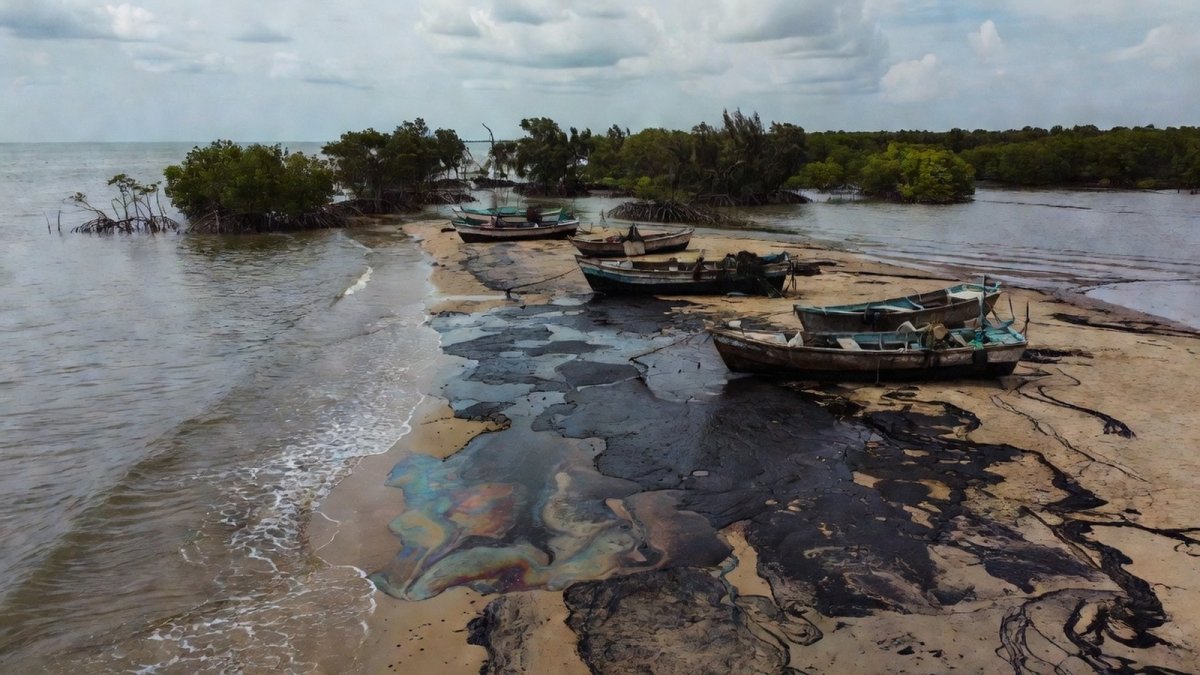
The Spill on Qeshm's Shores
Oil residue now lines the shore near fishing boats along a stretch that extends from Souza Beach to Shib Draz and the Hara mangrove forests near Naqasheh village. The slick has also reached Shidvar Island, a protected nesting site for hawksbill and green turtles, according to footage aired by Al Arabiya English on August 13. Satellite imagery confirms a dark, elongated trail in waters off Shib Deraz, a breeding ground for endangered hawksbill sea turtles, with black deposits visible on beaches.
The Qeshm Environmental Protection Department has collected water and sediment samples, while local port and municipal authorities initiated cleanup operations. The semi-official Iranian Students' News Agency (ISNA) reported responders using absorbent sheets to contain and collect the pollution. No marine life casualties or structural damage to coastal facilities have been reported so far, but environmental groups warn that the Hara mangroves - a vital nursery for fish and crustaceans - face long-term damage if the slick penetrates the root systems.
The environmental toll on Qeshm must be measured against the deeper scars of this waterway. The 1991 Gulf War spill, which released an estimated 240-336 million gallons of crude off Kuwait, remains the largest in history, and its legacy is a stark reminder that wartime oil pollution does not recede with the tides. Three decades later, the region's mangroves and turtle nesting grounds-ecosystems that are the lifeblood of islands like Qeshm-are still in a state of arrested recovery. The current slick, while smaller in volume, strikes at a coastline already weakened by cumulative industrial stress and chronic underinvestment in environmental protection. What makes this incident particularly insidious is the context: a single act of sabotage can undo years of fragile ecological gains, and the mangroves that serve as nurseries for regional fisheries face a slow, silent death that will outlast any political settlement.
Tehran Points the Finger - and the Mirror
Iran Foreign Ministry spokesman Esmaeil Baqaei did not mince words. In a statement carried by state media, Baqaei said preliminary evidence points to a foreign bulk carrier as the source of the spill, and that all commercial shipping beneficiaries in the Strait of Hormuz have a legal and moral duty to remediate environmental damage in the Persian Gulf and Gulf of Oman. He called for environmental protection to be a core part of any future administration of the Strait of Hormuz, invoking the "polluter pays" principle.
Baqaei documented contamination at three coastal sites and across parts of the sea surface, citing years of pollution events causing damage he estimated at "trillions of dollars" to Iran's coastal regions. His list of stakeholders was pointed: energy-consuming nations, insurers, and military aggressors. "Iran, with the region's longest coastline, cannot remain indifferent," he said, a clear reference to the US Fifth Fleet operations that have repeatedly struck Qeshm during the war.
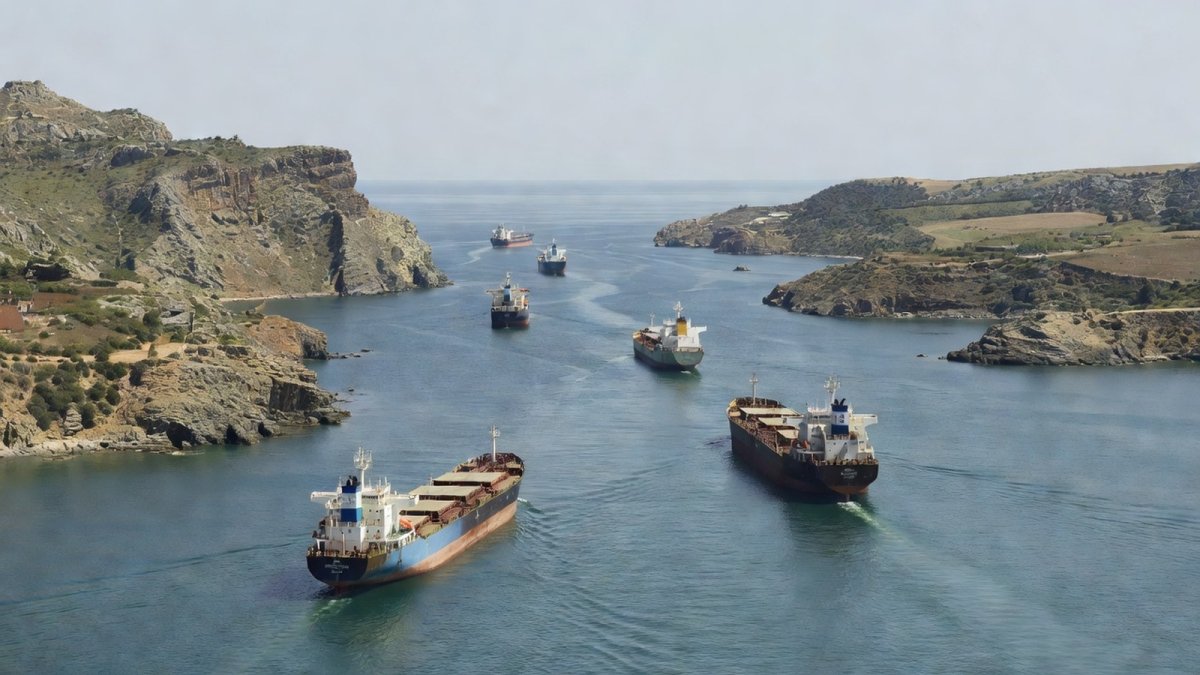
The Minoan Pioneer and the Trail of the Slick
Independent tracking firm TankerTrackers.com has identified the Liberia-flagged, Greek-managed bulk carrier Minoan Pioneer as the likely source, using satellite imagery that shows leaked petroleum products drifting through the Strait of Hormuz into Iranian waters before washing up on Qeshm's southern shores. The firm described the incident as a self-inflicted "own goal" by the Islamic Republic, given that the vessel was struck in waters near Oman.
The Minoan Pioneer, a 93,283 deadweight tonne vessel operated by Modion Maritime Management (IMO 9471630), was hit by a projectile around 22:00 UTC on August 3, approximately 20 nautical miles northeast of Khasab in Oman's Musandam Governorate. The strike caused a fire, a complete engine-room blackout, and left one crew member missing; the crew subsequently abandoned ship. Iran has not confirmed involvement in the attack, and the International Maritime Organization (IMO) has recorded 65 confirmed incidents in the Strait of Hormuz and across the Middle East since the beginning of March - a pace reminiscent of the 1980s Tanker War, when US escort operations turned the Gulf into a shooting gallery.
A Wartime Waterway Under Strain
The spill is the latest symptom of a waterway under unprecedented stress. Since February 28, the United States and Israel have been at war with Iran and its regional allies, and Tehran responded by closing the Strait of Hormuz entirely. The Persian Gulf Strait Authority (PGSA) has stated the waterway "will not be reopened until Iran's conditions are accepted," while US officials counter-claim: President Trump has asserted "100% control" of the strait, and Energy Secretary Chris Wright claimed Hormuz oil flows surpassed prewar levels with exports topping 20 million barrels a day - figures the PGSA has flatly refuted.
Qeshm itself has repeatedly been hit by US airstrikes during the conflict, making the island both a target and a staging ground. Earlier in the war, Tehran approved a route for certain ships seeking to traverse Hormuz, insisting they travel between Qeshm and Larak islands near Iran's southern coast - a narrow, easily monitored corridor that gave Iran leverage over any vessel attempting passage. Now, Iran is tying the reopening of the vital waterway to US concessions, including an end to the war and blockade, a position that echoes the 2019 tanker attacks and the Stena Impero seizure, when Tehran used maritime harassment as diplomatic leverage.
Beyond the visible sheen on the water, the attack has triggered a commercial shockwave that reverberates through global shipping lanes. War-risk insurance premiums for tankers transiting the Persian Gulf and the Gulf of Oman have spiked sharply since February, with underwriters now treating these waters as among the highest-risk on earth. The immediate consequence is a costly calculus for shipowners: either absorb the surcharge, reroute cargo around the Arabian Peninsula-adding weeks to transit times-or simply refuse to call at Gulf ports. This is not a marginal cost; it is a structural tax on every barrel of oil and every container of goods moving through the Strait of Hormuz. The second-order effect is a tightening of freight capacity and a creeping upward pressure on global supply chain costs, which ultimately lands on consumers far from the conflict. Insurers are now pricing in not just the risk of a strike, but the risk of a miscalculation that closes the strait entirely.
Oman's Separate Slick and the Sanctions Complication
Iran is not alone in facing an environmental crisis. Oman is responding to a separate oil slick near its southeastern coast after the sanctioned tanker Caroline Bezengi, carrying around 800,000 barrels of Russian crude, ran aground on June 30. Up to 40 kilometers of coast near Ras Madraka and Masirah Island could be affected, according to Omani environmental officials. The vessel first reported trouble off Yemen on June 8 following a suspected blast, adding another layer of complexity to a region already saturated with sanctions-evading tankers.
The compensation picture is murky. The International Oil Pollution Compensation (IOPC) Funds rules exclude compensation for pollution damage caused by an act of war or hostilities, potentially complicating recovery of cleanup costs for both Oman and Iran. This legal gap, a relic of the 1991 Gulf War oil spill era, leaves coastal states bearing the financial burden of wartime pollution while insurers and flag states sidestep liability.
Regional Implications
The diplomatic backdrop to this spill is as murky as the water itself. Oman has long played the role of quiet intermediary between Washington and Tehran, and reported talks on a safe shipping corridor-a mechanism to de-conflict naval movements and protect commercial traffic-were already fragile before the Minoan Pioneer strike. Those talks remain unresolved, and the irony is bitter: Muscat's own pristine coastline has now been fouled by the Caroline Bezengi slick, a direct hit on the very state trying to broker peace. A durable de-escalation would require more than a ceasefire on attacks; it would demand a verifiable framework for maritime security that includes real-time communication channels, third-party inspection of damaged vessels, and a compensation fund for environmental damage that holds perpetrators accountable regardless of flag or affiliation. Without such mechanisms, the Gulf will remain a hostage to the next provocation, and its waters will continue to pay the price for political stalemate.
The strategic calculus extends far beyond beach cleanup. The International Energy Agency (IEA) expects global oil supply to fall by 4.3 million barrels per day, or about 4%, this year as renewed Middle East hostilities disrupt production and shipping, deepening an oil market deficit. Brent crude futures hover around $88.93 per barrel, with West Texas Intermediate at $83.13 - prices that reflect a market bracing for prolonged disruption rather than a quick resolution.
For Gulf states, the spill and the broader closure of Hormuz represent a dual threat: environmental degradation of shared waters and the erosion of the maritime insurance framework that underpins regional trade. For Washington, the challenge is maintaining the credibility of its "100% control" claim while Iranian forces continue to demonstrate their ability to interdict shipping and, now, to weaponize environmental damage as a diplomatic tool. For Tehran, the spill offers a narrative of victimhood - a foreign vessel polluting Iranian shores while the US blockade strangles the economy.
The coming weeks will test whether the "polluter pays" principle can survive wartime conditions, or whether the Strait of Hormuz becomes a permanent environmental casualty of a conflict that shows no signs of abating. For the fishermen of Qeshm, whose boats now sit in oil-stained water, the war has already claimed their livelihood - regardless of which flag the next tanker flies.
By Malik Hassan, Staff Writer
This article was produced with AI-assisted research and editorial support. Reporting is based on sources cited in the article.
What's Your Reaction?
 Like
0
Like
0
 Dislike
0
Dislike
0
 Love
0
Love
0
 Funny
0
Funny
0
 Wow
0
Wow
0
 Sad
0
Sad
0
 Angry
0
Angry
0

Middle East Correspondent at Global1.News. Based in Beirut, covering politics, conflict, energy, and society across the Middle East. Brings context and depth to a region often reduced to headlines.















Comments (0)