
Gatchalian thanks Sotto for ‘proper’ office turnover
The exchange, captured in photographs of polished wooden floors, gleaming granite countertops and untouched sofas, underscores a broader narrative of respect, institutional continuity and the politics of propriety that reverberates far beyond the Senate’s marble corridors.
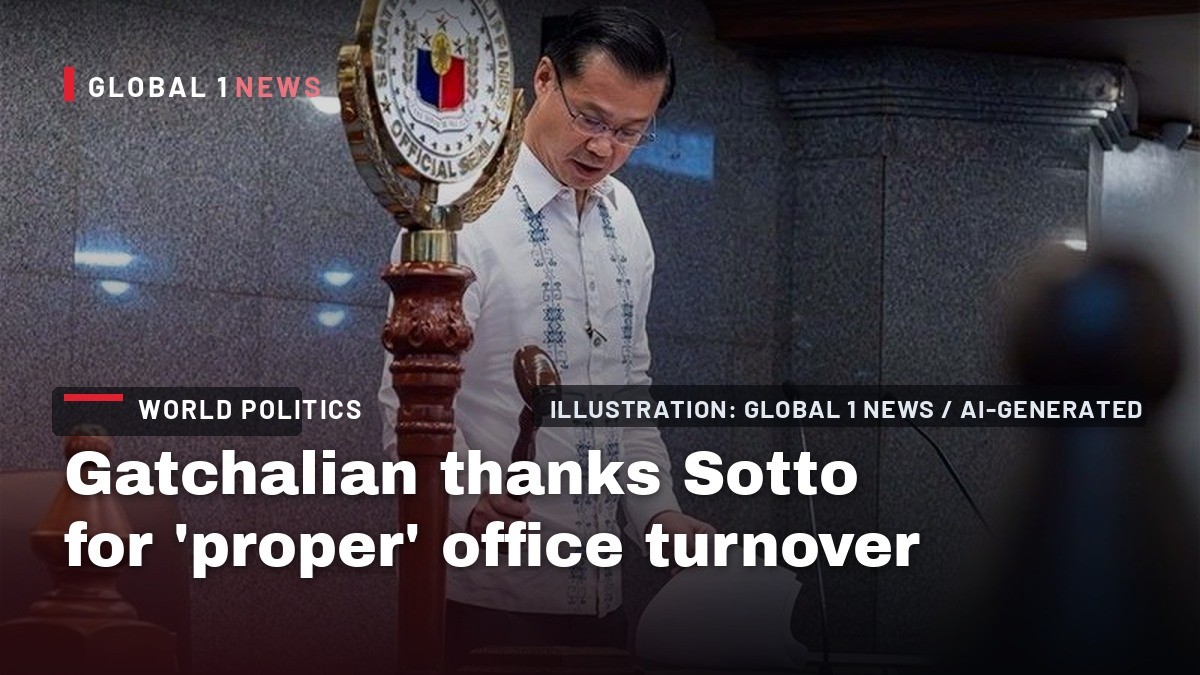
Manila — In a gesture that may seem modest to outsiders but carries symbolic weight in the halls of power, Senate President Sherwin Gatchalian publicly thanked his predecessor, Senate President Pro Tempore Vicente “Tito” Sotto III, for handing over the Senate President’s office in immaculate condition. The exchange, captured in photographs of polished wooden floors, gleaming granite countertops and untouched sofas, underscores a broader narrative of respect, institutional continuity and the politics of propriety that reverberates far beyond the Senate’s marble corridors.
From polished floors to political footing
When Gatchalian stepped into the Senate President’s office on Tuesday, he did not have to worry about arranging for repairs or negotiating the return of furniture. “It’s beautiful. I am thankful to Sen. Sotto because he even left me his personal chair and sofa,” the new Senate chief said, emphasizing that the ready‑made setup would let him “hit the ground running.” For a nation where the symbolism of a well‑kept office can echo the perceived legitimacy of its occupants, the gesture was more than a matter of convenience.
In the Philippines, the Senate President’s office is not merely a workspace; it is a stage where legislative leadership is displayed to the public, to staff and to fellow lawmakers. By preserving the office’s fixtures, Sotto signaled a desire for a smooth transition and a respect for the institution that Gatchalian now leads. The polished wood and granite surfaces, often featured in media coverage of Senate activities, serve as visual metaphors for order and stability—qualities that Gatchalian pledged to bring to his tenure.
A stark contrast: Estrada’s stripped office
The smooth handover stands in sharp contrast to the turnover of the Senate President Pro Tempore office by former Senate President Pro Tempore Jinggoy Estrada, who was suspended over flood‑control controversies. Estrada left his office “stripped of all fixtures and defaced,” a move he defended as “standard practice.” The visual disparity between Estrada’s barren space and Sotto’s well‑maintained office highlights divergent attitudes toward the stewardship of public property.
Gatchalian did not mince words when he addressed the difference. “Respect and courtesy should be the standard,” he asserted, positioning his own approach as a corrective to what he framed as a neglect of decorum. For ordinary Filipinos, especially those who watch the Senate’s proceedings on television or follow the daily news, such gestures can shape perceptions of accountability and respect among elected officials.
Political reshuffling: From Sotto to Cayetano to Gatchalian
The turnover took place against a backdrop of rapid leadership changes within the Senate. Sotto served as Senate President from September 2025 until May 2026, when he was ousted by Alan Peter Cayetano. Cayetano’s tenure lasted only a month before Gatchalian succeeded him, and Sotto was subsequently elected as Gatchalian’s Senate President Pro Tempore. This swift succession of leaders reflects the fluid alliances and power dynamics that characterize Philippine legislative politics.
Such rapid shifts can be unsettling for the public, who often look to the Senate for consistent policy direction. Yet the orderly handover of the President’s office, as demonstrated by Sotto, offers a counter‑balance to the turbulence of political maneuvering. It suggests that, despite factional battles, there remains a shared commitment among some senior senators to preserve the dignity of the institution.
The Supreme Court’s vindication of Sotto
While the office turnover was a focal point of the day, another development underscored Sotto’s resilience in the face of legal challenges. Earlier this year, the Supreme Court dismissed a petition for indirect contempt filed against Sotto by a coalition of lawyers, a vice mayor, a retired brigadier general and a private citizen. The petition stemmed from Sotto’s opposition to a 2025 ruling that nullified the articles of impeachment against Vice President Sara Duterte.
The high tribunal ruled unanimously that Sotto’s remarks did not meet the “incitement test” or the “clear and present danger test,” standards used to gauge whether speech could lead to violence. By emphasizing that “provocative, harsh or critical statements are still protected speech,” the Court reinforced the principle that robust public debate—especially on matters of national importance—remains a cornerstone of Philippine democracy.
Sotto’s stance on judicial respect
In a statement following the Court’s decision, Sotto clarified that his disagreement with the impeachment ruling did not equate to a loss of respect for the judiciary. “I disagreed with one of its decisions. That does not mean I have lost respect for the Court. I have always held it in high regard as an institution, and I return the respect it has shown me in its decision,” he said. This articulation of dissent within the bounds of constitutional respect resonates with a broader Filipino tradition of “bayanihan”—working together even when opinions differ.
For ordinary citizens, especially those who have witnessed the politicization of the judiciary, Sotto’s remarks may offer reassurance that dissent does not automatically translate into contempt. It underscores a democratic norm: that elected officials can critique judicial decisions while still upholding the integrity of the courts.
Implications for governance and public perception
The juxtaposition of a well‑kept office and a contested legal battle highlights two intertwined aspects of governance: the material symbols of authority and the substantive exercise of power. By preserving the physical space of the Senate Presidency, Sotto contributed to a narrative of orderly governance that Gatchalian can now build upon. Simultaneously, the Supreme Court’s affirmation of protected speech reinforces the legal framework within which political disagreements unfold.
For barangay leaders, sari‑sari store owners and overseas Filipino workers watching the developments, these events signal that institutional respect—whether for a piece of furniture or a judicial ruling—remains a contested yet essential element of democratic life. The Senate’s ability to present a united front, even amid leadership changes, can influence public trust in legislative processes that affect everything from flood control policies to education funding.
Looking ahead: Continuity amid change
As Gatchalian settles into the Senate President’s office, his immediate priority, as he put it, is to “move in, hit the ground running.” The readiness afforded by Sotto’s meticulous turnover allows the new Senate chief to focus on legislative agendas rather than logistical concerns. Meanwhile, the broader political landscape continues to evolve, with former Senate President Pro Tempore Jinggoy Estrada still under suspension and the Senate’s internal dynamics shifting with each new alliance.
What remains clear is that the gestures of respect—whether in handing over a chair or defending free speech—carry weight in the Philippines’ democratic fabric. They shape how ordinary Filipinos perceive their leaders and, ultimately, how those leaders are held accountable. As the Senate moves forward, the hope is that the courtesy displayed in the office turnover will translate into a legislative agenda that addresses the pressing needs of the nation, from flood‑control reforms to the sustenance of a vibrant, participatory democracy.
This article was produced with AI-assisted research and editorial support. Reporting is based on the source material cited below. Sources: Philstar.com; Global1.News (14 October 2026).
By Bella Reyes, Staff Writer
What's Your Reaction?
 Like
0
Like
0
 Dislike
0
Dislike
0
 Love
0
Love
0
 Funny
0
Funny
0
 Wow
0
Wow
0
 Sad
0
Sad
0
 Angry
0
Angry
0

Philippines/Southeast Asia Correspondent at Global1.News. Manila-based journalist covering Philippine politics, environment, maritime security, and social issues. Passionate about marine conservation and the communities protecting the Philippines' natural heritage.











Comments (0)