
India jails 'Cockroach' leaders for 5 days over protest ban violation
India’s recent crackdown on a youthful dissent movement underscores a broader pattern of state authority confronting civil society, a dynamic that reverberates across the Middle East where governments balance security imperatives against popular protest.

India’s recent crackdown on a youthful dissent movement underscores a broader pattern of state authority confronting civil society, a dynamic that reverberates across the Middle East where governments balance security imperatives against popular protest. The sentencing of two “Cockroach” leaders to five days’ detention for scaling the barricades at New Delhi’s historic Jantar Mantar site reflects not only a domestic contest over electoral legitimacy but also a symbolic clash over the right to public space—a theme familiar to many regimes navigating the pressures of a digitally connected, increasingly restless citizenry.
From satire to street protest: the rise of the “Cockroach” movement
The “Cockroach” movement originated as an online satirical response to a remark by India’s chief justice, who likened unemployed youth to parasites. Young Indians adopted the cockroach as a symbol of resilience, turning a disparaging comment into a rallying point for dissent. This transformation from meme to mobilisation mirrors similar trajectories in the region, where digital humor has often seeded street activism, as seen in the Arab Spring’s early use of memes to undermine authoritarian narratives.
Founder Abhijeet Dipke’s criticism of Prime Minister Narendra Modi on the platform X highlights the movement’s reliance on social media to amplify grievances. By framing the state’s response as “cowardly tactics,” Dipke taps into a broader narrative of governmental overreach, a narrative that resonates with protestors across South Asia and the Middle East who perceive legalistic measures as tools to stifle dissent.
The Jantar Mantar flashpoint and its legal framing
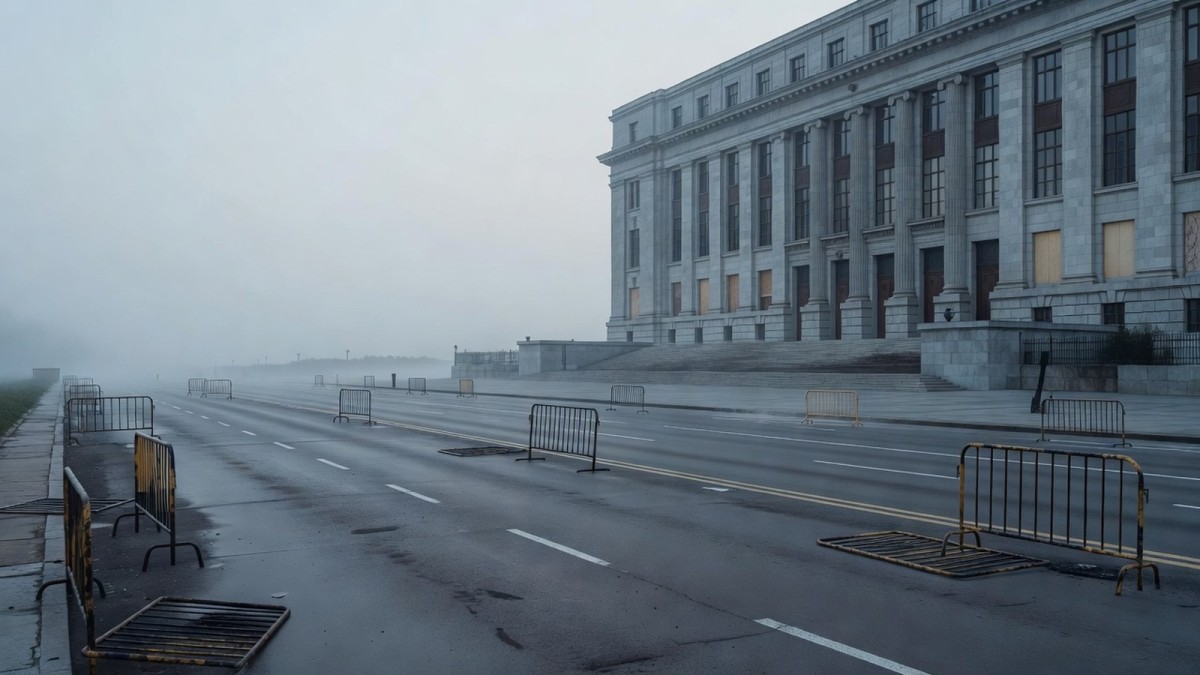
On Tuesday, Ashutosh Ranka and Saurav Das, two leaders of the movement, joined roughly a dozen demonstrators in scaling the barricades at Jantar Mantar, a historic observatory that has long served as a venue for public protest in New Delhi. Police, asserting that the site was no longer an official protest venue, charged the activists with trespassing and defying prohibitory orders. The subsequent five‑day jail sentence, handed down by a local court, signals a tightening of legal levers to curb assembly, echoing similar uses of public‑order statutes in Gulf states to limit gatherings deemed politically sensitive.
The authorities’ emphasis on the site’s “official” status reflects a strategic framing: by redefining the legal parameters of protest spaces, the state can justify arrests while maintaining a veneer of procedural legitimacy. This approach parallels how some Middle Eastern governments have reclassified traditional protest squares as “security zones,” thereby limiting public access under the pretext of public safety.
Political stakes: voter‑list revision and electoral legitimacy
The protests that culminated at Jantar Mantar were sparked by a nationwide revision of voter lists that has removed more than 130 million names since the previous year. Critics argue that the exercise is politically motivated and could disenfranchise millions of eligible voters, raising questions about the integrity of India’s electoral process. While the Election Commission and the Modi administration contend that the revision aims to eliminate duplicate and ineligible entries, the scale of the purge fuels suspicion of partisan intent.
In the Middle East, electoral reforms—often framed as anti‑fraud measures—have similarly been leveraged to consolidate ruling party dominance. The Indian case thus offers a comparative lens on how demographic engineering can become a flashpoint for mass mobilisation, especially among youth who feel their civic participation is being eroded.
Opposition response and the symbolism of Jantar Mantar
Opposition leader Rahul Gandhi’s condemnation of the arrests on X, describing them as “an act of cowardice,” underscores the political capital attached to Jantar Mantar. By asserting that “Jantar Mantar belongs to the people of India,” Gandhi invokes a historic narrative of public space as a democratic commons, a motif that resonates across the region where public squares often serve as stages for political contestation.
The rhetorical framing of the site as a collective heritage amplifies the perceived overreach of the authorities. In many Middle Eastern contexts, governments have similarly invoked national heritage to justify restrictions on public assemblies, thereby intertwining cultural symbolism with security policy.
Impact on governance: a rare setback for Modi
The “Cockroach” protests have already yielded a tangible political outcome: the resignation of Modi’s education minister in July, following earlier demonstrations led by the movement. This episode marks a rare instance of direct ministerial accountability in a government that has been in power for more than twelve years. It illustrates how sustained youth mobilisation can translate into concrete policy shifts, even within entrenched political structures.
Such setbacks are noteworthy when contrasted with the broader regional trend of limited governmental responsiveness to protest. While some Gulf monarchies have introduced superficial reforms in response to unrest, India’s experience demonstrates that organized, symbol‑driven movements can compel leadership to make high‑profile concessions, albeit limited in scope.
Strategic implications for regional actors
For Middle Eastern policymakers, the Indian episode offers several strategic takeaways. First, the rapid escalation from online satire to street protest highlights the potency of digital mobilisation—a factor that regional regimes must monitor as they grapple with the diffusion of dissent through social platforms. Second, the legal redefinition of protest venues underscores the importance of controlling spatial narratives; authorities in the Gulf and beyond may seek to pre‑emptively designate “authorized” protest zones to manage dissent.
Finally, the voter‑list revision controversy illustrates how administrative reforms can become politicised flashpoints. Regional governments contemplating electoral overhauls should anticipate potential backlash, particularly from youthful demographics that are increasingly attuned to issues of representation and inclusion.
Looking ahead: the resilience of youth dissent
Despite the brief incarceration of Ranka and Das, the “Cockroach” movement’s capacity to sustain its symbolic identity—embodied by the resilient insect—suggests a durability that may outlast immediate legal setbacks. The movement’s ability to translate online humour into tangible political pressure, as evidenced by the education minister’s resignation, indicates a strategic acumen that could inform future protest tactics across the region.
In the broader context of Sunni‑Shia competition, great‑power rivalry, and energy security, domestic unrest in a major democracy like India adds another layer to the complex tapestry of regional stability. While the immediate focus remains on the legal outcomes for the detained activists, the underlying currents—youth mobilisation, contested electoral reforms, and the contest over public spaces—are likely to echo in Middle Eastern societies navigating similar fault lines between authority and dissent.
This article was produced with AI-assisted research and editorial support. Reporting is based on the source material cited below. Sources: Daily Sabah Middle East; dailysabah.com; Global1.News (14 October 2026).
By Malik Hassan, Staff Writer
What's Your Reaction?
 Like
0
Like
0
 Dislike
0
Dislike
0
 Love
0
Love
0
 Funny
0
Funny
0
 Wow
0
Wow
0
 Sad
0
Sad
0
 Angry
0
Angry
0

Middle East Correspondent at Global1.News. Based in Beirut, covering politics, conflict, energy, and society across the Middle East. Brings context and depth to a region often reduced to headlines.













Comments (0)