
Netanyahu Rejects Trump's 15-Point Plan for Gaza
In a recent BBC News report, Israeli Prime Minister Benjamin Netanyahu rejected US President Donald Trump's 15-point plan for Gaza, insisting there will be no military pull-out until Hamas is "genuinely" disarmed.
In a recent BBC News report, Israeli Prime Minister Benjamin Netanyahu rejected US President Donald Trump's 15-point plan for Gaza, insisting there will be no military pull-out until Hamas is "genuinely" disarmed.
Netanyahu Rejects Trump's Gaza Plan as Hamas Backs Disarmament Roadmap
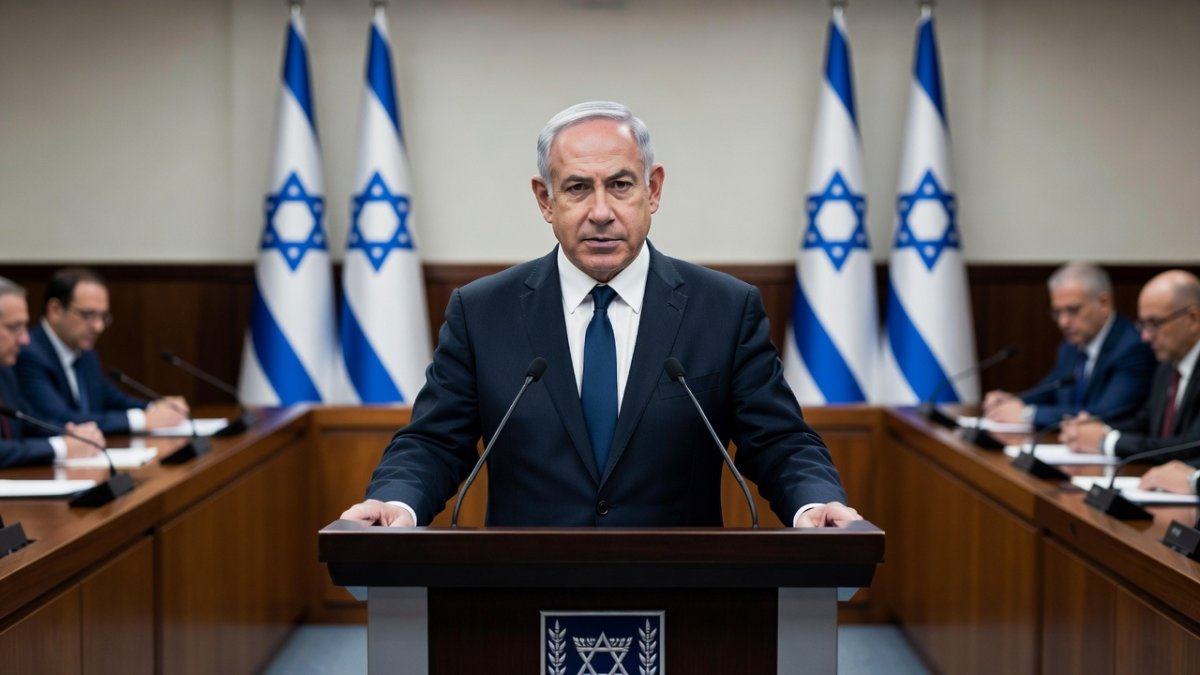
Jerusalem – 9 August 2026 — Speaking at the start of a cabinet meeting on Sunday, Netanyahu declared "Israel rejects the 15-point document," drawing a red line against the US-backed plan endorsed by Hamas last month. The prime minister said the Israeli military "will not carry out any withdrawal until Hamas is genuinely disarmed and will continue to thwart threats against our forces and our citizens." The statement came after weeks of quiet diplomacy involving the Board of Peace and US officials, yet it underscored persistent divisions over the sequence of disarmament and withdrawal. Israeli officials in Jerusalem emphasized that security concerns remain paramount, while mediators urged both sides to avoid actions that could unravel the fragile ceasefire framework established last October. Washington has continued to press for implementation, though the gap in positions has widened in recent days.
The Board of Peace Plan and Its Stakes
Trump's Board of Peace announced last month an agreement for the "complete disarmament" of Hamas and other armed groups in Gaza, which Trump called "a monumental step toward lasting peace and security." The 15-point plan initially focuses on Hamas's heavy weaponry, military production sites, weapons depots and tunnel network. The roadmap would eventually transfer Gaza's day-to-day administration to a technocratic Palestinian committee under the Board of Peace's oversight, alongside reconstruction. This approach seeks to address both immediate security threats and longer-term governance challenges in the territory, drawing on lessons from previous stalled initiatives in the region.
Named officials include the board's director Nickolay Mladenov, who met Netanyahu last week. After the meeting the board said an Israeli withdrawal would only happen once disarmament is complete. Netanyahu is now "talking to the Americans about this issue," saying "They have ideas, some of which are acceptable to us and some are not acceptable to us, and we know how to stand firm on these things." The discussions reflect ongoing efforts to bridge differences between Israeli requirements and the plan's phased structure, with US envoys shuttling between Jerusalem and other capitals to maintain momentum.
The rejection lands barely a week after Trump announced what he called a breakthrough in the long-running effort to stabilize Gaza. The Board of Peace has positioned itself as a neutral overseer capable of coordinating international reconstruction funds once core security conditions are met. Yet Israeli insistence on verified disarmament before any territorial concessions has placed new pressure on the timeline. Palestinian representatives have expressed cautious interest in the technocratic committee idea, provided it leads to tangible improvements in daily life across Gaza City and surrounding areas. US officials continue to highlight the plan's potential to reduce the risk of renewed large-scale conflict while addressing humanitarian needs that have persisted since the ceasefire began last October.
Hamas Responds: Commitment Versus Conditions
A Hamas official told the BBC on Sunday the group "reaffirms its commitment" to the agreement and was ready "to engage seriously and responsibly in implementing" the 15-point plan, calling on mediators to ensure "that all parties comply with what has been agreed." Hamas has previously said handing over its heavy weapons was contingent on Israel ending "all forms of aggression" and withdrawing its forces from Gaza. The gulf between the two positions — Israel demanding disarmament first, Hamas demanding withdrawal first — is the core sequencing dispute. Al Jazeera's Hani Mahmoud reported from Gaza City that Netanyahu's statement raises "serious questions" for Palestinians about the path out of hostilities.
Mediators from several countries have urged Hamas to clarify its timeline for surrendering heavy weapons, while Hamas leaders have reiterated that any handover must occur alongside visible Israeli steps toward full withdrawal. This mutual conditionality has slowed progress on even initial confidence-building measures, such as limited reconstruction in northern Gaza. Palestinian civilians in Gaza City have voiced frustration over the continued restrictions on movement and aid, noting that the ceasefire has not yet translated into meaningful relief for the majority of the population.
The White House has described the 15-point framework as flexible enough to accommodate phased implementation, yet it has stopped short of publicly criticizing either side. Hamas officials have pointed to the Board of Peace's oversight role as a potential guarantee against unilateral Israeli actions, though they remain wary of any arrangement that leaves Israeli forces in place indefinitely. International observers note that resolving the sequencing issue will require direct engagement between the parties, something that has proven difficult amid ongoing low-level clashes along the border areas.
Netanyahu's Coalition Calculus
Netanyahu's statement does not come as a surprise, but he took time to make it, reflecting his difficult position — unhappy with Trump's plan while unwilling to upset his closest ally. Months before Israeli elections and under pressure from right-wing coalition members to take a tough stance on Gaza, he is unlikely to make concessions. National Security Minister Itamar Ben Gvir dismissed the draft as "not acceptable," and far-right parts of the coalition have called for a new cabinet vote to end the Gaza plan. Netanyahu also vowed that "as long as I am prime minister, no Palestinian state will arise."
Coalition dynamics in Jerusalem have grown more complex as smaller parties weigh the political costs of supporting or opposing the US-backed roadmap. Ben Gvir and other ministers have argued that any perceived softening on disarmament could embolden Hamas and weaken Israel's deterrence posture. Netanyahu has balanced these voices by maintaining public support for the broader goal of peace while insisting on ironclad security guarantees before any territorial changes.
Israeli analysts point out that the prime minister's approach preserves room for future negotiations with Washington without alienating his base ahead of elections. The United States continues to emphasize its strategic partnership with Israel, even as differences over Gaza policy surface in public statements. This balancing act has allowed Netanyahu to project firmness domestically while keeping diplomatic channels open with the Trump administration and the Board of Peace.
Gaza on the Ground: Ceasefire in Name Only
Israel has continued to carry out near-daily strikes across Gaza since agreeing to an initial ceasefire last October. Since the ceasefire began in mid-October last year, at least 1,250 people have been killed and 4,120 wounded, with more than 800 bodies recovered from rubble, according to Gaza's health ministry. The overall death toll in Gaza since October 2023 is at least 73,300, with 174,000 wounded, according to the territory's health ministry, whose figures the United Nations considers reliable. About 1.9 million people — 90 percent of Gaza's population — have been displaced. The war was triggered by the Hamas-led attack on southern Israel on 7 October 2023, in which about 1,200 people were killed and 251 taken hostage.
Humanitarian conditions remain severe, with aid deliveries still limited by security concerns and infrastructure damage. Residents in Gaza City and surrounding areas report ongoing difficulties accessing clean water, medical care, and shelter. The United Nations has documented widespread displacement, noting that many families have been forced to move multiple times since the initial ceasefire took effect.
Israeli military operations have focused on preventing rearmament and targeting suspected militant infrastructure, according to statements from the Israel Defense Forces. Palestinian health authorities continue to record casualties from these incidents, underscoring the fragile nature of the current truce. International aid organizations have called for expanded access to allow reconstruction to begin in earnest once security conditions permit.
Analysis — A Reset That Tests Washington's Leverage
Analysts suggest the rejection is a deliberate reassertion of Israeli red lines rather than a total rupture with Washington. Al Jazeera's Nour Odeh reported from Bethlehem that the stated conditions could prove "extremely problematic" for the Board of Peace and mediators who have worked for months to carry out Hamas's disarmament, noting the board has "very limited power" to move forward without Israeli support. "Netanyahu has hit the reset button," she said. The sequencing dispute frames the deeper question: can a phased withdrawal be negotiated, or has the ceasefire itself reached its limit? Israel's rejection signals another blow for Trump's Gaza peace plan, first announced in September last year, which paired disarmament with troop withdrawal and reconstruction.
US officials have indicated they remain committed to the framework and are exploring adjustments that could satisfy Israeli security requirements without derailing the overall process. The Board of Peace continues to engage with all parties, though its influence depends heavily on cooperation from both Israel and Hamas. Regional actors have watched the developments closely, recognizing that prolonged stalemate could affect broader stability efforts in the Middle East.
The coming period will likely see intensified shuttle diplomacy as Washington seeks to narrow the differences over timing and verification mechanisms. Netanyahu's public stance has reinforced Israel's negotiating position, yet it also highlights the challenges of aligning domestic political pressures with international expectations. Observers note that sustained US engagement will be essential if the 15-point plan is to advance beyond its current impasse.
What comes next — Netanyahu said Israel is in discussion with US officials about the way forward, but with elections approaching and his coalition's right flank demanding no concessions, the window for compromise appears narrow. Mediators, the Board of Peace, and Hamas all still describe the 15-point document as the framework — yet the gap between "genuine disarmament first" and "withdrawal first" remains the central fault line of the Gaza peace process. Analysts suggest the coming weeks will test whether Washington can translate its leverage over Israel into a plan both sides can accept.
By Irina Volkov, Staff Writer
This article was produced with AI-assisted research and editorial support. Reporting is based on sources cited in the article.
What's Your Reaction?
 Like
0
Like
0
 Dislike
0
Dislike
0
 Love
0
Love
0
 Funny
0
Funny
0
 Wow
0
Wow
0
 Sad
0
Sad
0
 Angry
0
Angry
0

Russia/Eastern Europe Correspondent at Global1.News. Covering Russian politics, energy, security, and the shifting dynamics of the post-Soviet space. Provides clear-eyed analysis on one of the world's most opaque regions.















Comments (0)