
The Rohingya Are Not a Legal Test Case. We Are a People Waiting for Justice.
The International Court of Justice is set to deliver its judgment in The Gambia v. Myanmar on 19 November 2026, a case that has become the focal point of a generation‑long struggle for the Rohingya people.
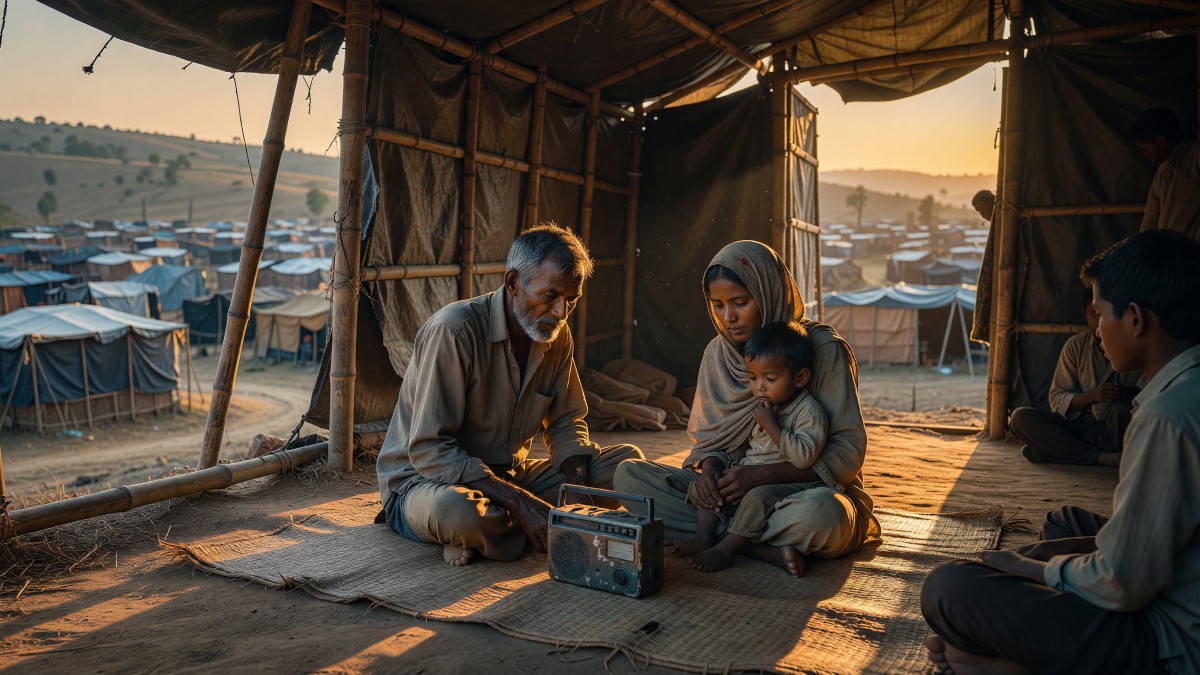
The International Court of Justice is set to deliver its judgment in The Gambia v. Myanmar on 19 November 2026, a case that has become the focal point of a generation‑long struggle for the Rohingya people. While the legal community debates the broader implications of the ruling, the Rohingya community asks a more immediate question: where are the women, children and families whose lives have been shattered by the 2017 campaign of violence? This article examines the legal backdrop, the humanitarian realities, and the stakes that extend far beyond abstract jurisprudence.
Background of the case and its significance
In 2019, the case was opened before the ICJ, marking the first time a state—The Gambia—brought a genocide claim against Myanmar under the 1948 Genocide Convention. The filing was rooted in documented atrocities against the Rohingya, including mass killings, village destruction and widespread sexual violence. The judgment, expected on 19 November, will determine whether the evidence satisfies the legal definition of genocide.
For the Rohingya, the case represents “decades of persecution and nearly ten years of waiting for accountability,” as one survivor wrote. The judgment will not only confirm whether Myanmar bears legal responsibility, but also signal whether the international community is willing to translate that responsibility into concrete protective measures for a people still living in displacement.
Legal debates surrounding genocide intent
Recent commentary has shifted attention from the Rohingya to the potential ripple effects of the ruling. A Wall Street Journal opinion piece warned that a lowered threshold for genocide could influence other cases, such as South Africa’s suit against Israel or possible claims against the United States and NATO members. U.S. Ambassador to the United Nations Mike Waltz echoed concerns about the independence of international justice, referencing Washington’s sanctions against the International Criminal Court.
Legal scholars, including former ICJ officer Professor Michael Becker, have noted that the Court’s interpretation of genocidal intent could shape how intent is inferred from patterns of conduct in future disputes. However, Professor John Packer of the University of Ottawa cautioned that “there is no separate or adjustable genocide threshold to be lowered according to whose interests are affected.” The law, he argues, remains the Genocide Convention, and the question is whether the evidence meets that standard, not whether powerful states can shape the threshold.
The human cost behind the legal arguments
Human Rights Watch’s 2017 report “All of My Body Was Pain” documented the experiences of 52 Rohingya women and girls, including 29 survivors of rape. Their testimonies described sexual violence, killings, village razing and forced displacement across the Naf River into refugee camps. The report highlights that these survivors “carried their trauma … without adequate healthcare, justice, or the security of knowing they will not be forced to flee again.”
The survivors’ plight underscores a stark reality: legal judgments cannot restore a murdered child to a mother or return the years stolen from an entire generation. Yet, as the article stresses, “recognition matters. Accountability matters. Being heard matters.” The human dimension remains central, even as policymakers and jurists debate technical thresholds.
Political pressures and the risk of instrumentalising the case
Beyond academic debate, the case has become entangled in geopolitical calculations. The Wall Street Journal piece suggested that the Trump administration might sanction judges who vote to lower the genocide threshold, while Ambassador Waltz’s remarks linked the case to broader concerns about sanctions on international courts. Such statements raise the question of whether powerful states will use the Rohingya case as leverage in unrelated disputes.
Critics warn that allowing the Rohingya case to become a “stepping stone” for other proceedings risks subordinating the community’s quest for justice to external political agendas. The article argues that “the possibility that a judgment on the Rohingya could affect another state is not a reason to politically contain our case.” The focus must remain on whether the evidence satisfies the Genocide Convention, not on how the outcome might serve other interests.
Current humanitarian situation of the Rohingya
While the legal battle unfolds, Rohingya refugees continue to live in protracted displacement. The article notes that many have spent “nearly a decade in refugee camps without citizenship or a prospect of going home.” Permanent refugee settlements are described as “not a solution,” and detention centers as offering “no protection.” Humanitarian resources have been shrinking, even as the international community invokes the slogan “Never Again.”
These conditions highlight a gap between rhetoric and reality. Even if the ICJ finds Myanmar responsible, the judgment alone will not “restore our citizenship, recognize our identity, or dismantle the systems that made genocide possible.” Achieving those outcomes will require sustained international pressure, robust transitional‑justice mechanisms, and concrete assistance to displaced families.
Alternative pathways to justice pursued by the Rohingya
Rohingya activists have not waited passively for a single institution to decide their fate. The article references “Rohingya‑led universal jurisdiction initiatives,” including a genocide case in Indonesia pursued by a lead complainant represented by Themis Indonesia and supported by the Myanmar Accountability Project. These efforts illustrate a broader strategy of building parallel legal avenues to hold perpetrators accountable.
Such initiatives demonstrate that the community is actively constructing “alternative pathways to justice.” While the ICJ judgment remains a pivotal moment, it is part of a larger mosaic of legal actions aimed at securing recognition, reparations and, ultimately, a return to their homeland.
Looking ahead: what the judgment could mean
If the Court issues a finding against Myanmar, it would constitute “a historic step” for the Rohingya, affirming that the documented atrocities meet the legal definition of genocide. However, the article stresses that the judgment alone will not solve the underlying problems of statelessness, lack of citizenship and ongoing insecurity. The community will still need “sustained international pressure and a credible process of transitional justice” to translate legal recognition into tangible change.
Conversely, if the Court does not find Myanmar responsible, the judgment will not erase the documented atrocities or invalidate survivor testimony. The Rohingya’s pursuit of justice will continue through universal‑jurisdiction cases, advocacy and grassroots organizing. As the survivor author writes, “Let the evidence speak and the law be applied without political intimidation,” urging the world to keep the focus on the people whose lives hang in the balance, rather than on abstract geopolitical anxieties.
This article was produced with AI-assisted research and editorial support. Reporting is based on the source material cited below. Sources: The Diplomat; thediplomat.com; Global1.News (20 November 2026).
By Kenji Tanaka, Staff Writer
What's Your Reaction?
 Like
0
 Dislike
0
 Love
0
 Funny
0
 Wow
0
 Sad
0
 Angry
0

Japan Correspondent at Global1.News. Tokyo-based voice covering Japanese politics, technology, economy, and culture. Tracks the intersection of tradition and innovation in one of the world's most dynamic societies.















Comments (0)