
Syria-Russia Deal Reshapes Moscow's Mediterranean Footprint
Syria and Russia have agreed a memorandum reorganizing Moscow's presence at the Hmeimim air base and Tartus naval facility. Civilian facilities pass to Syrian control and military sites become joint training centers within three months, ending 18 months of negotiations.
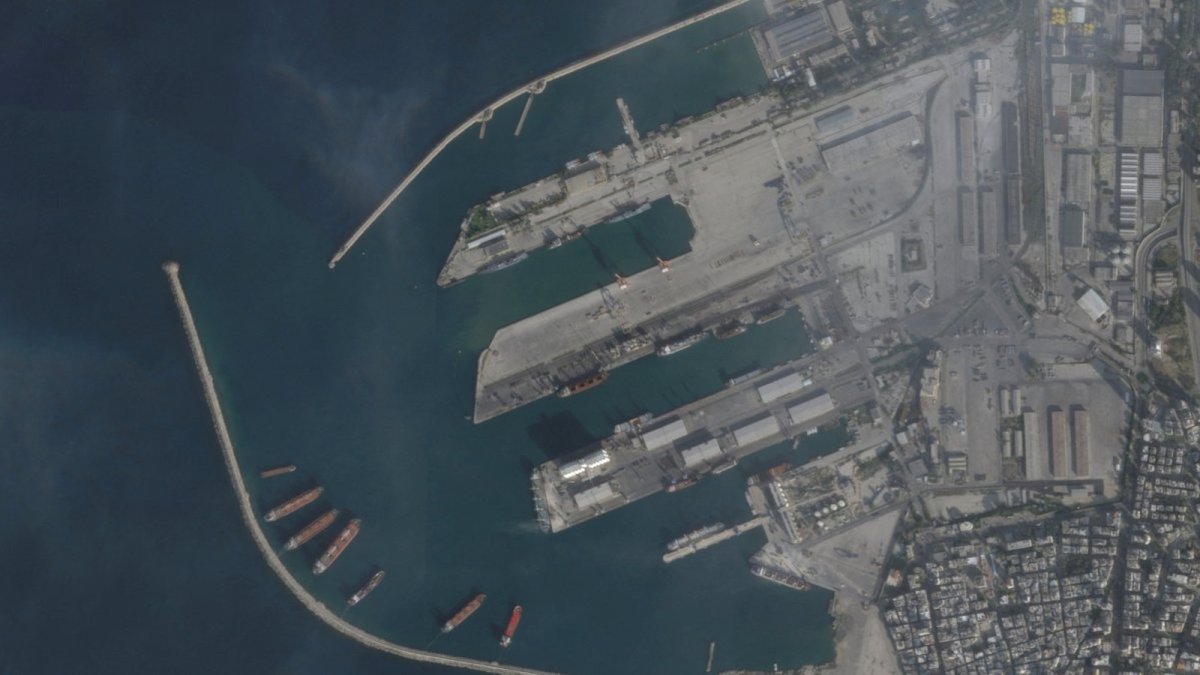
The memorandum of understanding announced in Damascus on Sunday is the most significant reordering of Russia's military footprint in the Middle East since Bashar al-Assad's fall in December 2024. After roughly eighteen months of negotiation, Syria and Russia have agreed on a new architecture for the Hmeimim air base and the Tartus naval facility — one that converts Moscow's principal military outposts on the Mediterranean into a hybrid arrangement of civilian administration, joint training centers, and commercial operations.
Syria-Russia Deal Reshapes Moscow's Mediterranean Footprint
Damascus, Syria – August 9, 2026 — Syria's Foreign Ministry announced Sunday that the two countries have reached a memorandum of understanding to reorganize Russia's presence at the Hmeimim and Tartus bases in western Syria, ending nearly a year and a half of intensive negotiations over the future of Moscow's most important military assets in the region.
Under the terms of the memorandum, Syria will assume management of the civilian facilities at both sites — including Hmeimim Airport and the fourth commercial berth at Tartus port — gradually integrating them into the country's civilian administration system. Military facilities, meanwhile, will undergo a functional transformation, with the two sides agreeing to convert them from military bases into joint training and qualification centers under arrangements designed to preserve their mutual interests.
The memorandum sets a maximum three-month timeframe to complete the transition, after which the new arrangements are scheduled to take effect. The ministry described the agreement as "the most significant development" since negotiations began about a year and a half ago, saying it opens the way for a new phase in Syrian-Russian relations.
What the Memorandum Changes
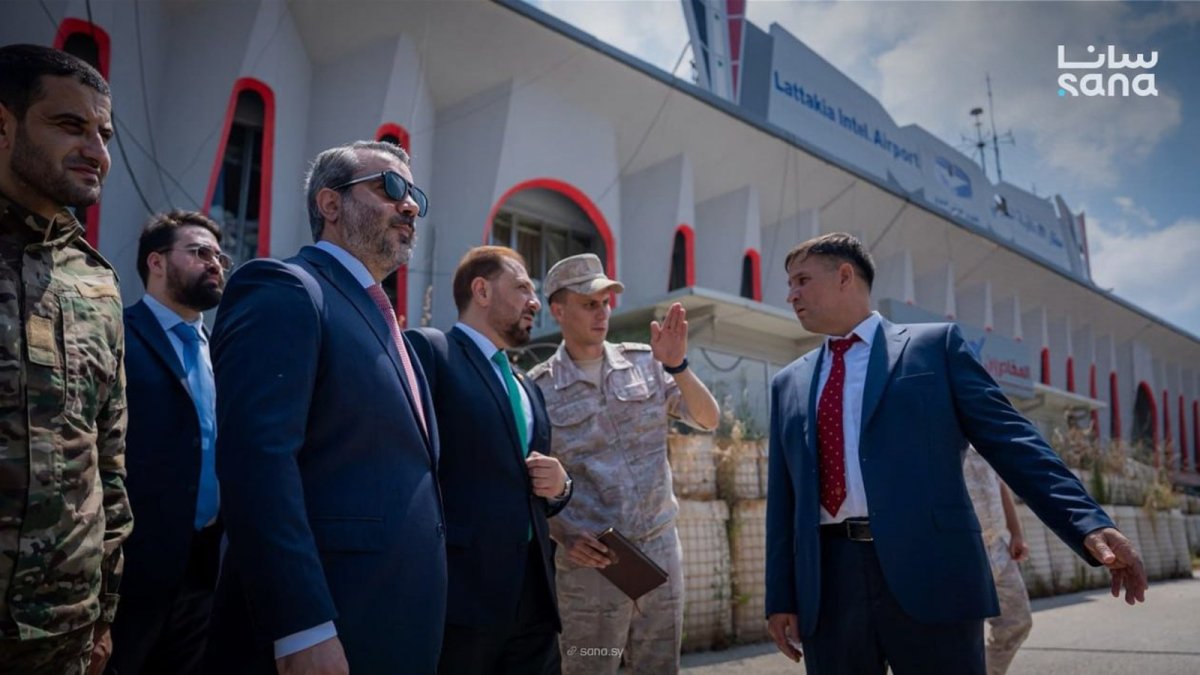
On the civilian side, the shift is immediate and tangible. Syria's General Authority for Border Crossings and Customs said in a statement that the Syrian side will take over commercial sites previously operated by Russia at Tartus port, including Berth No. 4, warehouses, and associated facilities. In parallel, Omar al-Hosary, head of the Syrian Civil Aviation and Air Transport Authority, said on X that the authority had taken control of Latakia International Airport and begun technical and operational assessments of its facilities and systems, ahead of preparing a rehabilitation plan and restoring the airport to operational readiness.
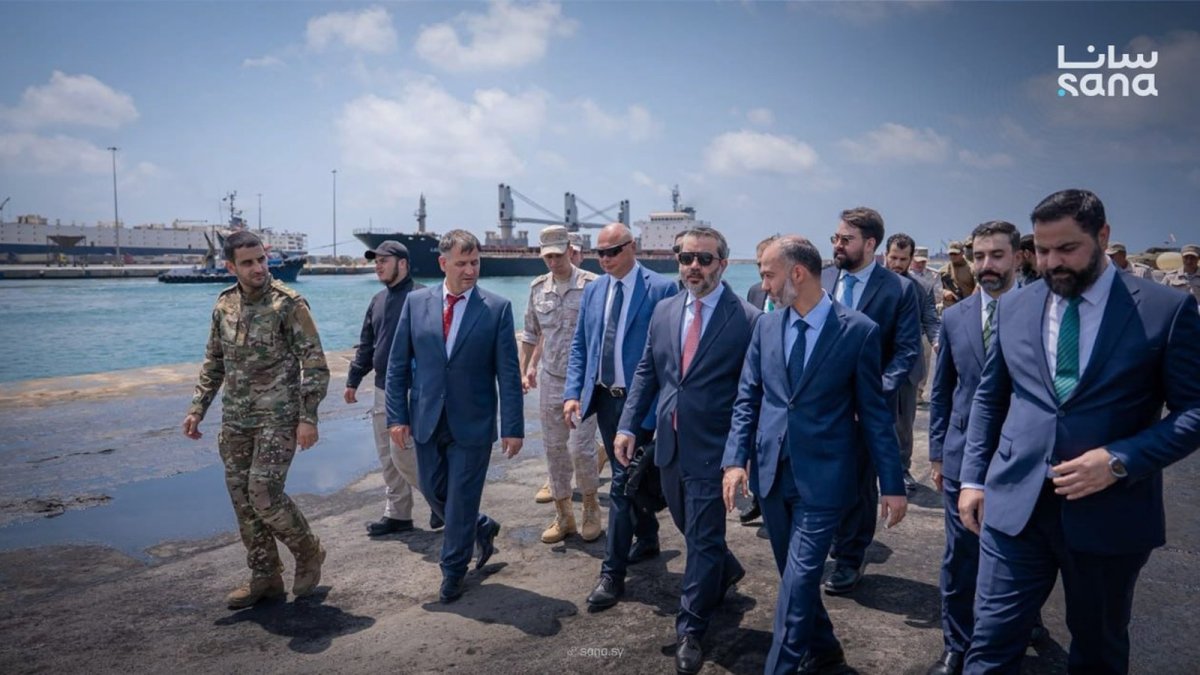
Syrian Foreign Minister Asaad Al Shibani toured Latakia International Airport and Tartus port on Sunday to inspect the installations covered by what the state-run Syrian Arab News Agency (SANA) described as a "historic" deal. The presence of the foreign minister at both sites on the day of the announcement underscored the political weight Damascus attaches to reclaiming assets that had operated under Russian management for years.
A Historic Reversal at Tartus and Hmeimim
The significance of the agreement is best measured against the history of the two facilities. Hmeimim, in Latakia province, began as a small civilian airport — formerly known as Bassel al-Assad International Airport — before Russia converted it into a fully equipped military air base in mid-2015, making it the main hub for Moscow's air operations in support of the Assad government. In October 2016, President Vladimir Putin approved an agreement with the Assad regime granting Moscow permanent and free use of the base.
Tartus carries even deeper weight. It is Russia's only naval facility in the Mediterranean, with a presence dating to 1971, when Moscow established a small technical and logistical support facility. The site was later expanded into a full naval base, and the 2017 agreement granted Russia full sovereignty over the leased area while allowing it to accommodate up to eleven warships simultaneously, including nuclear-powered vessels and submarines. For more than half a century, Tartus has been the anchor of Russian naval power projection in the eastern Mediterranean.
The Strategic Calculus in Moscow
For Moscow, the agreement represents a managed retreat rather than a clean exit. Russia's decision to refrain from intervening when the insurgency swept Assad from power in December 2024 — after providing military and political support to his regime from 2011 onward — left the future of the bases in doubt. Russian troops remaining in Syria after the transition have operated under an increasingly uncertain mandate, and Moscow's January 2025 proposal to recast the two bases as "humanitarian hubs" signaled early recognition that the old arrangement was no longer sustainable.
The transformation into joint training and qualification centers allows Russia to preserve a presence on Syrian soil and a relationship with the new leadership, while the commercial dimension offers a route to retain economic access to the port. The calculus appears to be one of preservation through reinvention: retain a foothold, protect the substantial investment sunk into the facilities, and avoid the strategic humiliation of a total expulsion from the Mediterranean coast.
Damascus's Rebalancing Act
For President Ahmad al-Sharaa's transitional administration, the deal balances two imperatives. On one hand, Damascus has sought to maintain functional ties with Moscow — al-Sharaa has visited Putin in Moscow twice since taking power, first on October 15, 2025, and again in January of this year, with the two Mediterranean bases among the key points of discussion. On the other hand, the new leadership has moved decisively to rebuild relations with the United States, Europe, and neighboring Arab states that severed ties with Damascus during Assad's crackdown on protests. Washington has lifted most of its sanctions.
Reclaiming civilian control of Hmeimim Airport and Tartus port allows the Syrian government to present a tangible sovereignty dividend to its population and its international partners, without severing the Russian relationship entirely. It is a rebalancing act in which the bases serve as both a negotiating asset and a symbol of the transition's consolidation of authority.
The Commercial Pivot
The commercial dimension of the agreement was foreshadowed in July, when Reuters reported that Russia was seeking to establish a commercial logistics hub at Tartus port using Pier No. 4, a restricted zone outside the naval base. Both sides said at the time that the hub would remain under Syrian control, with all operations subject to approval by Syria's General Authority for Ports and Customs. Sunday's memorandum formalizes that trajectory, placing the fourth berth, its warehouses, and associated facilities under Syrian management while leaving room for continued Russian commercial engagement.
For Syria, the port's rehabilitation carries real economic significance. Tartus is one of the country's principal gateways for trade, and restoring full civilian operation of the berths is a precondition for attracting the Gulf and European investment that Damascus is courting. The General Authority of Civil Aviation and Air Transport said it would complete the technical and operational procedures needed to rehabilitate and reopen Latakia Airport, paving the way for it to receive flights and improve regional connectivity.
Regional Implications
The reconfiguration of the bases will reverberate across the eastern Mediterranean security landscape. Russia's ability to project air and naval power into the Middle East and Africa from Syrian soil will be diminished as the facilities transition to their new roles, altering calculations in Ankara, Tel Aviv, and Washington alike. For Turkey, which backed the opposition that toppled Assad, the reduction of Russia's military presence on its southern flank is a strategic gain. For Israel, the fate of Russian air defenses and early-warning systems on Syrian territory has long been a live concern.
The agreement also speaks to a broader regional pattern: the post-Assad order is being built through negotiation rather than rupture. Moscow retains leverage through its asylum for the former president, its seat in the UN Security Council, and its continued relevance to Syria's security establishment, even as Damascus opens new doors to the West and the Gulf. The three-month transition window will test whether the memorandum's ambitious timetable can be implemented on the ground — and whether the "new phase" in Syrian-Russian relations promised by the Foreign Ministry takes hold in practice.
What Happens Next
Over the coming weeks, the practical mechanics of the transition will come into focus. Syrian authorities are expected to complete their assessments of Hmeimim Airport, Latakia International Airport, and the Tartus facilities, while the two sides work out the detailed arrangements for the joint training and qualification centers. The memorandum's three-month deadline is a demanding one, and the speed of implementation will depend on technical capacity, the presence of Russian personnel, and the pace at which civilian agencies can absorb newly transferred assets.
The agreement does not fully resolve the question of Russia's long-term role on Syria's coast — it redefines it. Whether the joint training centers evolve into a meaningful security partnership or a largely symbolic presence will depend on the trajectory of Syria's relations with the West, the evolution of the regional security environment, and Moscow's willingness to accept a reduced but durable position in the eastern Mediterranean. For now, the deal closes the most contentious chapter in post-Assad Syrian-Russian relations and opens a more ambiguous one.
By Malik Hassan, Staff Writer
This article was produced with AI-assisted research and editorial support. Sources: Daily Sabah, Anadolu Agency, Reuters, SANA, The National, CNN.
What's Your Reaction?
 Like
0
Like
0
 Dislike
0
Dislike
0
 Love
0
Love
0
 Funny
0
Funny
0
 Wow
0
Wow
0
 Sad
0
Sad
0
 Angry
0
Angry
0

Middle East Correspondent at Global1.News. Based in Beirut, covering politics, conflict, energy, and society across the Middle East. Brings context and depth to a region often reduced to headlines.









Comments (0)